Understand number relationships Grade 3 Worksheets
4 filtered results
-
From - To
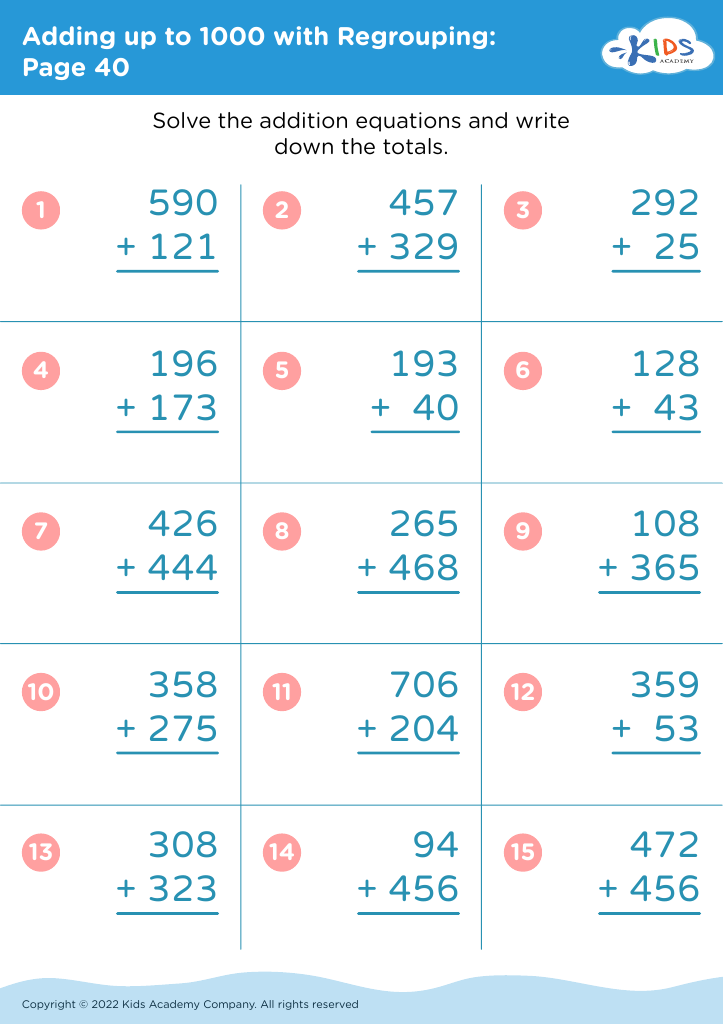
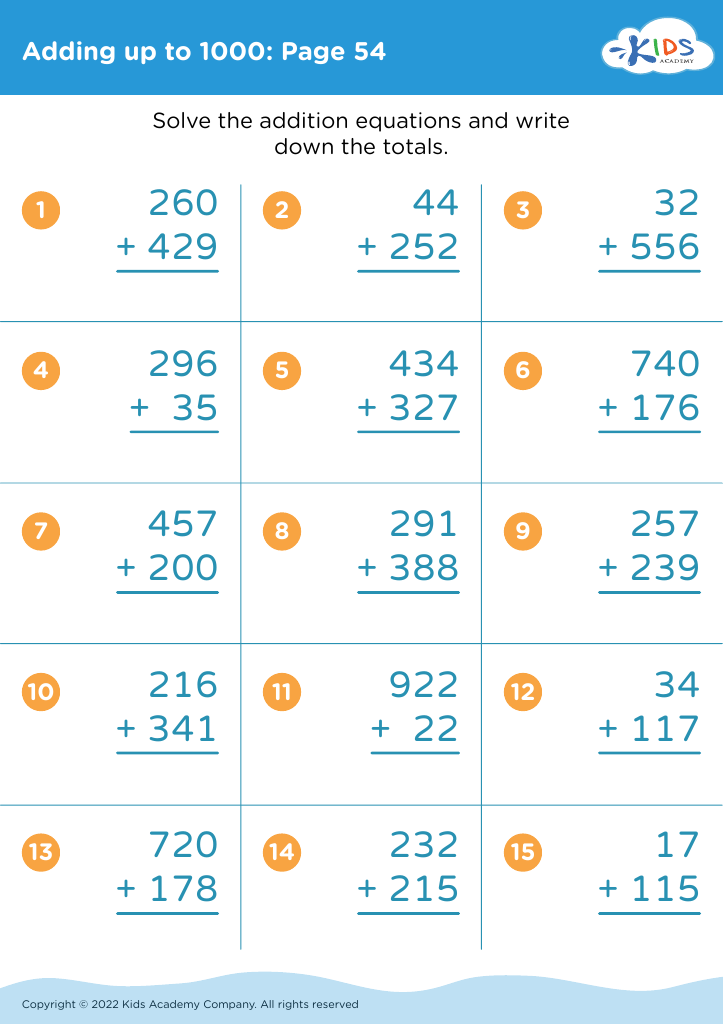
Our "Understand Number Relationships Grade 3 Worksheets" are expertly designed to enhance mathematical thinking in third graders. These engaging worksheets help students grasp essential concepts such as number patterns, sequences, and relationships, fostering strong foundational skills. Each worksheet offers interactive and varied exercises, ensuring consistent practice and improvement. With vibrant visuals and structured activities, these worksheets make learning enjoyable and effective. Perfect for supplementing classroom education or dedicated homeschooling sessions, these resources cater to diverse learning styles, ensuring every child achieves mathematical proficiency and confidence in number relationships. Empower your child’s math journey today with our expertly crafted worksheets.
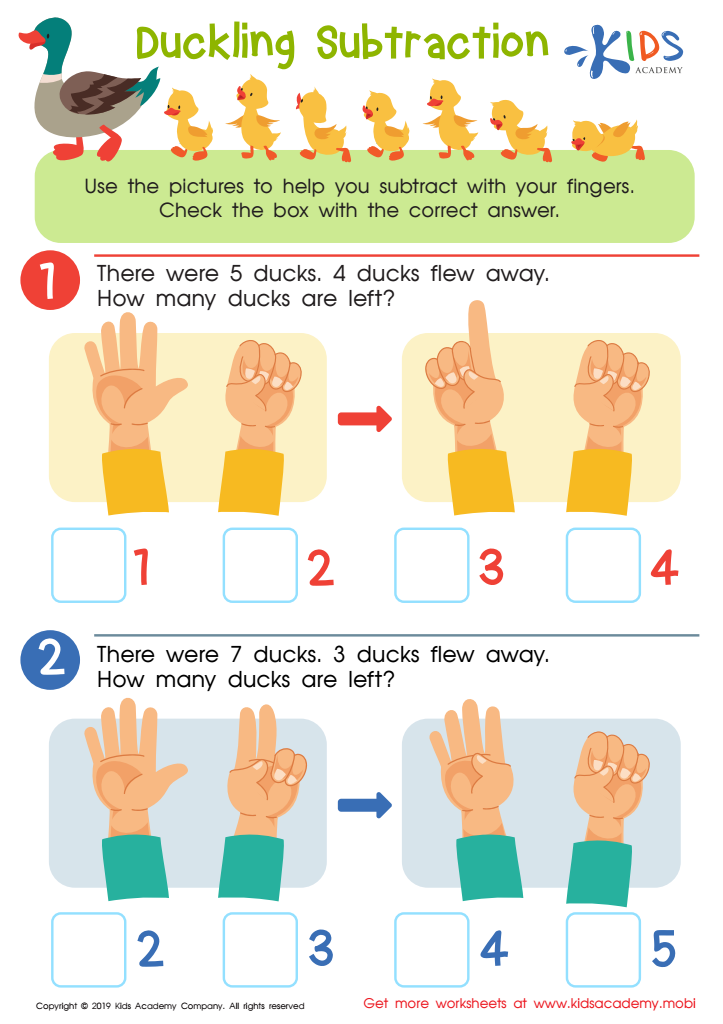
Duckling Subtraction Worksheet
 Assign to My Students







In Grade 3, understanding number relationships is crucial for several reasons, and it's important for both parents and teachers to emphasize this aspect of mathematical learning. Firstly, a solid grasp of number relationships underpins a wide array of future mathematical concepts. For instance, understanding that 8 + 7 is related to 8 + 5 and 2 more enables children to develop mental math strategies, making lengthy calculations quicker and less intimidating.
Secondly, number relationships contribute to better problem-solving skills. By comprehending concepts like the relationship between addition and subtraction or even multiplication and division, children can approach math problems from various angles, enhancing their analytical abilities.
Thirdly, an early mastery of these fundamental concepts builds confidence. Children who understand number relationships feel more competent and prepared in their math classes, which positively impacts their overall attitude towards learning. It's not just about learning to count or add but about recognizing patterns, relationships, and structures—skills that are applicable in everyday life and other academic areas.
Moreover, fostering these skills at this stage aligns with educational standards, ensuring children meet critical benchmarks. Thus, whether at home or in school, a focus on number relationships provides children with a solid mathematical foundation, fostering a lifelong ability and love for mathematical learning.