Understand subtraction Grade 3 Worksheets
3 filtered results
-
From - To
Unlock the essentials of subtraction with our Grade 3 Worksheets designed to boost understanding and confidence. Children will engage with a variety of exercises that make mastering subtraction both fun and effective. These worksheets feature an array of tasks including word problems, minuend and subtrahend comparison, and practical application in real-world contexts. Aligned with curriculum standards, they not only bolster arithmetic skills but also enhance critical thinking. Perfect for classroom or home use, these resources ensure that young learners grasp the foundational concepts of subtraction, setting a solid math foundation for future success.
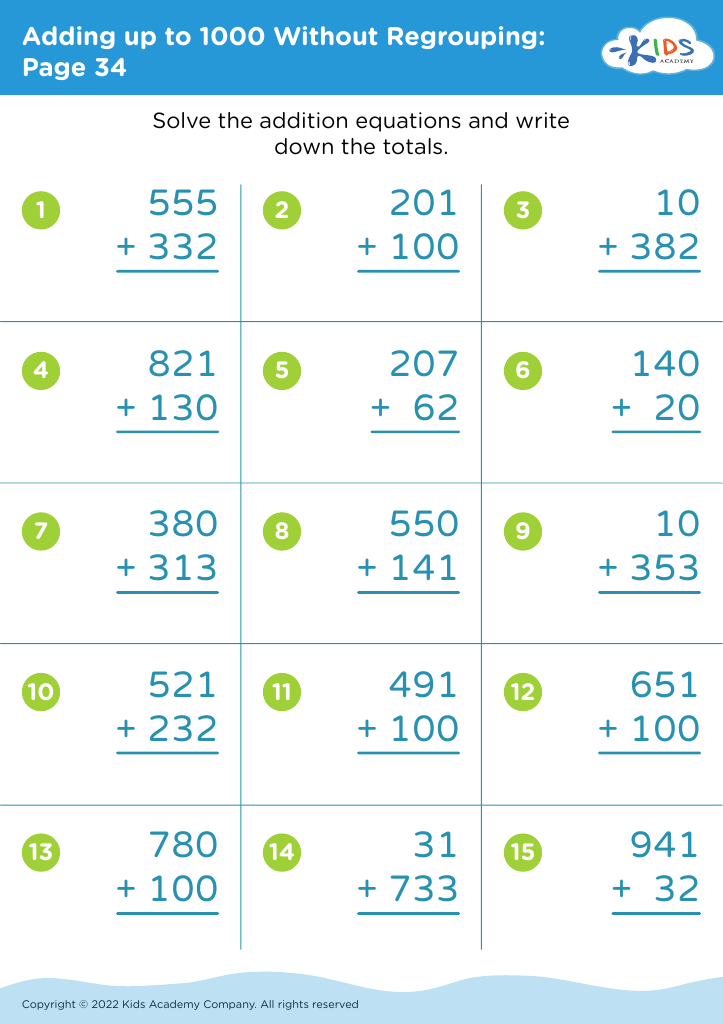
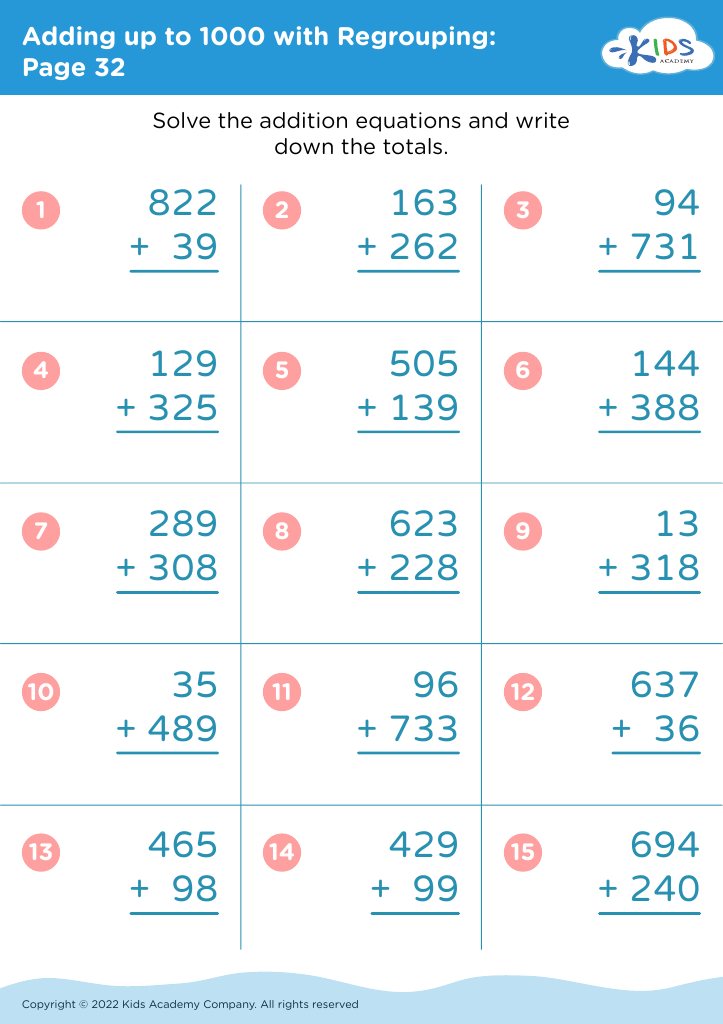
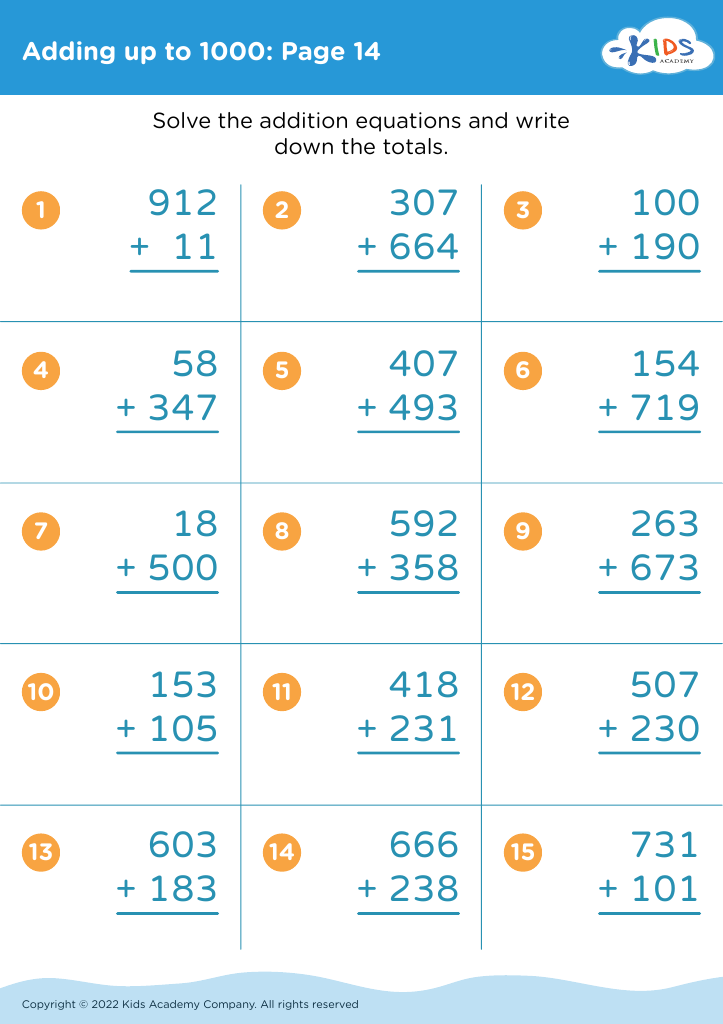








Understanding subtraction in Grade 3 is crucial for children's mathematical development. At this stage, children transition from basic arithmetic to more complex operations. A solid grasp of subtraction lays the foundation for future topics such as fractions, decimals, estimation, and algebra.
Firstly, subtraction is a fundamental arithmetic skill. Children who fail to master it may struggle with everyday problem-solving and more advanced math concepts later on. For instance, subtraction is used in determining differences, making change, and working out missing values in equations.
Secondly, subtraction also helps children understand mathematical relationships and patterns, which in turn develops logical thinking and reasoning skills. These skills are not only essential in mathematics but in many real-life situations.
Moreover, proficiency in subtraction promotes confidence and a positive attitude towards math. Children who feel competent with subtraction are more likely to participate actively in class and tackle challenging problems, thereby fostering a lifelong love for learning.
Finally, subtraction skills are often integrated into other subjects and everyday activities. For example, it aids in understanding timelines in history, measuring in science, and budgeting in home economics.
In summary, parents and teachers should prioritize teaching subtraction in Grade 3 to ensure students build a strong mathematical foundation, critical thinking skills, and confidence in their abilities.