Understanding economics Grade 3 Worksheets
3 filtered results
Difficulty Level
Grade
Age
-
From - To
Subject
Activity
Standards
Introduce your third grader to the exciting world of economics with our "Understanding Economics Grade 3 Worksheets." These worksheets from Kids Academy provide young learners with practical and engaging activities that simplify economic concepts such as goods and services, supply and demand, and saving and spending. Each carefully designed worksheet is crafted to nurture essential life skills, critical thinking, and economic understanding in a fun, interactive way. Perfect for classroom use or at-home learning, these resources help build a solid foundation in economics, setting up learners for future success. Discover how our worksheets can make learning economics enjoyable and accessible for your child today!
Favorites
With answer key
Interactive
 Assign to My Students
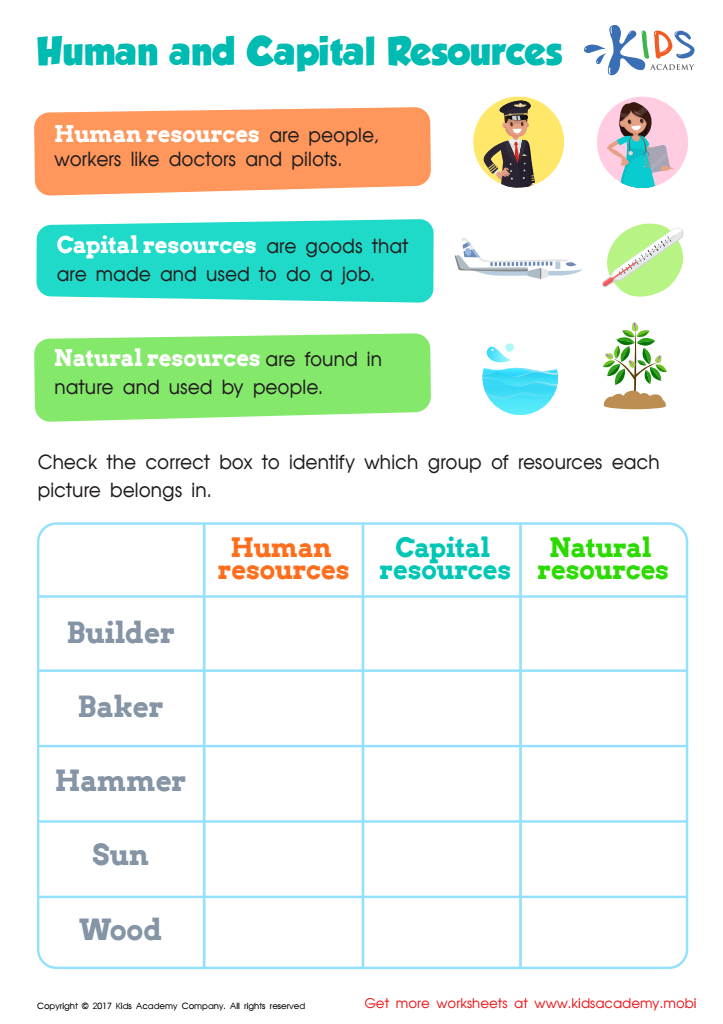
Human and Capital Resources Worksheet
It helps identify and differentiate human, natural and capital resources, so your kid can understand how each affects their world.
Human and Capital Resources Worksheet
Worksheet
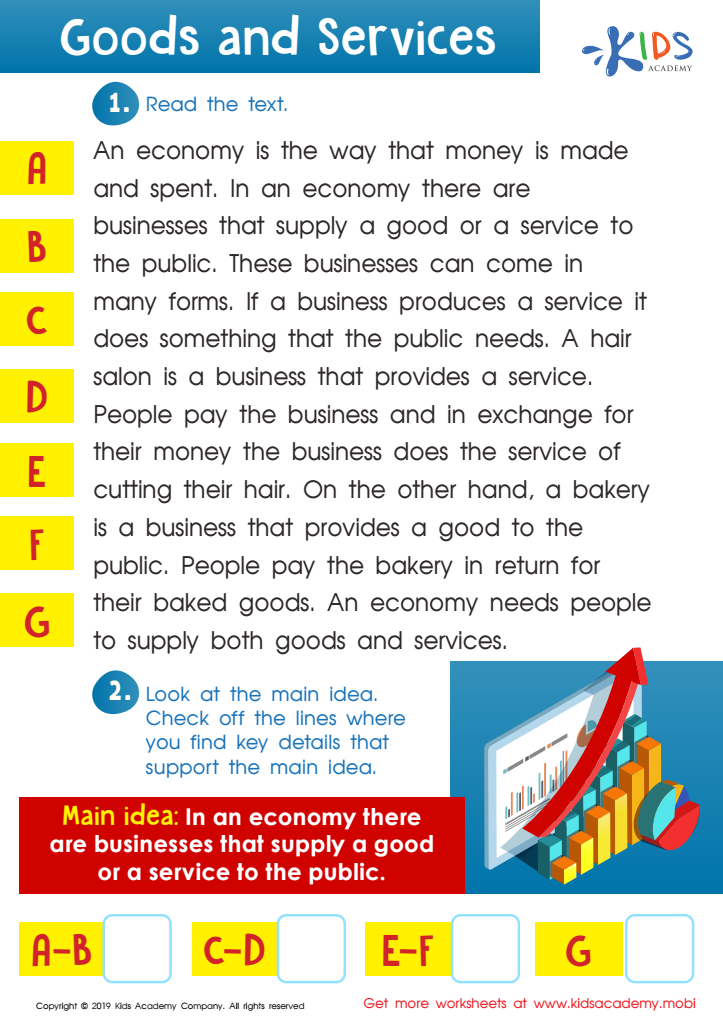
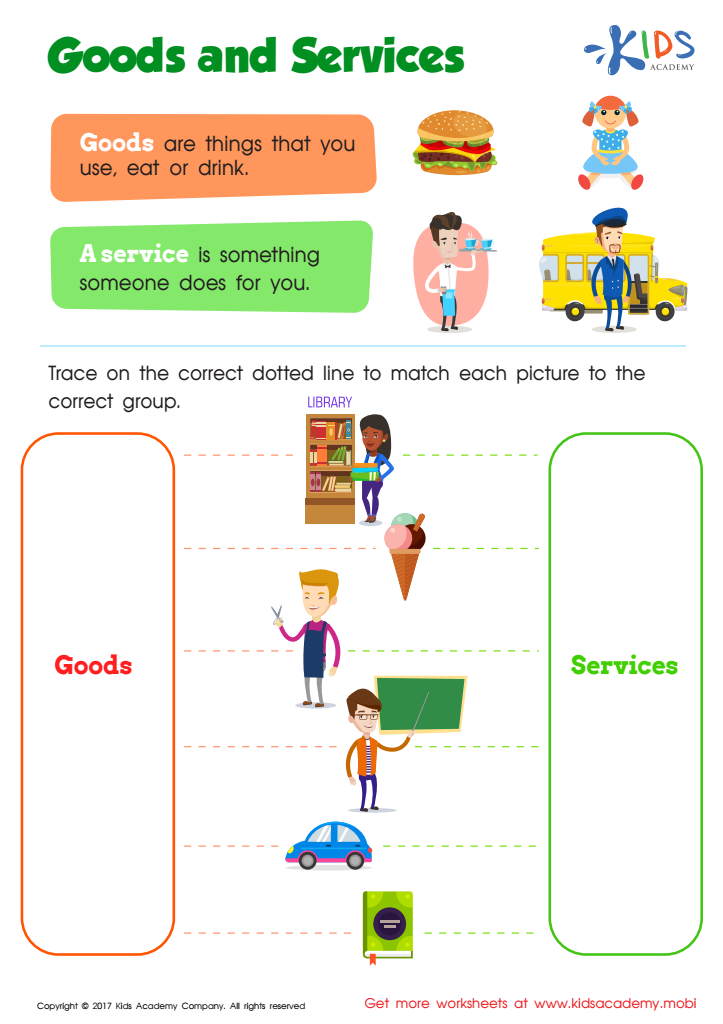
Goods and Services Worksheet
Teach your kids about the economy and businesses with this worksheet. Ask them if they know what goods and services are. After they complete the worksheet, they'll have a better understanding. Read the text to them and guide them step-by-step through the instructions. Help them learn!
Goods and Services Worksheet
Worksheet
Join Kids Academy for Free
Who is primarily going to use this learning content?





Understanding economics at a Grade 3 level is vital for laying a strong foundation for financial literacy and decision-making skills that will benefit children throughout their lives. At this age, children are naturally curious and begin to grasp basic concepts like money, saving, and spending. By introducing them to fundamental economic principles, parents and teachers can help them develop a sense of responsibility and an understanding of resource management.
Learning about economics early on simplifies complex ideas, making them understandable and relevant for young minds. For example, concepts like scarcity, supply and demand, and the value of work can be taught through simple classroom activities or real-life situations, such as setting up a classroom market or managing a small savings plan.
Moreover, this foundational knowledge equips children with the skills to make informed decisions, weigh options, and foresee consequences. Understanding economics also enhances problem-solving and critical thinking abilities, as children learn to evaluate choices and prioritize needs over wants.
In the broader context, fostering an early understanding of economics can cultivate mindful consumers and responsible citizens. They are better prepared to navigate the complexities of personal and global financial systems, leading to financially healthier and more informed communities. Thus, it is crucial for parents and teachers to invest time and effort in teaching economics at this formative stage.