Understanding food chains Grade 3 Worksheets
3 filtered results
Difficulty Level
Grade
Age
-
From - To
Subject
Activity
Standards
Discover our engaging "Understanding Food Chains Grade 3 Worksheets" designed to help young learners grasp the concept of food chains and ecosystems. These worksheets offer a variety of interactive activities including fill-in-the-blanks, matching, and drawing exercises, all aimed at reinforcing key vocabulary and understanding of producers, consumers, and decomposers. Through colorful graphics and relatable examples, students can visually connect how energy flows in nature. These resources align with third-grade science standards, making learning fun and effective. Perfect for classroom or home use, these worksheets will spark curiosity and encourage critical thinking about the interconnectedness of living organisms in their environment.
Favorites
With answer key
Interactive
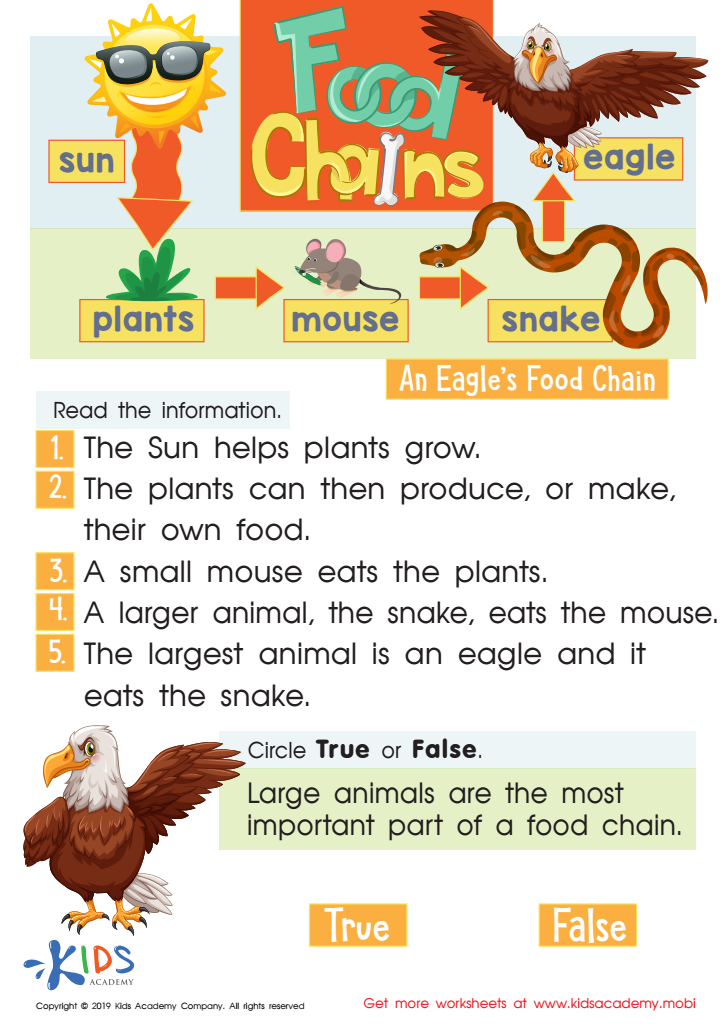
Food Chains Worksheet
This worksheet gets your child thinking about the sun's key role in the food chain. Read the info on the page, then discuss the true/false question. Are large animals the most important? Explain that without the sun, the other organisms would not exist. Have them circle the correct answer to finish.
 Assign to My Students
Food Chains Worksheet
Worksheet
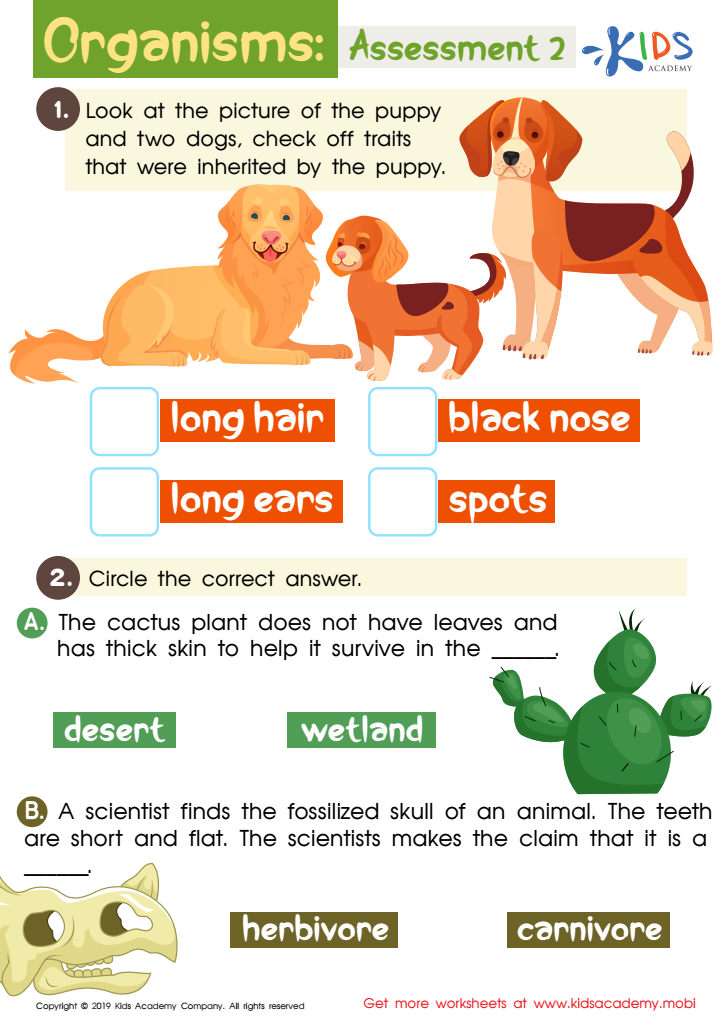
Organisms: Assessment 2 Worksheet
This free assessment helps you measure your child's science knowledge. They can check off traits a puppy inherited, identify a cactus's habitat, and review a dinosaur's diet. It's an efficient way to assess their skills.
Organisms: Assessment 2 Worksheet
Worksheet
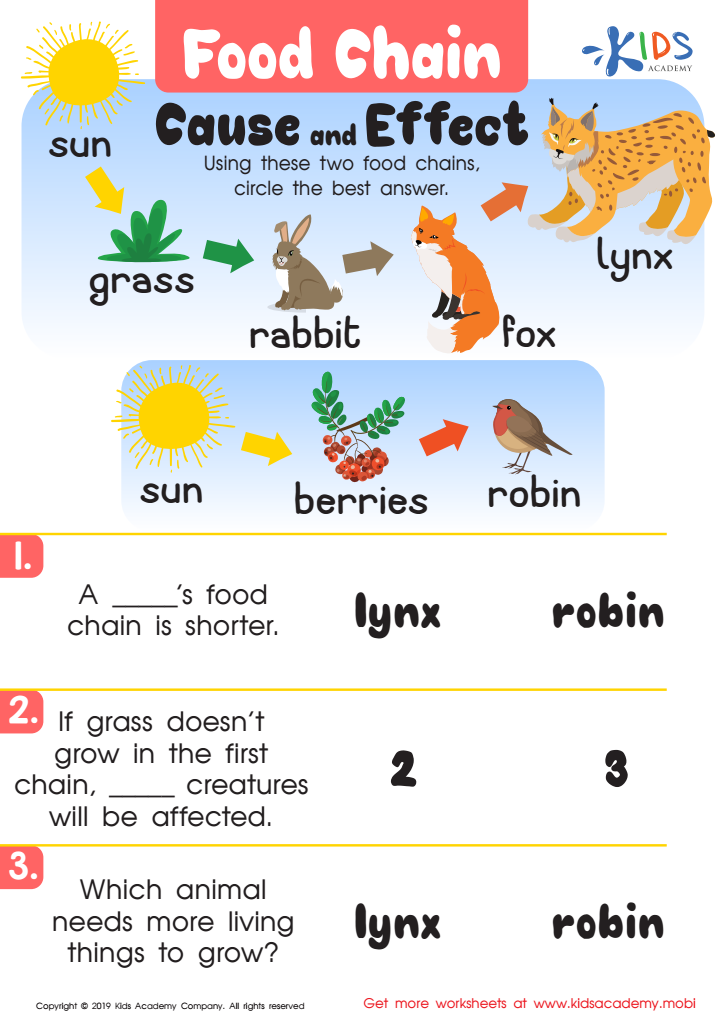
Food Chain Cause Worksheet
Help your little learner analyze ecosystems and compare food chains with this Kids Academy worksheet! Kids will compare a carnivore's and herbivore's food chain; which is longer and why? Questions at the bottom of the page will help them compare and circle the best answers. A great way to understand animal food chains!
Food Chain Cause Worksheet
Worksheet
Learning Skills
Understanding food chains
Learning about ecosystems
Comprehending energy transfer
Identifying animal diets
Recognizing predator-prey relationships
Identifying organisms
Analyzing organisms relationships
Understanding organisms interactions
Identifying cause and effect
Analyzing ecological relationships
Join Kids Academy for Free
Who is primarily going to use this learning content?







Understanding food chains is important for both parents and teachers because it lays the foundation for children’s knowledge about ecosystems and the environment. At a Grade 3 level, children are naturally curious about how living things interact with each other. By learning about food chains, students discover the relationships between producers (like plants), consumers (like animals), and decomposers (like fungi), which helps them grasp the concept of interdependence in nature.
When parents and teachers emphasize the importance of food chains, they nurture children’s critical thinking and observational skills. This knowledge can lead to a greater appreciation for biodiversity and the role each organism plays in the ecosystem. It also raises awareness about ecological balance and encourages children to think about human impact on the environment, fostering responsible stewardship at a young age.
Moreover, understanding food chains enhances problem-solving and inquiry-based learning, as students may ask questions about what happens if one part of the chain is disrupted. Overall, teaching kids about food chains not only provides essential scientific knowledge but also empowers them to be compassionate caretakers of the planet as they grow.