Developing math skills Grade 3 Addition & Subtraction Worksheets
3 filtered results
-
From - To
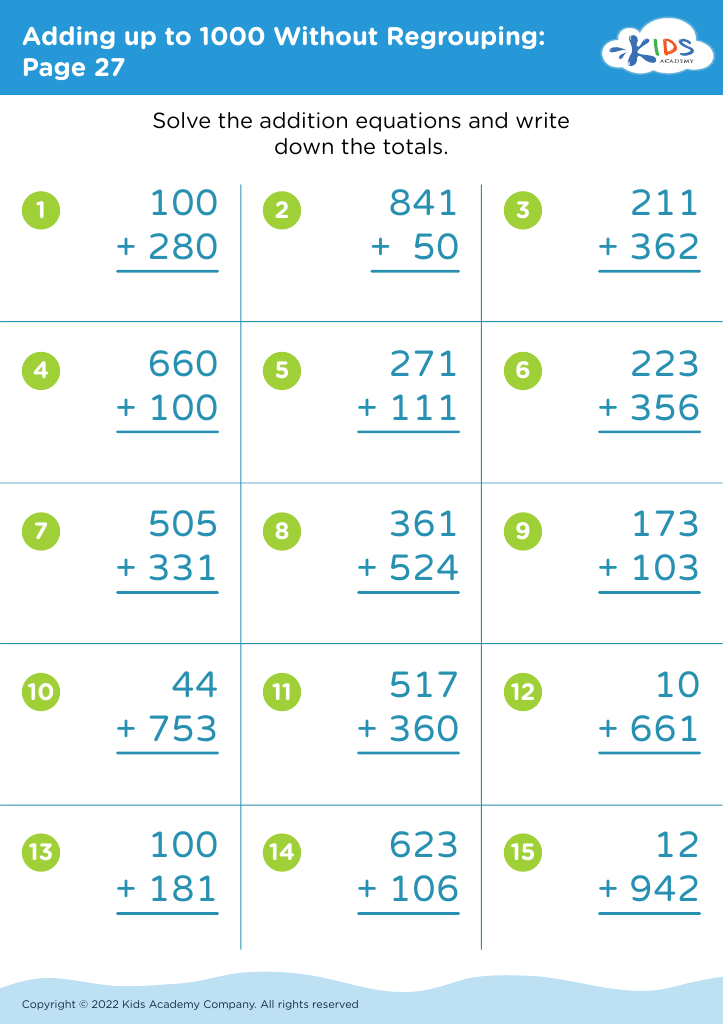
Explore our engaging Grade 3 Addition & Subtraction Worksheets designed to enhance math skills in young learners! These printable resources are perfect for helping students master essential concepts through fun and interactive exercises. Tailored to meet the needs of third graders, our worksheets incorporate real-world scenarios and problem-solving activities that promote a deeper understanding of addition and subtraction. Whether for classroom use or at-home practice, these worksheets foster critical thinking and build confidence in math abilities. Unlock your child's potential with these invaluable tools that make learning math enjoyable and effective. Perfect for educators and parents alike!
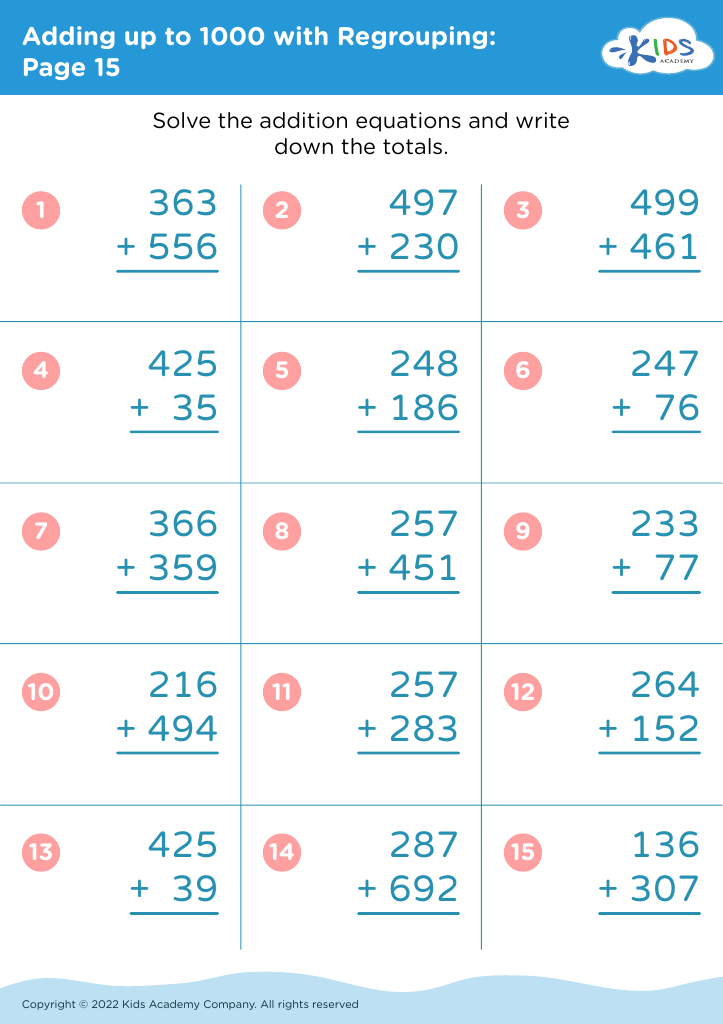
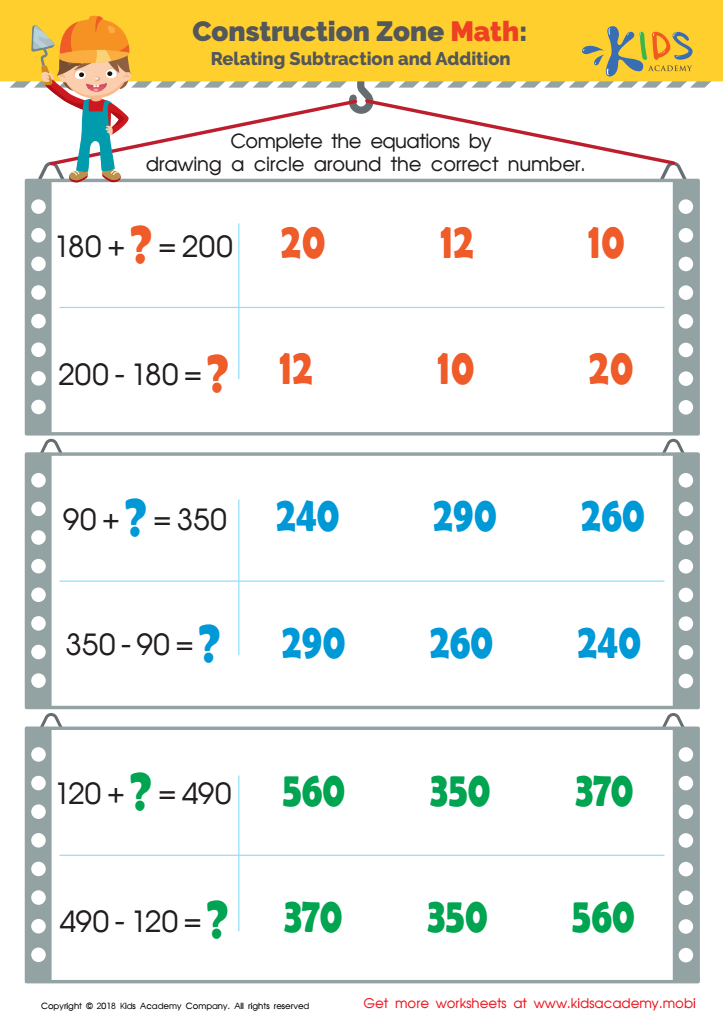
Construction Zone Math: Relating Subtraction and Addition Worksheet
 Assign to My Students








Developing math skills in Grade 3, particularly in addition and subtraction, is crucial for a child's academic growth and confidence. At this stage, students transition from basic arithmetic to more complex mathematical concepts. Mastering addition and subtraction lays the foundation for future learning, including multiplication, division, and problem-solving skills which are essential across all subjects.
Furthermore, proficient math skills enhance critical thinking and analytical abilities. As students learn to tackle word problems and develop strategies for calculations, they also cultivate logic and reasoning. These skills are not only important in school but are valuable in everyday life, helping children become adept at managing tasks such as budgeting, cooking, and time management.
Moreover, when parents or teachers actively support and encourage these skills, it fosters a growth mindset in children, bolstering their resilience and determination. Involving parents in math activities at home or organizing collaborative practice in the classroom nurtures a positive reinforcement environment. Ultimately, focusing on addition and subtraction at this critical stage shapes students' overall attitude towards math, making them more enthusiastic and willing to engage in the subject as they progress through their education.