Filters

14 filtered results

Clear all filters
Favorites
With answer key
Interactive

14 filtered results

Difficulty Level

Grade


Unlock your child's potential with our Fine Motor Skills Grade 3 Addition & Subtraction Worksheets! Designed specifically for third graders, these engaging and educational worksheets combine crucial math practice with activities that enhance fine motor skills. Each worksheet features addition and subtraction problems that challenge young minds while incorporating tasks like tracing, coloring, and cutting. Perfect for reinforcing classroom lessons or supplemental learning at home, these worksheets ensure a fun and interactive way to strengthen math abilities and fine motor skills simultaneously. Help your child build confidence and dexterity with our expertly crafted worksheets!
Check out this FREE Grade 3 Trial Lesson on Addition & Subtraction!

Initial Positions on the Board

Favorites
With answer key
Interactive
  • Grade 3
  • Fine Motor Skills
  • Addition & Subtraction
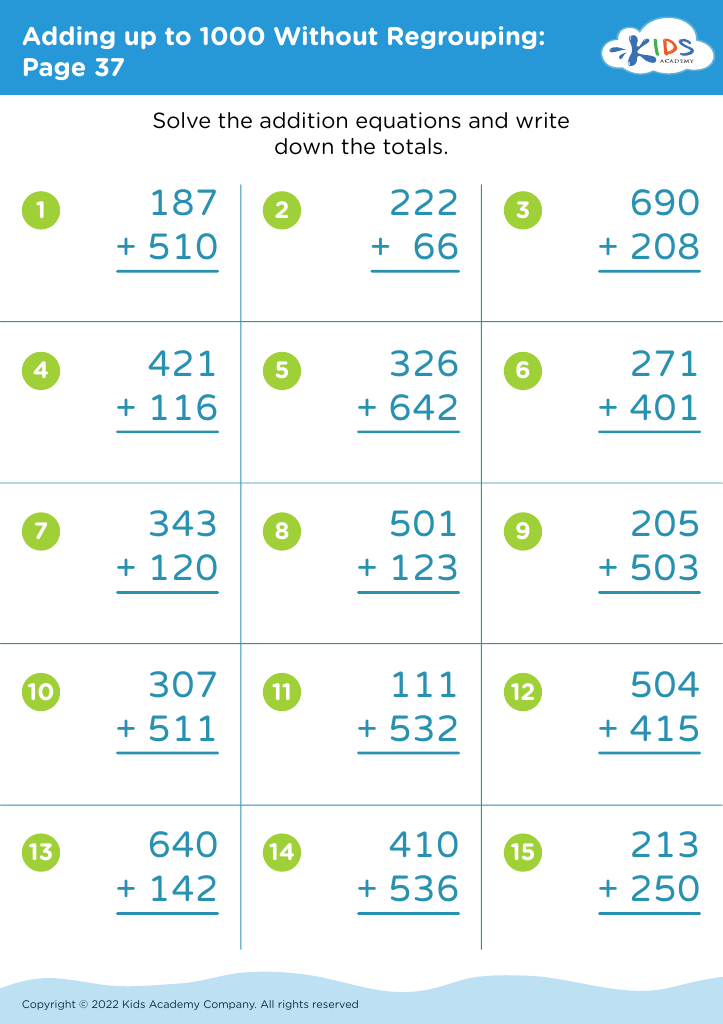
Adding up to 1000 Without Regrouping: Page 37
Worksheet
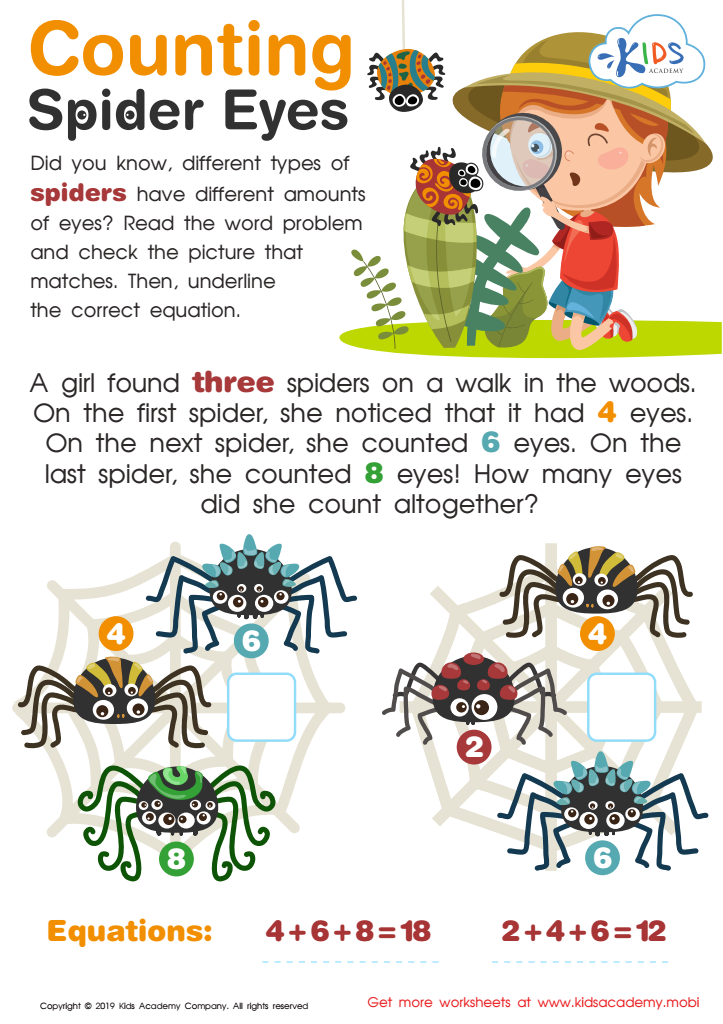
Counting Spider Eyes Worksheet

Counting Spider Eyes Worksheet

Did you know different spiders have different eye numbers? Kids will love learning this fact and solving the spider word problems on this free worksheet! Word problems promote a deeper understanding of the concept, plus they get to add up the spiders’ eyes while solving addition problems with more than one addend. Fun and math all in one!
Counting Spider Eyes Worksheet
Worksheet
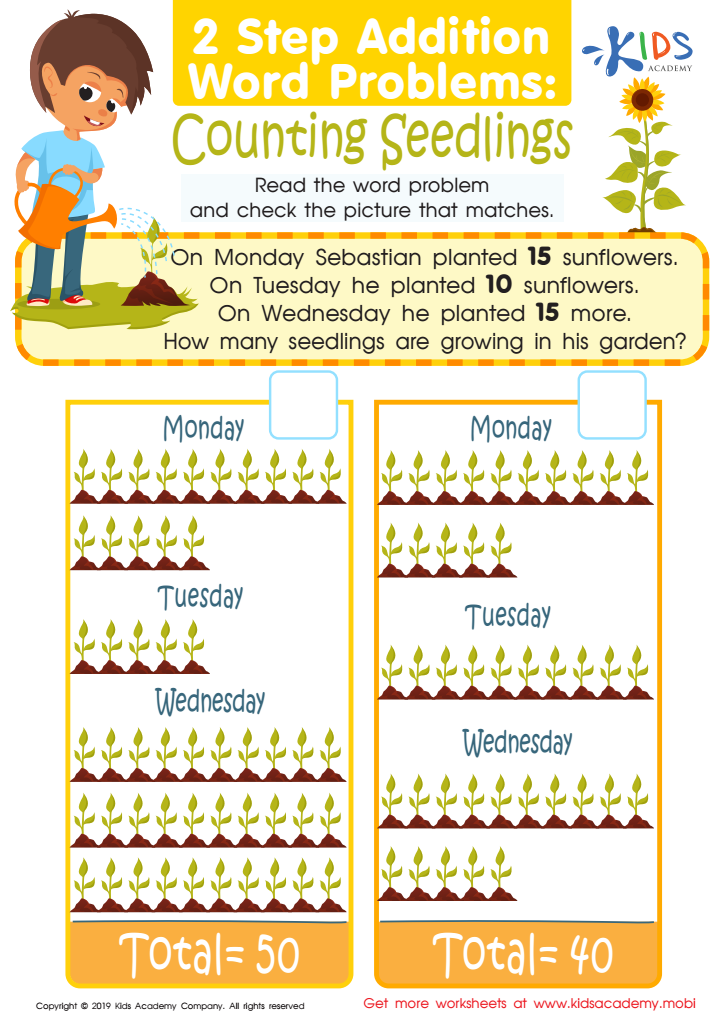
Counting Seedlings Worksheet
Counting Seedlings Worksheet

Understanding math word problems is key. Multiple steps can prove challenging - this free worksheet provides one-to-one picture representation to help kids solve multi-step addition word problems. Strengthen addition skills by choosing the matching picture to the answer.
Counting Seedlings Worksheet

Worksheet
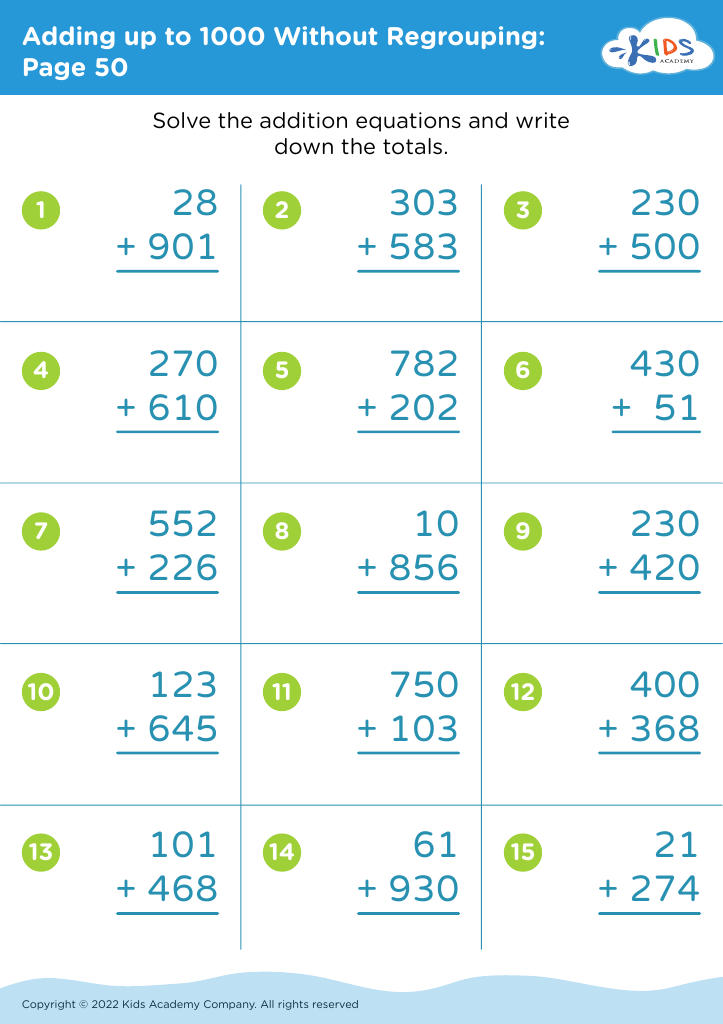
Adding up to 1000 Without Regrouping: Page 50
Worksheet
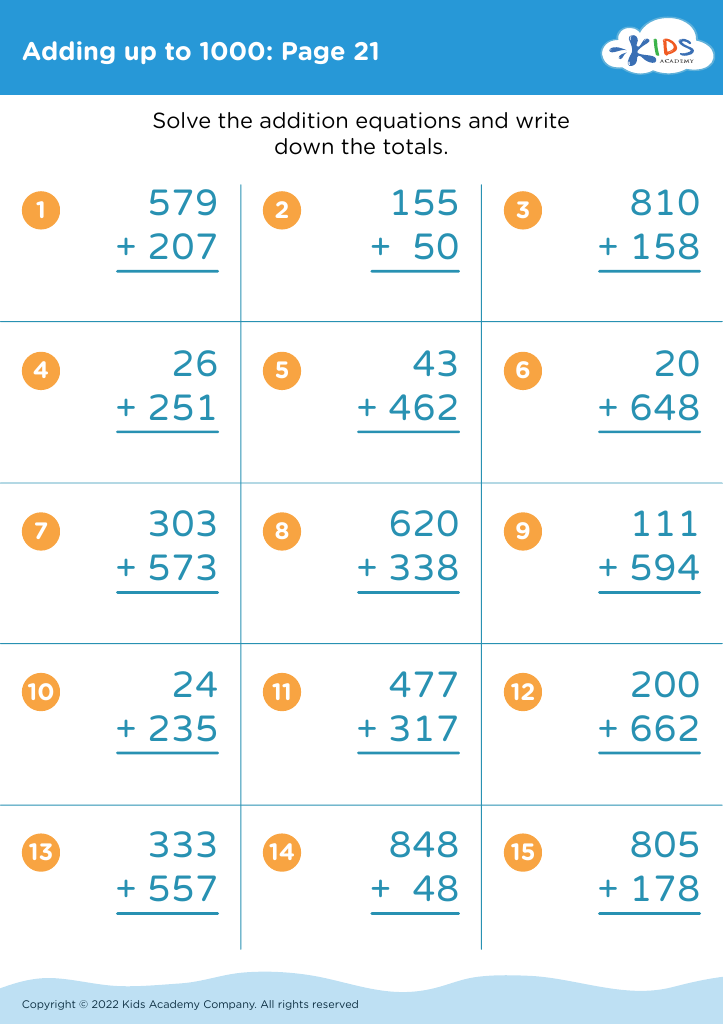
Adding up to 1000: Page 21

Adding up to 1000: Page 21

Adding up to 1000: Page 21
Worksheet
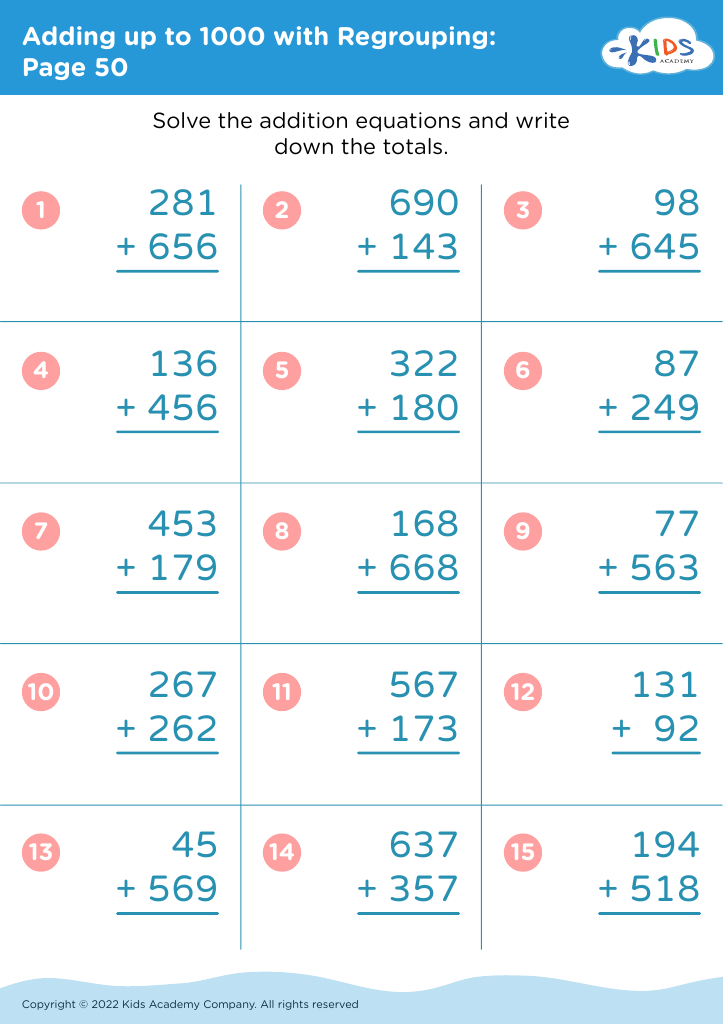
Adding up to 1000 with Regrouping: Page 50
Worksheet
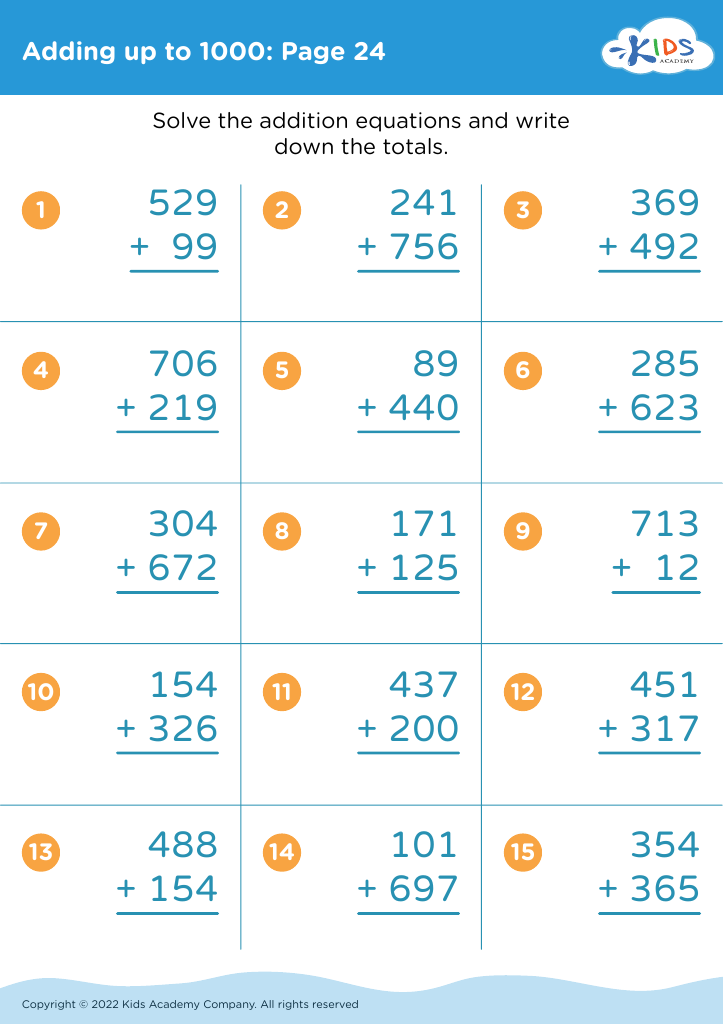
Adding up to 1000: Page 24

Adding up to 1000: Page 24

Adding up to 1000: Page 24
Worksheet
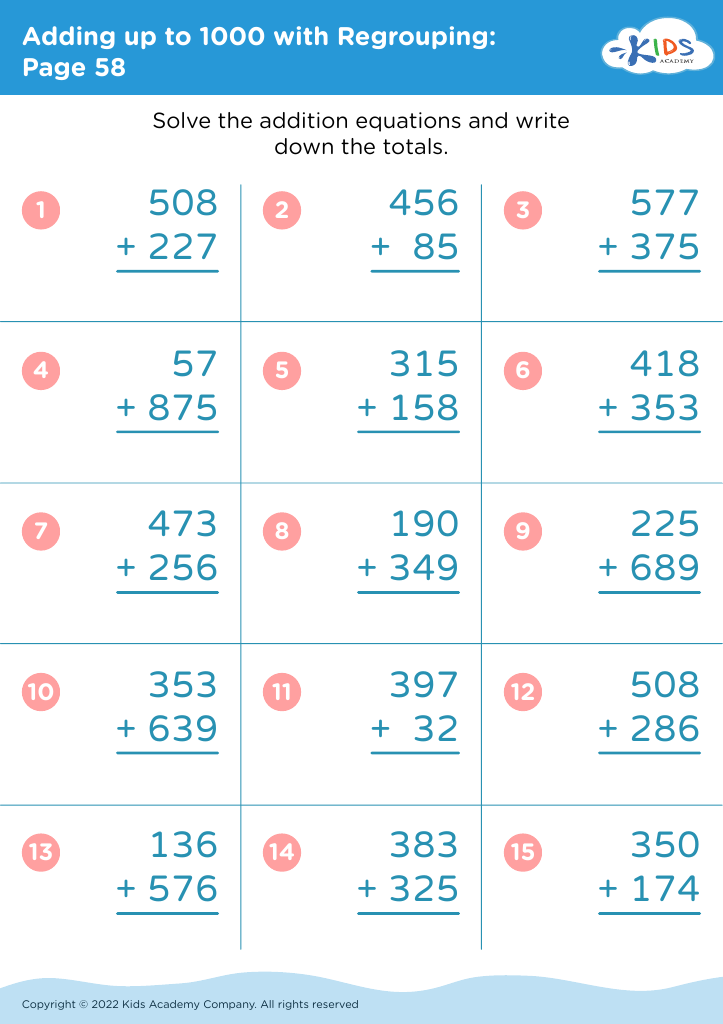
Adding up to 1000 with Regrouping: Page 58
Worksheet
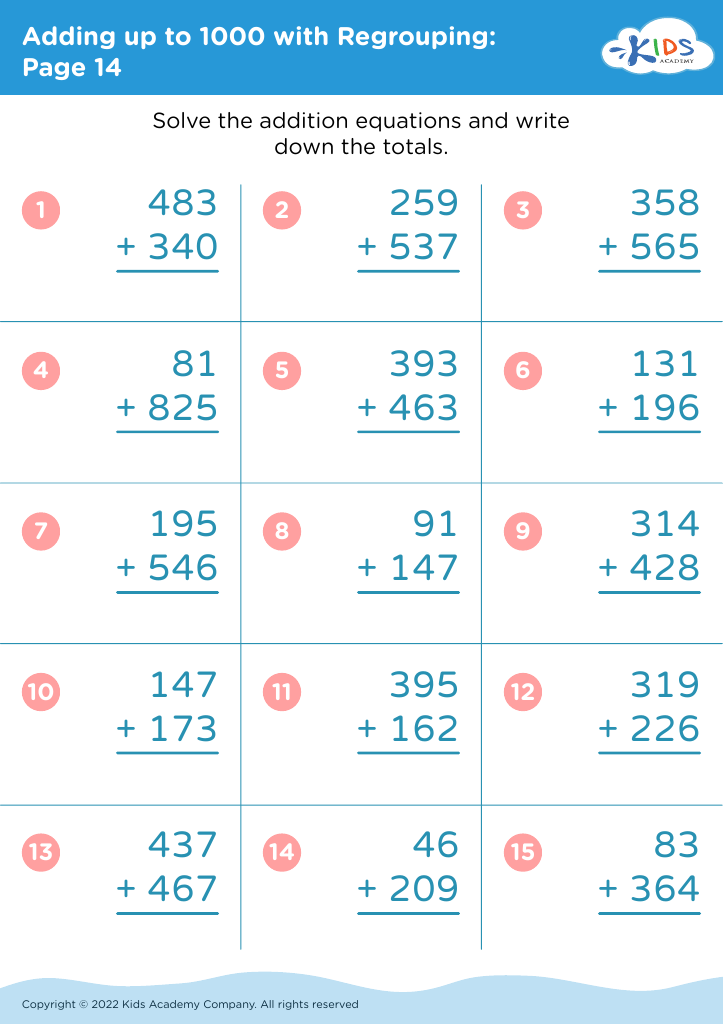
Adding up to 1000 with Regrouping: Page 14
Worksheet
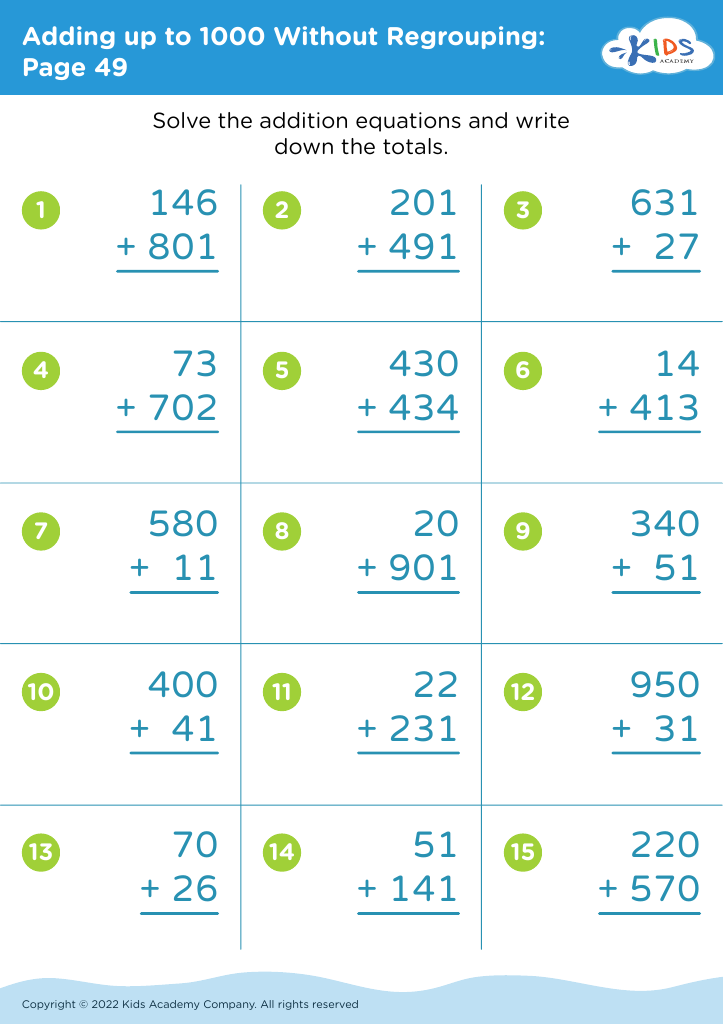
Adding up to 1000 Without Regrouping: Page 49
Worksheet
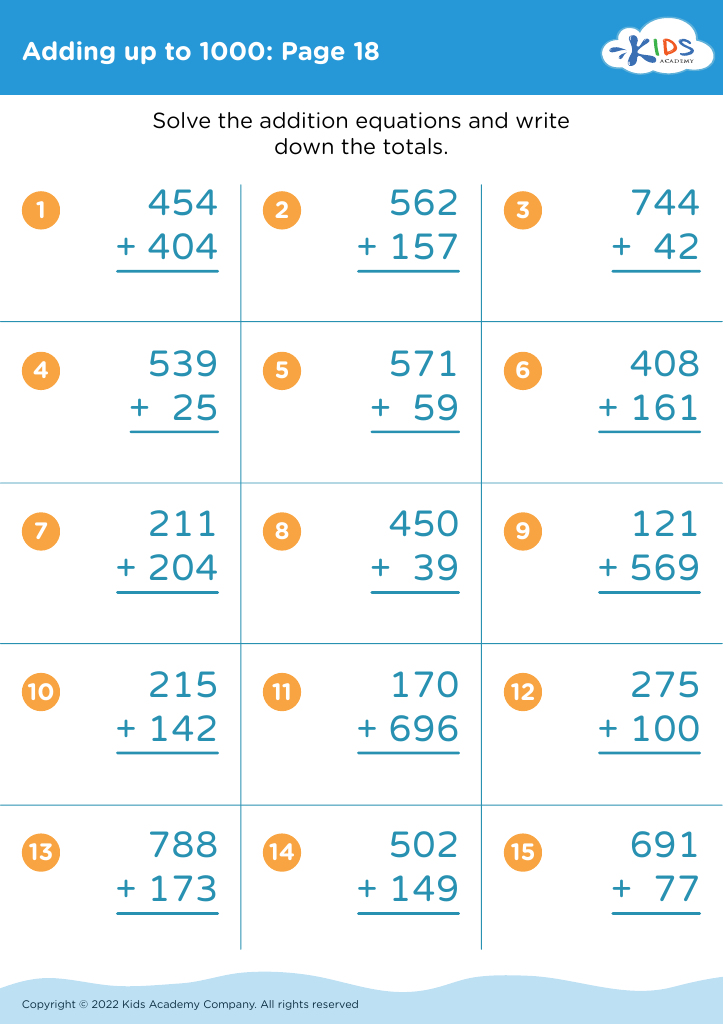
Adding up to 1000: Page 18

Adding up to 1000: Page 18

Adding up to 1000: Page 18
Worksheet
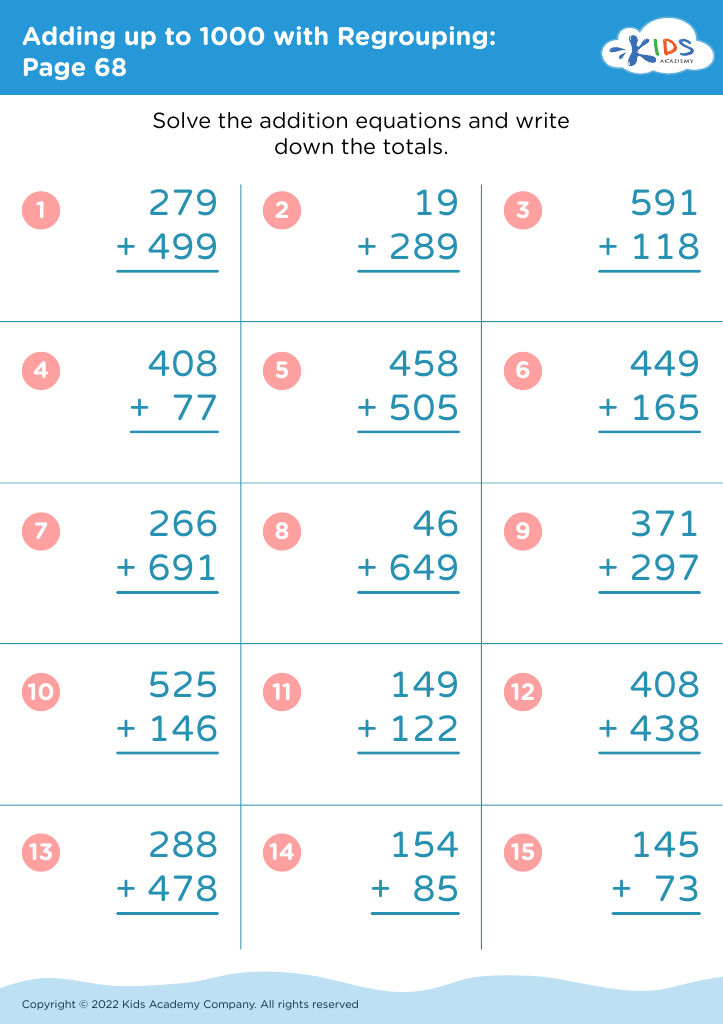
Adding up to 1000 with Regrouping: Page 68
Worksheet
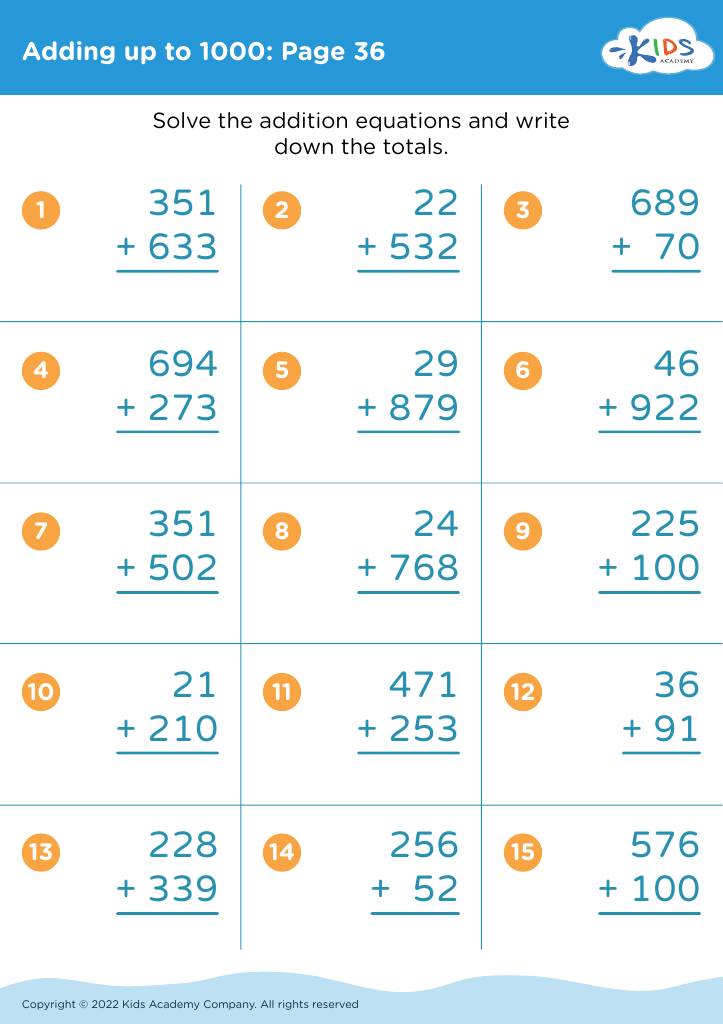
Adding up to 1000: Page 36

Adding up to 1000: Page 36

Adding up to 1000: Page 36
Worksheet
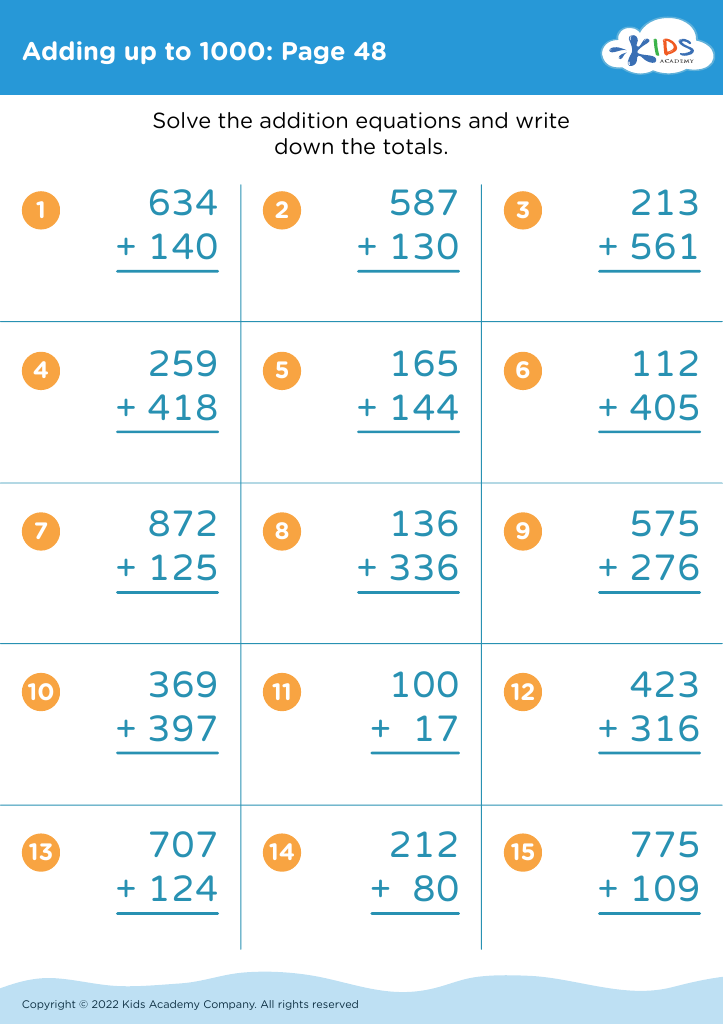
Adding up to 1000: Page 48

Adding up to 1000: Page 48

Adding up to 1000: Page 48
Worksheet


Fostering fine motor skills in grade 3 is crucial for parents and teachers because these skills support children’s overall development and success in both academic and daily activities. Fine motor skills include the precise movements of the hands and fingers necessary for tasks such as writing, cutting with scissors, and manipulating small objects. At the grade 3 level, students are expected to engage in more complex arithmetic operations, including addition and subtraction, which requires the ability to write numbers clearly and align them correctly. This is where well-developed fine motor skills come into play.

Improved fine motor control helps children neatly organize their arithmetic work, ensuring accuracy in their calculations. This precision is not just important for math; it spills over to other subjects where neat and legible handwriting is required. Enhanced fine motor abilities also contribute to their self-esteem, as they can perform tasks effectively and independently. Additionally, these skills facilitate the development of independence in personal care tasks such as buttoning clothes or tying shoelaces.

Parents and teachers investing in the fine motor skill development of third graders set the stage for academic success and improved confidence. Incorporating activities that improve dexterity, such as puzzles, art projects, and typing games, can be both enjoyable and beneficial for young learners.