Vocabulary development Grade 3 Addition & Subtraction Worksheets
3 filtered results
-
From - To
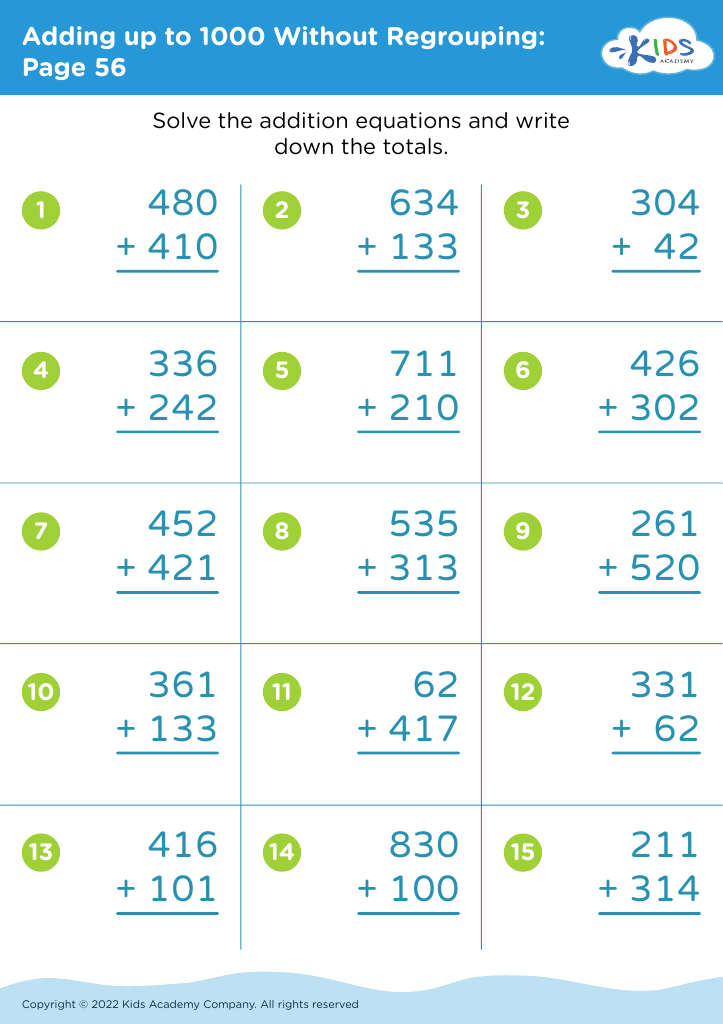
Enhance your third grader's math skills with our Vocabulary Development Addition & Subtraction Worksheets. Specifically crafted for grade 3, these engaging worksheets not only bolster computational skills but also build math vocabulary, ensuring students grasp key terms related to addition and subtraction. Tailored to support school standards, our printables offer a fun, educational experience that enhances understanding through practical exercises and vibrant illustrations. Perfect for supplementing classroom learning or at-home practice, these worksheets are designed to make math both enjoyable and accessible, paving the way for academic success in mathematics.
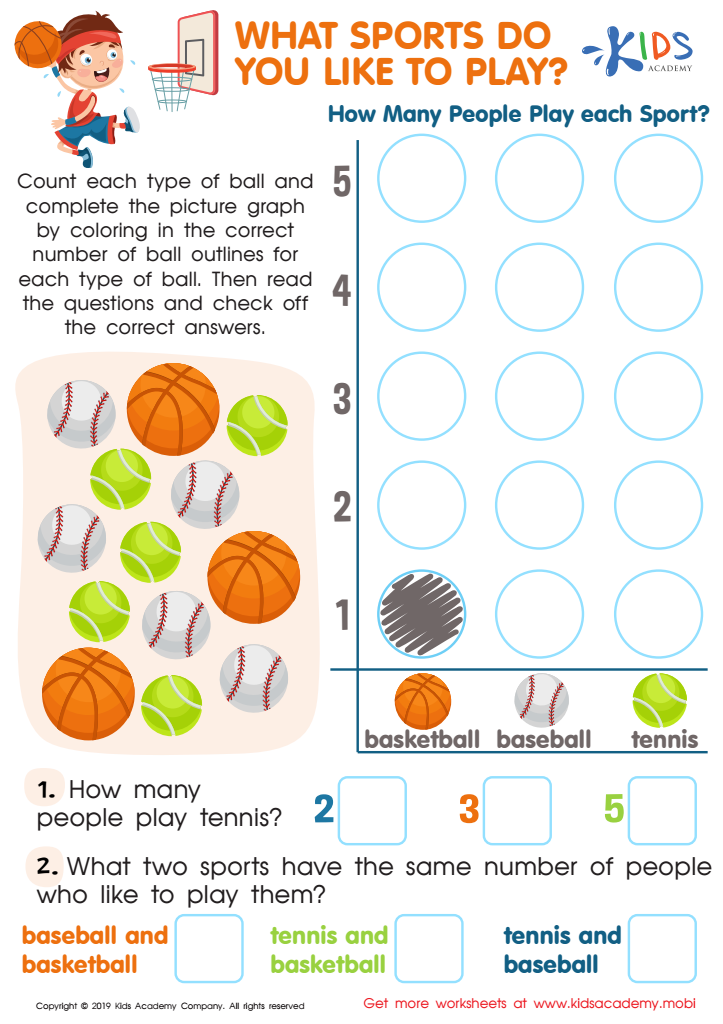
What Sports Do You Like to Play Worksheet
 Assign to My Students








Vocabulary development in Grade 3, especially within the context of addition and subtraction, is crucial for both parents and teachers to prioritize. At this stage, children are at a critical point in their cognitive and mathematical development. Building a strong vocabulary helps them grasp fundamental concepts more effectively, which lays the groundwork for more complex mathematical thinking in later years.
Understanding key terms like "sum," "difference," "addends," "total," "regrouping," and "borrowing" enables students to not only perform mathematical operations with confidence but also to understand word problems and instructions accurately. This linguistic foundation supports children in decoding questions, comprehending math problems, and devising solutions efficiently.
Moreover, vocabulary development bridges the gap between abstract concepts and practical application. By being familiar with specific terminology, children can transition from concrete counting to more abstract reasoning, enhancing their overall numeracy skills.
For parents, engaging in vocabulary-rich discussions about math enhances home support, making homework and everyday math scenarios less daunting. For teachers, well-structured vocabulary instruction fosters an inclusive classroom environment where all students, regardless of their background, can strive for and achieve better mathematical proficiency.
In short, a robust vocabulary sets Grade 3 students on a path to success not just in math, but in their overall academic journey.