Develop critical thinking Grade 3 Addition Worksheets
3 filtered results
-
From - To
Transform 3rd-grade math lessons with these engaging addition worksheets designed to develop critical thinking skills. Each worksheet from Kids Academy goes beyond simple calculations, encouraging young minds to solve problems creatively, identify patterns, and employ strategic thinking. Perfectly aligned with educational standards, these exercises integrate word problems and puzzles that make learning both fun and challenging. Watching students flourish with improved problem-solving abilities and confidence in math is immensely rewarding. Elevate your child’s learning experience with these essential tools, thoughtfully crafted to enhance critical thinking in addition practices. Start exploring the Kids Academy collection today!
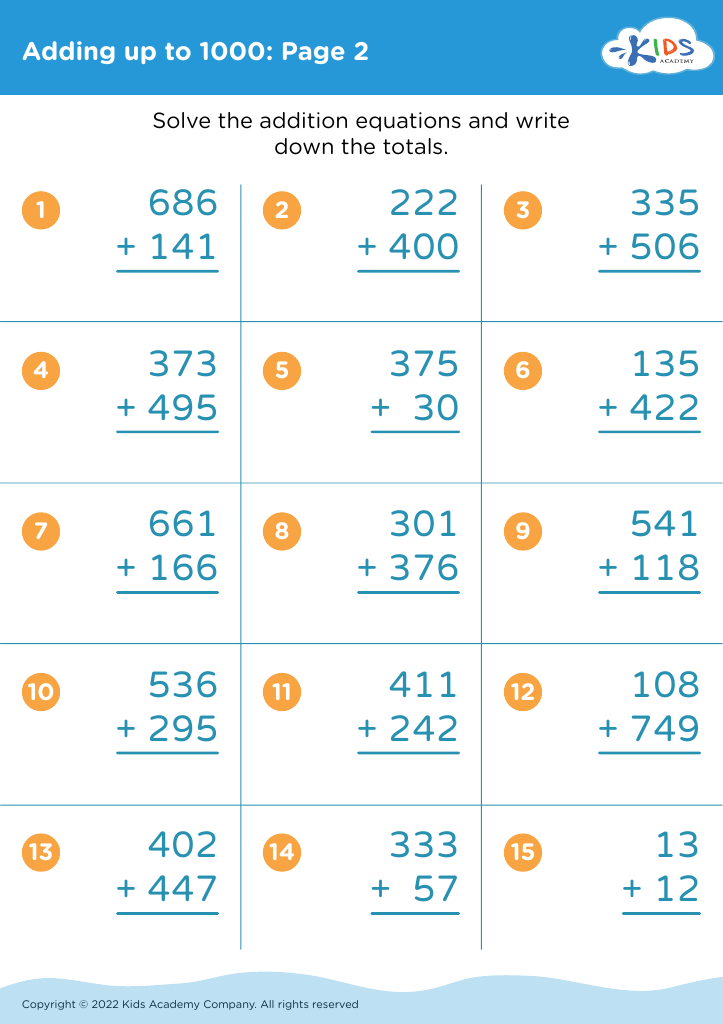
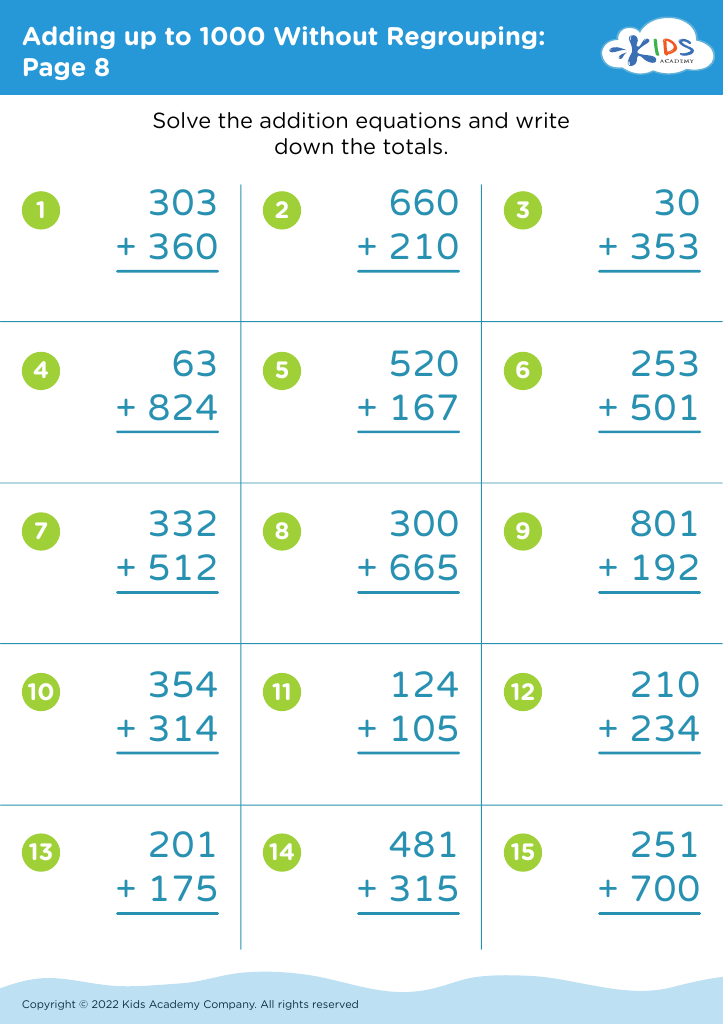
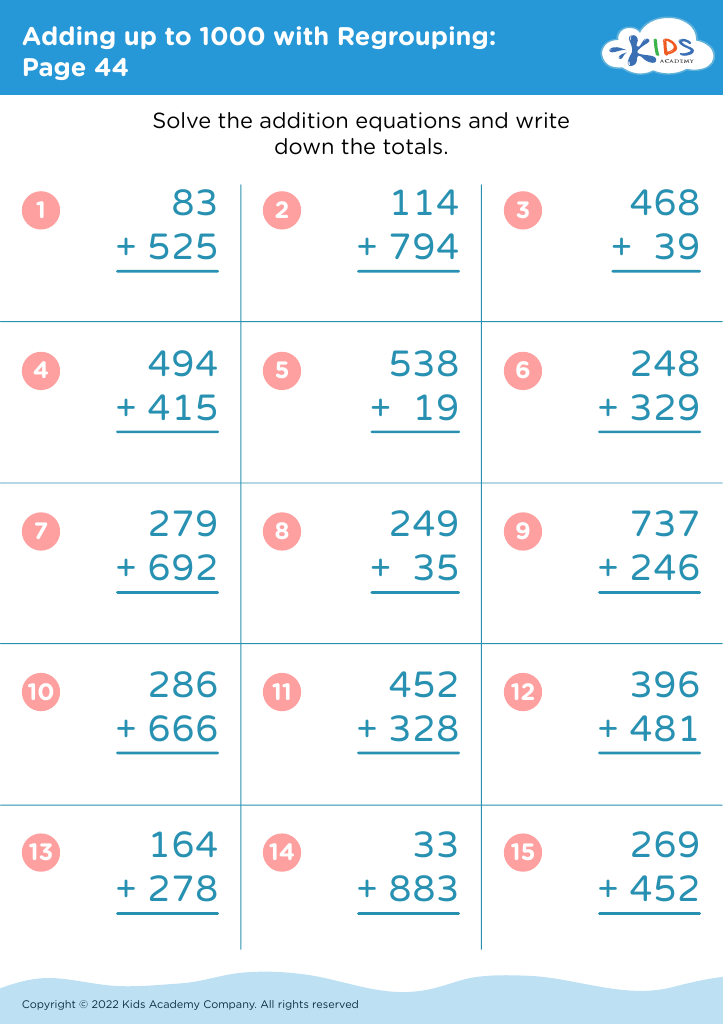








Developing critical thinking through Grade 3 addition is crucial for parents and teachers as it lays the foundation for future academic and life success. In early math education, critical thinking encourages children to not just memorize facts, but understand concepts and apply them in various contexts. By focusing on addition at this stage, children start to view numbers and problem-solving in a logical and analytical way.
For example, instead of merely recalling that 5+7=12, students learn to break down the problem (e.g., 5+7 as 5+5+2) and explore different strategies to arrive at the answer. This ability to decompose and recompose numbers enhances their flexibility with math concepts and prepares them for more advanced topics such as multiplication, division, and fractions.
Additionally, critical-thinking skills foster resilience and independence. Children become more comfortable tackling unfamiliar problems and are better equipped to explain their thinking, a skill useful not just in mathematics but across all subjects. Teachers and parents who emphasize thinking processes help cultivate curious, reflective, and versatile learners.
By engaging Grade 3 students in reasoning, pattern recognition, and problem-solving, caregivers and educators set the stage for lifelong learning and success. This strong foundation helps children approach challenges methodologically and confidently both inside and outside the classroom.