Developing math skills Grade 3 Addition Worksheets
3 filtered results
-
From - To
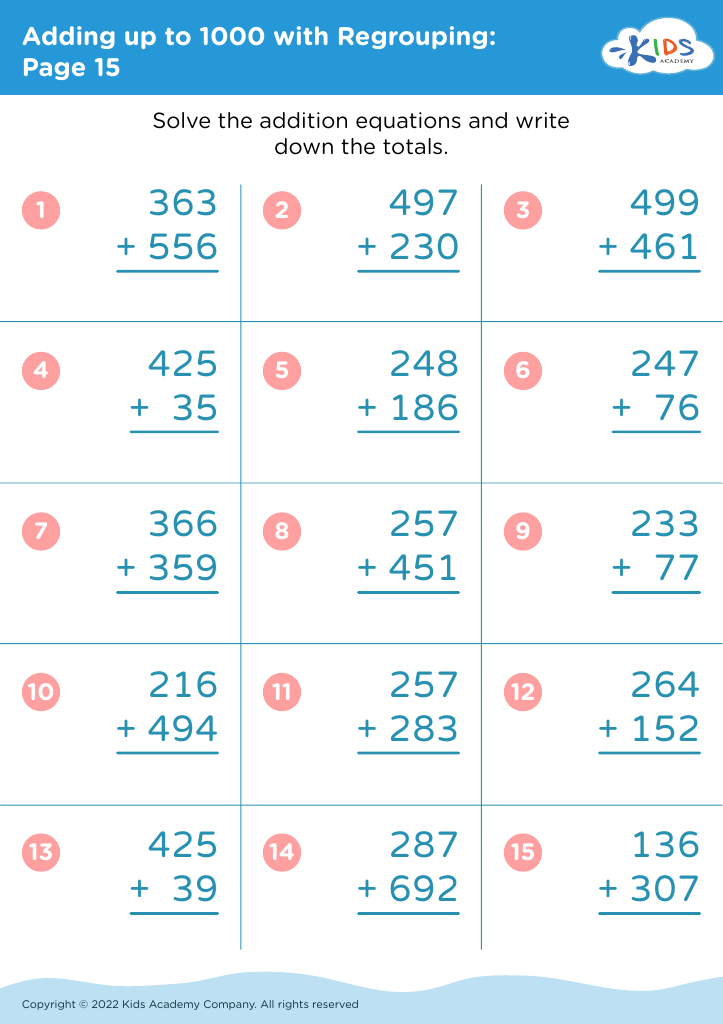
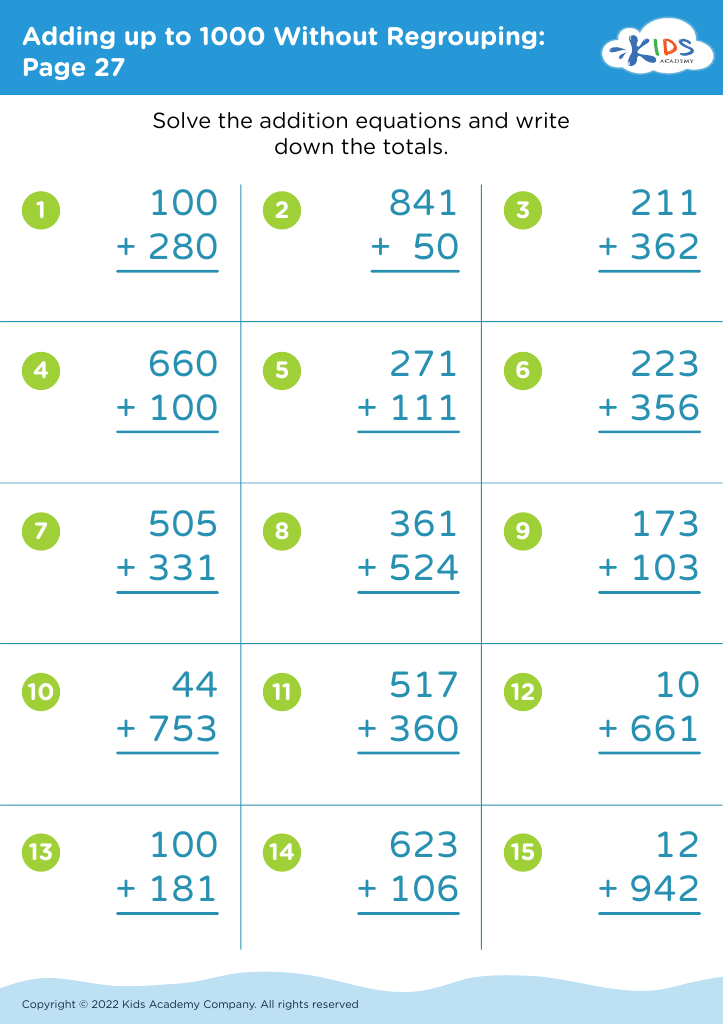
Enhance your third grader’s math success with our engaging "Developing Math Skills Grade 3 Addition Worksheets." Designed to strengthen addition skills, these worksheets provide a variety of activities that cater to different learning styles. From simple problem-solving exercises to fun word problems, students will improve their understanding of addition concepts and build confidence. Perfect for both classroom and home use, our worksheets help reinforce essential math skills through practice and repetition. Parents and teachers can easily track progress and ensure mastery of addition. Get ready to see your child excel in math with our creative and interactive resources!
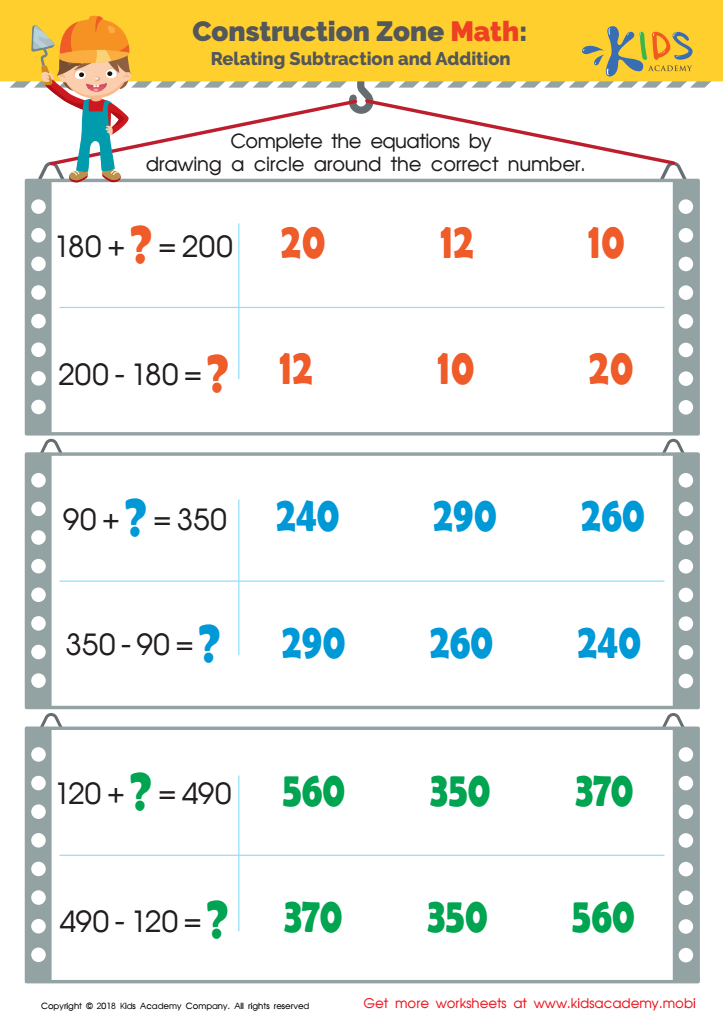
Construction Zone Math: Relating Subtraction and Addition Worksheet
 Assign to My Students








Developing math skills, particularly in addition for Grade 3 students, is crucial for various reasons. First and foremost, mastery of addition serves as the foundation for all future math concepts, including subtraction, multiplication, and division. If students struggle with basic addition, they may face challenges as they progress into more complex arithmetic and problem-solving.
Moreover, early math skills are linked to overall academic success. Research indicates that children who develop a solid understanding of basic math competencies in elementary school are more likely to excel in higher math courses later on. This early proficiency also enhances their logical thinking, encourages them to approach problems systematically, and strengthens their overall cognitive abilities.
Additionally, strong math skills can boost a child's confidence and self-esteem. As they grasp addition concepts, they become more willing to engage in classroom activities and participate in math discussions, helping to create a positive learning environment.
Finally, parents and teachers play integral roles in fostering these skills through engaging activities, practical applications, and positive reinforcement. When adults prioritize math development, they send a clear message about its importance, reinforcing the idea that math is both valuable and enjoyable, thus nurturing a lifelong appreciation for the subject.