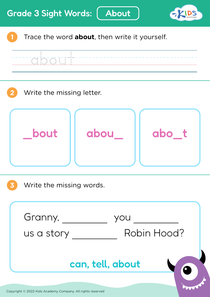
Fraction simplification Grade 3 Addition Worksheets
7 filtered results
-
From - To
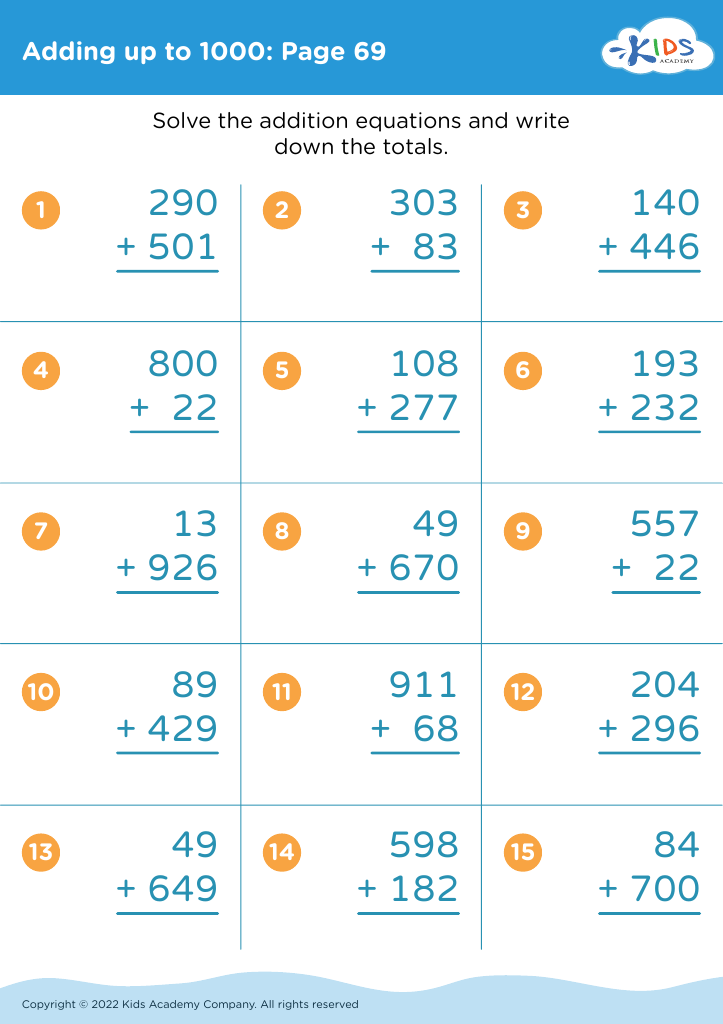
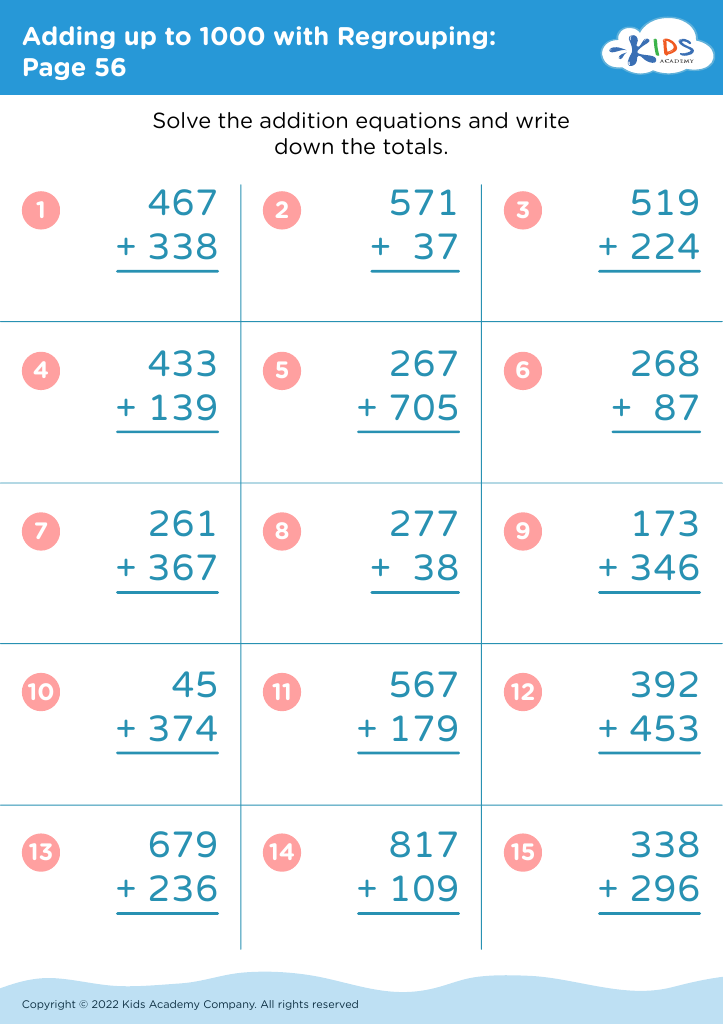
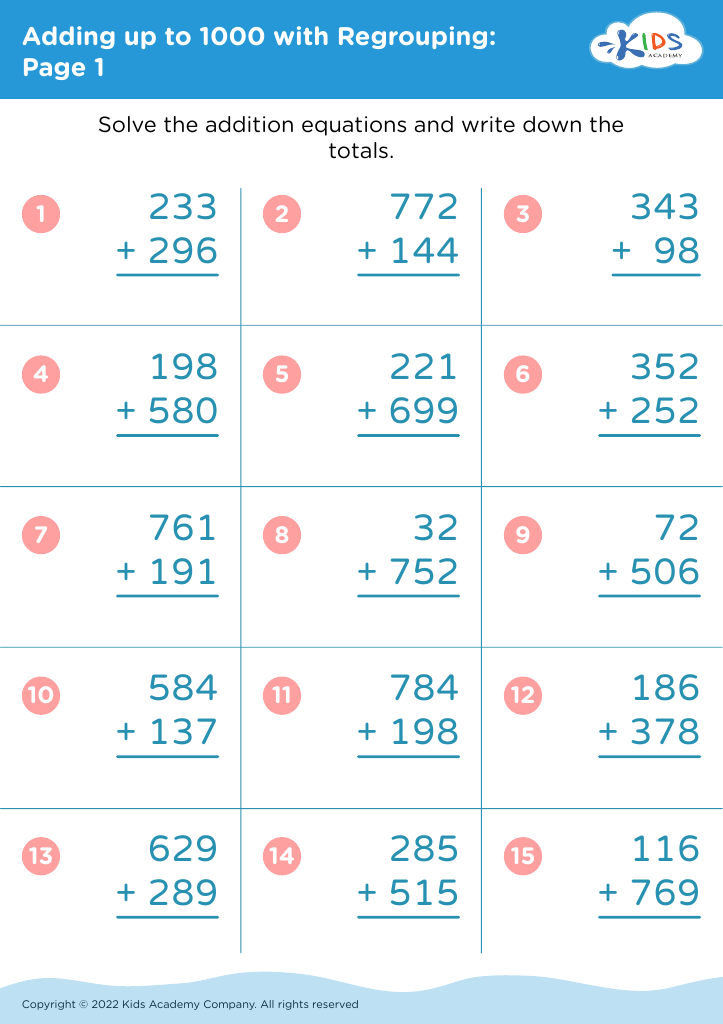
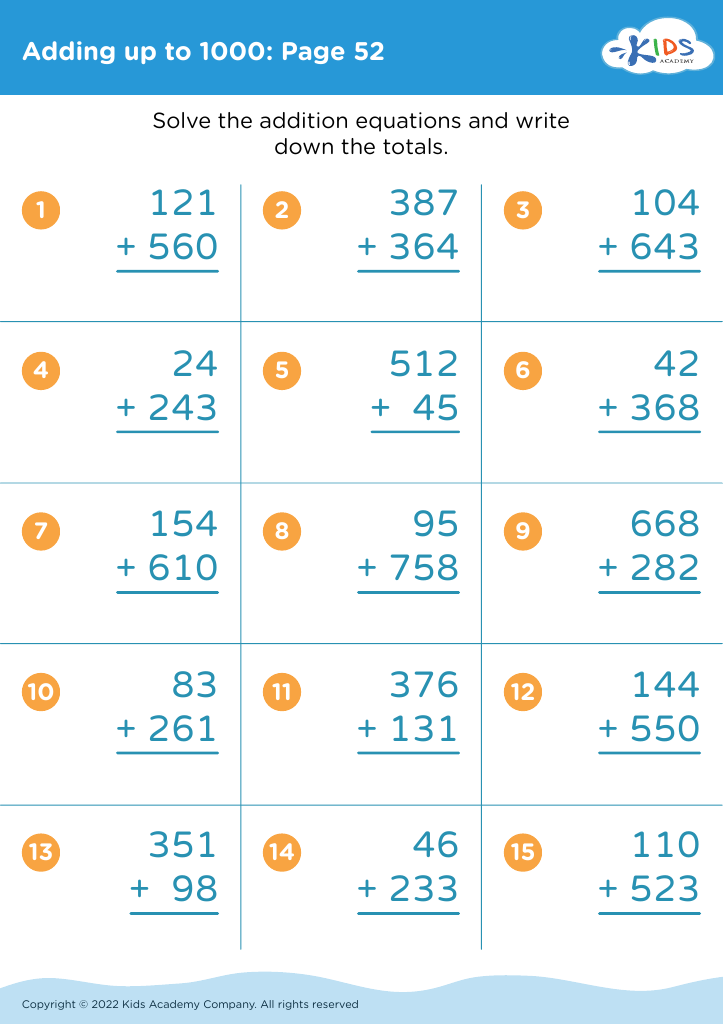
Welcome to our Fraction Simplification Grade 3 Addition Worksheets! Designed for young learners, these worksheets offer engaging activities that help students understand and master the concept of simplifying fractions while honing their addition skills. Crafted especially for third graders, each worksheet is packed with fun exercises that not only reinforce fraction knowledge but also encourage critical thinking. Students will practice identifying and reducing fractions to their simplest form, all while enjoying interactive and colorful designs. Perfect for classroom practice or at-home learning, these worksheets ensure a solid foundation in math that fosters confidence and competence. Let's make learning fractions fun!
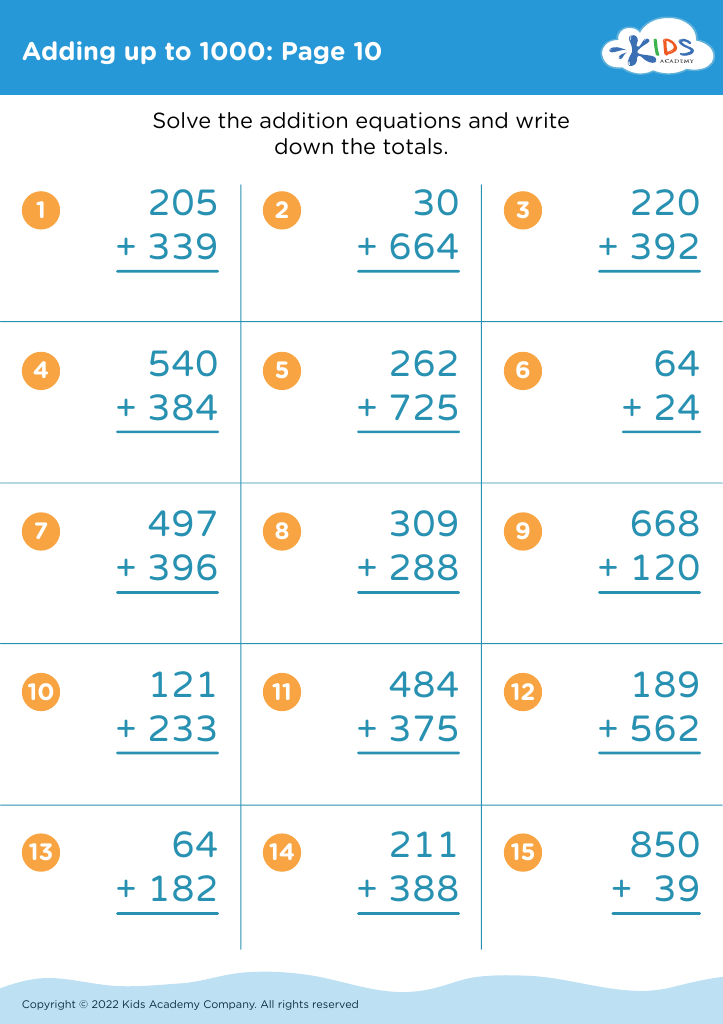
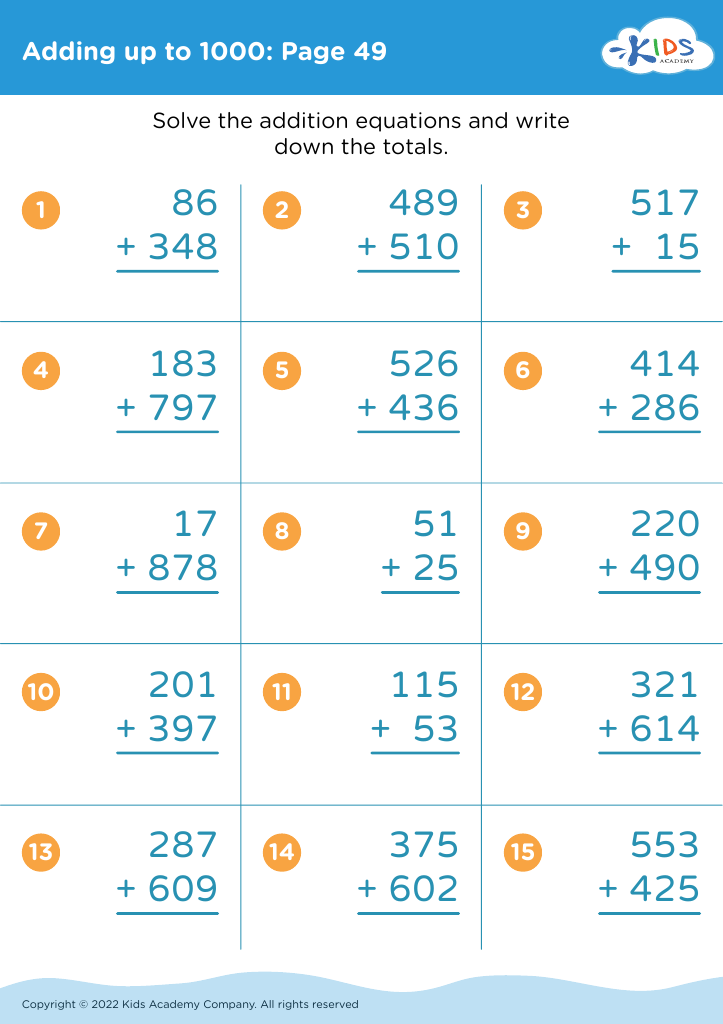
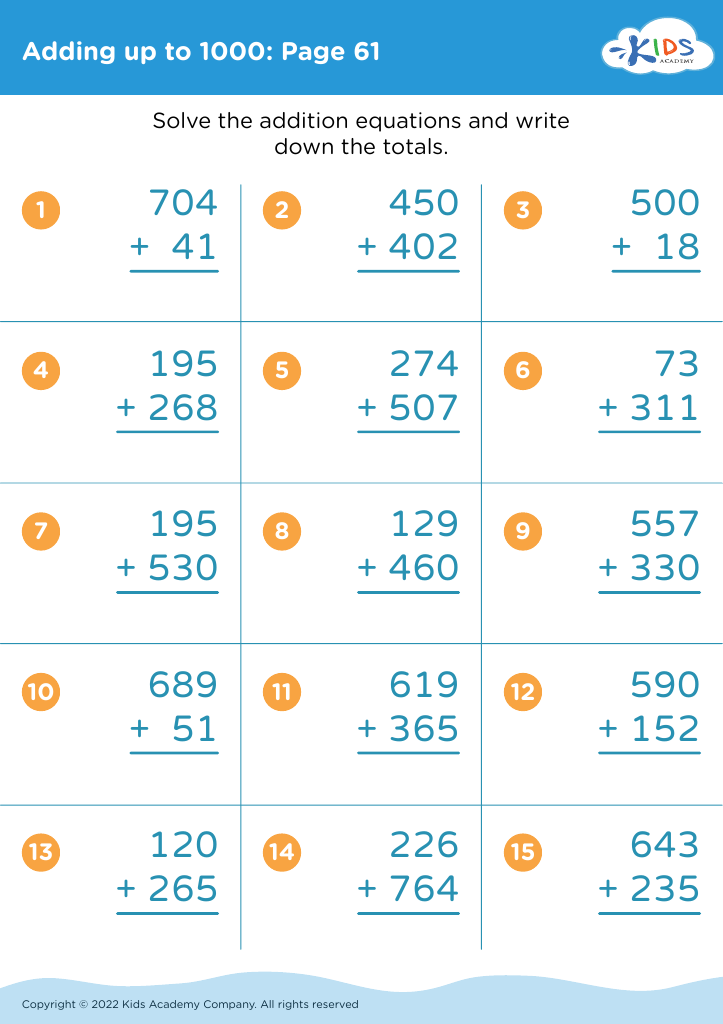







Parents and teachers should prioritize teaching fraction simplification and addition in Grade 3 because these skills lay the foundation for more complex mathematical concepts. Understanding fractions is crucial as it helps students make sense of parts of a whole, which they encounter in everyday life—whether sharing pizzas, measuring ingredients for baking, or dividing resources equitably.
Simplifying fractions aids students in grasping the concept of equivalency, encouraging them to recognize that different fractions can represent the same value. This is foundational when adding fractions, as it allows for a more straightforward combination of values, preventing errors stemming from misunderstanding sizes or proportions. Additionally, these skills enhance problem-solving abilities, critical thinking, and perseverance as children learn to manipulate numbers and realize the logic in arithmetic.
Moreover, when parents and teachers work together to emphasize the importance of fraction simplification, they foster a supportive learning environment. This collaboration can build students' confidence and interest in math, encouraging them to embrace challenges rather than shy away from them. Ultimately, mastering these concepts not only prepares students for future math lessons but also equips them with life skills essential for logical reasoning and decision-making.