Practice writing numbers Grade 3 Addition Worksheets
3 filtered results
-
From - To
Enhance your child's math skills with our "Practice Writing Numbers Grade 3 Addition Worksheets." Specifically designed for third graders, these engaging worksheets provide plenty of practice with addition problems, helping students to not only work on their arithmetic but also refine their number writing skills. With various fun and educational activities, these printable worksheets make learning both enjoyable and effective. Ideal for extra practice at home or additional classroom resources, they cater perfectly to improving numeral legibility and boosting confidence in math. Give your child the tools they need to succeed with these top-quality addition worksheets!
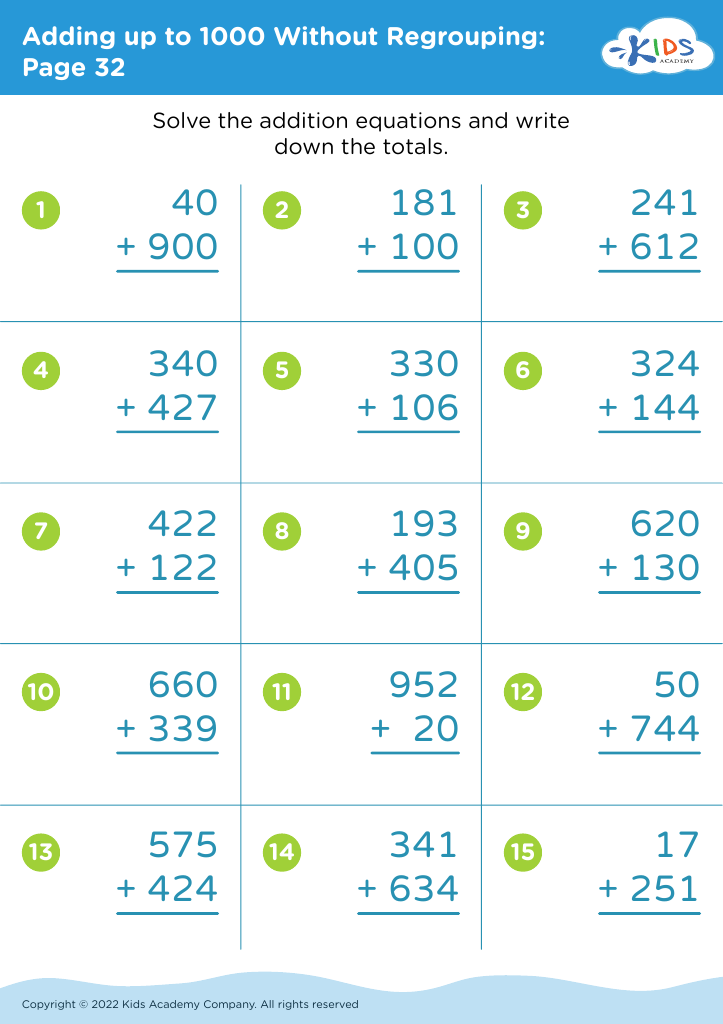
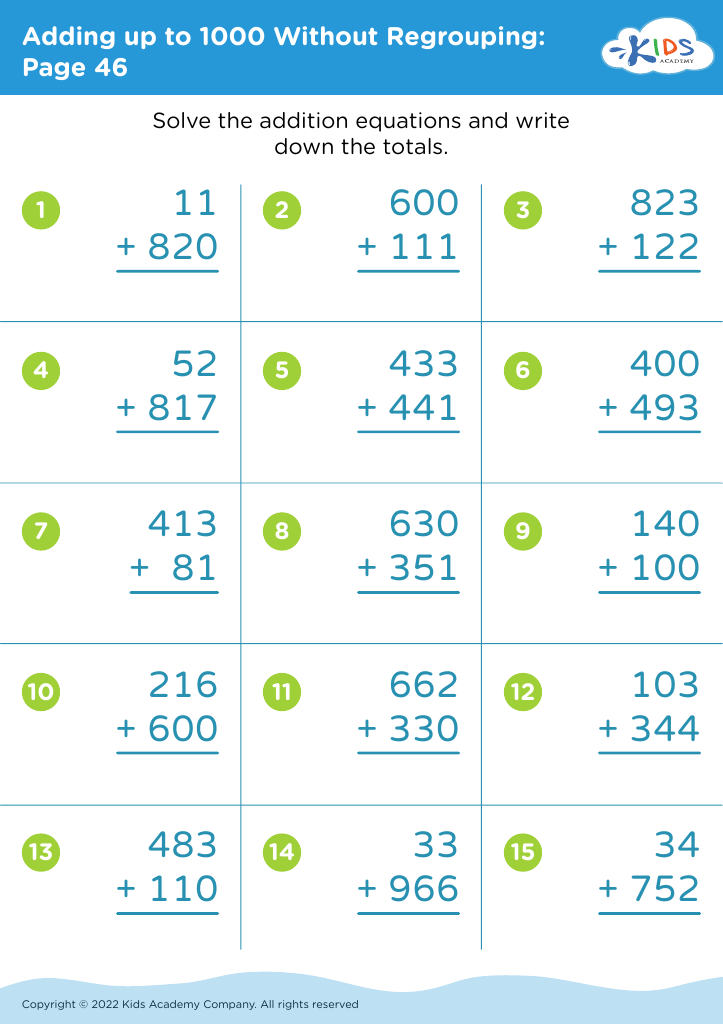
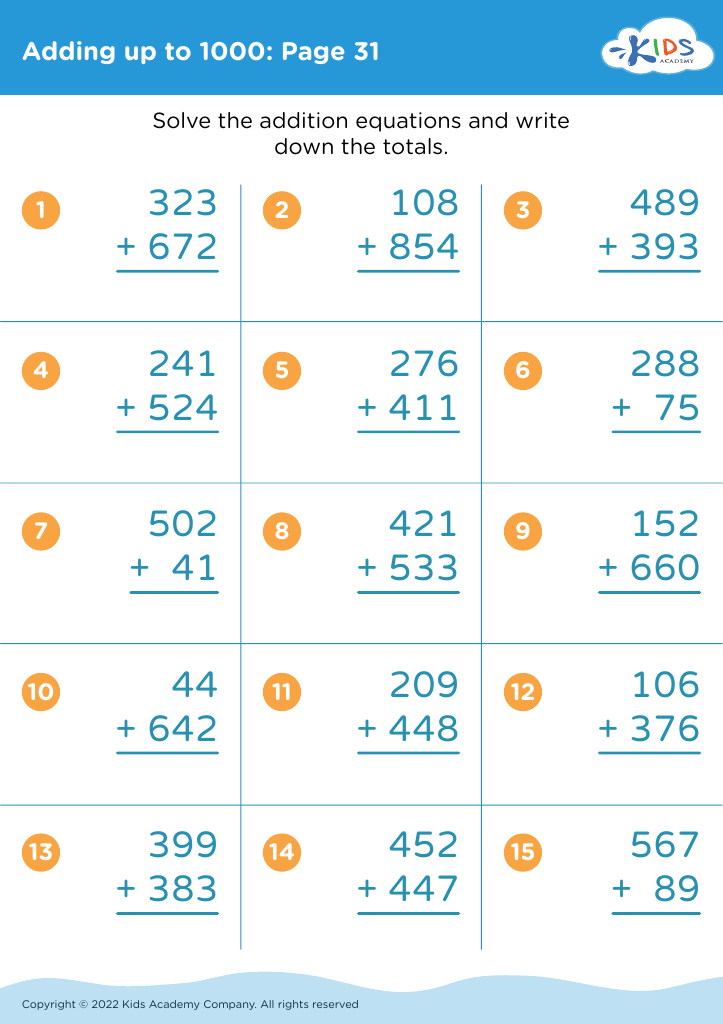








Helping children practice writing numbers and tackle Grade 3 addition problems benefits their cognitive and academic growth in several crucial ways. Firstly, solidifying number writing skills ensures students can clearly and accurately communicate mathematical ideas, reducing errors that might arise from illegible handwriting. When children refine this skill, it bridges classroom learning with real-world tasks, like reading prices or writing phone numbers.
Furthermore, mastering addition at this stage lays the groundwork for more complex arithmetic operations. Addition is a foundational skill that paves the way for understanding subtraction, multiplication, division, and a variety of advanced mathematical concepts. Practicing addition helps students improve mental math abilities, foster number sense, and build confidence in their math skills.
By reinforcing these competencies, parents and teachers cultivate a strong mathematical foundation, leading to better problem-solving skills, analytical thinking, and success in future academic endeavors. This practice promotes patience, concentration, and a growth mindset, essential soft skills for lifelong learning. Encouraging consistent practice also fosters a positive attitude towards math, transforming what might be considered a challenging subject into an engaging and rewarding experience. Therefore, investing time and effort into these practices at an early stage can greatly contribute to a child's overall educational journey.