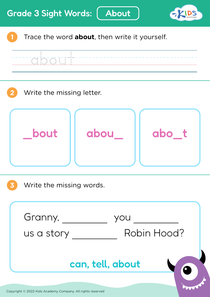
Recognize patterns Grade 3 Addition Worksheets
6 filtered results
-
From - To
Our "Recognize Patterns Grade 3 Addition Worksheets" are specially designed to enhance your child's understanding of numerical patterns and boost their math skills. These engaging worksheets help third graders identify and apply addition patterns, fostering both critical thinking and problem-solving abilities. With a variety of exercises that present addition in fun and interactive ways, youngsters will enjoy learning while progressing at their own pace. Perfect for classroom use and at-home practice, these printable worksheets make mastering addition patterns easy and entertaining. Unlock your child's mathematical potential with our thoughtfully crafted resources today!
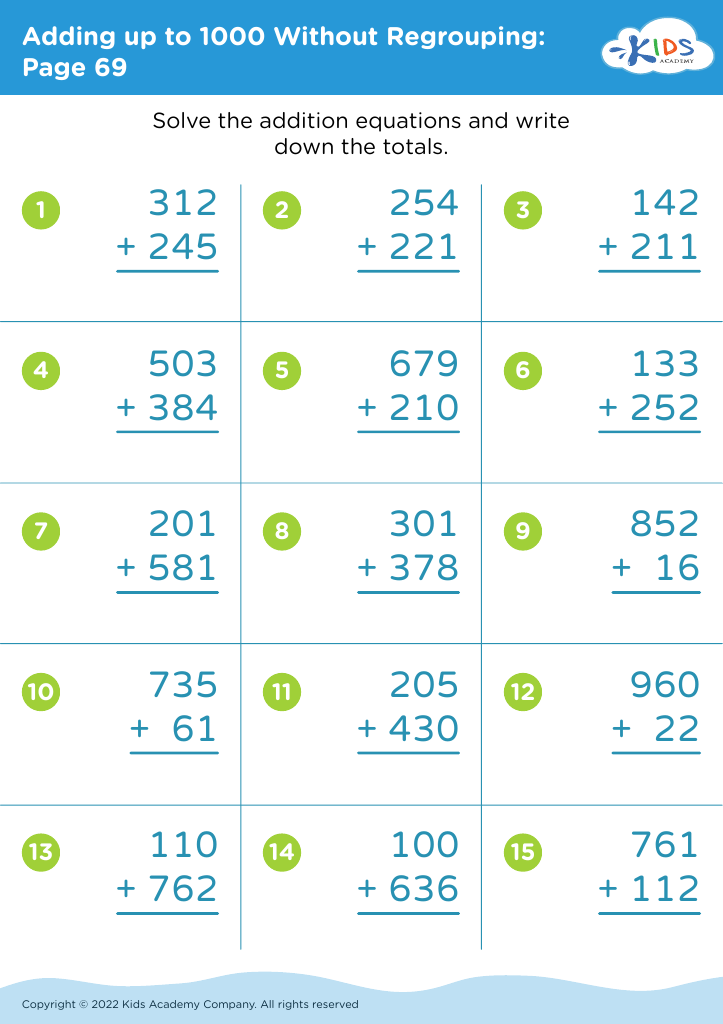
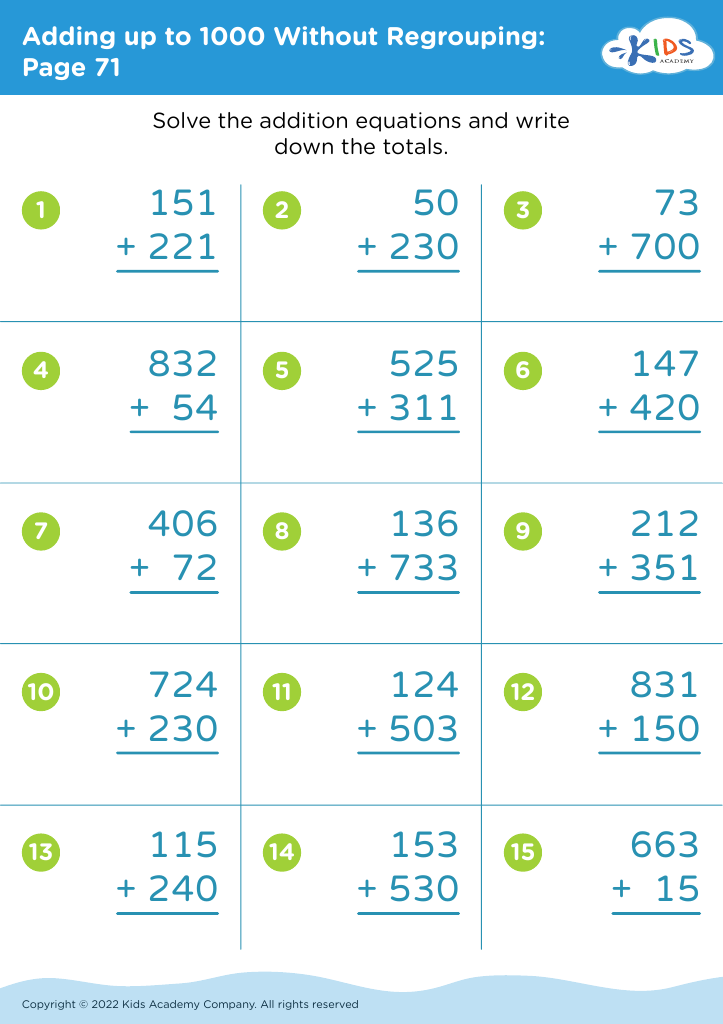
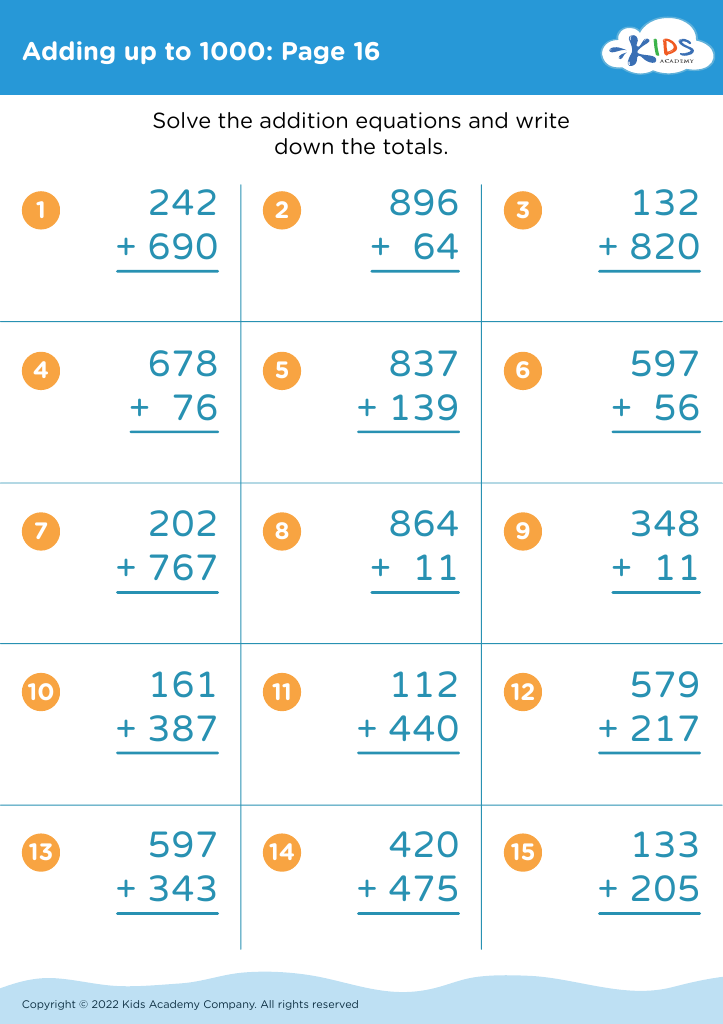
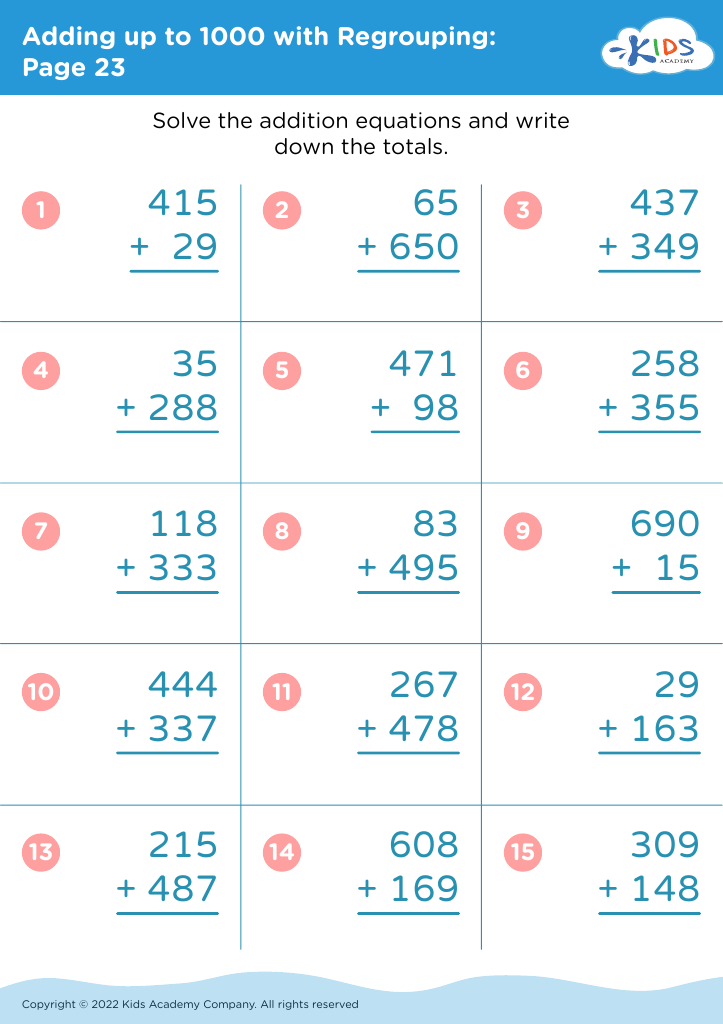
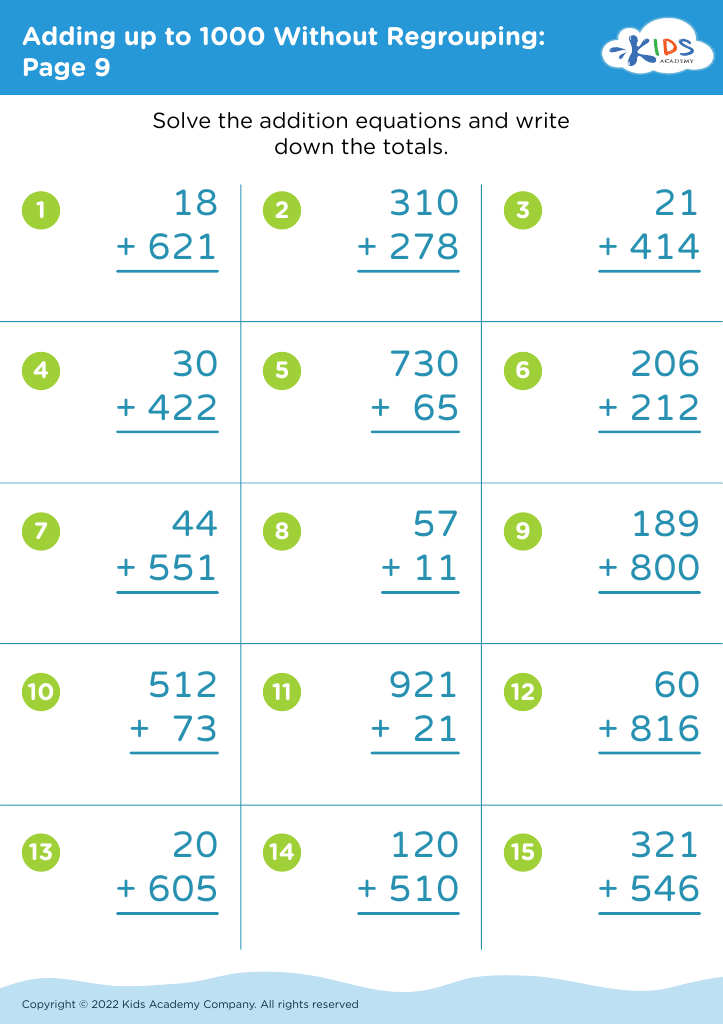
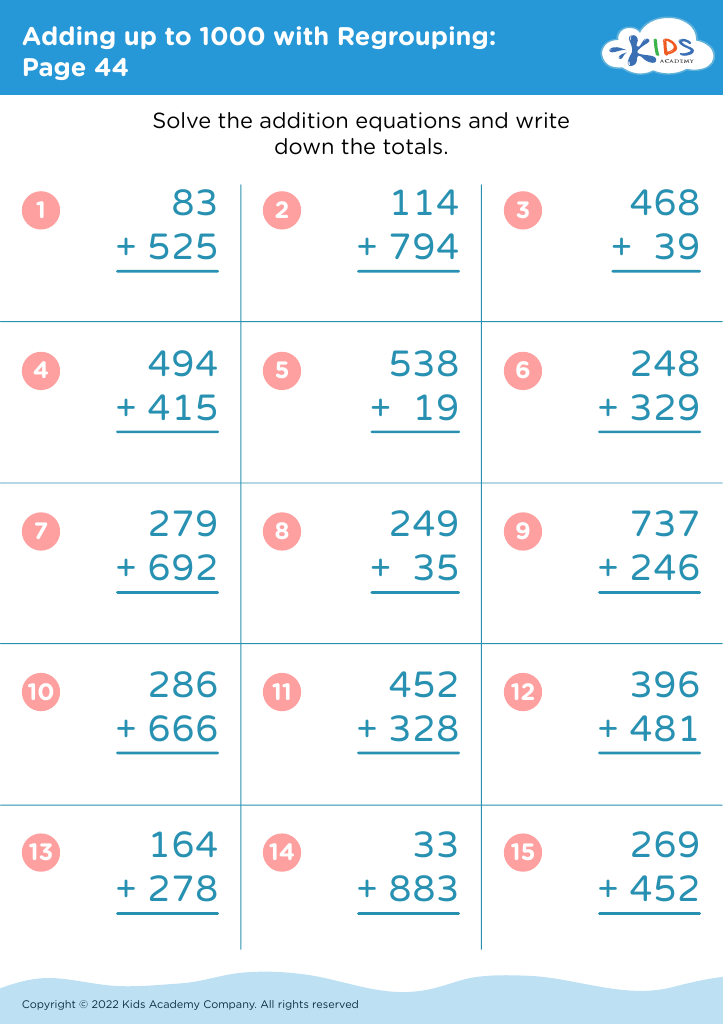








Recognizing patterns in third-grade addition is a crucial foundational skill for young learners. Patterns help children understand mathematical concepts more deeply and improve their problem-solving abilities. When teachers and parents prioritize pattern recognition, they aid in the child's cognitive development and analytical thinking.
For instance, spotting patterns in addition, such as the sequences in skip counting or even sums, can simplify the learning process. Recognizing these patterns enables students to perform mental math more effectively, reducing their reliance on counting fingers or physical objects. It makes math feel less intimidating and more manageable.
Moreover, understanding patterns fosters a sense of predictability and order, which is immensely reassuring for children. It also paves the way for more advanced mathematics topics such as multiplication, division, and algebra. Pattern recognition in math can even improve a child’s ability in other subjects that require logical thinking, such as science and computer programming.
Involving parents in recognizing and encouraging these patterns can turn learning into a collaborative and enjoyable activity, strengthening the bond between parent and child. Over time, children will develop a more positive attitude toward math, seeing it as a series of fascinating puzzles rather than tedious tasks. This engagement and enthusiasm will undoubtedly lead to better performance both inside and outside the classroom.