Recognizing Patterns Grade 3 Addition Worksheets
6 filtered results
-
From - To
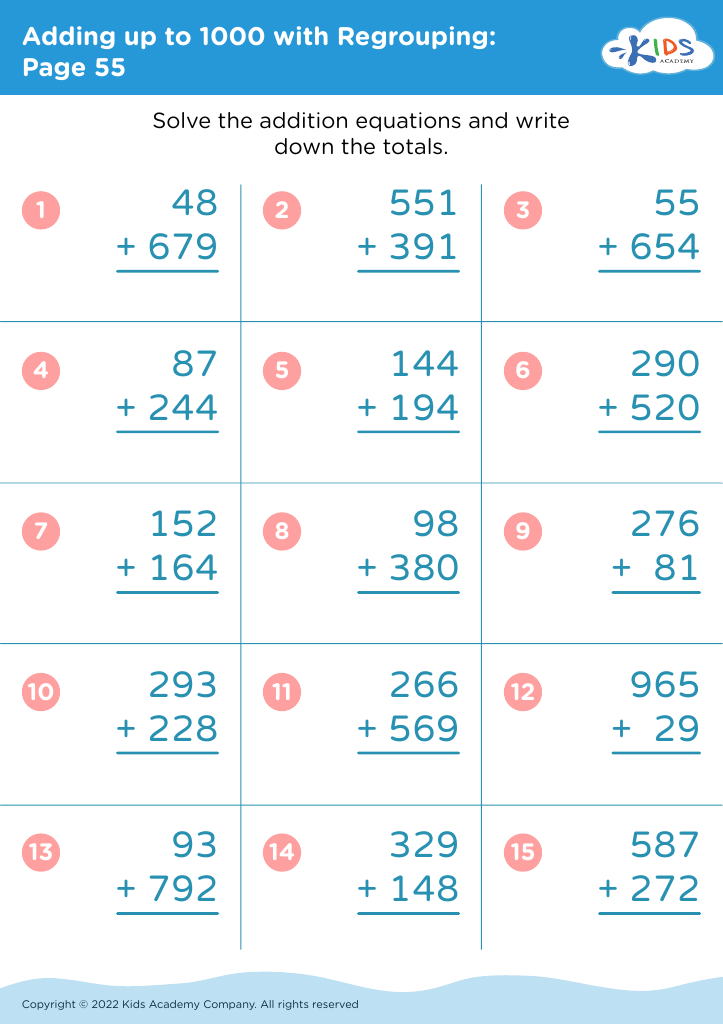
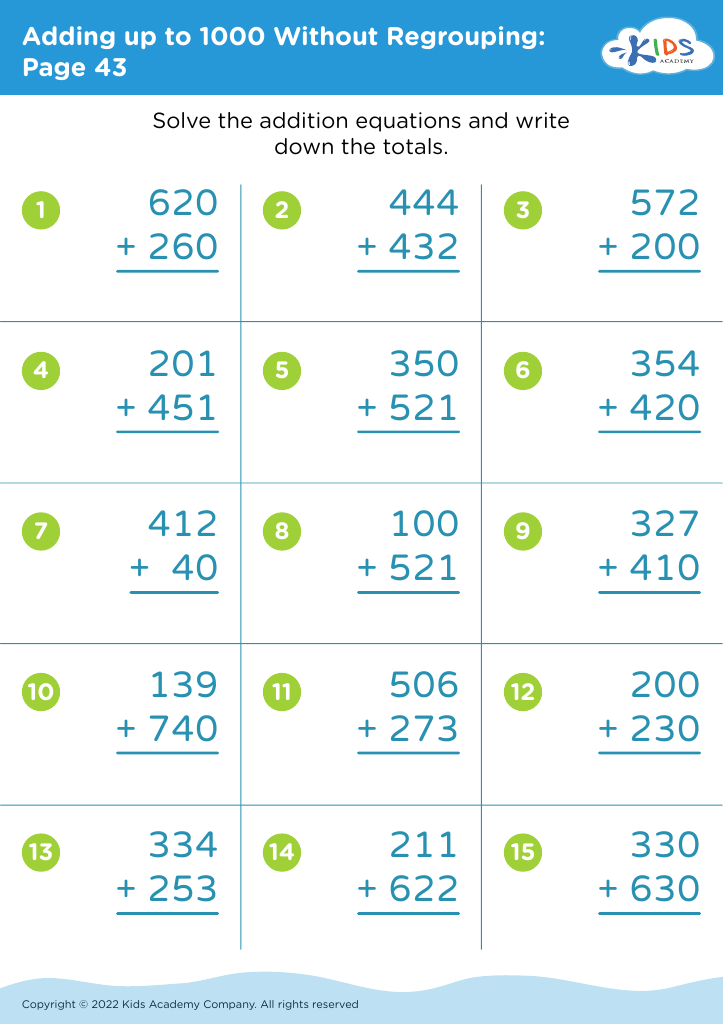
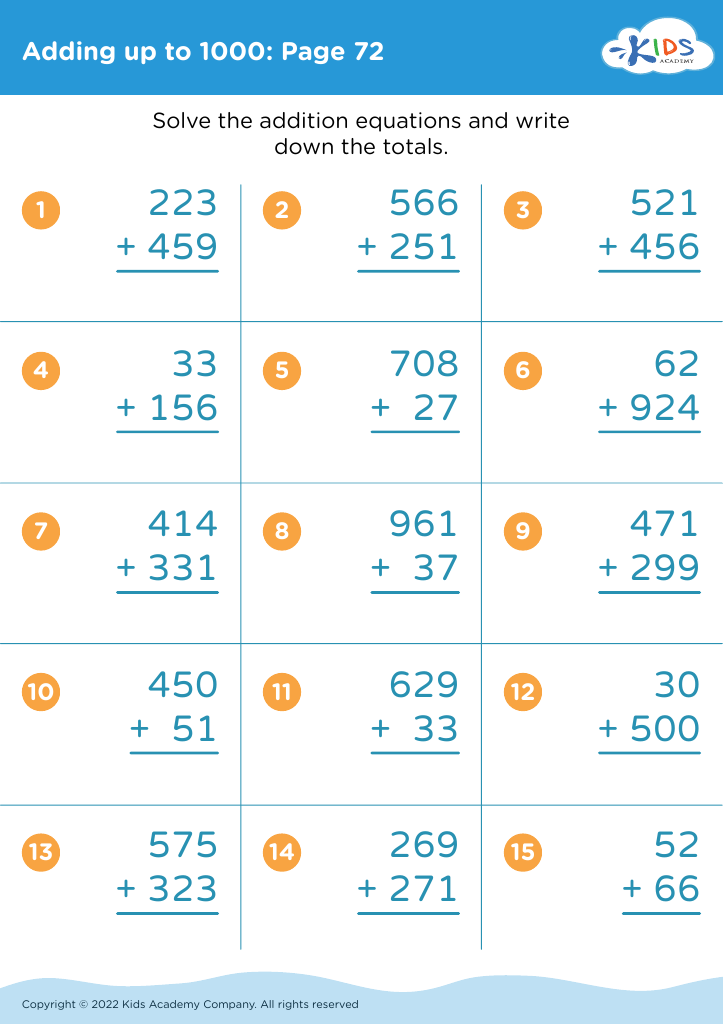
Explore our engaging Recognizing Patterns Grade 3 Addition Worksheets, designed to enhance students' mathematical skills through pattern identification. These worksheets encourage third graders to recognize and analyze numerical patterns, improving their addition abilities while making learning fun! Each worksheet features diverse exercises that let students practice adding numbers while uncovering patterns, fostering critical thinking and problem-solving skills. Perfect for in-class use or homework, these resources help build a strong foundation for future math concepts. Download now to boost your child’s understanding of addition through enjoyable and interactive activities that align with educational standards!
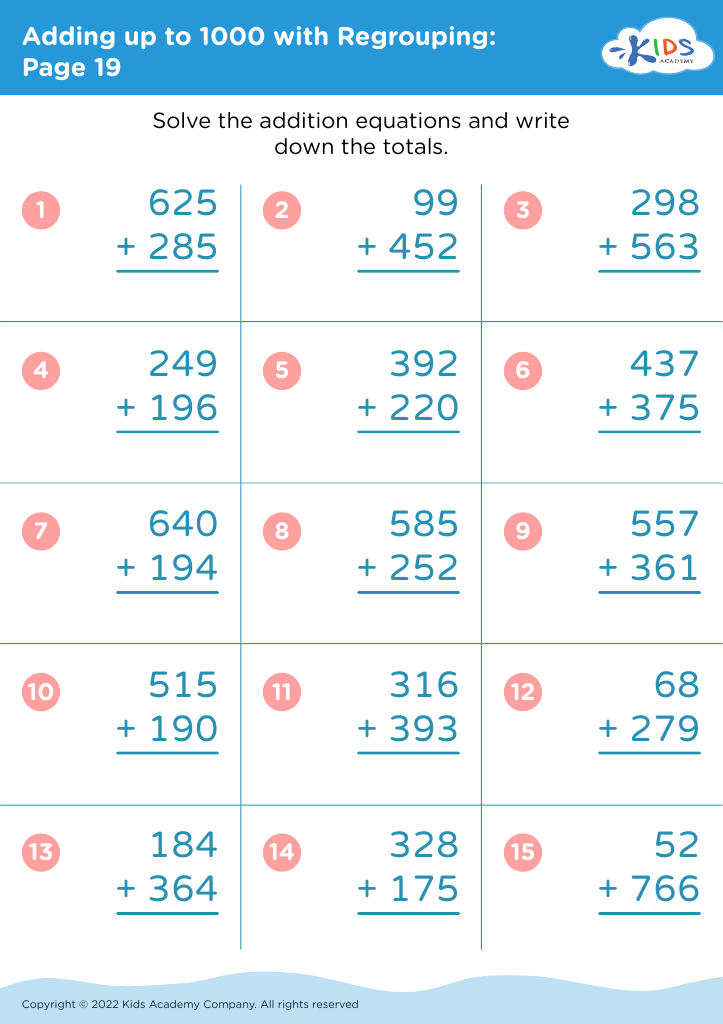
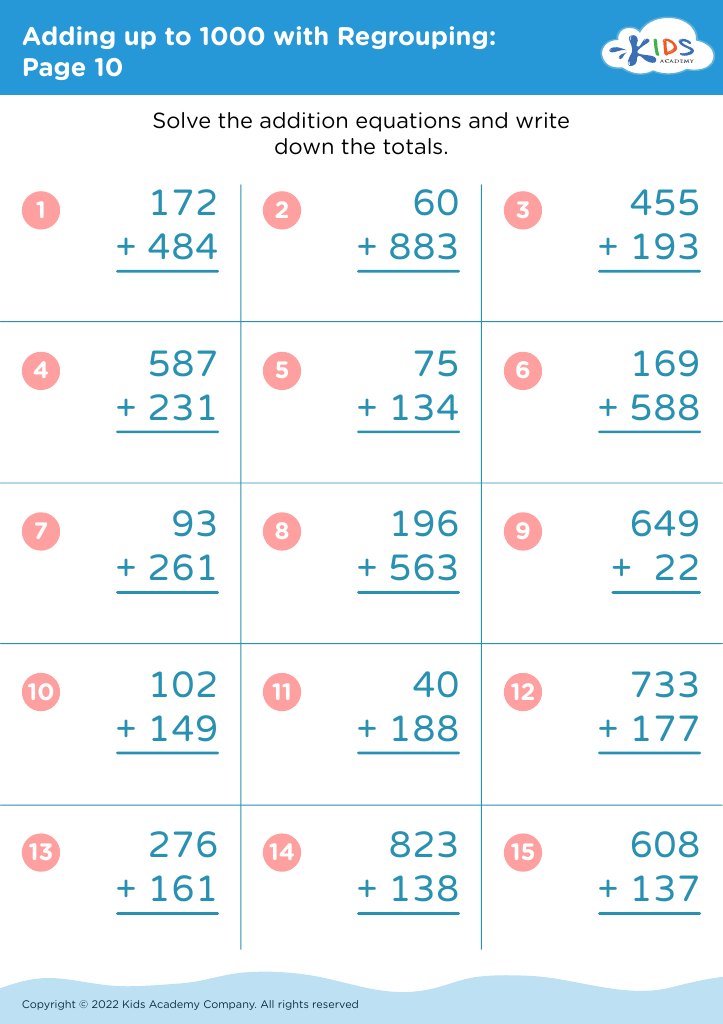
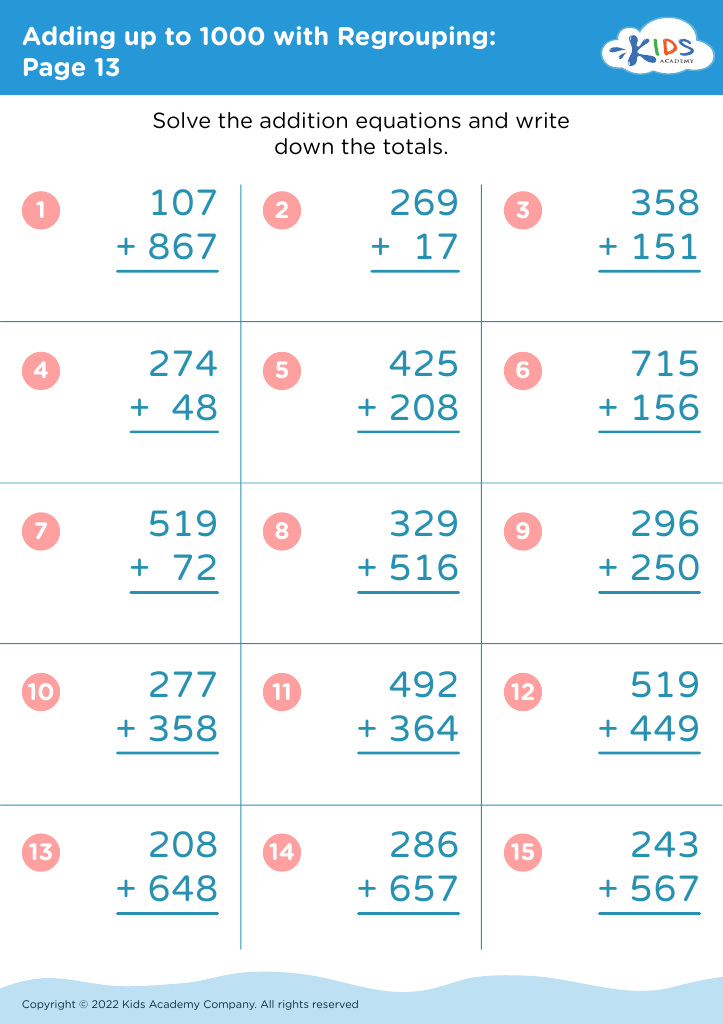








Recognizing patterns in addition is a crucial mathematical skill for third graders, and both parents and teachers play a significant role in fostering this understanding. At this stage, students start to build a foundation for more complex mathematical concepts and problem-solving abilities. When children recognize patterns in addition—for example, understanding that adding two whether the numbers are increased by two, the sum increases consistently— they enhance their ability to predict outcomes and simplify calculations.
Developing pattern recognition skills also promotes critical thinking, as it encourages students to make connections between numbers and operations, leading to a deeper understanding of mathematics. For instance, they can identify patterns in counting, number sequences or even in physical objects, encouraging logic and reasoning.
Furthermore, engaging parents in this process allows for consistent reinforcement of these concepts at home, improving confidence and fluency in math. Moreover, teachers benefit by integrating pattern recognition into their lessons, making learning more interactive and engaging, thus catering to diverse learning styles.
Ultimately, caring about Recognizing Patterns in Grade 3 Addition equips students with essential skills that will serve them not only in math but across various subjects as they progress in their education.