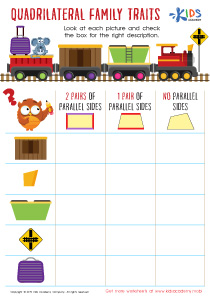
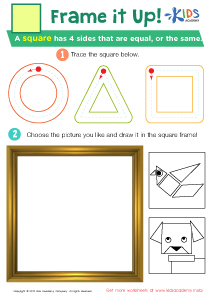
Shape Recognition Grade 3 Area and Perimeter Worksheets
3 filtered results
-
From - To
Enhance your third-grade students' math skills with our Shape Recognition worksheets focused on area and perimeter! These engaging and interactive resources guide young learners in identifying various shapes while mastering key concepts of measuring areas and calculating perimeters. Each worksheet is designed to promote critical thinking and problem-solving skills through fun, hands-on activities that align with grade-level standards. Perfect for in-class assignments or at-home practice, our worksheets help students build confidence in geometry while fostering a deeper understanding of shapes and their properties. Explore our collection today and support your students on their journey to mathematical success!
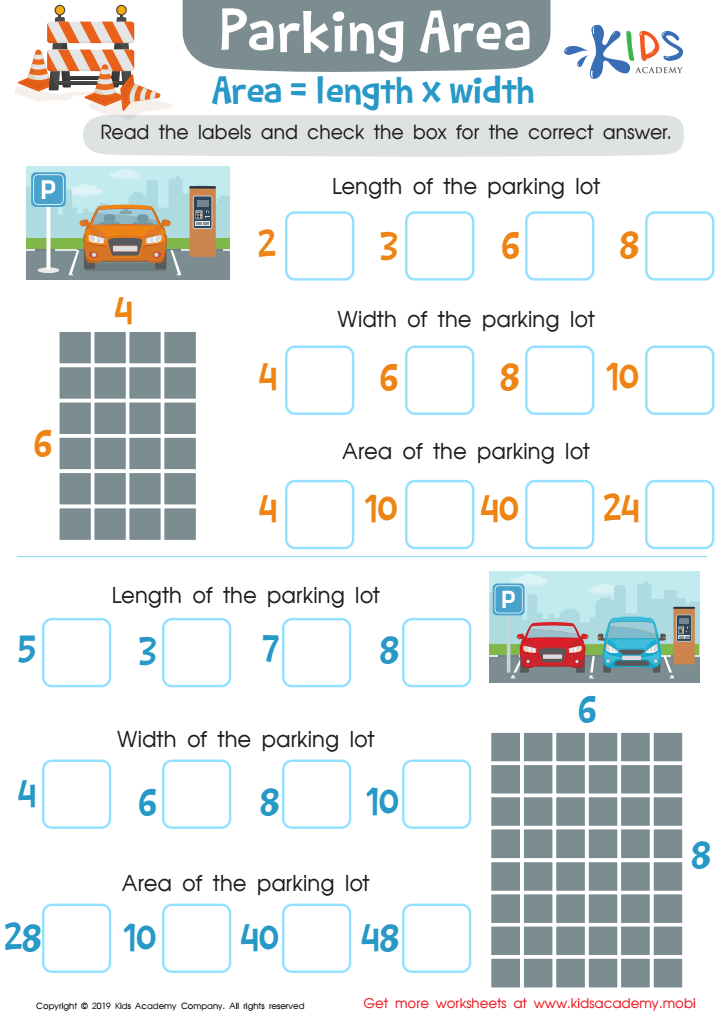
Parking Area Worksheet
 Assign to My Students
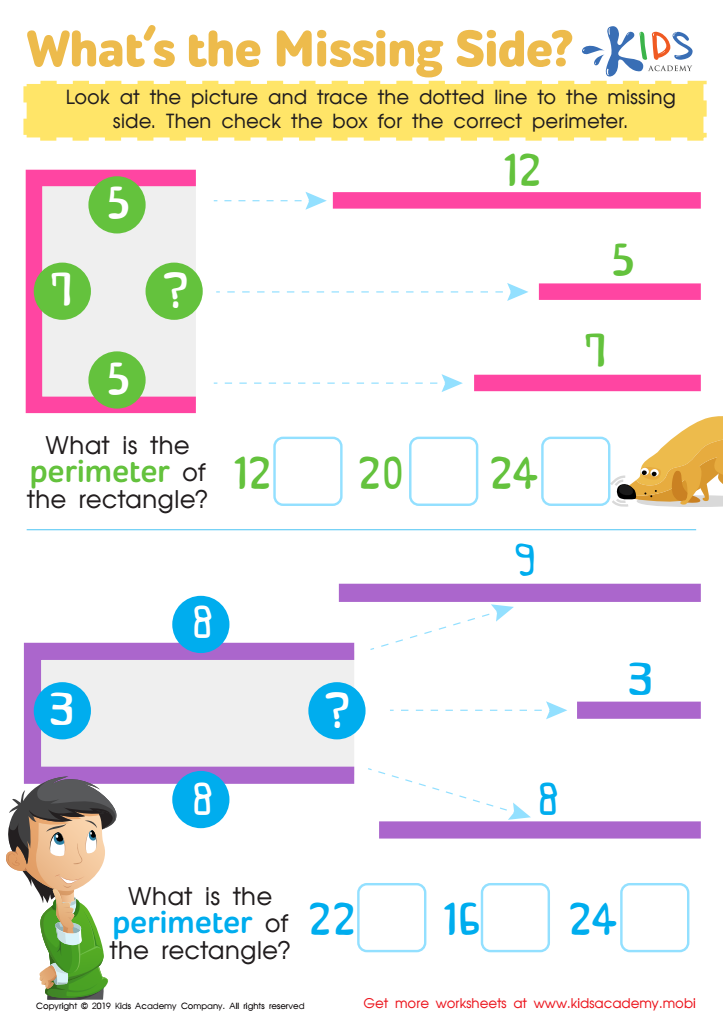
What's the Missing Side Worksheet
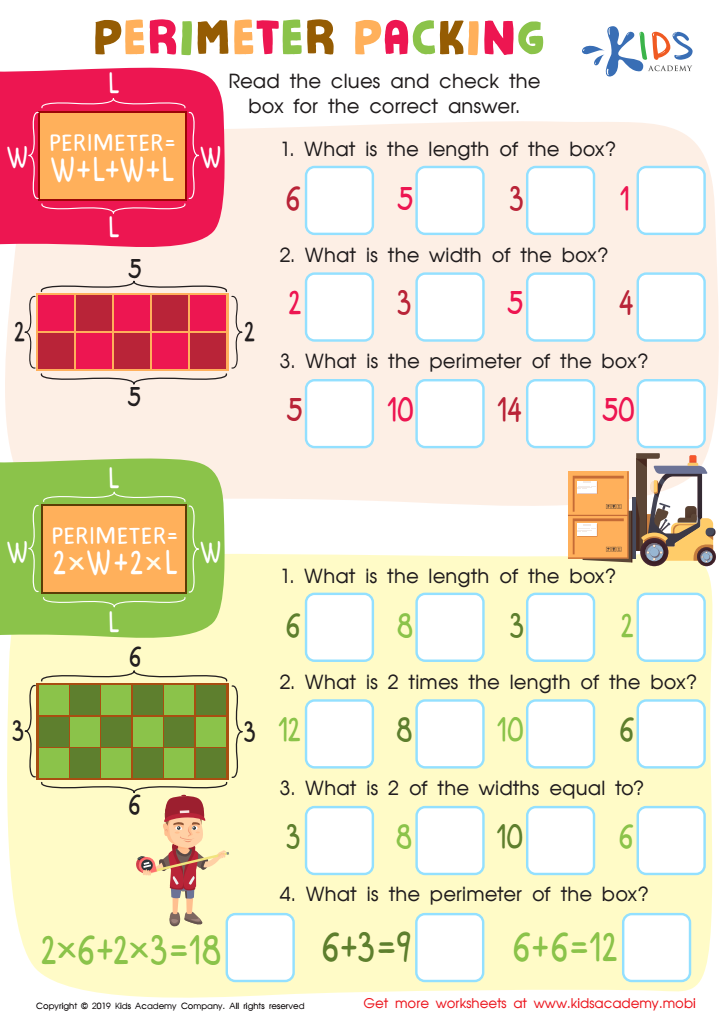
Perimeter Parking Worksheet



Shape recognition, area, and perimeter are foundational concepts in Grade 3 mathematics that hold significant importance for both parents and teachers. Understanding these concepts develops spatial reasoning skills, which are critical in everyday life and subsequent mathematical learning. Shape recognition enables students to identify, classify, and interact with different geometric shapes, fostering observational skills and critical thinking.
Learning about area and perimeter allows students to apply mathematical principles in practical situations, enhancing their problem-solving skills. For instance, when tasked with calculating the area to paint a room or the perimeter to build a fence, students grasp the real-world applicability of math. Mastery of these concepts also supports collaboration and enhances communication as students learn to explain their reasoning and methods clearly.
For parents, encouraging mastery of these concepts not only aids in academic performance but also contributes to their child’s confidence and enthusiasm for learning. Teachers play a crucial role in creating engaging activities that promote exploration and understanding of shapes, paving the way for more complex geometry concepts in later grades. Ultimately, fostering these skills prepares students for enhanced mathematical proficiency and everyday challenges, making them essential focus areas in early education.