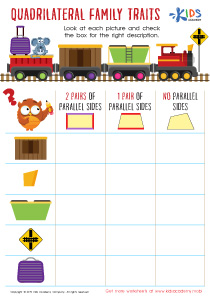
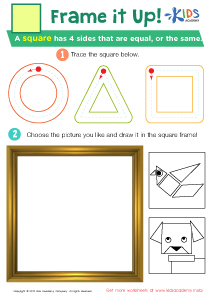
Understanding area Grade 3 Area and Perimeter Worksheets
3 filtered results
-
From - To
Unlock the mysteries of area with our Grade 3 Understanding Area and Perimeter Worksheets! These expertly crafted worksheets are designed to help young learners grasp the concept of measuring space within a shape. Engaging activities, illustrated problems, and clear instructions guide students through the fundamentals of calculating area using unit squares. Our resources offer a perfect blend of fun and education, enriched with visual aids and practical exercises, making it easier for kids to visualize and solve area-related problems. Ideal for both classroom use and at-home practice, these worksheets will build a solid mathematical foundation for your third graders.
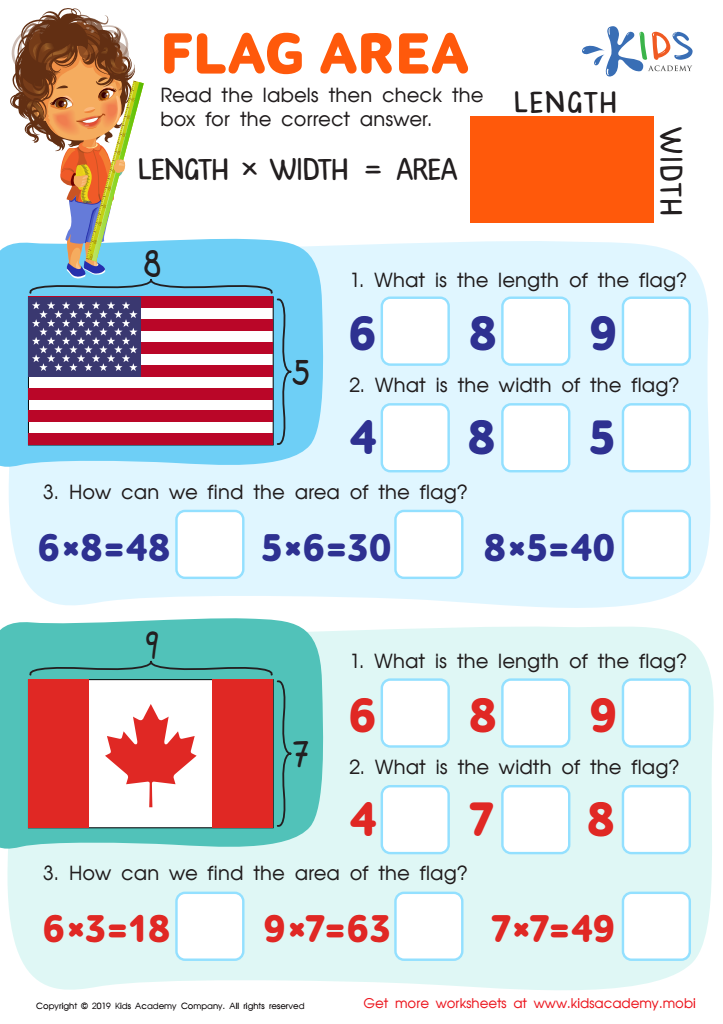
Flag Area Worksheet
 Assign to My Students
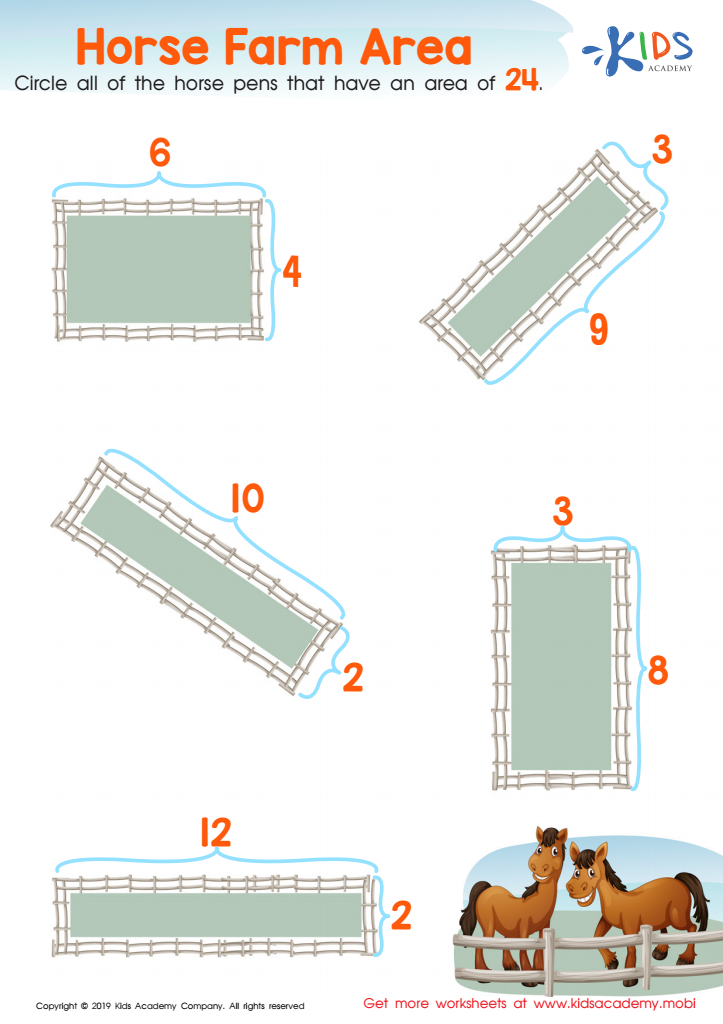
Horse Farm Area Worksheet
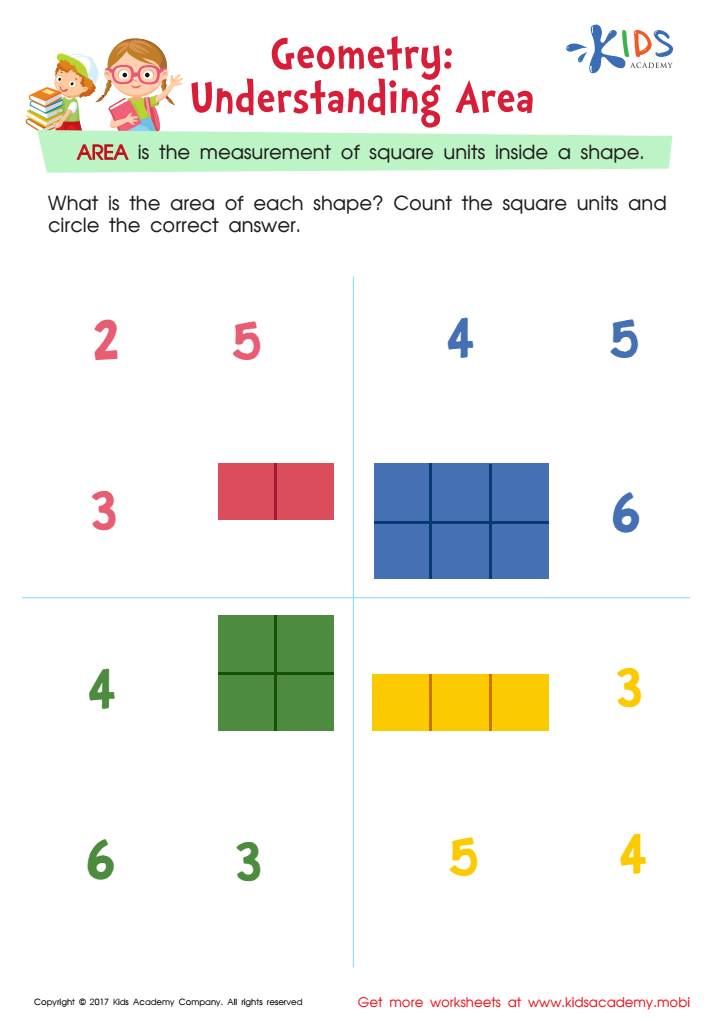
Understanding Area Worksheet



Understanding area and perimeter in Grade 3 is a crucial foundational skill for students, and both parents and teachers play a significant role in supporting this learning process. Knowing how to calculate and understand area and perimeter helps children develop spatial awareness, which is important in everyday life because it enables them to navigate their environment more effectively.
Area and perimeter are practical concepts that appear in real-world situations, such as determining how much paint is needed for a wall (area) or the length of fencing required to enclose a garden (perimeter). By grasping these concepts early, students develop problem-solving skills and mathematical reasoning, which are essential for their academic growth in math and other STEM (Science, Technology, Engineering, and Math) subjects.
Understanding area and perimeter also lays the groundwork for more advanced mathematical concepts, including geometry and algebra. For example, integrating these skills with multiplication and addition enhances students’ numerical fluency and conceptual understanding, thereby enriching their overall math capability.
Moreover, when parents and teachers actively engage in teaching these concepts through hands-on activities, like measuring objects or creating shapes, it makes learning more enjoyable and relevant for the students. This engagement fosters a positive attitude towards math, encouraging a lifelong interest in the subject and a strong foundation for future academic success.