Problem-Solving Skills Grade 3 Fractions Worksheets
3 filtered results
-
From - To
Boost your third grader's problem-solving abilities with our engaging Fractions Worksheets designed specifically for Grade 3! These worksheets offer a variety of interactive tasks that encourage critical thinking and help students grasp fractional concepts. From adding and subtracting fractions to identifying equivalent fractions, each activity is aligned with educational standards to ensure comprehensive skill development. As your child tackles real-world scenarios and mathematical challenges, they will build confidence and enhance their analytical reasoning. Perfect for homework, classroom use, or extra practice, these worksheets make learning fractions enjoyable and effective. Unlock your child's potential in math with our specially crafted resources!
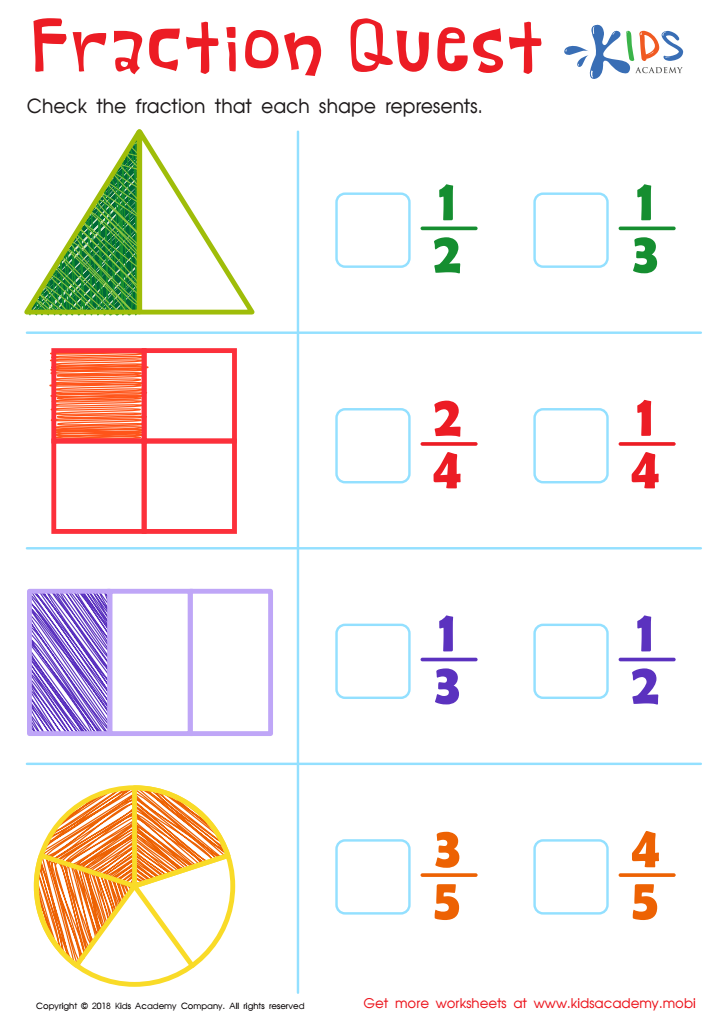
Fraction Quest Worksheet
 Assign to My Students
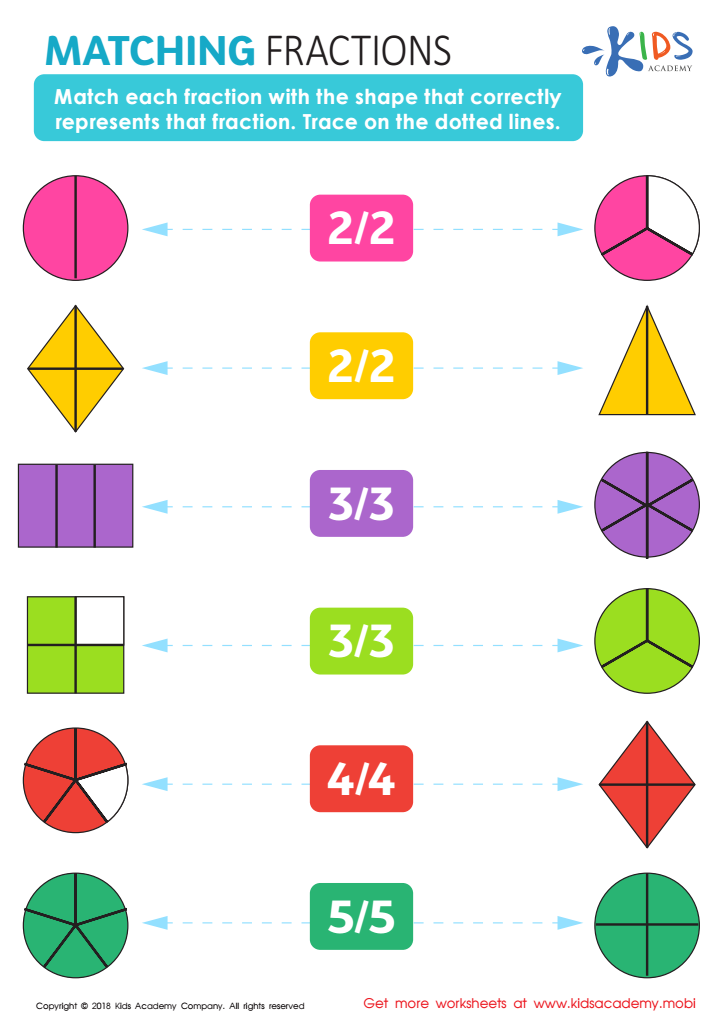
Matching Fractions Worksheet
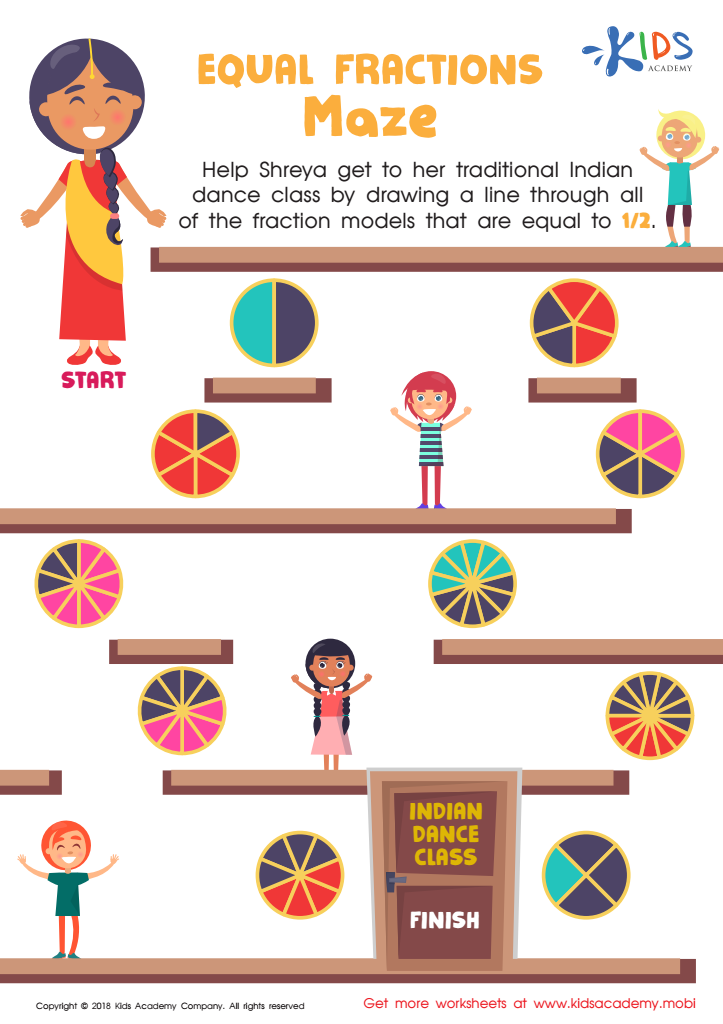
Equal Fractions Maze Worksheet








Parents and teachers should prioritize problem-solving skills in Grade 3 fractions because these skills serve as a foundational element for mathematics and critical thinking. At this stage, students begin to engage with more complex concepts, and understanding fractions is key to their overall academic growth. Mastering fractions not only prepares children for future mathematical concepts, such as ratios and proportions, but also enhances their ability to tackle real-world problems.
Moreover, strong problem-solving skills foster independence and resilience. When children learn to approach fraction problems systematically, they develop perseverance and confidence in their abilities. This mindset is essential not only in mathematics but across all subjects and aspects of life.
Encouraging exploration of fractions through engaging and relatable examples, such as cooking, measuring, or dividing, makes learning enjoyable and applicable, boosting motivation and interest. Additionally, collaborative problem-solving nurtures communication and teamwork skills, vital for personal and professional success.
By focusing on these skills, parents and teachers help children build a robust mathematical foundation, encourage critical thinking, and equip them with tools they can use throughout their educational journey. Ultimately, investing in problem-solving skills today will yield long-term benefits for students as they advance academically and beyond.