Understanding bar graphs Grade 3 Graphs Worksheets
3 filtered results
Difficulty Level
Grade
Age
-
From - To
Subject
Activity
Standards
Explore our "Understanding Bar Graphs Grade 3 Graphs Worksheets" designed to enhance your child's data interpretation skills! This comprehensive set of worksheets helps third graders grasp the essentials of reading, creating, and analyzing bar graphs. Through engaging activities and practical examples, young learners can practice comparing quantities, interpreting information, and making informed conclusions. Perfect for classroom use or extra practice at home, these worksheets cover key concepts aligned with grade-level math standards. Boost your child's confidence and proficiency in math with our fun and educational bar graph resources today. Visit and download now!
Favorites
With answer key
Interactive
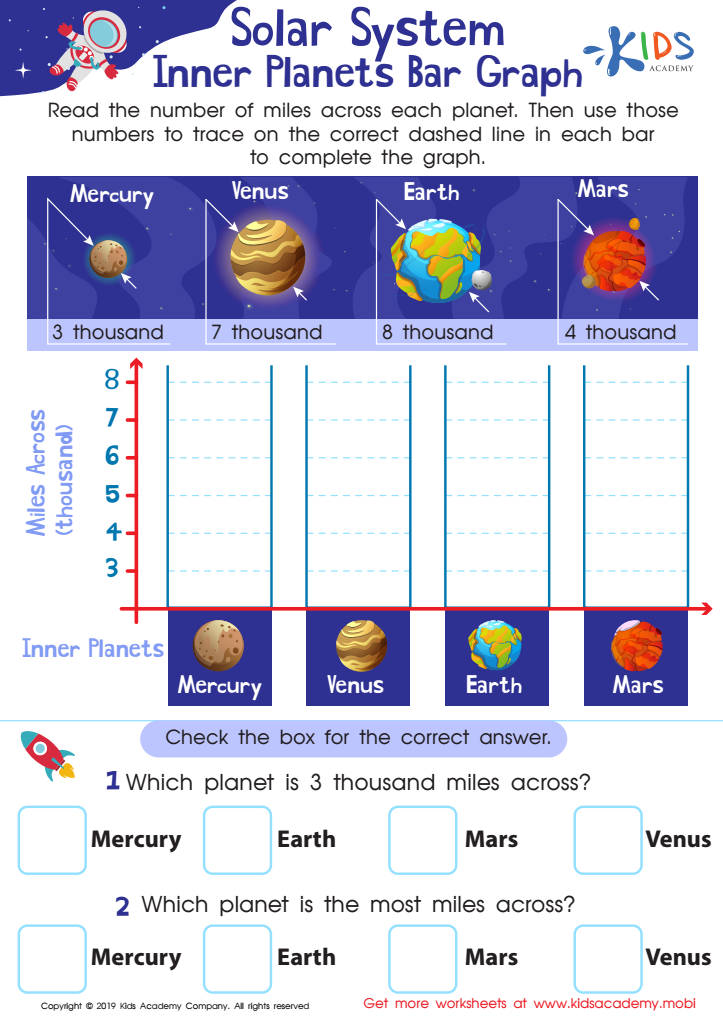
Planets Bar Graph Worksheet
With this fun, educational worksheet, kids can learn about bar graphs and the solar system simultaneously. Introduce them to the concept by reading out the number of miles for each planet, then help them trace the dashed lines in each bar to complete the graph.
 Assign to My Students
Planets Bar Graph Worksheet
Worksheet
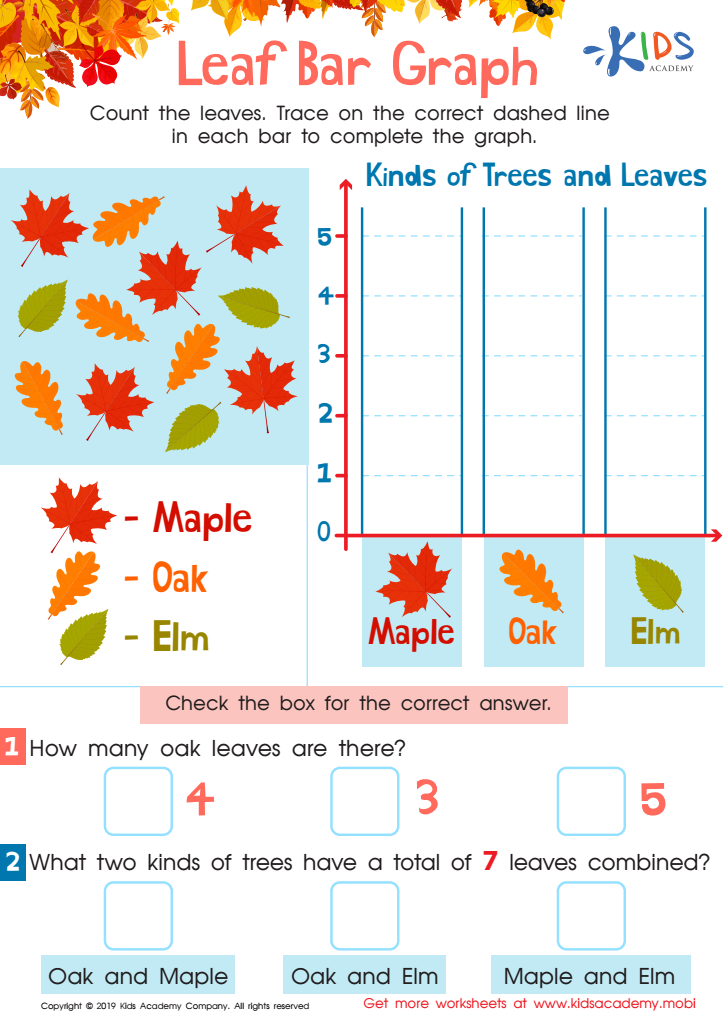
Leaf Bar Graph Worksheet
You can help your kids make learning easier and more enjoyable. While their teachers provide lessons and homework, you can take their education further. This worksheet can assist them in mastering bar charts. Count the leaves, then trace the correct line for each bar to complete the graph.
Leaf Bar Graph Worksheet
Worksheet
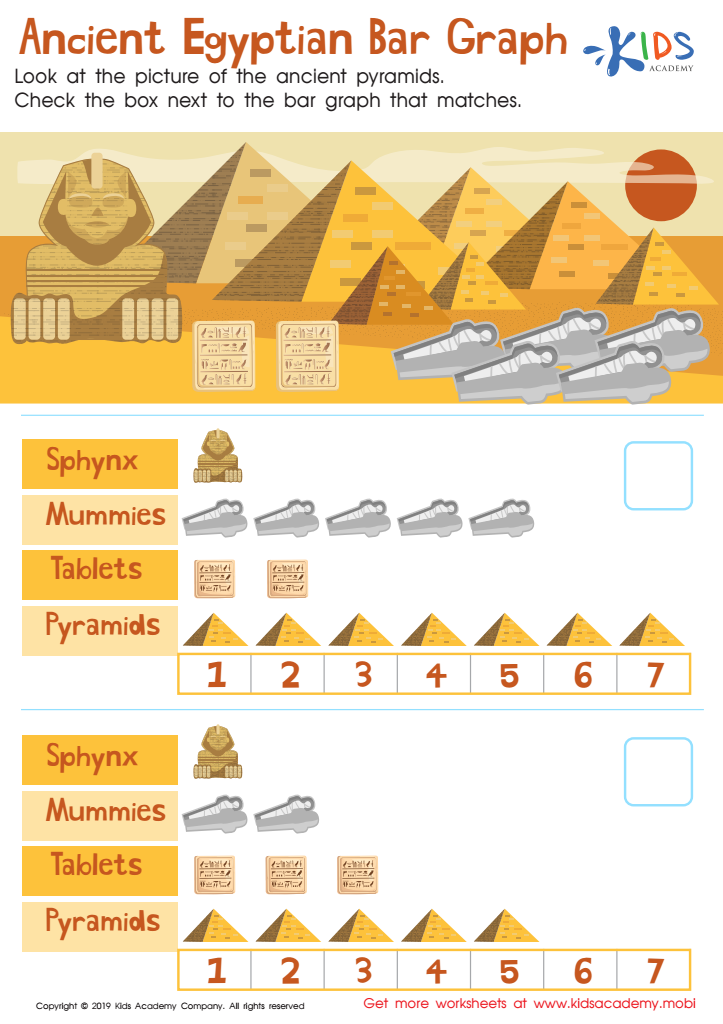
Egyptian Bar Graph Worksheet
Help your kids get a hang of bar graphs with this fun worksheet. Examine the picture of the ancient pyramids and help them match the bar graph to it. Check the box next to the correct bar graph and watch your little ones learn quickly!
Egyptian Bar Graph Worksheet
Worksheet
Join Kids Academy for Free
Who is primarily going to use this learning content?





Understanding bar graphs by third grade is crucial for several reasons. Bar graphs are fundamental tools in teaching children how to visualize and interpret data, which are valuable skills in both academic and real-world contexts. By learning how to read and create bar graphs, children enhance their math and analytical capabilities. This early exposure helps them with future subjects that rely on data representation, such as science and social studies.
In everyday life, bar graphs are everywhere—commercials comparing products, reports in news articles, and even weather forecasts. Encouraging graph literacy helps children become informed, thoughtful citizens who can critically evaluate the information presented to them. Moreover, understanding bar graphs enhances organizational skills. For instance, when a child learns to gather information, categorize it, and display it clearly, they are organizing their thoughts and presenting them coherently.
Additionally, mastering bar graphs involves several core math skills: counting, comparing numbers, addition, and perhaps even introduction to concepts like average and range. These skills serve as building blocks for more complex mathematical concepts in the future.
Thus, while it may seem simple, competence with bar graphs opens doors to numerous educational and practical opportunities, making it an essential component of the curriculum at an early age. Parents and teachers who support the development of these skills are preparing children not just for academic success but for thoughtful, data-informed living.