Categorization skills Grade 3 Math Worksheets
3 filtered results
Difficulty Level
Grade
Age
-
From - To
Subject
Activity
Standards
Boost your child's critical thinking with our Grade 3 Math Categorization Skills worksheets! Designed specifically for third graders, these engaging activities help students develop essential categorization skills by sorting and classifying numbers, shapes, and patterns. Through a variety of thought-provoking exercises, children enhance their ability to recognize relationships and discern differences among diverse elements. Perfect for classroom or home use, our worksheets provide a fun and interactive way to strengthen foundational math skills, promoting logical reasoning and problem-solving abilities. Give your third grader the targeted practice they need to excel in math with our expertly crafted resources!
Favorites
With answer key
Interactive
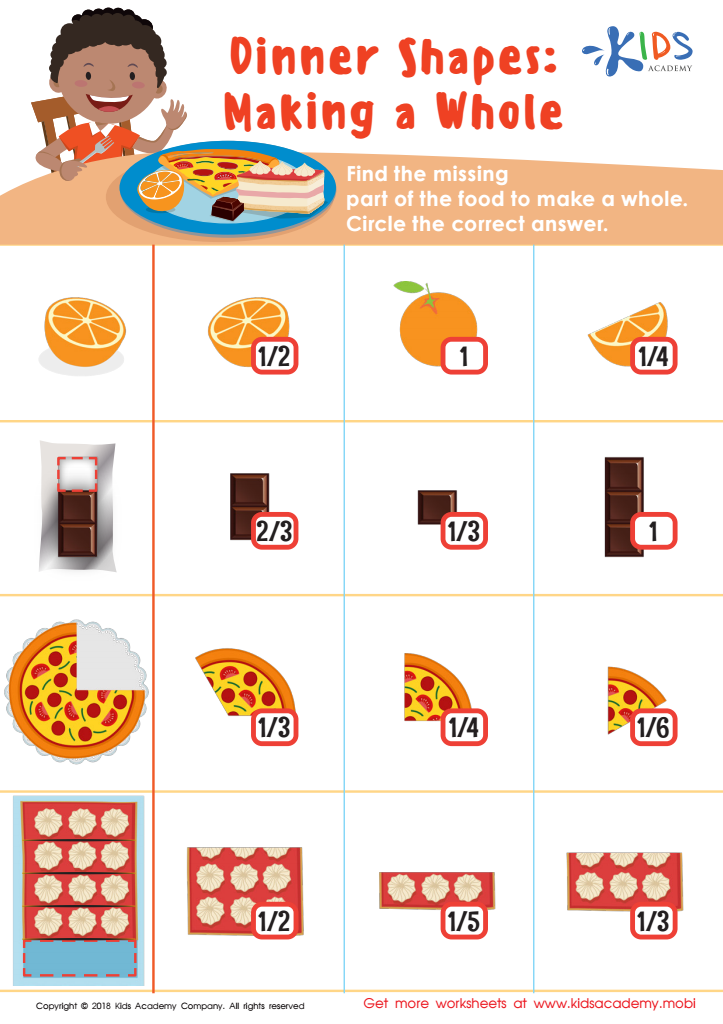
Dinner Shapes: Making a Whole Worksheet
Using food and snacks to stimulate learning and interest in topics is a great strategy. Fractions can prove tricky, but this worksheet can help your child become an expert. Have them look for the missing parts of the food to make a whole, then circle the answer.
 Assign to My Students
Dinner Shapes: Making a Whole Worksheet
Worksheet
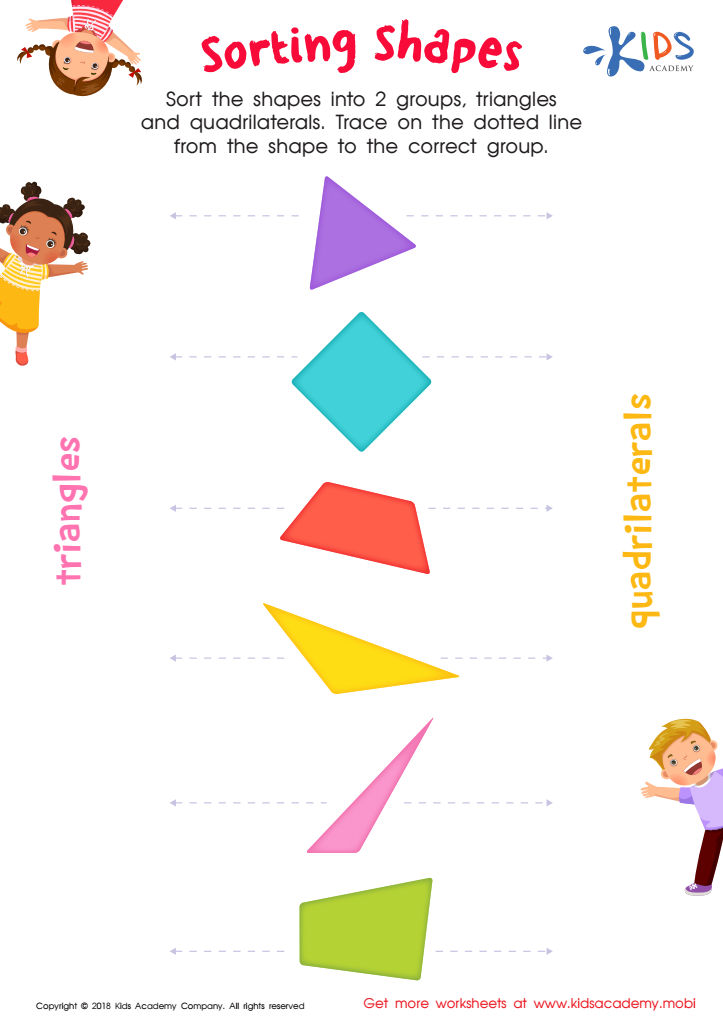
Sorting Shapes Worksheet
Before beginning, ensure your child is familiar with quadrilaterals (4 sides) and triangles (3 sides). This tracing exercise is easy: sort the shapes into the two groups and trace the dotted lines to the correct group.
Sorting Shapes Worksheet
Worksheet
Join Kids Academy for Free
Who is primarily going to use this learning content?






Categorization skills are essential in Grade 3 math as they lay the foundation for more complex mathematical concepts and critical thinking skills. For parents and teachers, nurturing these skills is crucial. At this developmental stage, children are beginning to make sense of the world around them by grouping objects and concepts based on shared characteristics. This ability to categorize is fundamental for understanding various math concepts such as sorting, classifying, and organizing data.
In math, categorization skills help students to differentiate between shapes, understand place values, and recognize patterns, which are vital for comprehending more advanced topics like fractions, geometry, and algebra. When children categorize, they learn to recognize relationships and make connections, promoting logical thinking and problem-solving abilities. These skills are not limited to math; they enhance cognitive development and facilitate learning across all subjects.
Furthermore, effective categorization skills lead to better organizational abilities and improved memory. For teachers, integrating categorization activities in lessons helps in creating a more interactive and engaging learning environment, allowing children to apply their knowledge practically. For parents, supporting these skills at home can lead to significant improvements in their child's academic performance and confidence in handling various tasks. Overall, strong categorization skills are indispensable for a child's holistic development and long-term academic success.