Counting practice Grade 3 Math Worksheets - Page 2
33 filtered results
-
From - To
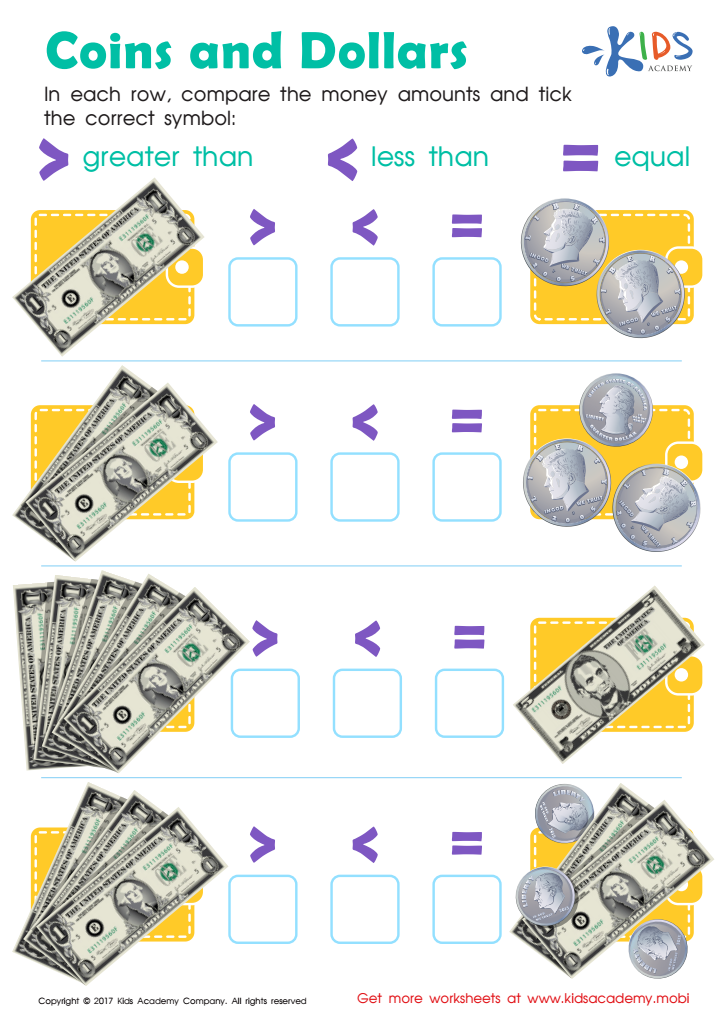
Money: Coins Dollars Printable
 Assign to My Students
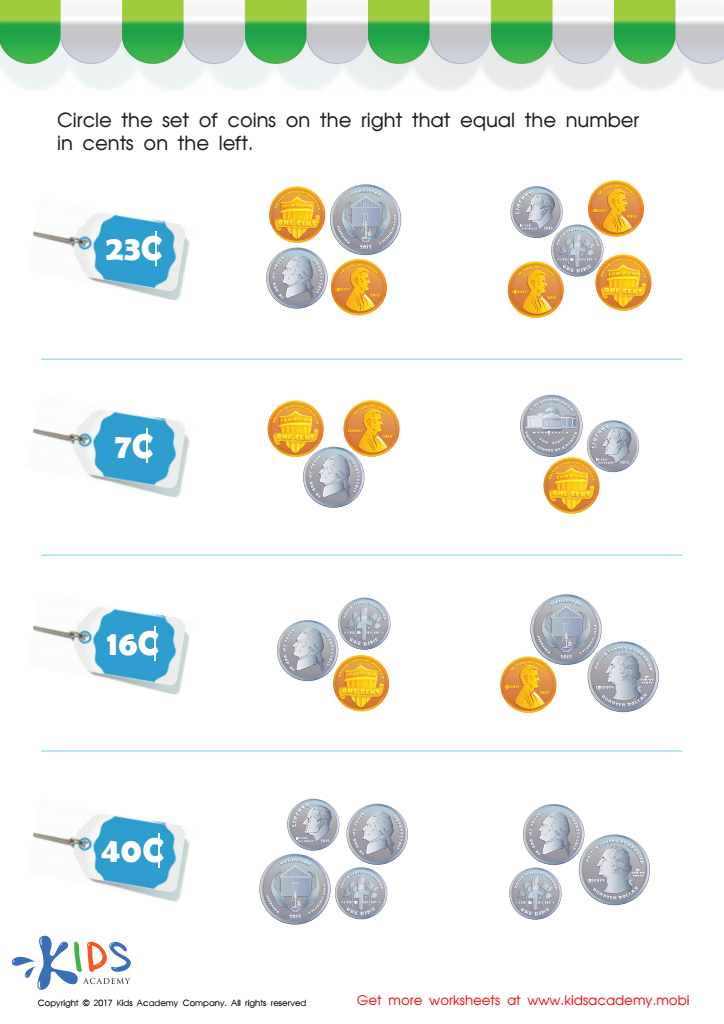
Picking the Coins You Need Money Worksheet
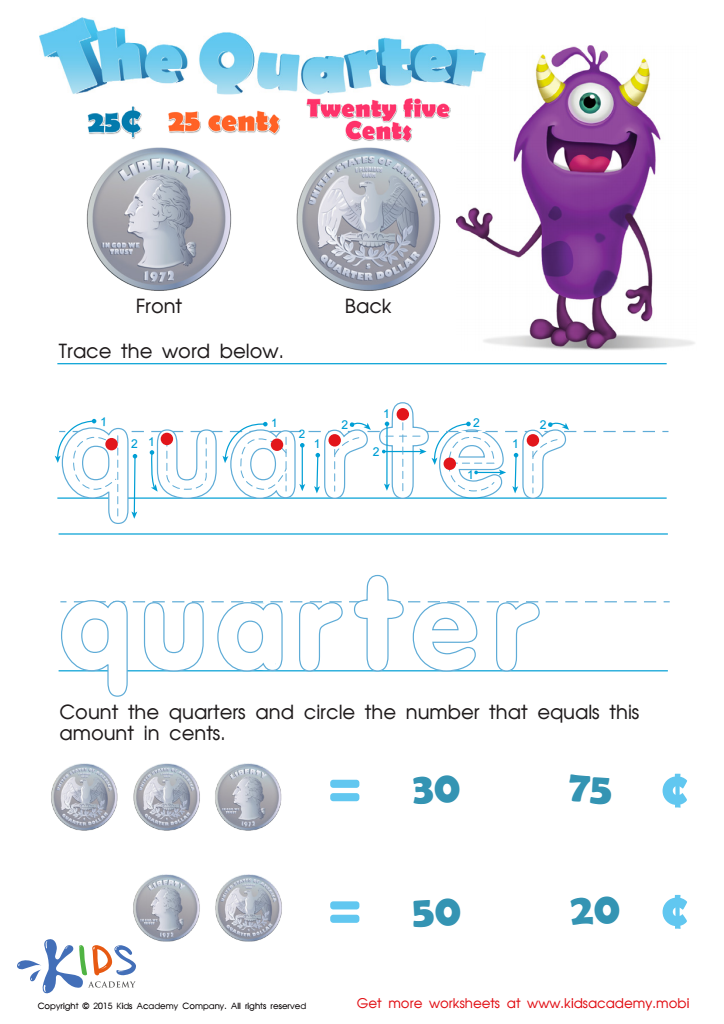
Twenty Five Cents or the Quarter Money Worksheet
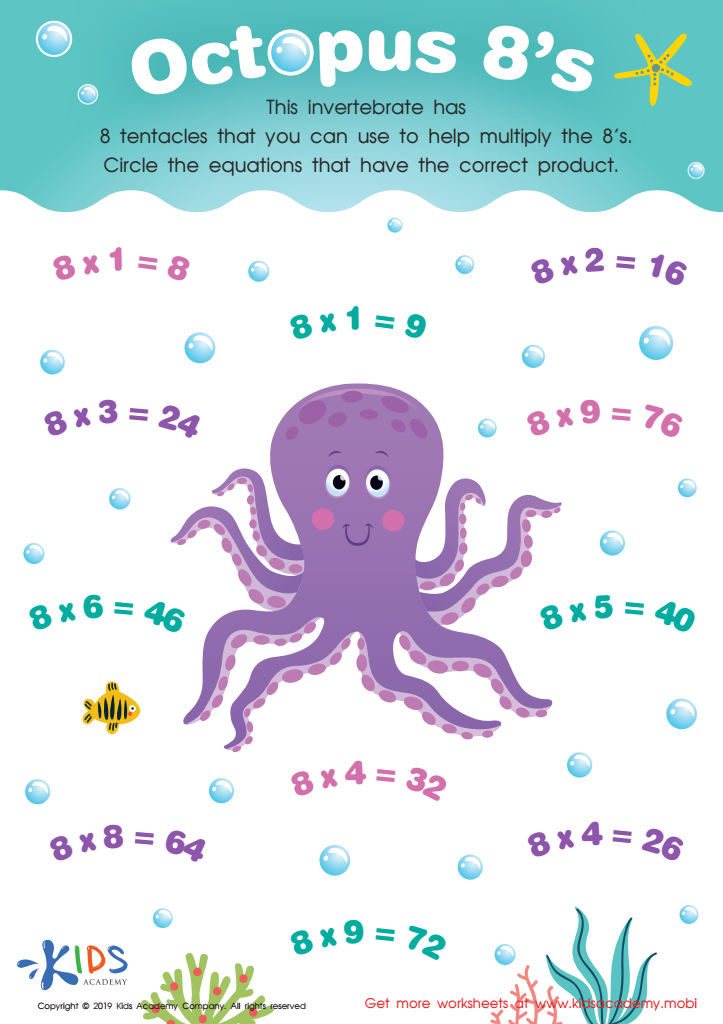
Octopus 8’s Worksheet
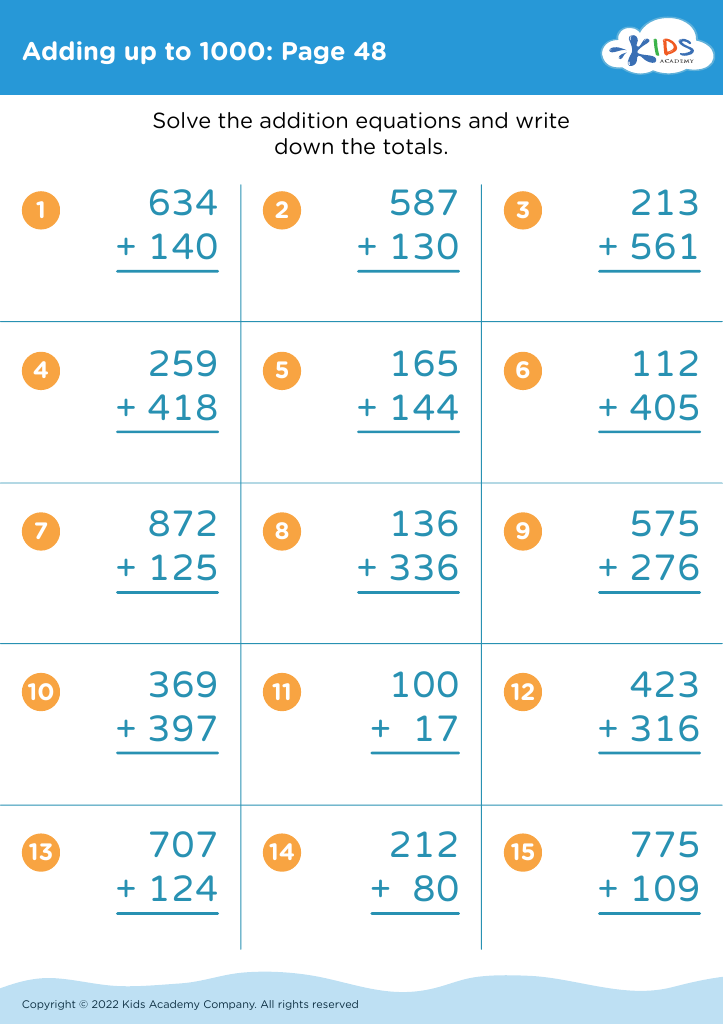
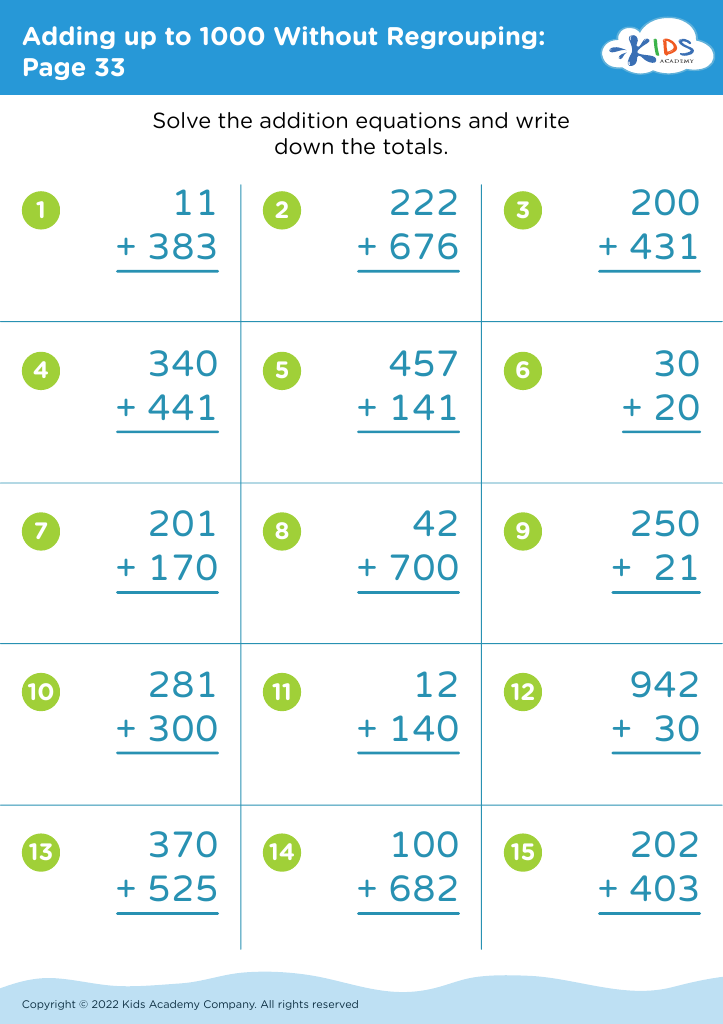








Counting practice in Grade 3 is vital for several reasons, benefitting both students and their overall academic journey. Firstly, counting is a foundational skill in math that shapes learners' understanding of numbers and operations. Proficiency in counting enhances their ability to perform more complex calculations, such as addition, subtraction, multiplication, and division.
Moreover, as students move towards fractions, decimals, and measurements, solid counting skills become crucial in interpreting and solving mathematical problems. Consistent counting practice builds number sense, allowing children to relate quantities to their written representations and comprehend larger concepts.
Additionally, counting experience promotes critical thinking and problem-solving abilities, enabling students to tackle real-life situations effectively. From determining the total number of items to understanding monthly budgets, counting acts as a practical and functional tool.
For parents and teachers, incorporating fun counting activities—like games or group exercises—encourages a positive attitude towards math and fosters a supportive learning environment. Encouragement and engagement in counting not only help improve students’ confidence in their math skills but also prepare them for standardized testing and future academic challenges. Hence, spotlighting counting practice is essential for comprehensive educational development in Grade 3.