Historical Knowledge Grade 3 Math Worksheets
5 filtered results
-
From - To
Explore our engaging Historical Knowledge Grade 3 Math Worksheets, designed to combine math skills with fascinating historical themes. These worksheets help students enhance their mathematical understanding while discovering important facts about history, cultures, and significant events. By integrating math with historical context, young learners develop critical thinking and problem-solving skills in a fun and interactive way. Perfect for classroom use or at-home learning, our worksheets cover various math concepts such as addition, subtraction, and more, all set against intriguing historical backdrops. Unlock the joy of learning with our engaging resources that motivate young minds to excel in both math and history!
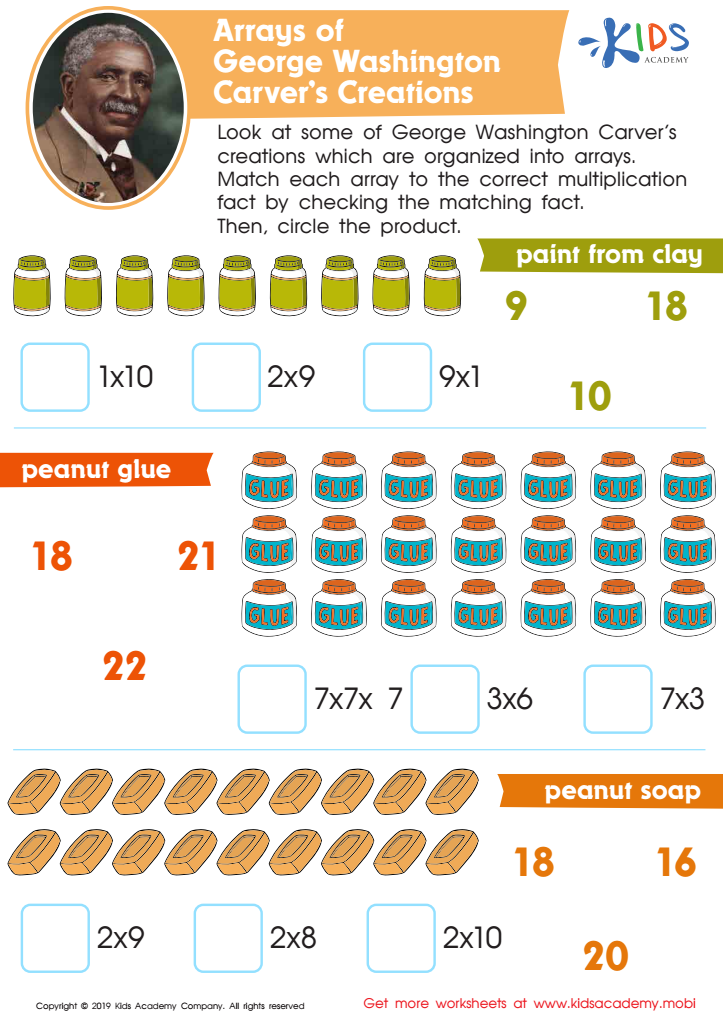
Arrays of George Washington Carver’s Creations Worksheet
 Assign to My Students
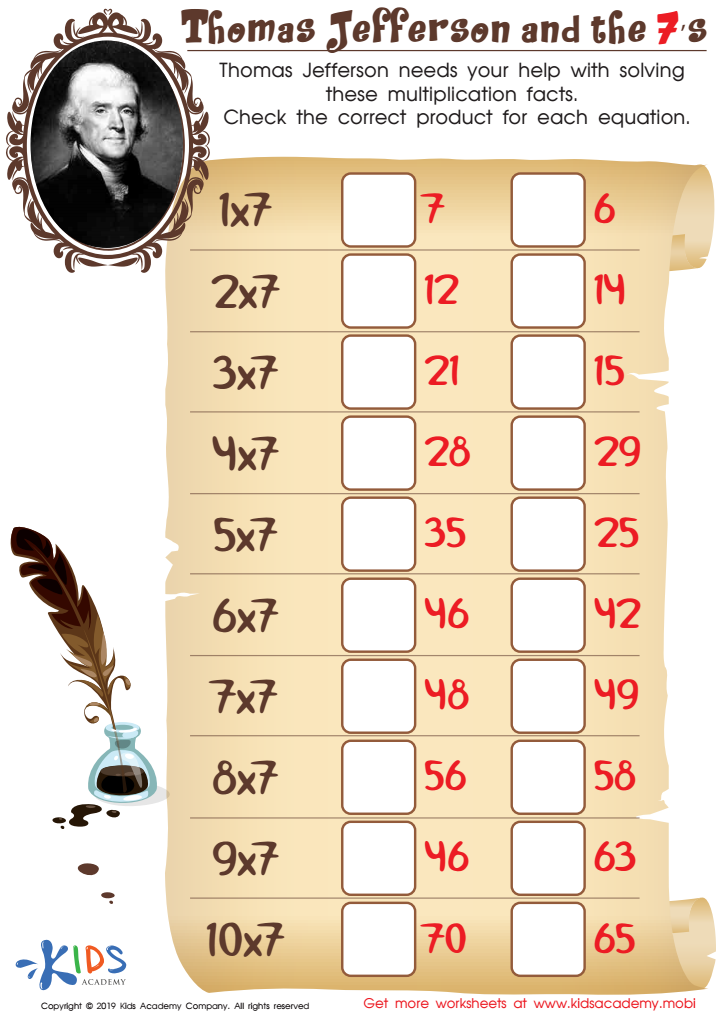
Thomas Jefferson and the 7’s Worksheet
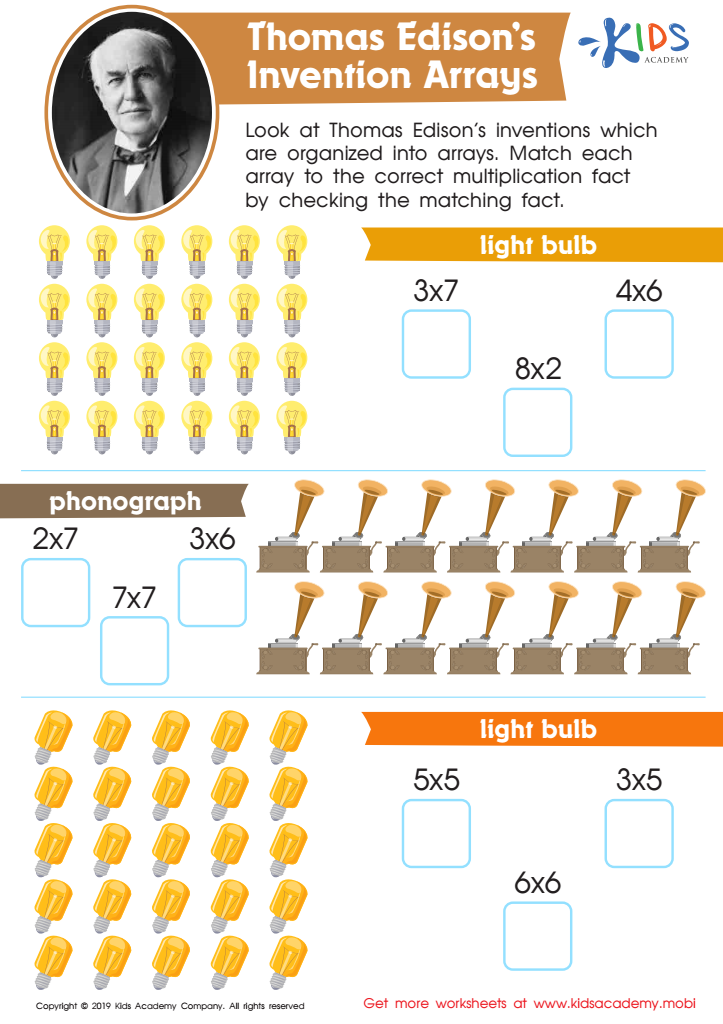
Thomas Edison’s Invention Arrays Worksheet
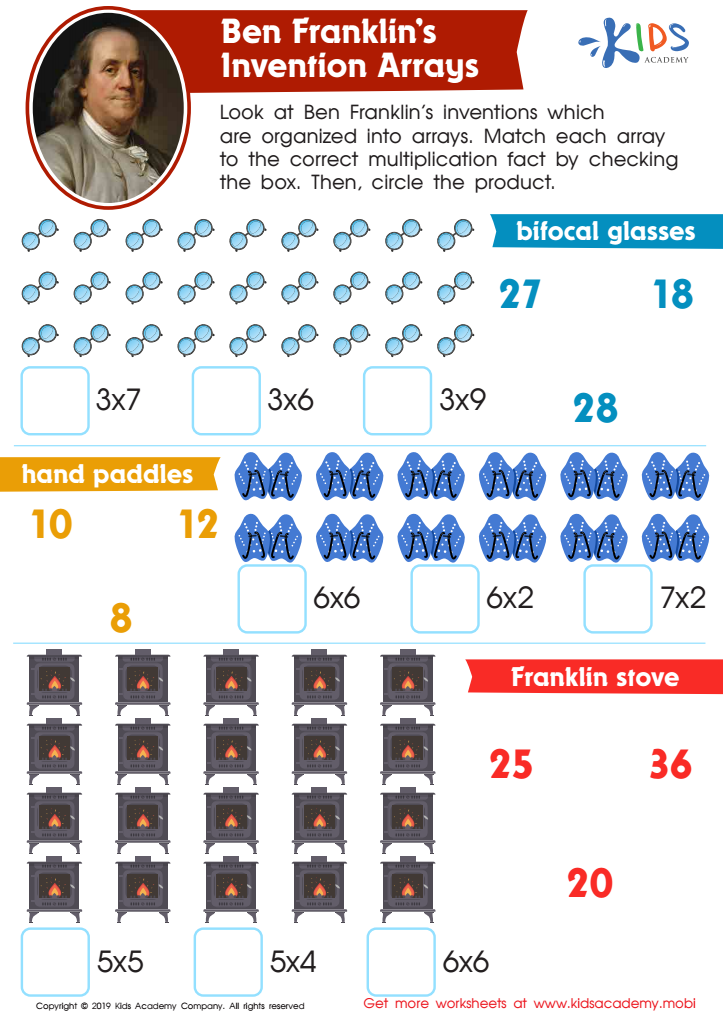
Ben Franklin’s Invention Arrays Worksheet
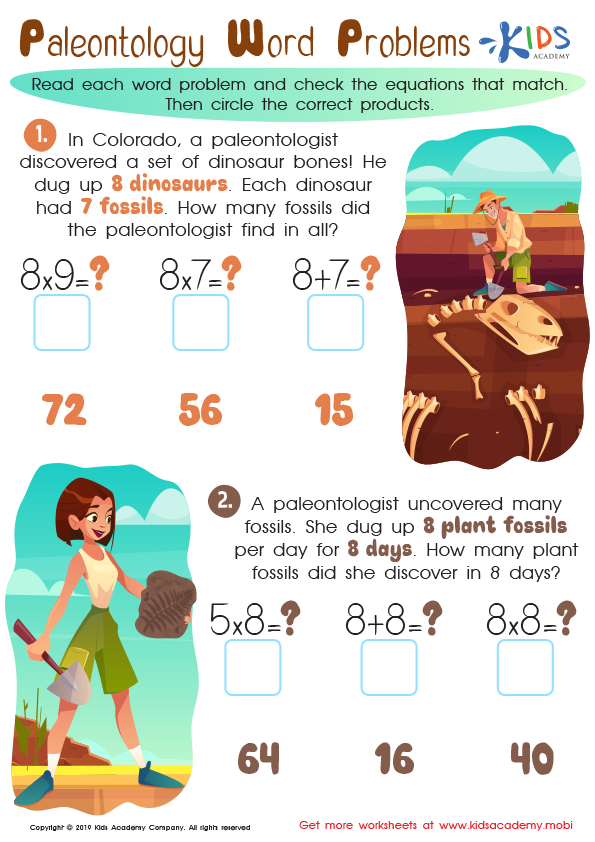
Archeology Word Problems Worksheet







Understanding historical knowledge in math, particularly for third graders, is essential for several reasons. First, it enriches students' comprehension of mathematical concepts and problem-solving skills. When children learn about the historical development of numbers and mathematical principles, they appreciate how math has evolved and the diverse cultures that contributed to its growth. This connection fosters a deeper interest in the subject, motivating students to engage with math in meaningful ways.
Secondly, integrating historical contexts into math lessons helps make abstract concepts more relatable. For example, using ancient counting methods or the evolution of measurement tools makes learning tangible and enjoyable. It can transform math from a series of formulas into a story grounded in human experience.
Moreover, awareness of historical knowledge promotes critical thinking. Students can analyze different mathematical approaches across cultures and time periods, encouraging them to think creatively when solving problems.
Finally, teaching history within math nurtures a sense of inclusivity and curiosity. Children learn that math is not purely a Western creation; it is a collective achievement shaped by numerous societies worldwide. This appreciation promotes global citizenship and encourages respectful dialogue about cultural contributions, enhancing educational experiences for both students and educators.