Enhance your third grader's math skills with our engaging spatial awareness worksheets! Designed specifically for Grade 3, these worksheets focus on developing crucial spatial reasoning abilities, helping students understand shapes, directions, and visual relationships. Each activity encourages hands-on learning, enabling kids to grasp complex concepts while having fun! From identifying geometric shapes to solving problems related to physical space, our worksheets support critical thinking and boost confidence in math. Perfect for classroom use or at-home practice, these resources are tailored to meet the needs of young learners. Empower your child’s education and improve their spatial awareness skills today!

Check out this FREE Grade 3 Trial Lesson on Math!

Finding the Unknown Side in Perimeter and Area Problems

Favorites
With answer key
Interactive
  • Grade 3
  • Spatial awareness
  • Math
Trace The Circles Worksheet

Trace The Circles Worksheet

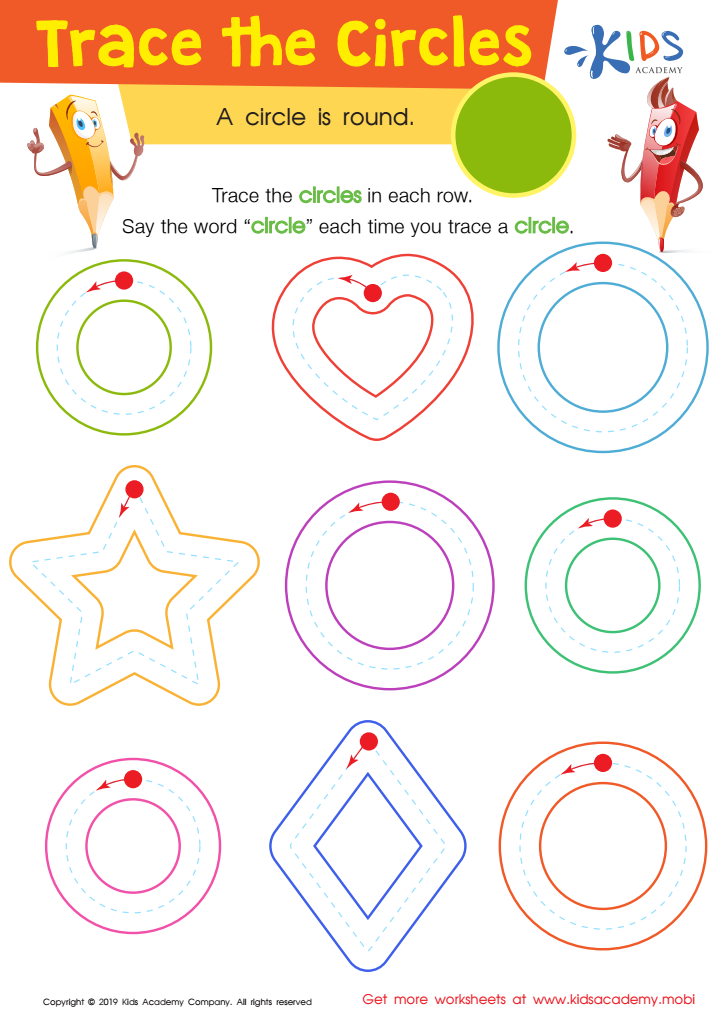
Preschoolers and kindergarteners love learning shapes! This worksheet provides practice in naming and tracing circles. Students say "circle" each time they trace one. It's a fun way to help kids learn math vocabulary and develop fine motor skills. Enjoy this printable and get ready to master circles!
Trace The Circles Worksheet
Worksheet
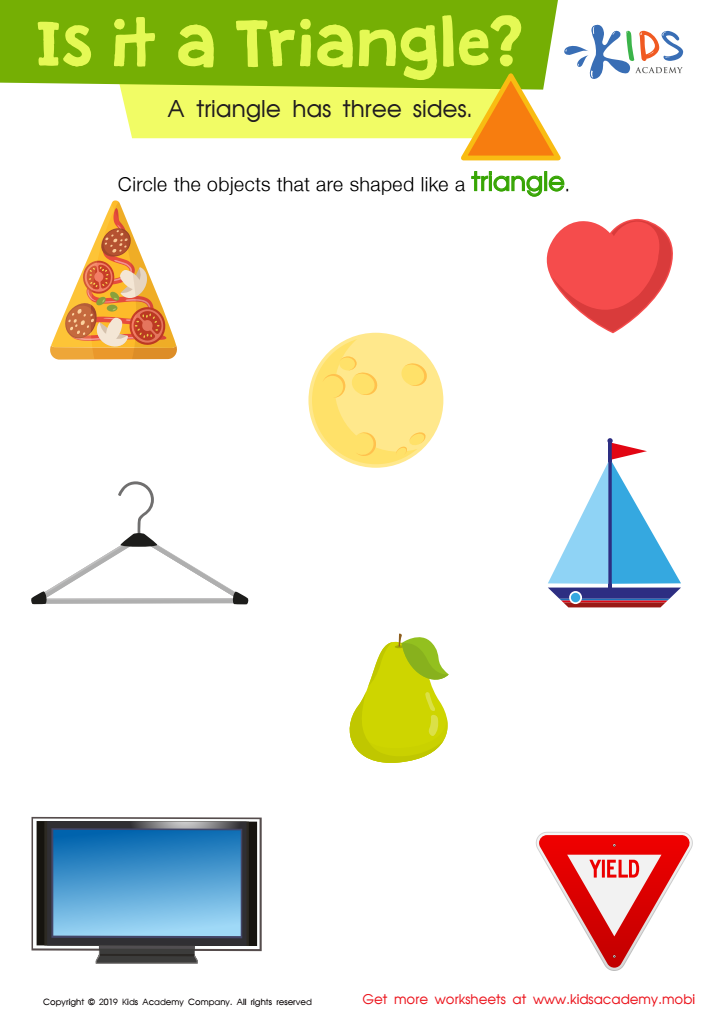
Is It a Triangle? Worksheet

Is It a Triangle? Worksheet

Young kids need to learn to identify basic shapes for math. Show them what a triangle looks like with this fun worksheet. They can look around their environment for everyday objects shaped like a triangle and circle them on the sheet. Download now and start learning what a triangle is!
Is It a Triangle? Worksheet
Worksheet
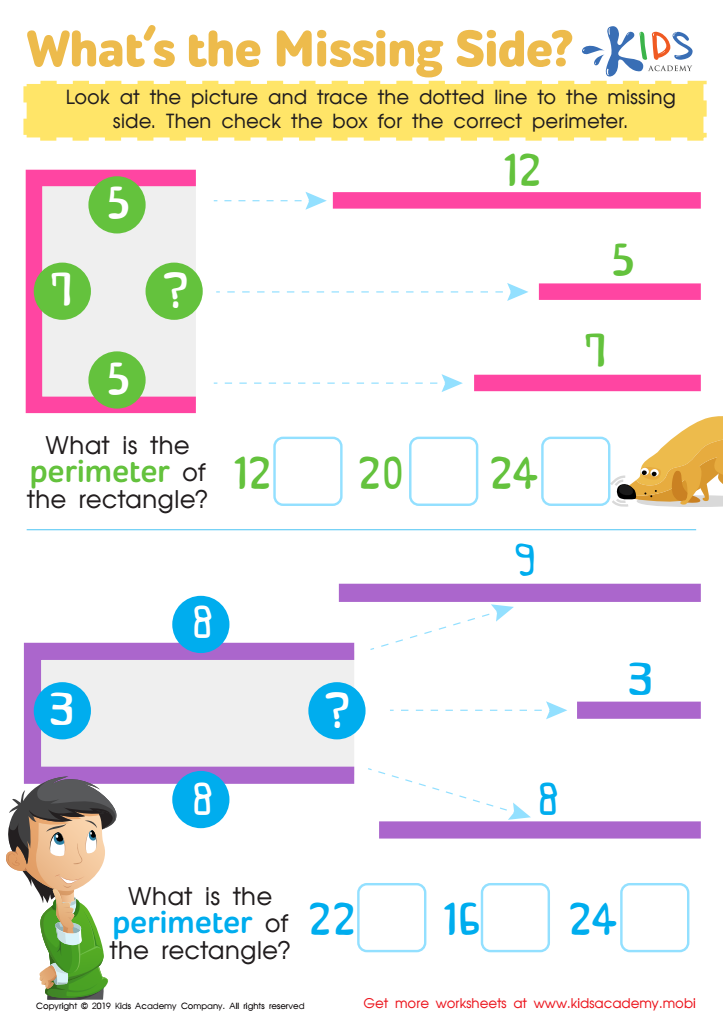
What's the Missing Side Worksheet

What's the Missing Side Worksheet

Assist your pupils in improving math skills with fun exercises like the tracing sheet. Show them the picture and guide them to trace the missing side. Ask them to check the box of the right perimeter afterwards. Doing this regularly can help them to enjoy and appreciate the subject more.
What's the Missing Side Worksheet
Worksheet
Shape Quest Worksheet

Shape Quest Worksheet

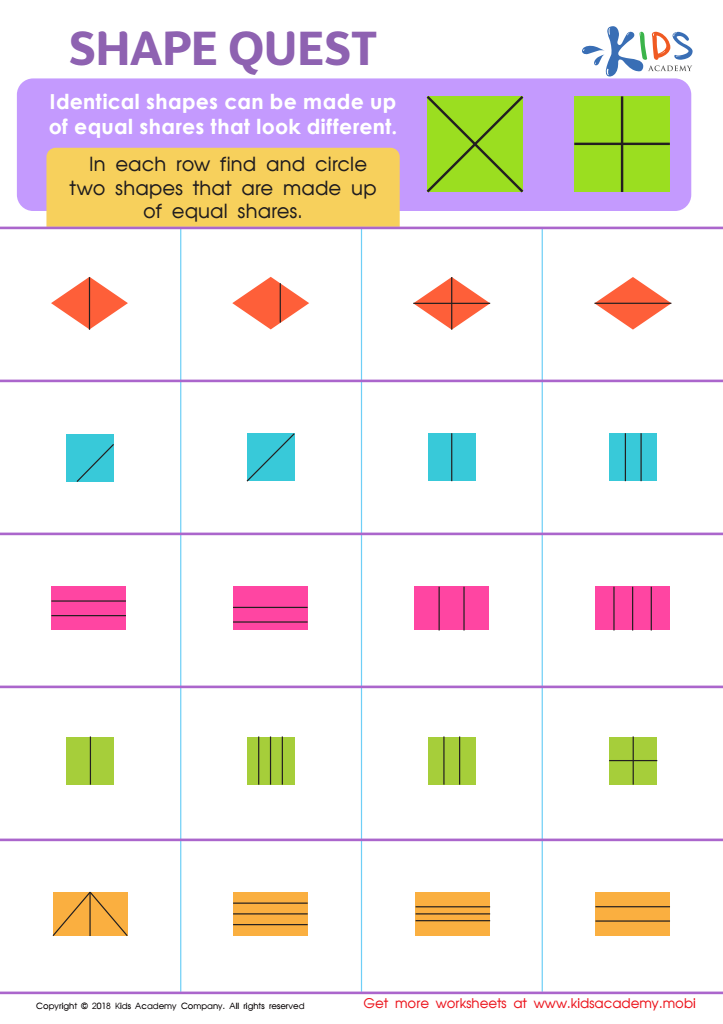
Help your child identify shapes by having them find shapes made up of equal parts. This colorful worksheet challenges them to look through each row and circle two matching shapes. It's a great way to teach them the unique features of each shape, while also helping them understand that identical shapes can look different.
Shape Quest Worksheet
Worksheet
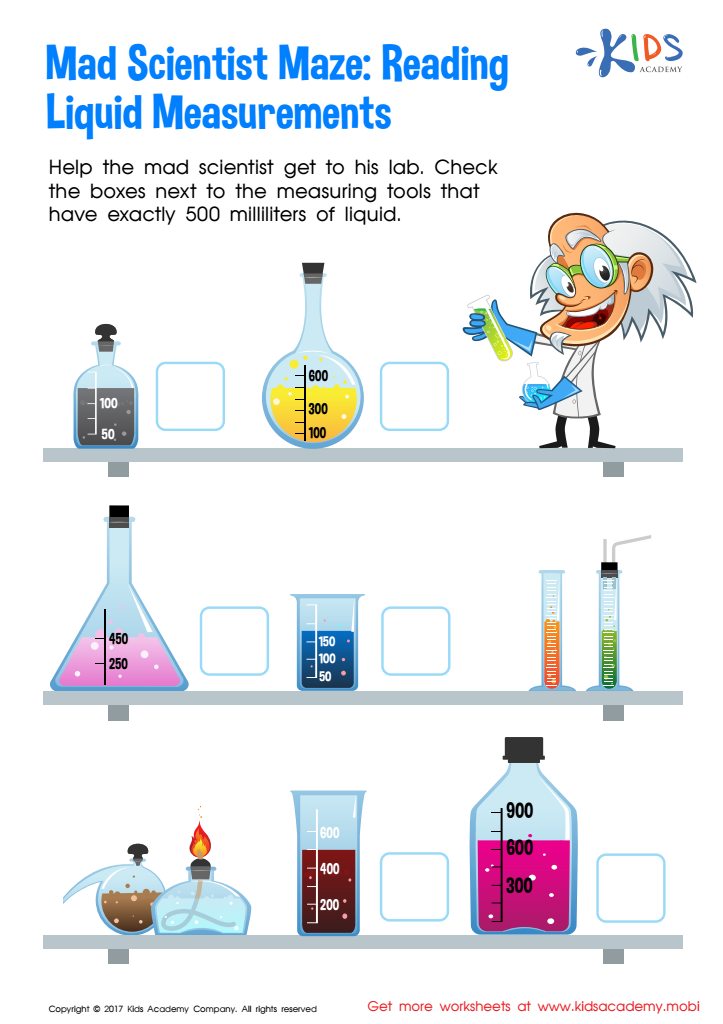
Reading Liquid Measurement Worksheet
Reading Liquid Measurement Worksheet

Help a mad scientist return to his lab by having your child measure the liquid in each flask. Their results will determine his fate! Help a mad scientist return to his lab! Kids can practice reading liquid measurements to the millimeter on this worksheet. Determine the amount of liquid in each flask and let your child's results decide the scientist's fate!
Reading Liquid Measurement Worksheet

Worksheet
Adding up to 1000: Page 45

Adding up to 1000: Page 45

Adding up to 1000: Page 45
Worksheet
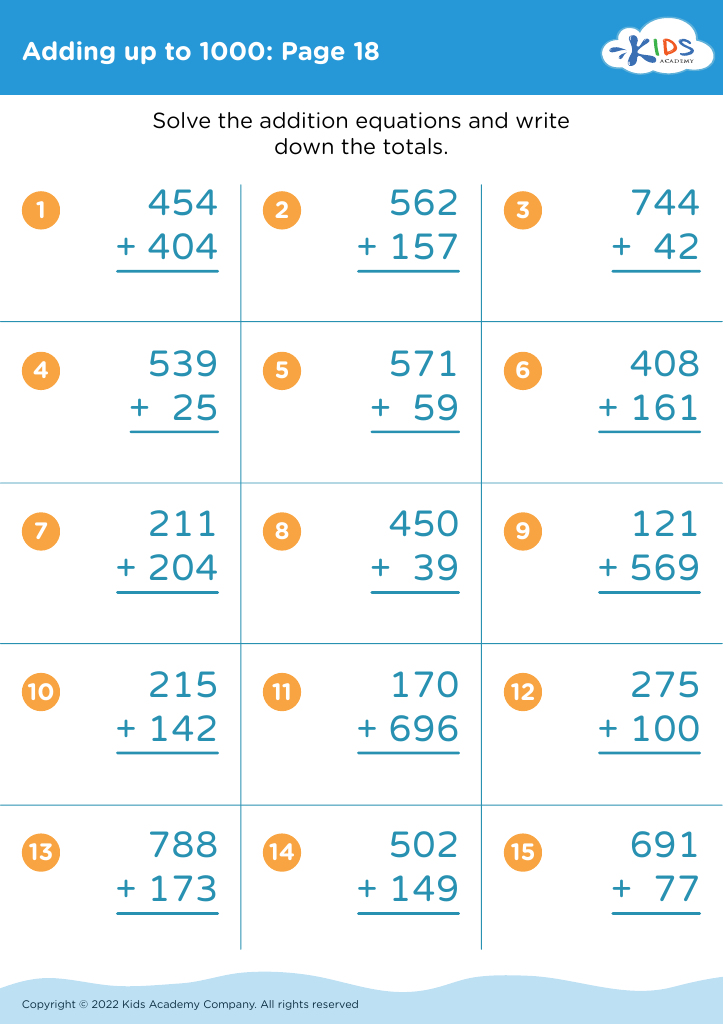
Adding up to 1000: Page 18

Adding up to 1000: Page 18

Adding up to 1000: Page 18
Worksheet


Spatial awareness is a crucial element of early mathematics learning, particularly in Grade 3. Parents and teachers should care about this concept because it serves as the foundation for many advanced mathematical skills. Children with strong spatial awareness can visualize objects in three dimensions, understand how shapes fit together, and solve problems related to geometry. This skill is important not just for mathematics but also for everyday tasks like reading maps, understanding charts, and even playing sports.

In Grade 3, students begin to explore geometry more deeply, including concepts like area, perimeter, and congruence. Encouraging spatial awareness at this stage can significantly enhance a child's ability to grasp these topics. Moreover, spatial skills are linked to improved critical thinking and problem-solving abilities, which are essential across all academic fields.

Engaging in activities that foster spatial awareness, such as puzzles, building blocks, and geometry games, can be both fun and enriching. When parents and teachers prioritize this area of development, they equip children with critical tools for academic success and real-world application, ultimately preparing them for future learning opportunities throughout their educational journey.