Understand fractions Grade 3 Math Worksheets
5 filtered results
Difficulty Level
Grade
Age
-
From - To
Subject
Activity
Standards
Welcome to our "Understand Fractions Grade 3 Math Worksheets" page, designed to help young learners master the concept of fractions in a fun and engaging way. Our comprehensive worksheets enhance students' understanding of fractions through various activities, including visual aids, fraction identification, and real-life applications. Perfect for in-school assignments or at-home practice, these resources cater to diverse learning styles and encourage critical thinking. With clear instructions and vibrant illustrations, our worksheets make learning fractions enjoyable and interactive. Help your child build a solid foundation in math while boosting their confidence and skills in dealing with fractions. Start exploring today!
Favorites
With answer key
Interactive
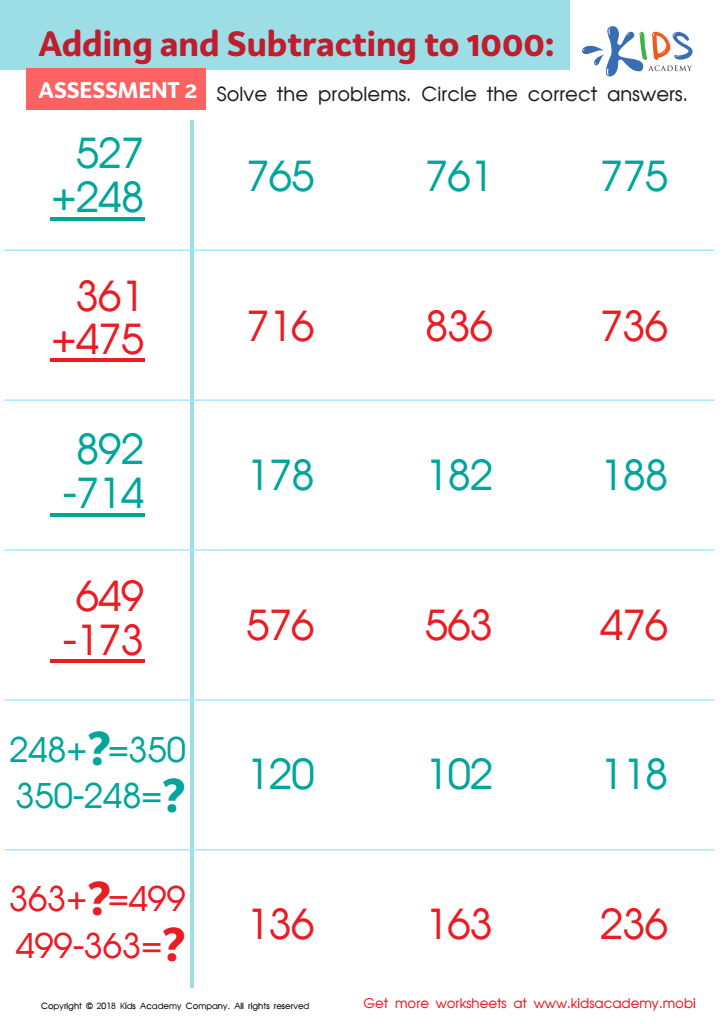
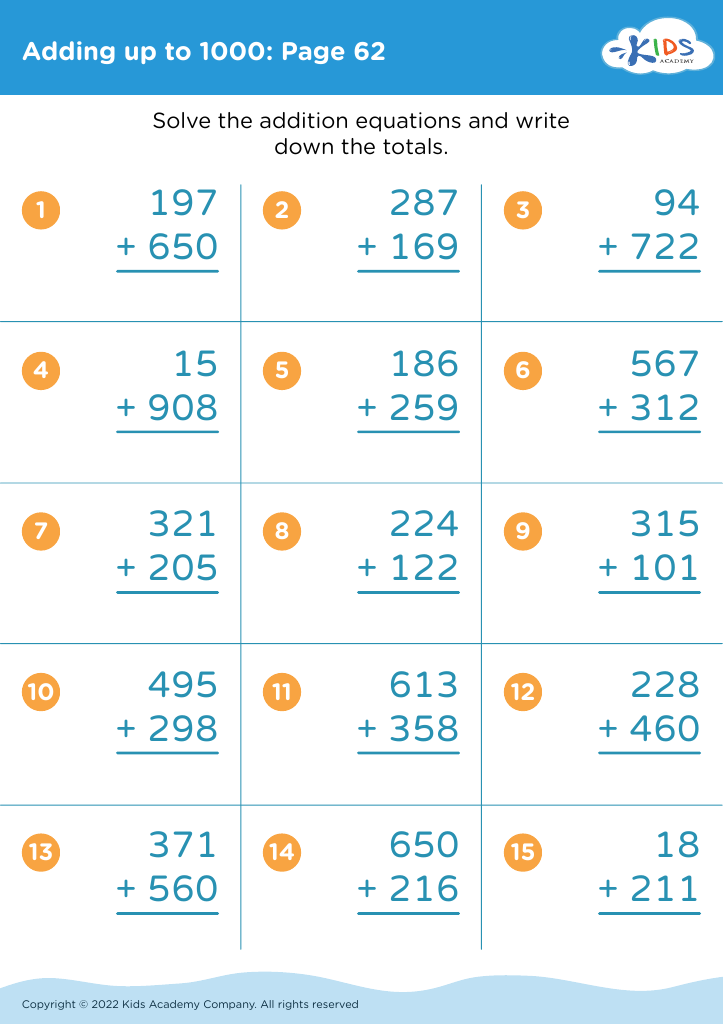
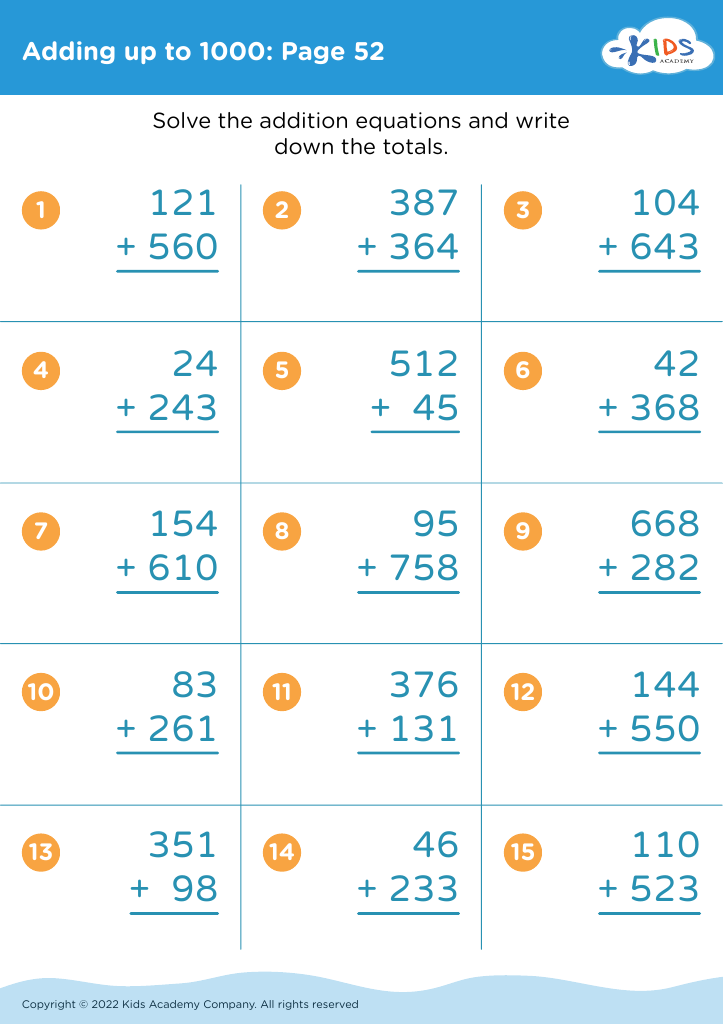
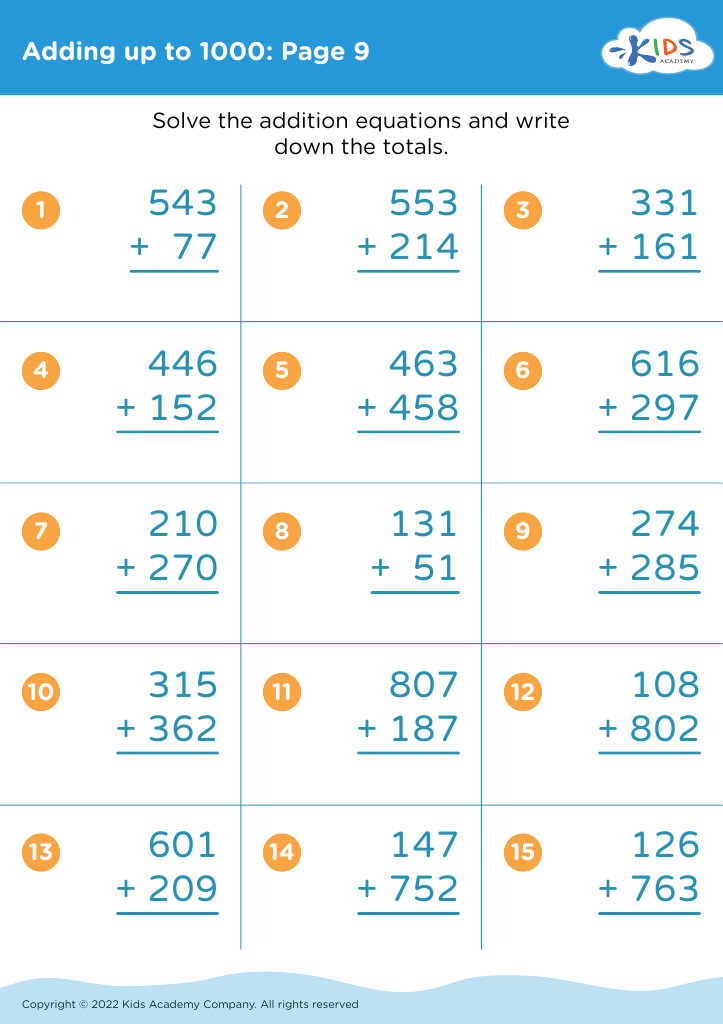
Adding and Subtracting to 1 Worksheet: Assessment 2
Test your child's addition and subtraction of 3-digit numbers with this assessment worksheet! They'll practice regrouping and pre-algebra skills to show their expertise. Have them work through the page and circle their answers, then see how many they got right to check their understanding and progress.
 Assign to My Students
Adding and Subtracting to 1 Worksheet: Assessment 2
Worksheet
Join Kids Academy for Free
Who is primarily going to use this learning content?







Understanding fractions in Grade 3 math is crucial for both students’ immediate academic success and their future learning. At this stage, students transition from whole numbers to dealing with parts of a whole, which lays the groundwork for more complex mathematical concepts. Parents and teachers must care about this foundational skill because it enhances children's problem-solving abilities and critical thinking.
Students learning fractions develop a sense of proportion and quantity that they will use in everyday situations, such as cooking, sharing, or measuring. Mastering fractions also prepares them for future topics like decimals and ratios, making their transition to higher math smoother.
Moreover, a solid understanding of fractions boosts a child’s confidence in math. When students grasp this concept, they are more likely to engage actively in math-related tasks and participate in discussions, thus fostering a positive attitude towards learning.
Involving parents and teachers in supporting this learning process creates a collaborative environment that reinforces concepts through real-life applications. When they show interest in fractions, students are more motivated to learn, ensuring they develop the skills necessary for success in and out of the classroom.