Check out this FREE Grade 3 Trial Lesson on Math!

Recognizing Common Fractions

Favorites
With answer key
Interactive
  • Grade 3
  • Understanding fractions
  • Math
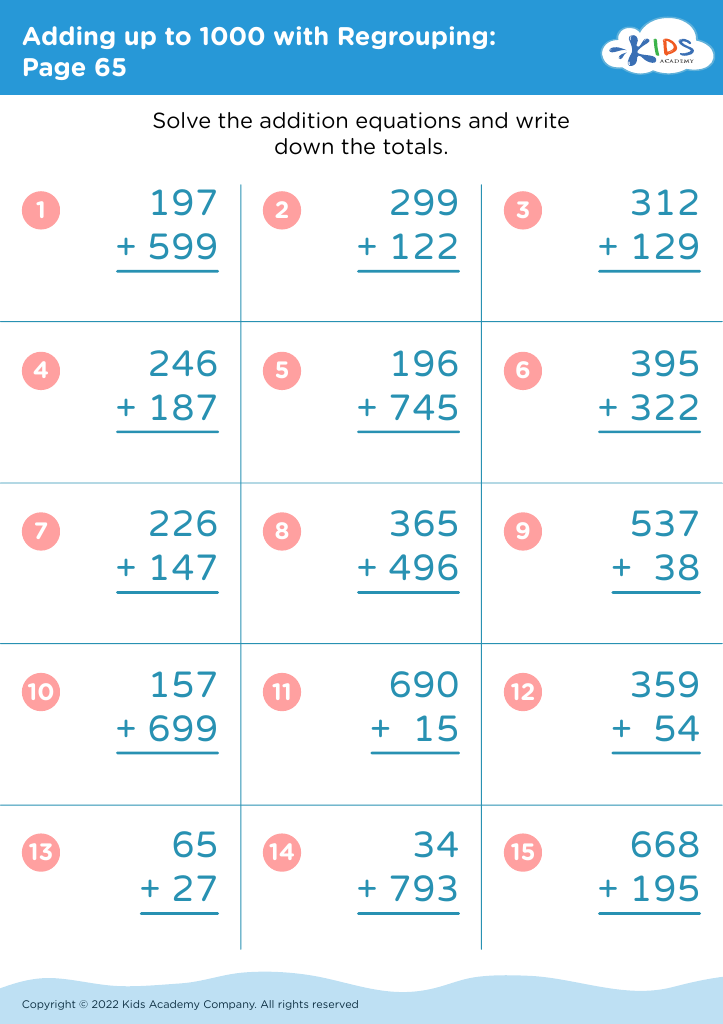
Adding up to 1000 with Regrouping: Page 65
Worksheet
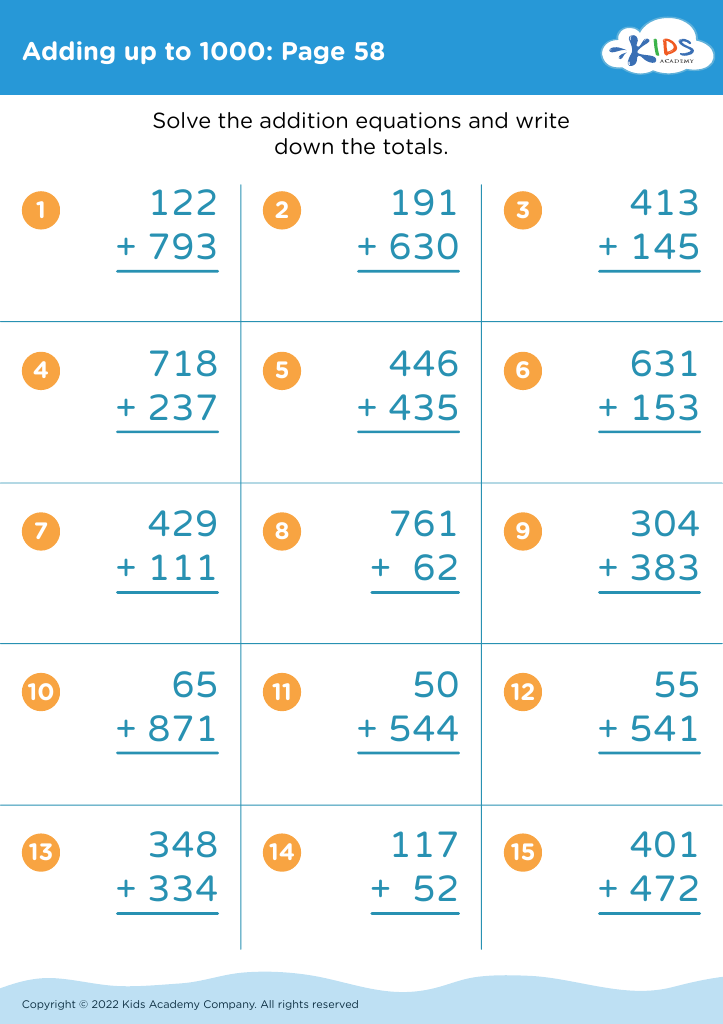
Adding up to 1000: Page 58

Adding up to 1000: Page 58

Adding up to 1000: Page 58
Worksheet
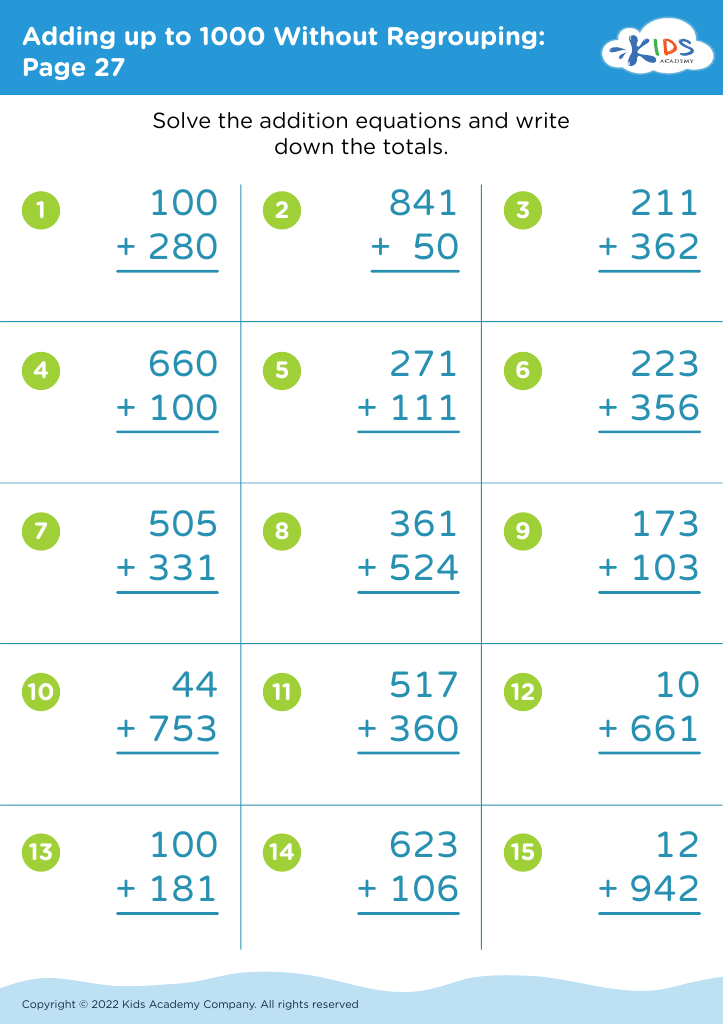
Adding up to 1000 Without Regrouping: Page 27
Worksheet
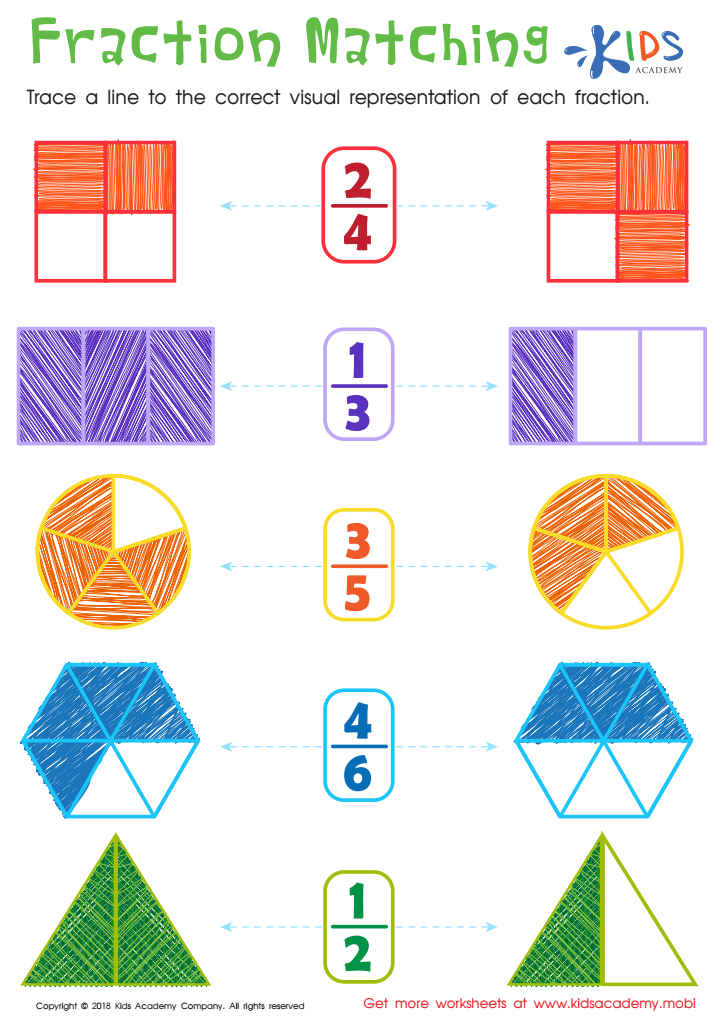
Fraction Matching Worksheet

Fraction Matching Worksheet

Teach your kindergartners fractions with this colorful worksheet. Make sure they understand numerators and denominators, then have them trace a line to the correct visual representation of each equation. There are five fractions for them to work on. With the foundation of fractions, mathematics will be much easier for them.
Fraction Matching Worksheet
Worksheet
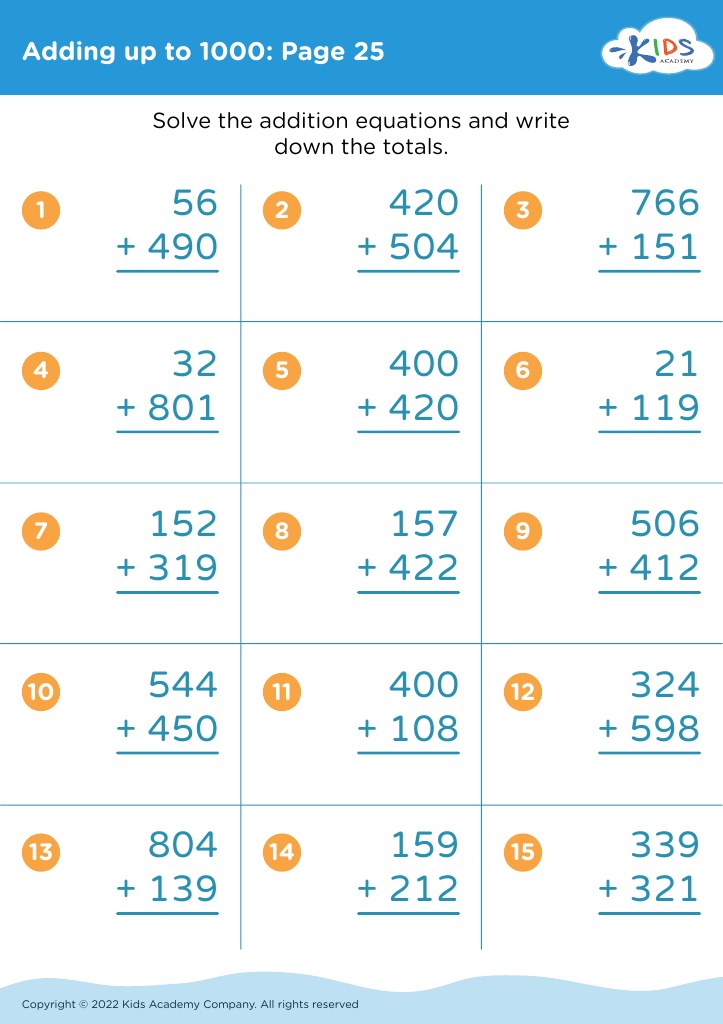
Adding up to 1000: Page 25

Adding up to 1000: Page 25

Adding up to 1000: Page 25
Worksheet
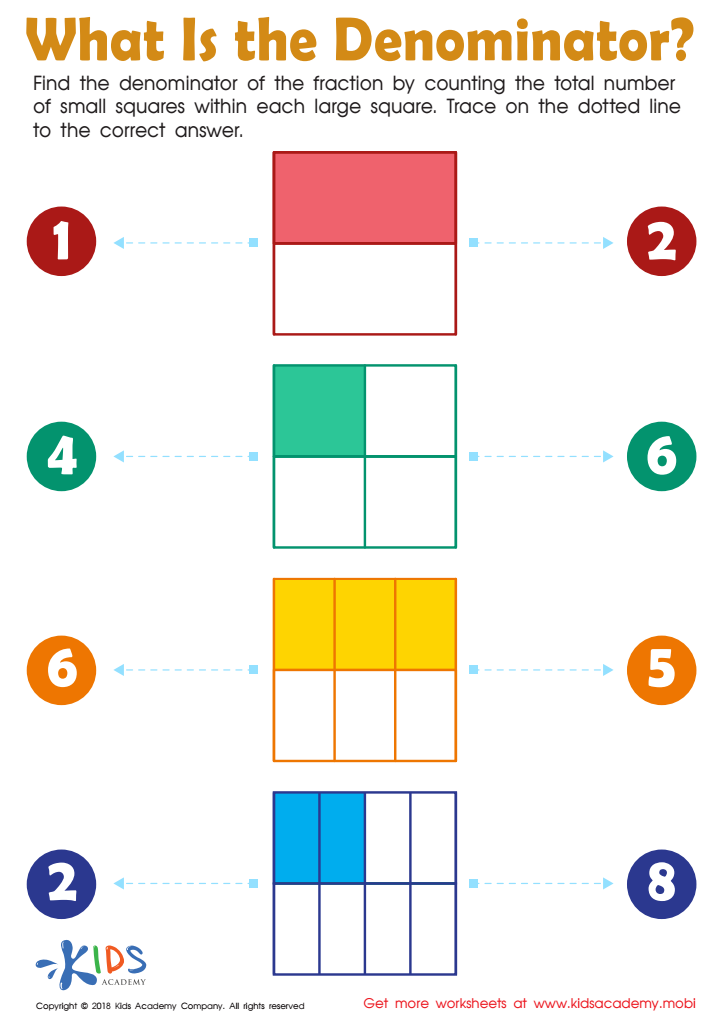
What Is the Denominator? Worksheet

What Is the Denominator? Worksheet

If your kindergartener is struggling with fractions, don't worry. Use this worksheet to help them understand better. Ask them to count the total small squares in each large square to find the denominator, then trace on the dotted line to answer. This printable tracing sheet will help them learn fractions easier.
What Is the Denominator? Worksheet
Worksheet
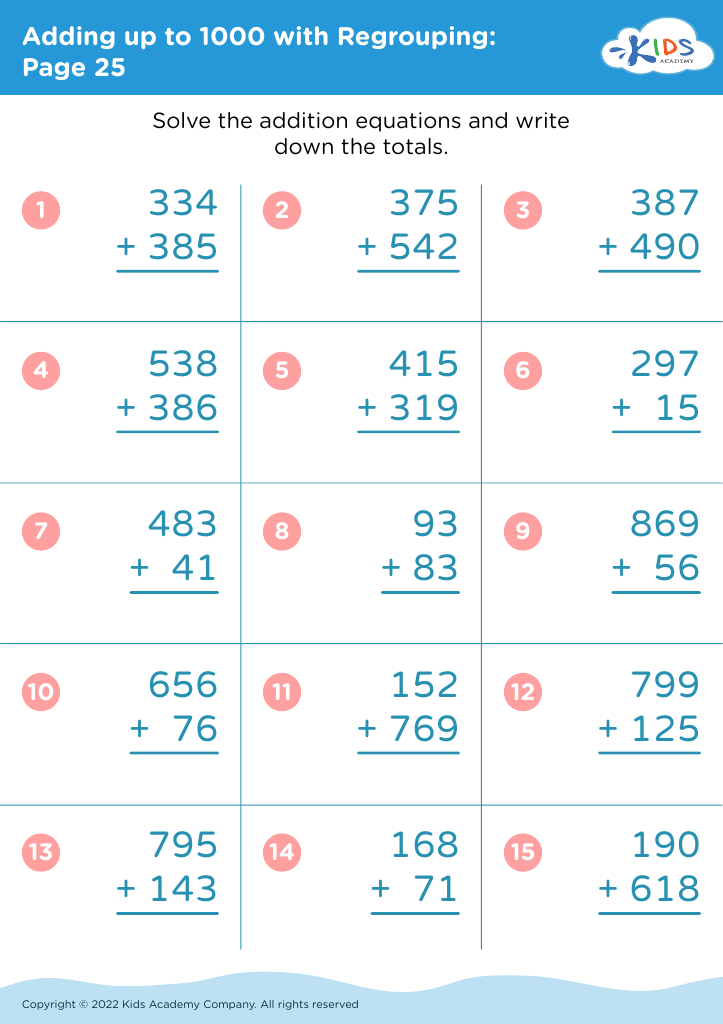
Adding up to 1000 with Regrouping: Page 25
Worksheet
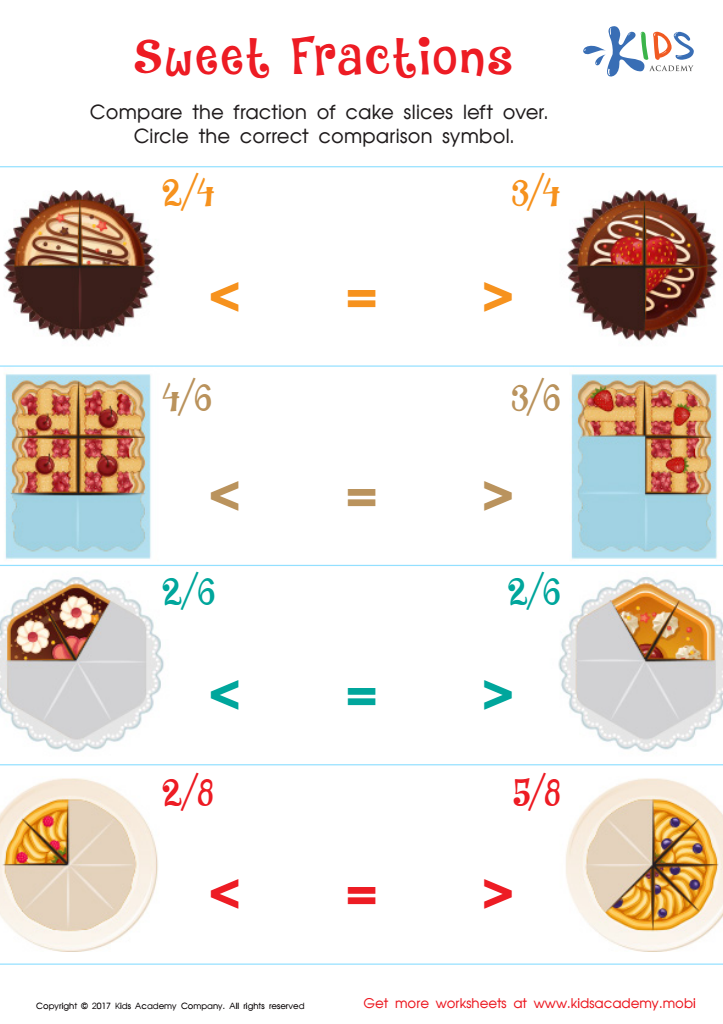
Сompare fractions worksheet for 3rd grade

Compare Fractions Worksheet

This compare fractions worksheet is great for 3rd graders to learn and understand fractions in a fun way. Let them explore fractions visually with the help of sweet treats!
Compare Fractions Worksheet
Worksheet
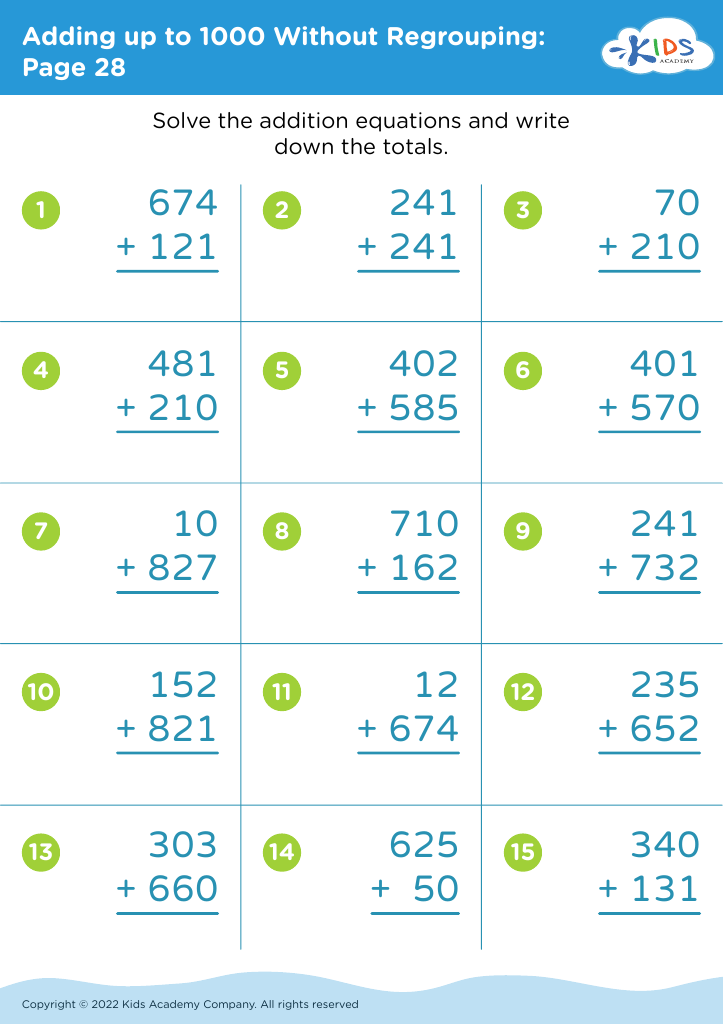
Adding up to 1000 Without Regrouping: Page 28
Worksheet
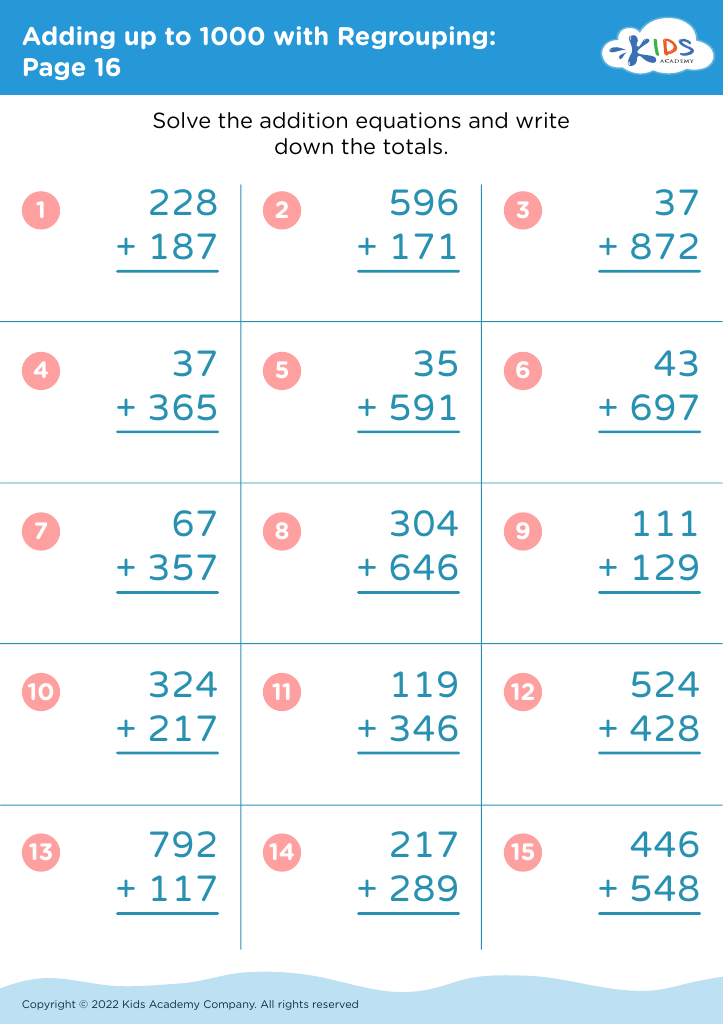
Adding up to 1000 with Regrouping: Page 16
Worksheet
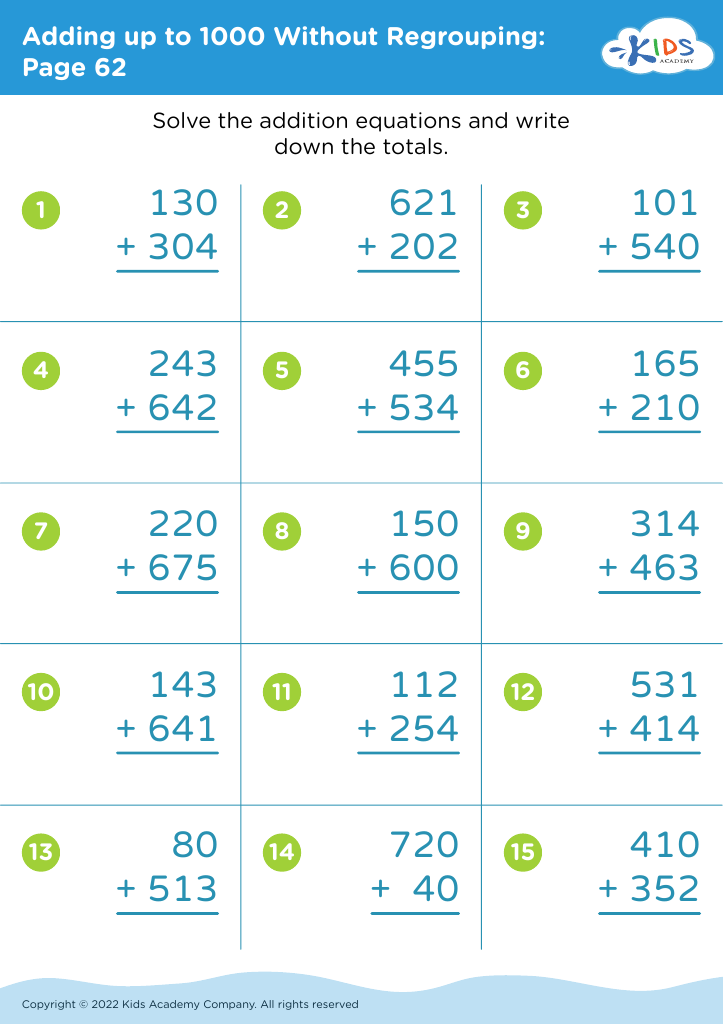
Adding up to 1000 Without Regrouping: Page 62
Worksheet
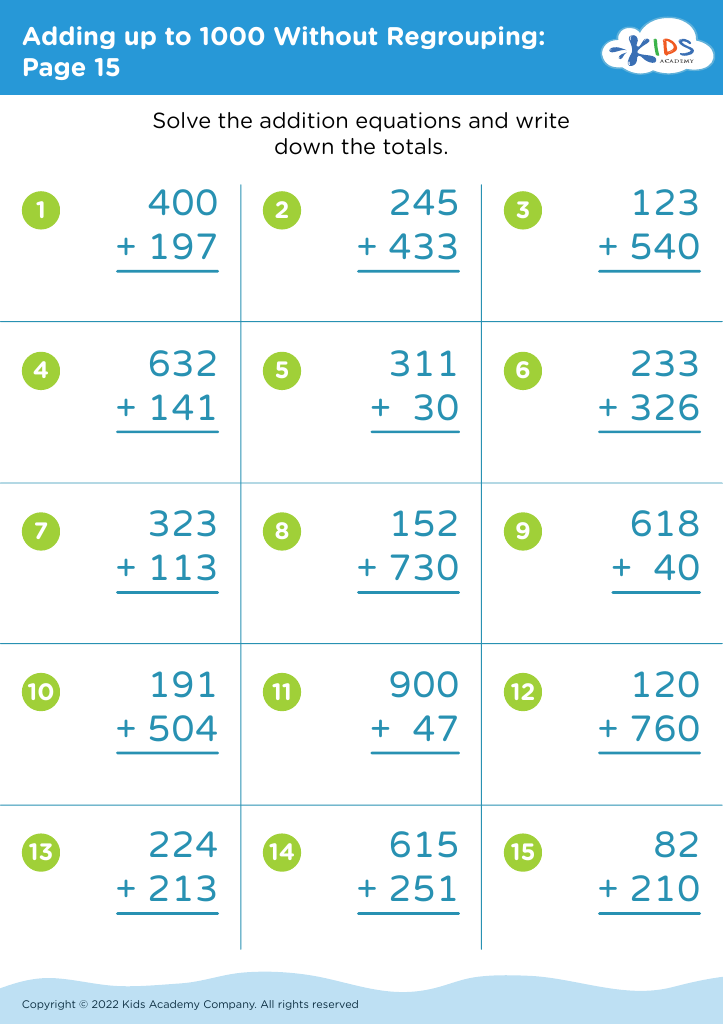
Adding up to 1000 Without Regrouping: Page 15
Worksheet
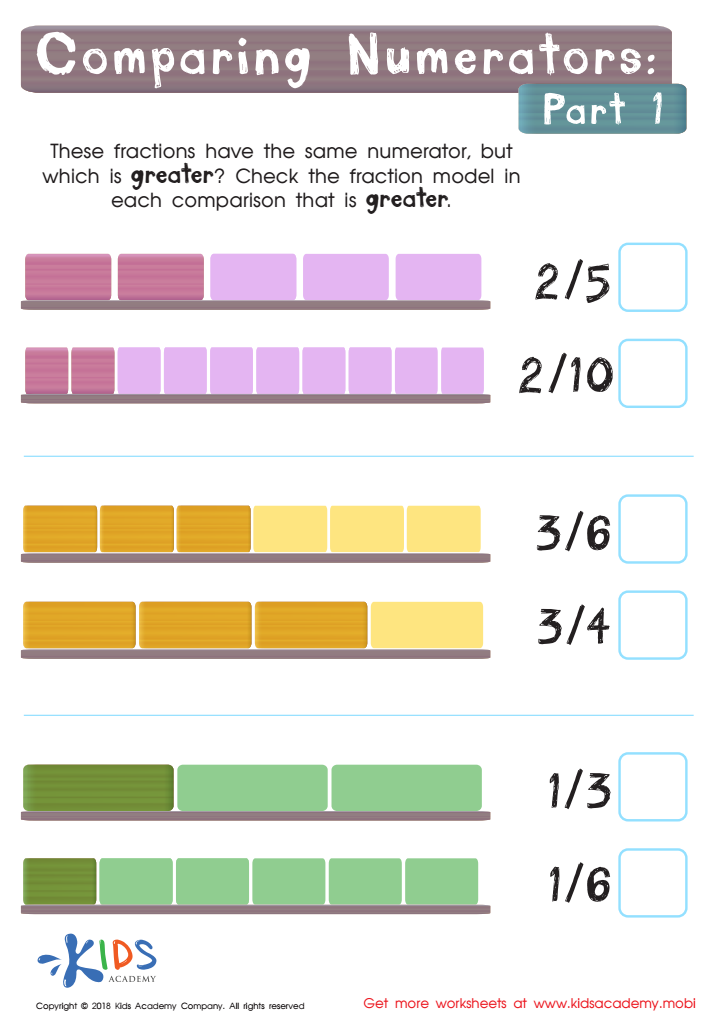
Comparing Numerators Part 1 Worksheet

Comparing Numerators Part 1 Worksheet

This worksheet has 3 fractions groups with the same numerator. Your child must determine which fraction is greater in each comparison. Check the fraction model to see the greater one.
Comparing Numerators Part 1 Worksheet

Worksheet
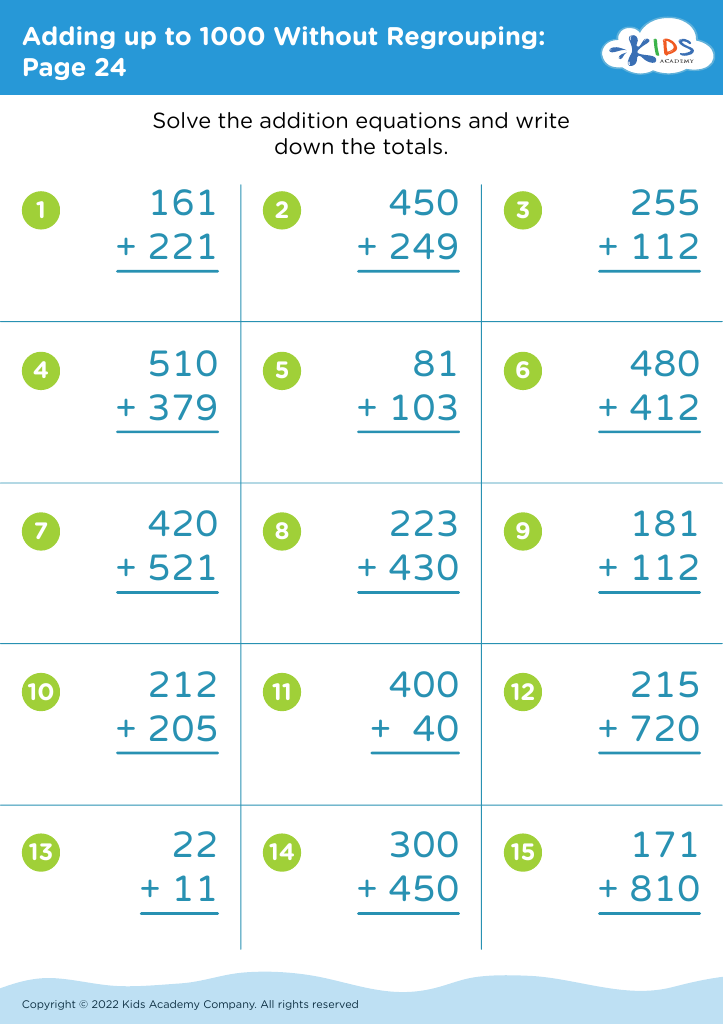
Adding up to 1000 Without Regrouping: Page 24
Worksheet


... 2 3

Understanding fractions in Grade 3 is fundamental for several reasons. For starters, fractions are integral to daily life, appearing in cooking, shopping, and even time management. By grasping these concepts early, children become better equipped to navigate everyday tasks efficiently.

From an academic standpoint, fractions form the foundation for more advanced mathematical concepts such as ratios, percentages, and algebra. A solid understanding at this stage can boost confidence, fostering a positive attitude towards more challenging subjects later on. Furthermore, fraction comprehension enhances problem-solving skills, encouraging logical thinking and pattern recognition.

Parents and teachers should also recognize that mastering fractions at an early age supports overall cognitive development. It aids in abstract thinking, as children learn to comprehend and manipulate parts of a whole. This skill translates across various academic subjects and real-world scenarios, contributing to a well-rounded education.

Lastly, displaying an interest in a child's education positively impacts their motivation and performance. When parents and teachers collaborate to emphasize the importance of topics like fractions, children receive a consistent message about the value of learning. This support can make educational experiences more rewarding and enriching, fostering lifelong learning habits.