Understanding Perimeter Grade 3 Math Worksheets
3 filtered results
-
From - To
Unlock the world of geometry with our "Understanding Perimeter Grade 3 Math Worksheets" designed specifically for young learners. These engaging and challenging worksheets help third graders grasp the essential concept of perimeter through fun activities and real-world examples. Each exercise aims to develop their calculation skills by measuring the boundaries of various shapes. Our printables make learning interactive and enjoyable, solidifying foundational math skills that will benefit students as they progress. Perfect for classroom use or at-home practice, these worksheets are a valuable resource for teachers and parents seeking to enhance their child's math education.
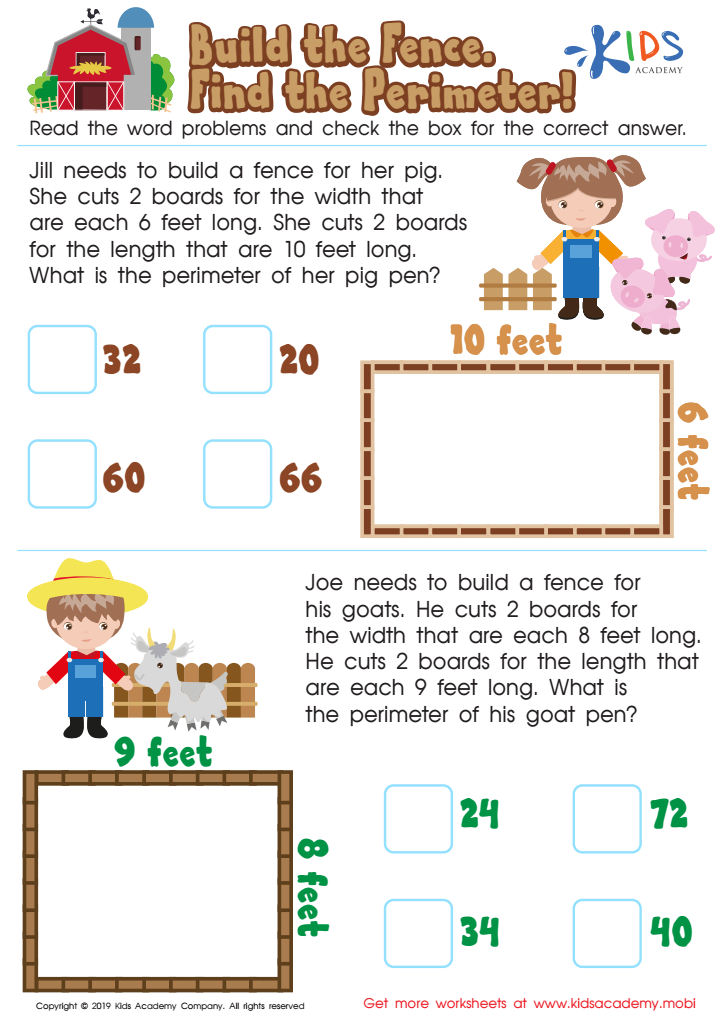
Build the Fence, Find the Perimeter Worksheet
 Assign to My Students
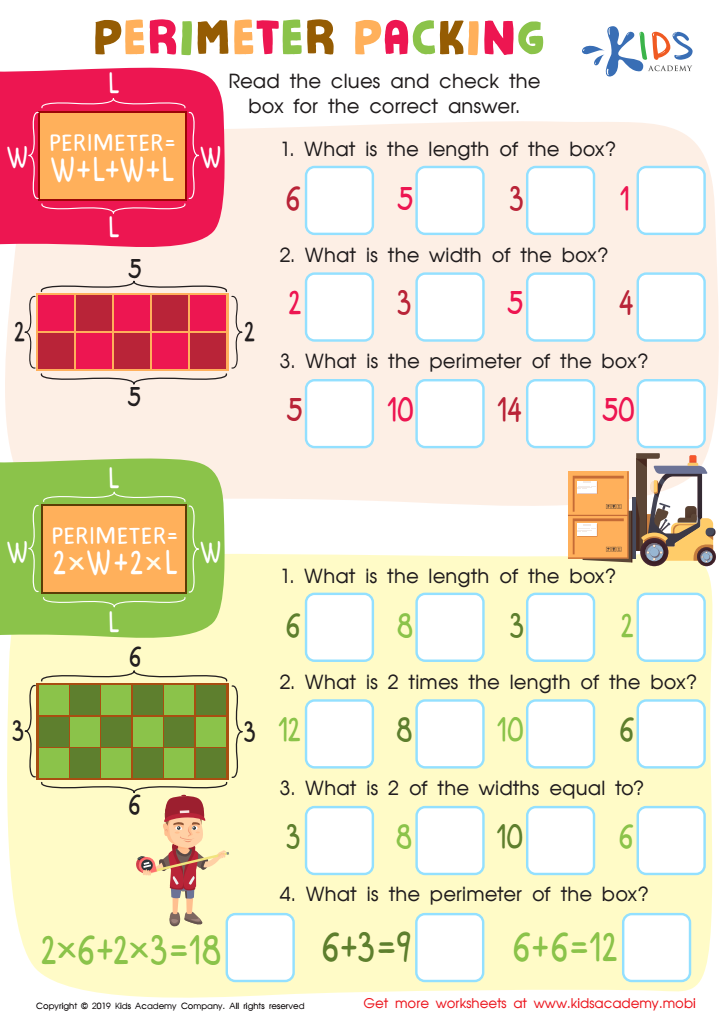
Perimeter Parking Worksheet
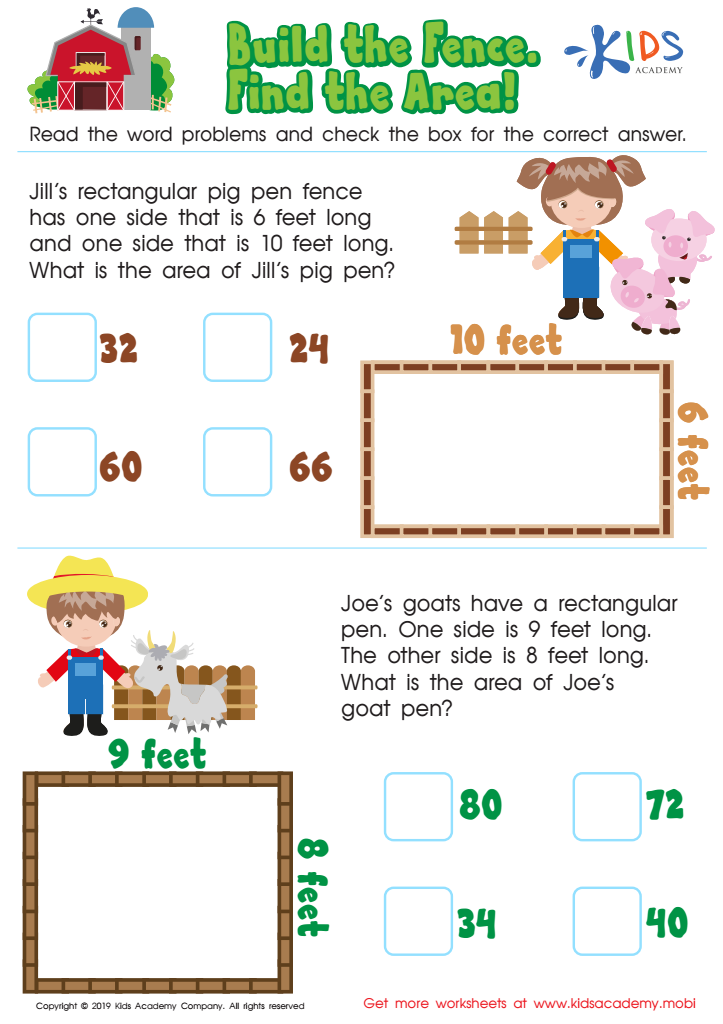
Build the Fence, Find the Area Worksheet








Understanding perimeter is a foundational skill in Grade 3 math that significantly boosts students' overall comprehension of geometry and early algebra. For parents and teachers, this concept should be prioritized because it cultivates critical thinking and problem-solving skills essential for advanced mathematical learning.
When students grasp how to calculate the perimeter, they learn to measure and organize spaces around them, directly correlating abstract numbers to real-world applications. For example, they may apply their knowledge to find the boundary lengths required for a garden or a playground, thereby seeing the practical utility of their lessons.
Moreover, understanding perimeter lays the groundwork for more complex topics, such as area and volume, which are key concepts in later grades. It helps students recognize patterns and build a sequential understanding of how mathematical concepts evolve.
Beyond academics, learning perimeter enhances spatial awareness and logical reasoning, skills crucial in everyday decision-making and problem-solving scenarios.
Lastly, when teachers and parents show enthusiasm for this topic, their attitude transfers to the students, fostering a positive and conducive math learning environment. Encouraging curiosity and interest in such fundamental concepts ensures students remain engaged and motivated, easing the transition into more advanced mathematical studies.