Vocabulary expansion Grade 3 Math Worksheets
5 filtered results
-
From - To
Boost your third grader's math language with our Vocabulary Expansion Grade 3 Math Worksheets! Designed to enhance your child's mathematical awareness and proficiency, these engaging worksheets focus on important terminology and concepts relevant to their grade level. By mastering key vocabulary such as "numerator," "denominator," "estimation," and "multiplication," students will gain confidence and improve their problem-solving skills. Packed with fun and interactive activities, our worksheets support classroom learning and are perfect for at-home practice. Prepare your child for academic success by expanding their math vocabulary and understanding. Unlock their potential today with these invaluable resources!
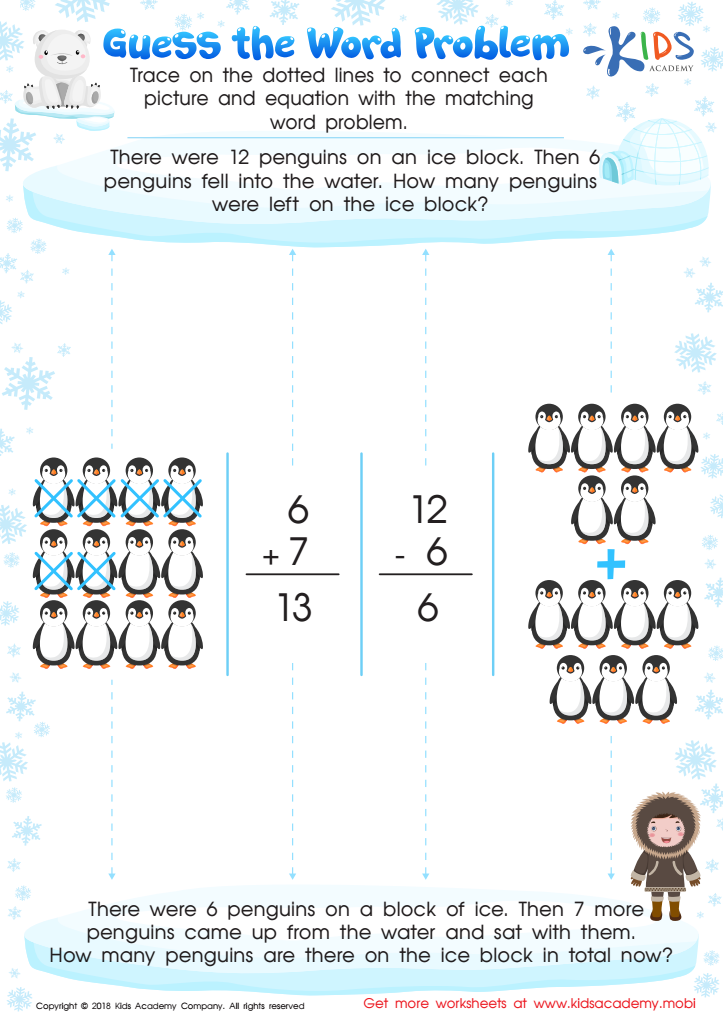
Guess the Word Problem Worksheet
 Assign to My Students
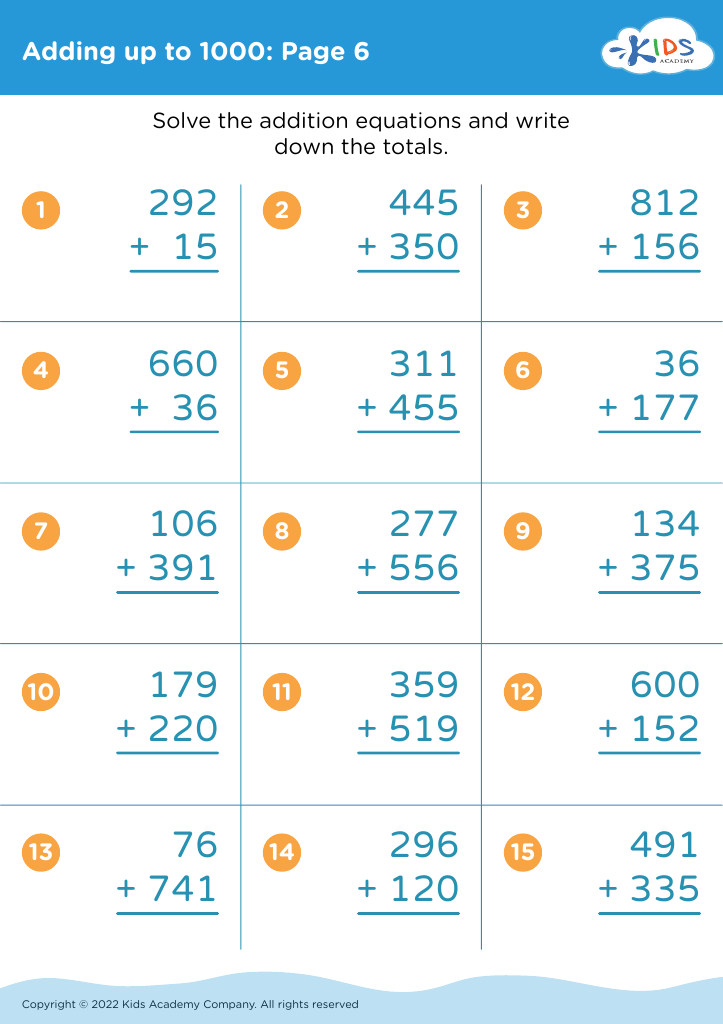
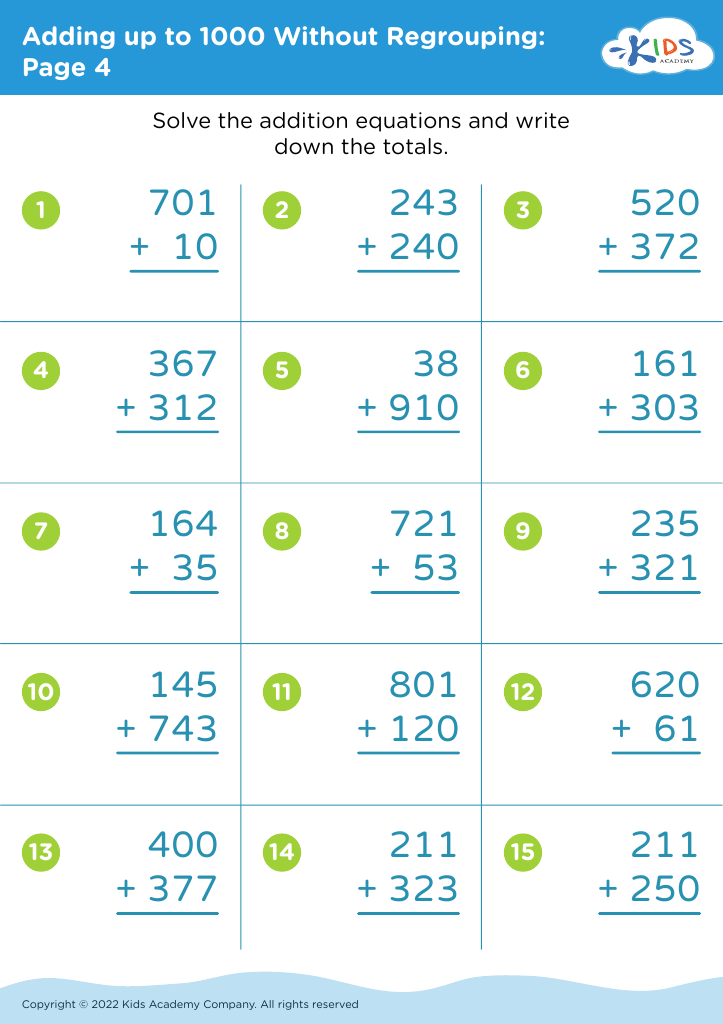







Vocabulary expansion in Grade 3 Math is crucial for several reasons. A robust math vocabulary helps children grasp concepts more quickly and accurately. Math terminology such as "sum," "difference," "product," and "quotient," alongside words like "parallel," "perpendicular," "area," and "perimeter," give students the precise language needed to describe and solve problems effectively. When kids understand these terms, they can follow instructions better, participate more actively in class discussions, and perform accurately on assessments.
Vocabulary development also supports higher-order thinking. Words are more than labels; they connect and structure knowledge. Knowing the term "estimate" equips students with a strategy for problem-solving that goes beyond mere calculation, fostering reasoning and critical thinking.
A broad math vocabulary also builds confidence. Children who can articulate their mathematical thinking feel more capable and are likely to enjoy math more, which can lead to greater engagement and better outcomes.
Lastly, mathematical literacy extends beyond the classroom. Understanding math vocabulary is vital for real-world applications, such as managing money, cooking, and building projects. Therefore, investing time in expanding students' math vocabulary in Grade 3 lays a strong foundation for future learning, not just in math but across their educational journey and life skills.