Number Recognition Grade 3 Multiplication Worksheets
4 filtered results
-
From - To
Discover an engaging collection of Grade 3 multiplication worksheets focused on number recognition! Designed to enhance your child's mathematical skills, these worksheets provide fun and interactive exercises that reinforce the understanding of numbers and their relation to multiplication. Perfect for classroom use or at-home learning, these resources help students practice identifying numbers and solving multiplication problems with confidence. With a variety of challenging activities, your child will strengthen their foundation in mathematics while enjoying the process. Boost their skills today and empower them to excel in their academic journey with our Number Recognition Grade 3 Multiplication Worksheets!
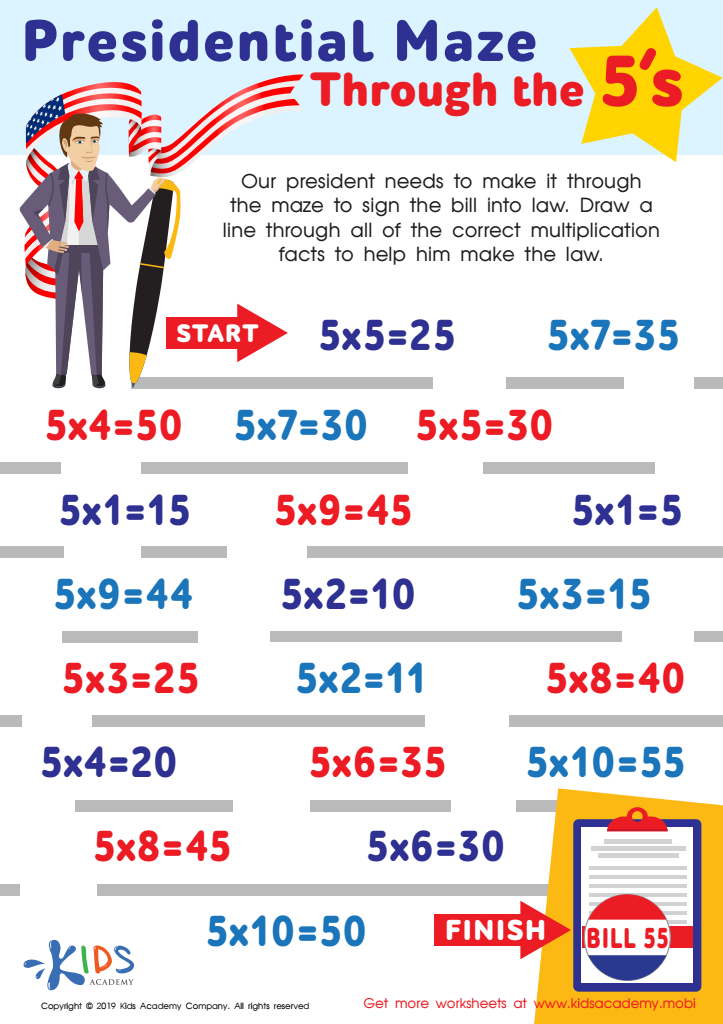
Presidential Maze Through the 5’s Worksheet
 Assign to My Students
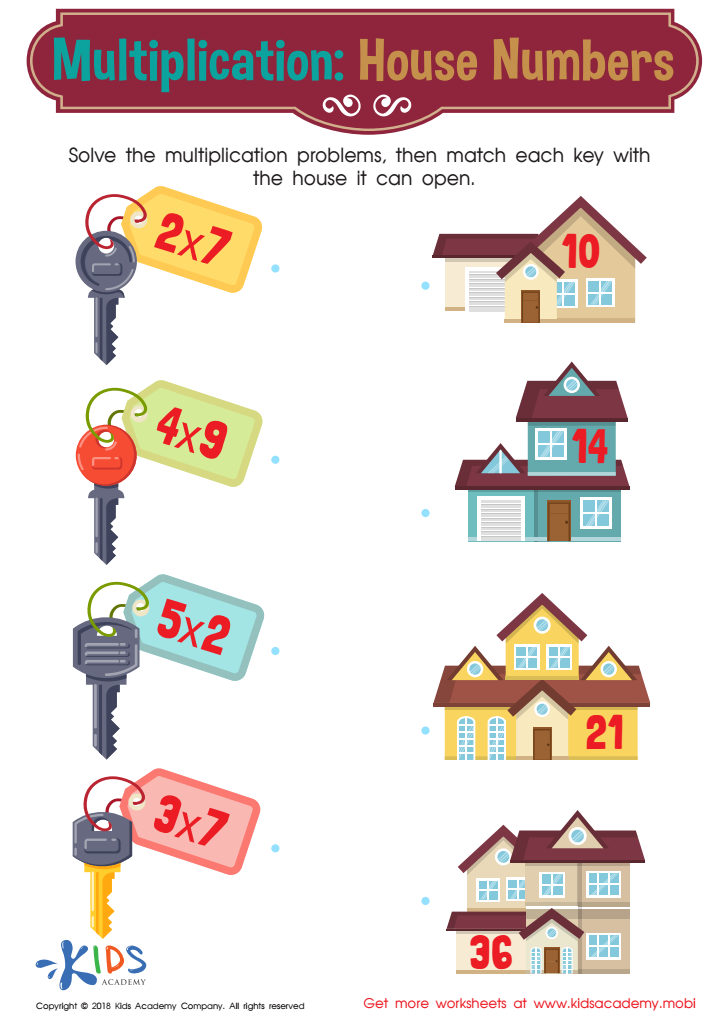
House Numbers Worksheet
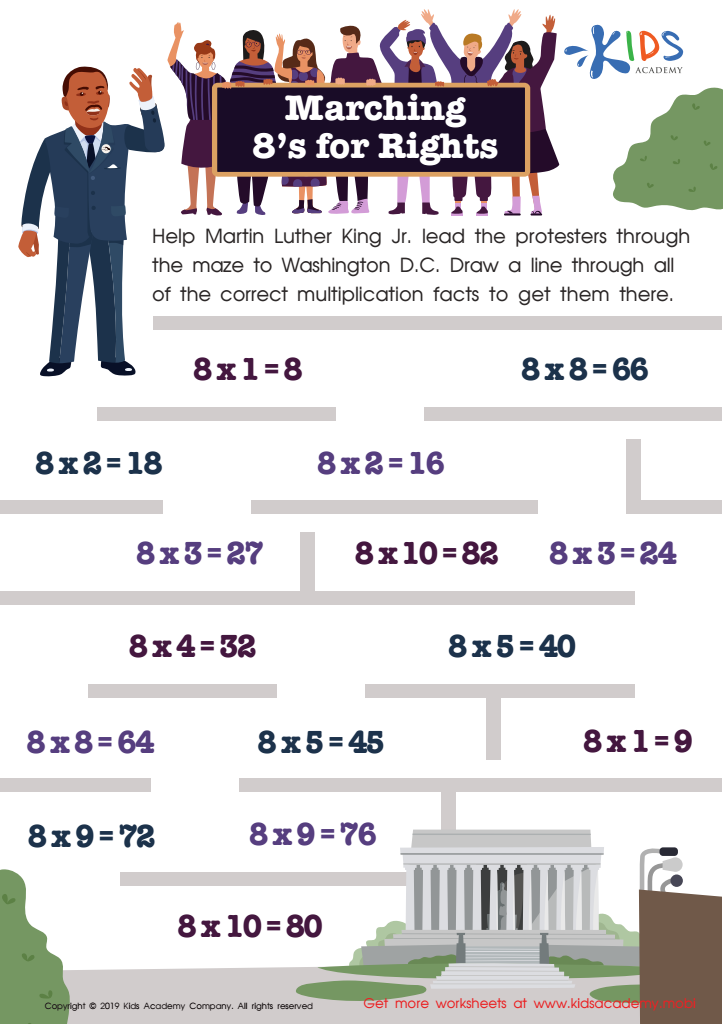
Marching 8’s for Rights Worksheet
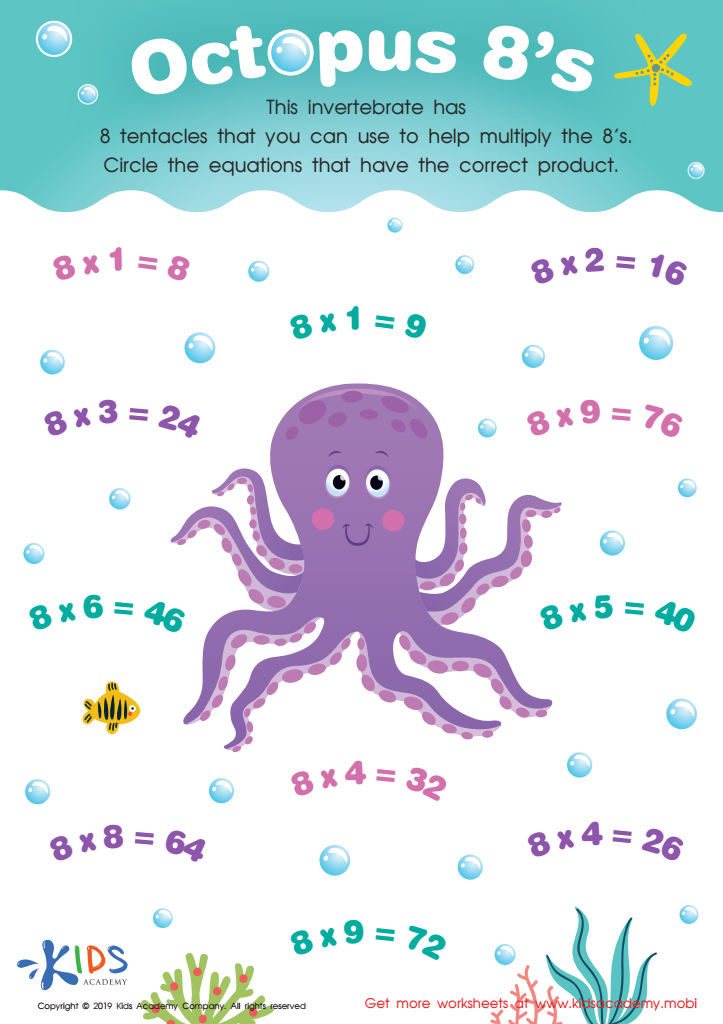
Octopus 8’s Worksheet








Number recognition and multiplication skills in grade 3 are foundational for a child's future success in mathematics and beyond. At this stage, children transition from basic arithmetic to more complex problem-solving tasks, making strong number recognition an essential tool. Parents and teachers should care about this developmental milestone for several reasons.
Firstly, multiplication is a core skill that lays the groundwork for more advanced mathematical concepts like division, fractions, and algebra. Mastery in multiplication enables students to tackle multi-step problems, enhancing their critical thinking abilities.
Additionally, number recognition reduces cognitive load, allowing children to focus on understanding mathematical relationships rather than struggling with basic facts. This is crucial for developing a positive attitude toward mathematics, as children who master these skills are less likely to experience math anxiety.
Furthermore, early mastery of multiplication enhances confidence and fosters a growth mindset. When students experience success with number recognition and multiplication, they are more likely to engage in math-related activities and challenges enthusiastically.
Finally, strong mathematical skills can lead to better educational and career opportunities in our increasingly data-driven world. Parents and teachers play a vital role in supporting this development, ensuring children are equipped with the necessary tools for lifelong learning.