Understanding times tables Grade 3 Multiplication Worksheets
6 filtered results
Difficulty Level
Grade
Age
-
From - To
Subject
Activity
Standards
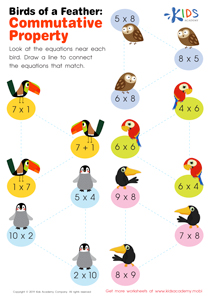
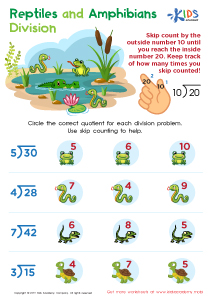
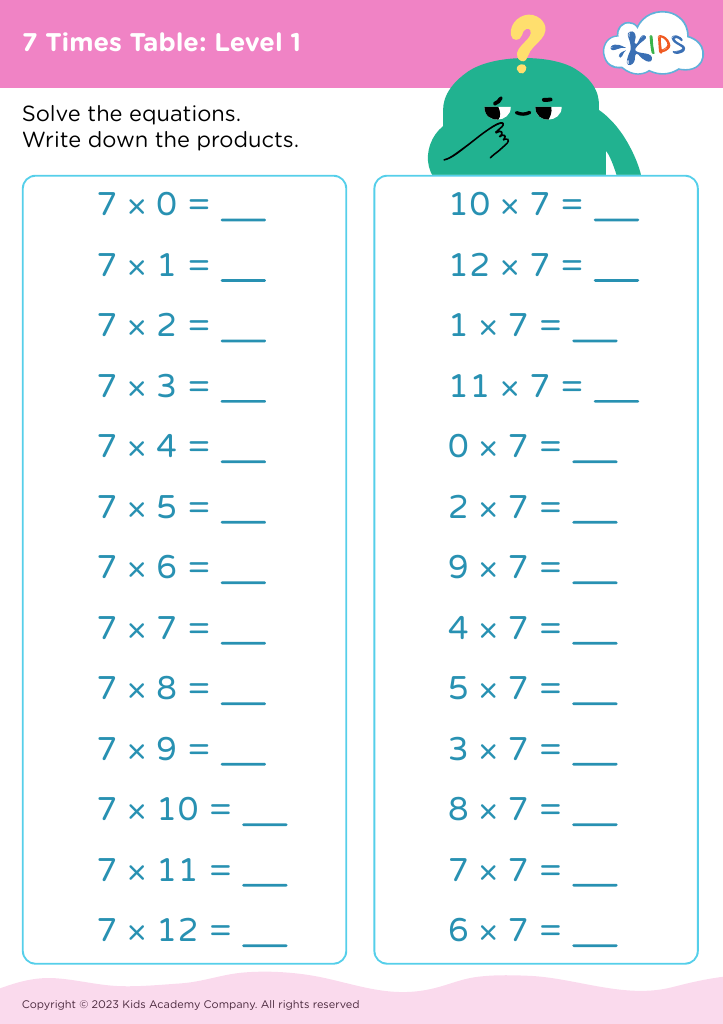
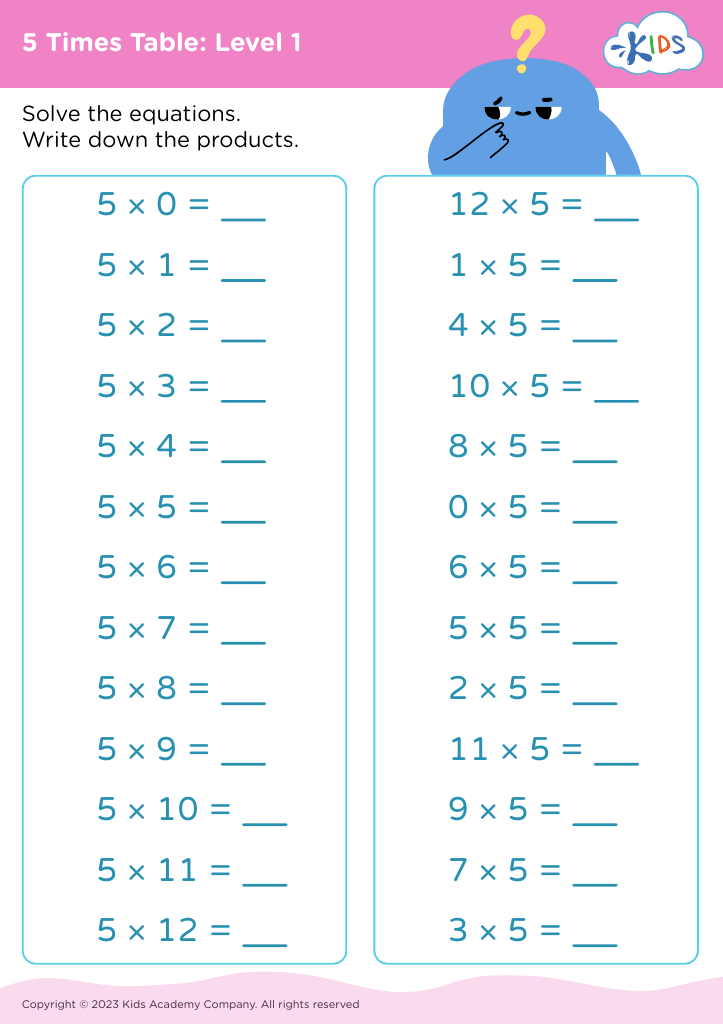
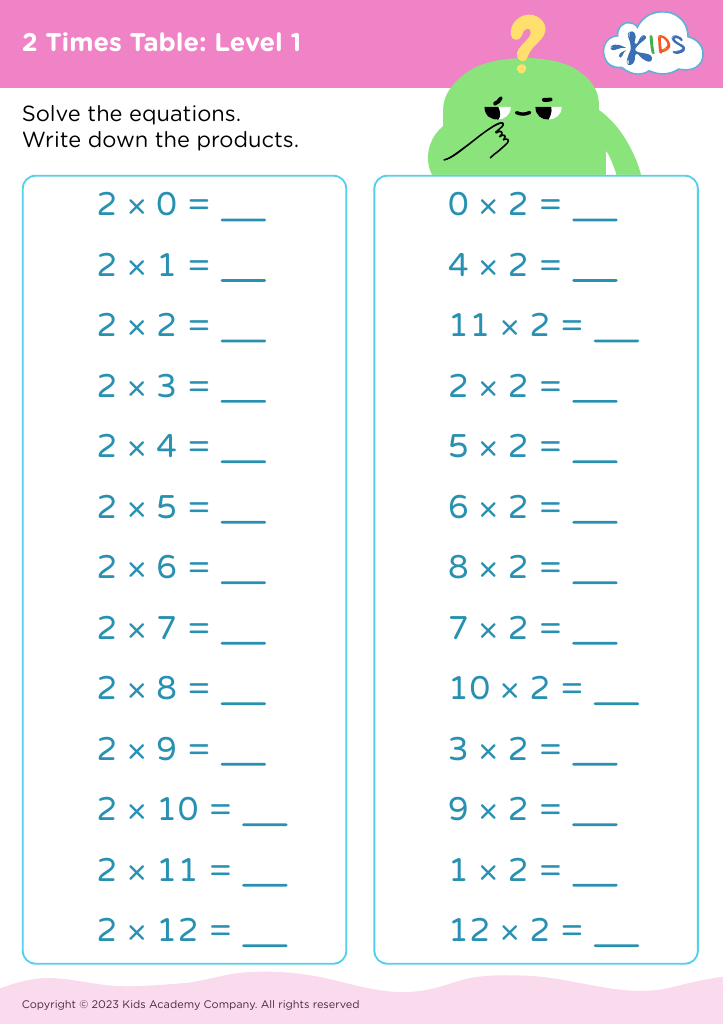
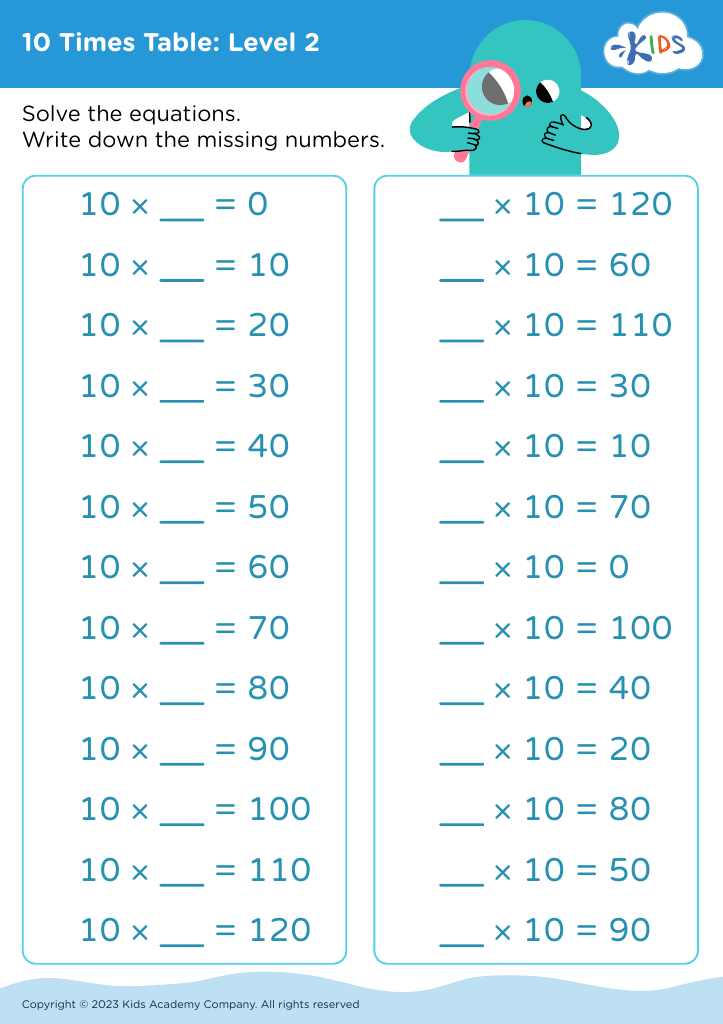
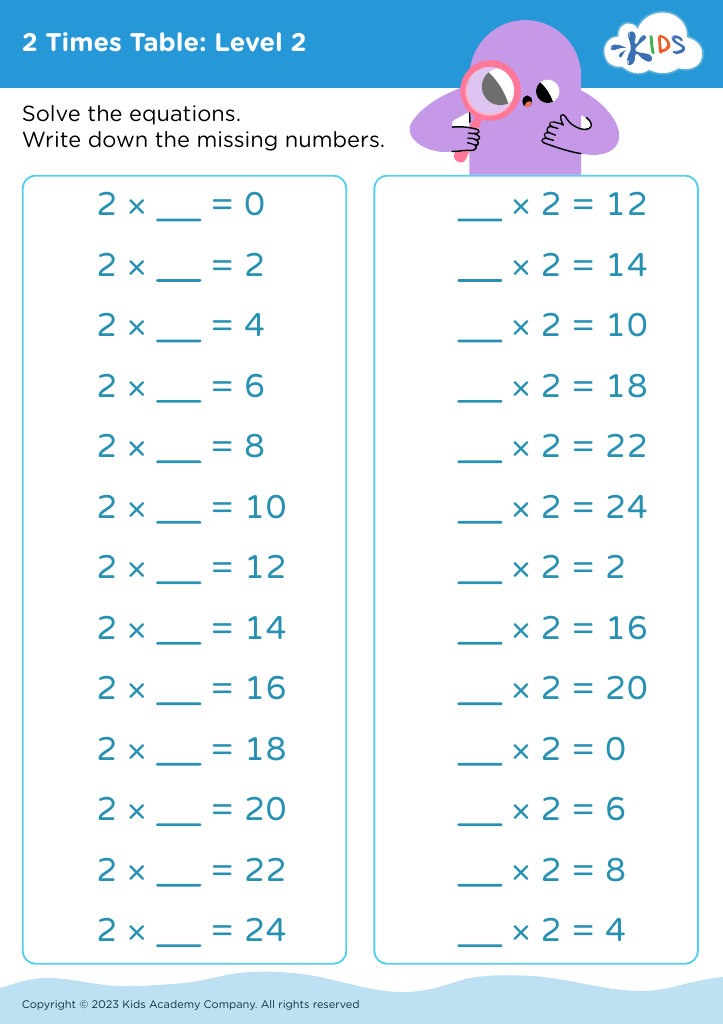
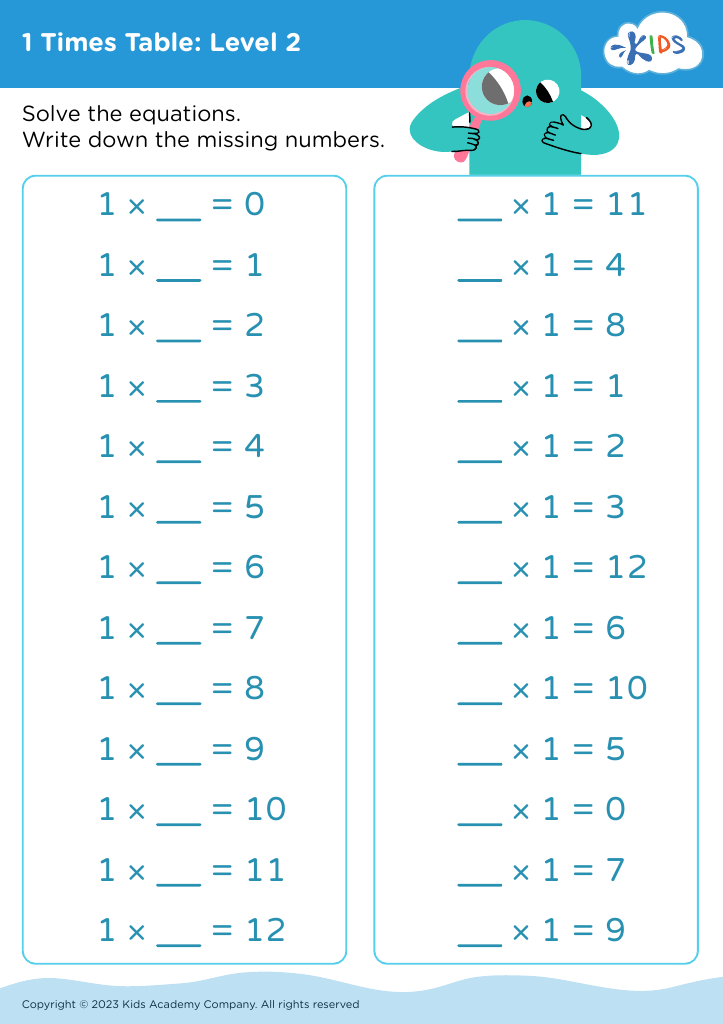
Boost your third grader's math skills with our engaging "Understanding Times Tables" Grade 3 Multiplication Worksheets. Designed to simplify the learning process, these worksheets provide a variety of interactive and fun exercises to help children grasp the fundamentals of times tables. From basic multiplication problems to more challenging tasks, each worksheet aims to build confidence and proficiency. Perfect for both classroom use and at-home practice, our sheets ensure that your child learns at their own pace while gaining essential multiplication skills. Give your young learner the tools they need to excel in math with Kids Academy’s expertly crafted resources.
Favorites
With answer key
Interactive
Join Kids Academy for Free
Who is primarily going to use this learning content?








Understanding times tables in Grade 3 is crucial for several reasons, benefitting both academic growth and life skills development. Firstly, multiplication is a foundational mathematical skill that underpins more complex concepts students will encounter later in their academic journey, such as division, fractions, and algebra. Mastery of times tables enhances a child's confidence and competence in these areas, reducing anxiety and making advanced topics more accessible.
Secondly, strong times table knowledge boosts problem-solving capabilities and logical thinking. Children who are proficient in multiplication can quickly perform calculations that are often necessary in everyday scenarios, such as travel, shopping, and budgeting, thus fostering their numerical literacy.
For teachers, ensuring that students have a solid grasp of times tables facilitates more effective teaching of higher-order math skills. It prevents the need to continuously reteach basic multiplication, allowing more time to be focused on introducing and practicing more complex concepts.
For parents, supporting their child in mastering times tables can create a more engaging and less stressful homework environment. It can also provide opportunities for positive reinforcement and bonding through joint learning activities. Therefore, both teachers and parents should prioritize times tables mastery, recognizing its pivotal role in shaping both academic success and practical life skills.