Visual Learning Grade 3 Word Problems Worksheets
5 filtered results
-
From - To
Enhance your Grade 3 students' math skills with our Visual Learning Word Problems Worksheets! These engaging resources help young learners decode and solve a variety of math challenges using visual representations. By incorporating visual aids like pictures, diagrams, and charts, students can better understand mathematical concepts and improve critical thinking. These worksheets encourage creativity and hands-on learning, making math enjoyable and accessible. Perfect for classroom use or at-home practice, our Visual Learning worksheets support different learning styles and help children build confidence in problem-solving. Download now to foster a supportive learning environment that makes math fun and captivating for every student!
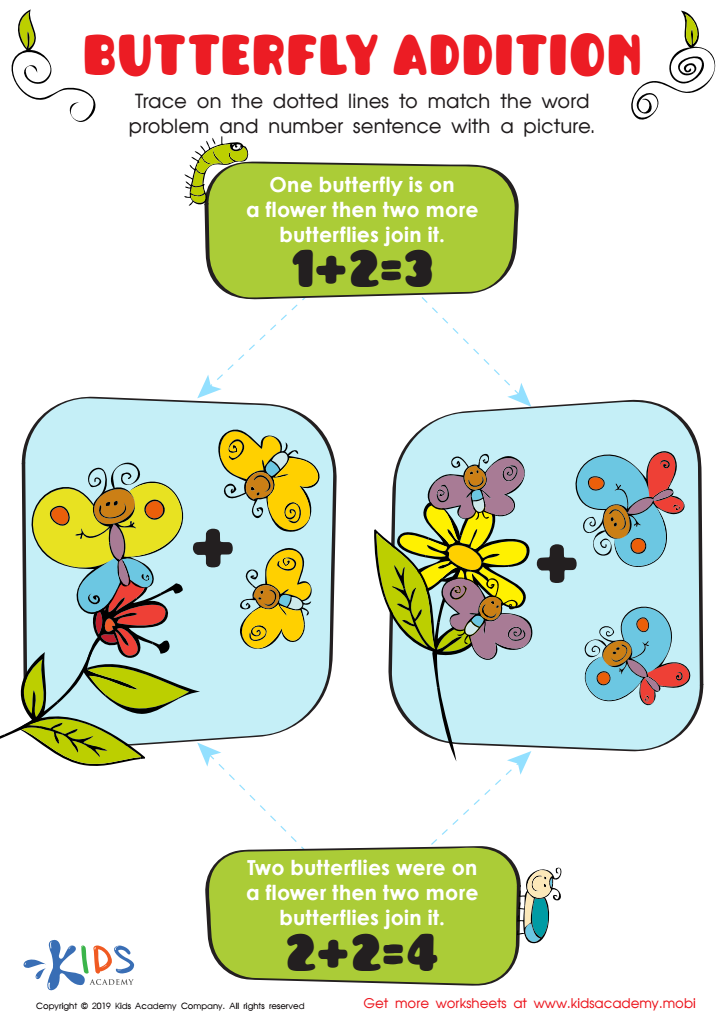
Butterfly Addition Worksheet
 Assign to My Students
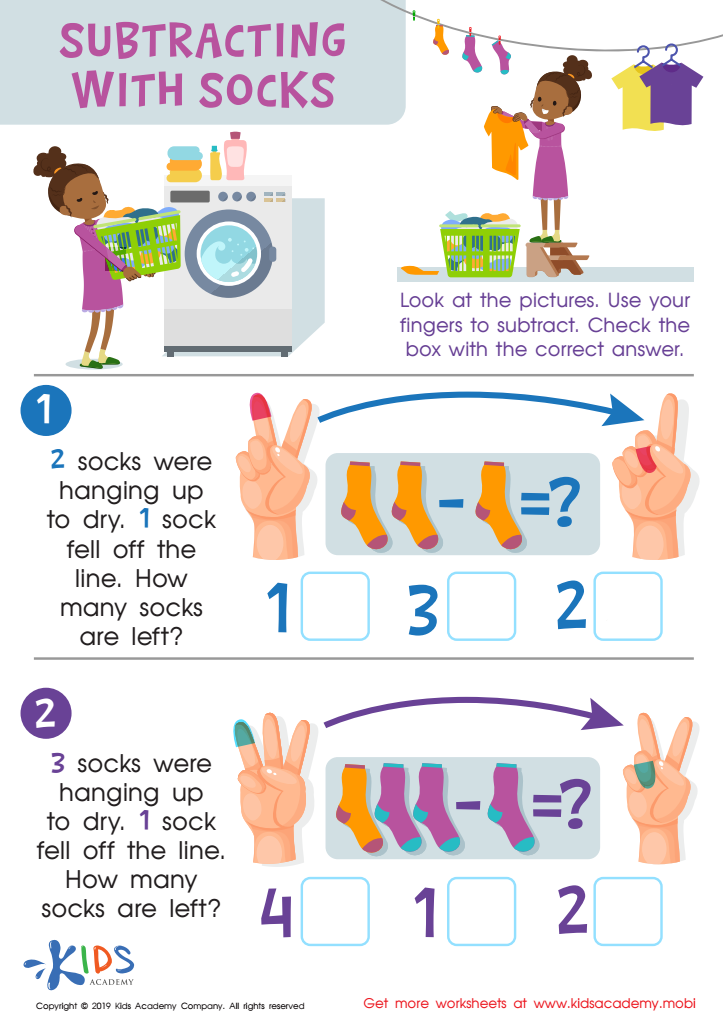
Subtracting Socks Worksheet
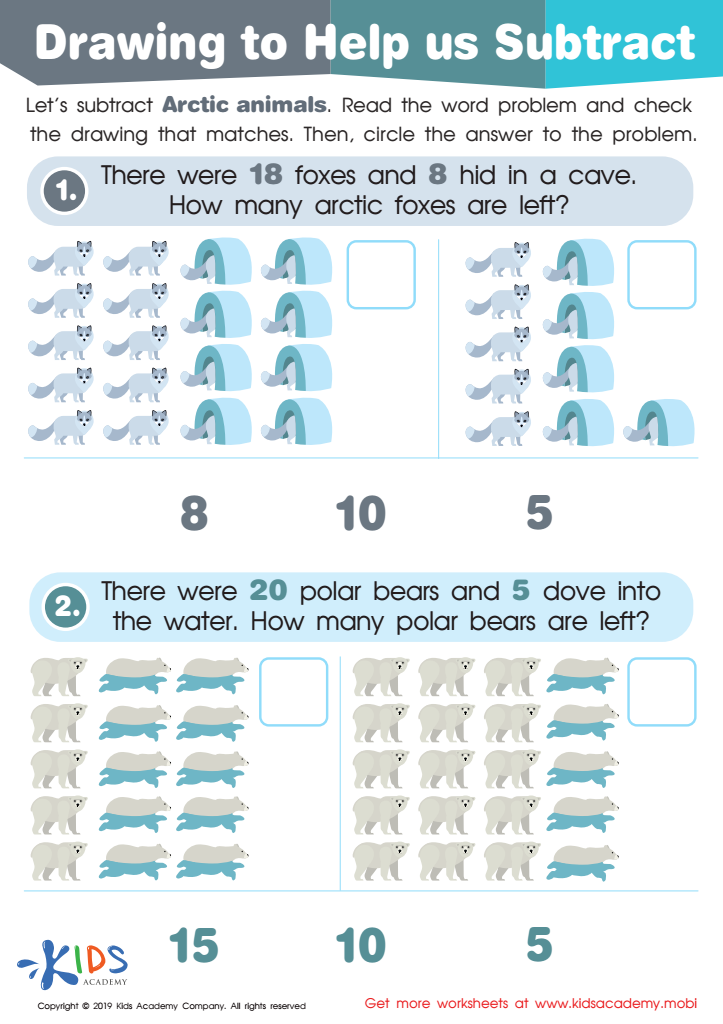
Drawing to Help Us Subtract Worksheet
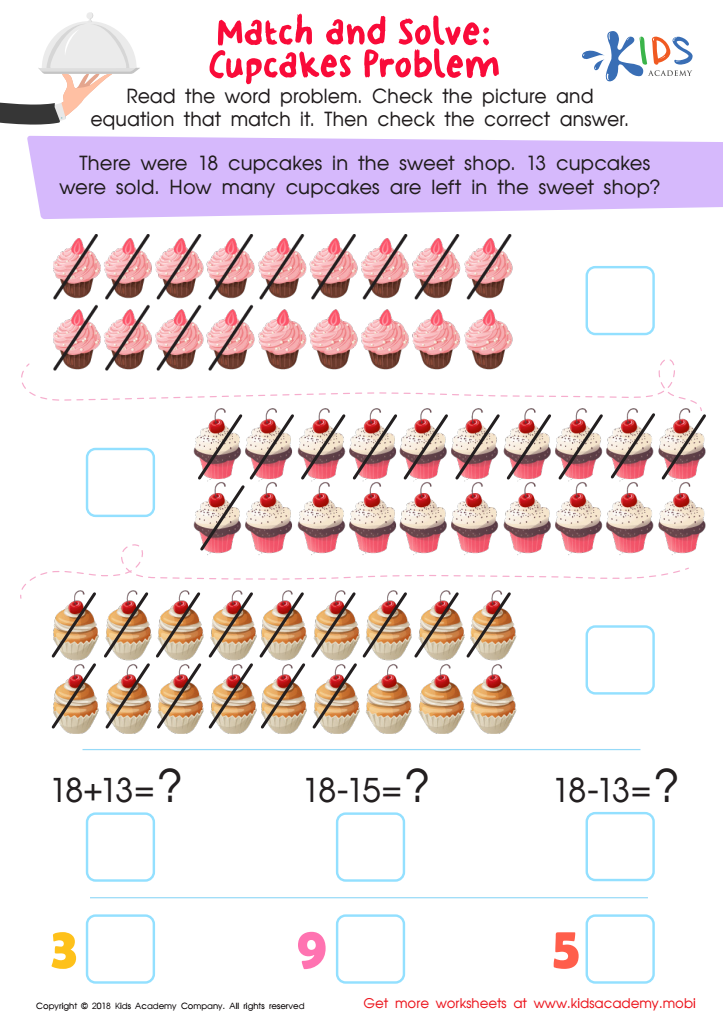
Match and Solve: Cupcakes Problem Worksheet
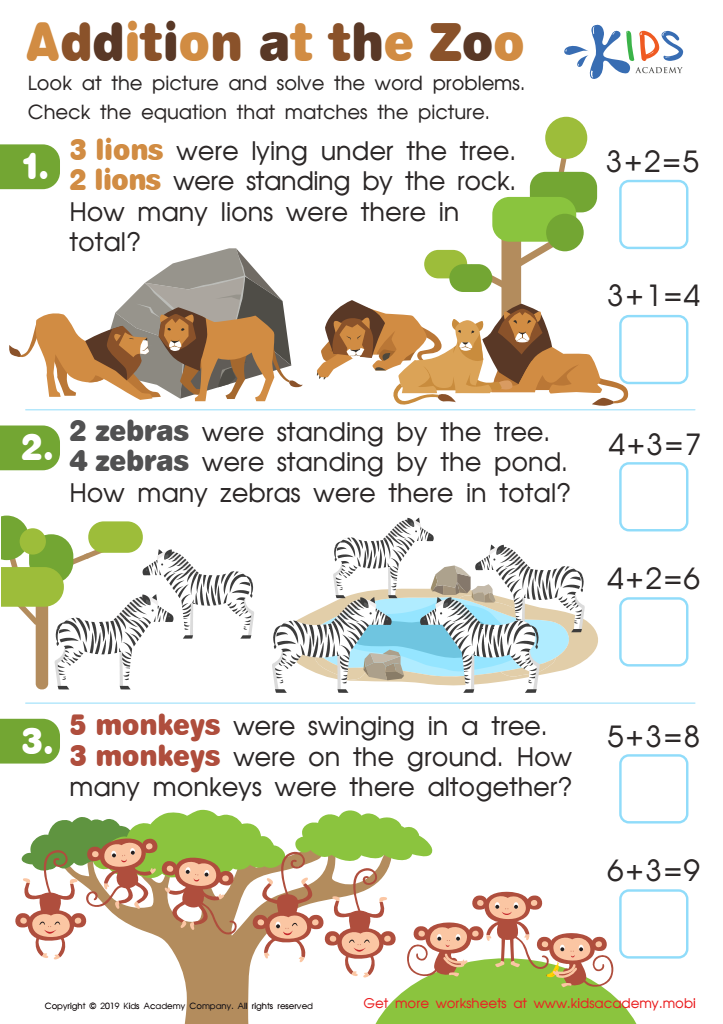
Addition at the Zoo Worksheet








Parents and teachers should care about visual learning in Grade 3 word problems because it plays a critical role in enhancing children's mathematical comprehension and problem-solving skills. Young learners are often still developing their abstract thinking abilities, making it essential to use concrete visual aids that illuminate concepts and processes involved in word problems.
Visual learning techniques—such as diagrams, charts, and models—allow students to better understand the relationships between different elements of a word problem. For example, using drawings to represent the items in a word problem helps children visualize quantities and relationships, enabling them to grasp the problem's essence more effectively. This grounded understanding fosters confidence and encourages a positive view of mathematics.
Additionally, visual strategies can make learning collaborative and interactive, inviting parental involvement. Parents can reinforce lessons at home using visual tools, creating valuable teachable moments and strengthening the parent-child bond through joint exploration of mathematical concepts. Overall, focusing on visual learning can ensure that students not only solve problems but also see the relevance of math in real life, thereby nurturing their overall academic growth and lifelong learning skills.