Spelling improvement Grade 3 Building Vocabulary Worksheets
3 filtered results
Difficulty Level
Grade
Age
-
From - To
Subject
Activity
Standards
Enhance your Grade 3 students' spelling and vocabulary skills with our engaging Building Vocabulary Worksheets! Designed to support young learners, these worksheets focus on fun exercises that help improve spelling, understand word meanings, and expand vocabulary. Through various activities such as word searches, matching games, and fill-in-the-blank sentences, kids will enjoy practicing essential spelling skills while developing a stronger language foundation. Our user-friendly worksheets cater to diverse learning styles, promoting creativity and a love for words. Perfect for classroom use or at-home practice, our Spelling Improvement Worksheets are a valuable resource for fostering literacy growth in early education. Start building better vocabulary today!
Favorites
With answer key
Interactive
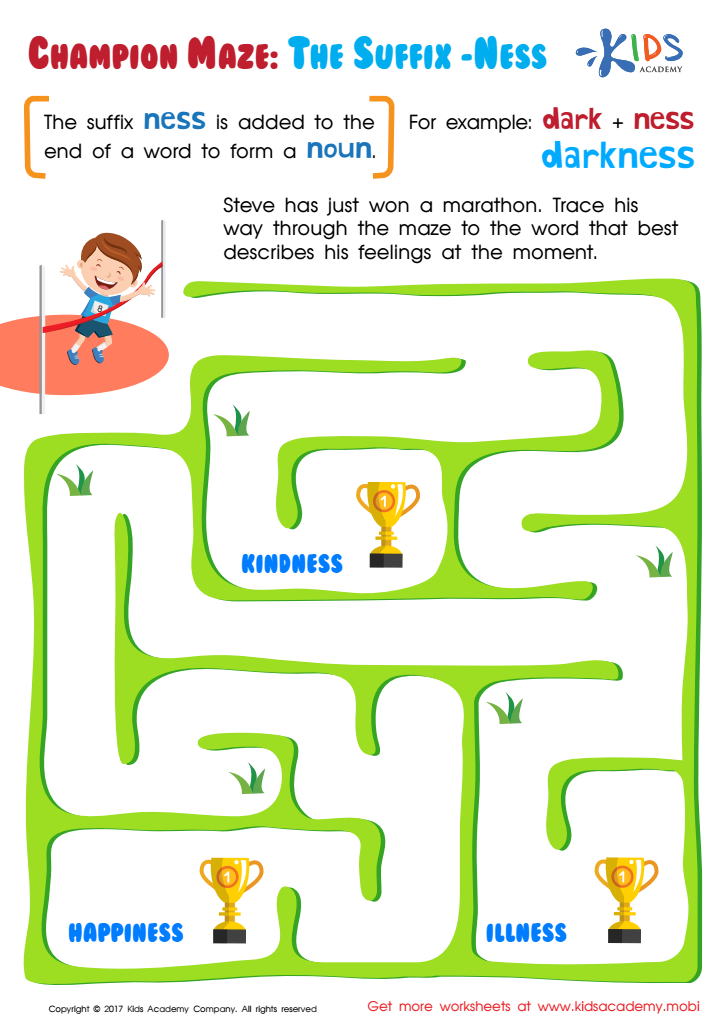
Suffix Ness Worksheet
Words are amazing! Add an ending and they can change part of speech. Make nouns out of adjectives with -ness. This worksheet has a fun maze to help learners increase vocabulary and language skills.
 Assign to My Students
Suffix Ness Worksheet
Worksheet
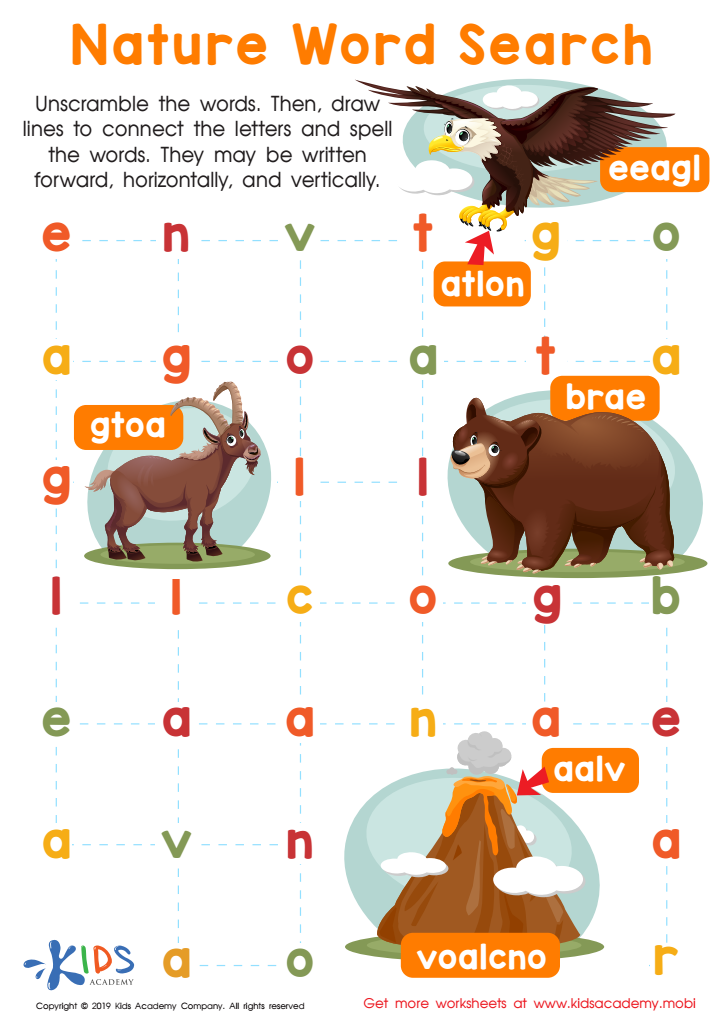
Nature Word Search Worksheet
Unscramble science vocabulary words and find them in this fun worksheet! Use the pictures as clues if you get stumped; you can also write down the words for reference. Solve the puzzle when you're done to finish!
Nature Word Search Worksheet
Worksheet
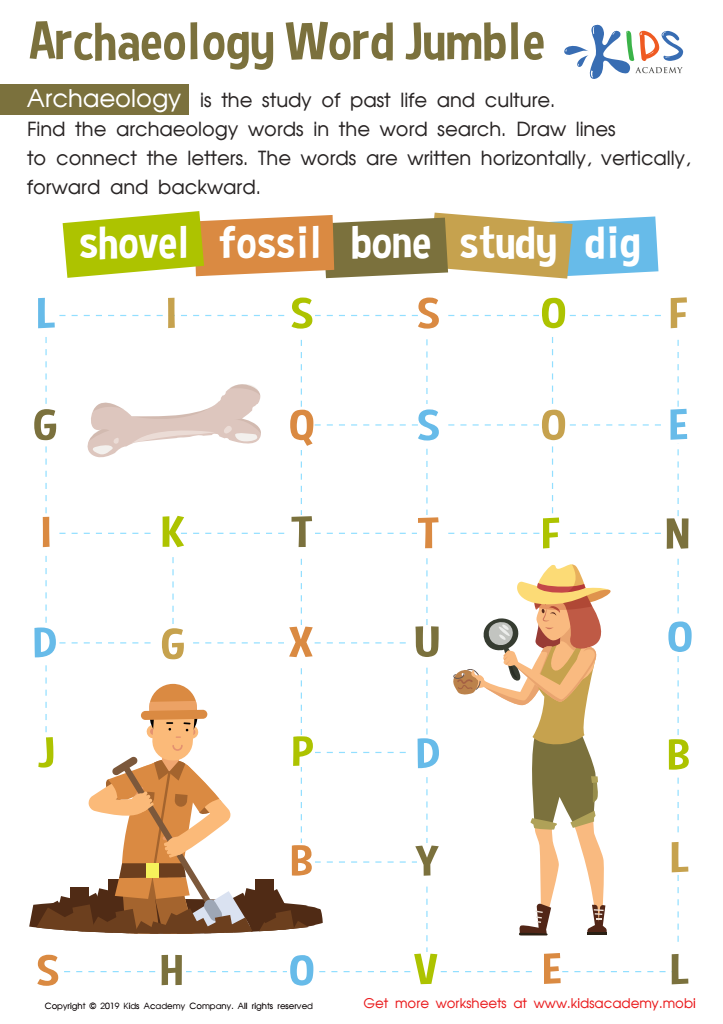
Archaeology Word Jumble Worksheet
Kids will love this fun, colorful word search about archeology! Tracing the lines, they'll uncover terms related to the study of past life and cultures. As they explore, they'll learn about fossils and bones and discover new archeology words.
Archaeology Word Jumble Worksheet
Worksheet
Join Kids Academy for Free
Who is primarily going to use this learning content?








In third grade, spelling improvement and vocabulary building are crucial for a child’s academic growth. At this stage, students transition from learning to read to reading to learn, making effective spelling and a rich vocabulary essential for understanding content across subjects.
Parents and teachers should prioritize spelling because it directly impacts reading comprehension and writing fluency. A strong grasp of spelling allows children to focus on crafting their ideas rather than being bogged down by spelling mistakes. Moreover, effective communication skills—fostered by an expansive vocabulary—empower students to express their thoughts and connect more deeply with the material they encounter.
Additionally, spelling improvement aligns with foundational literacy skills, boosting confidence and encouraging a positive attitude toward learning. When children feel proficient in spelling, they are more likely to participate actively in discussions and activities.
Supporting spelling and vocabulary development also lays the groundwork for academic success in higher grades. Engaged parents and teachers can use games, reading together, and integrating new words into daily conversations, making these efforts enjoyable and memorable. In short, a focus on spelling improvement enriches a child’s language skills, supports literacy development, and fosters a lifelong love of learning.