Story sequencing Grade 3 Reading Worksheets
3 filtered results
Difficulty Level
Grade
Age
-
From - To
Subject
Activity
Standards
Enhance your third grader's reading skills with our engaging story sequencing worksheets! Designed specifically for Grade 3, these worksheets help students understand narrative structure by arranging events in chronological order. Through fun and interactive exercises, kids will learn to identify key details in stories, fostering comprehension and critical thinking. Our printable resources encourage independent learning and are perfect for both classroom and home use. Engage your child’s imagination while reinforcing essential literacy skills! Explore our diverse range of activities that align with educational standards and support your child’s journey in becoming a confident reader. Start their adventure in storytelling today!
Favorites
With answer key
Interactive
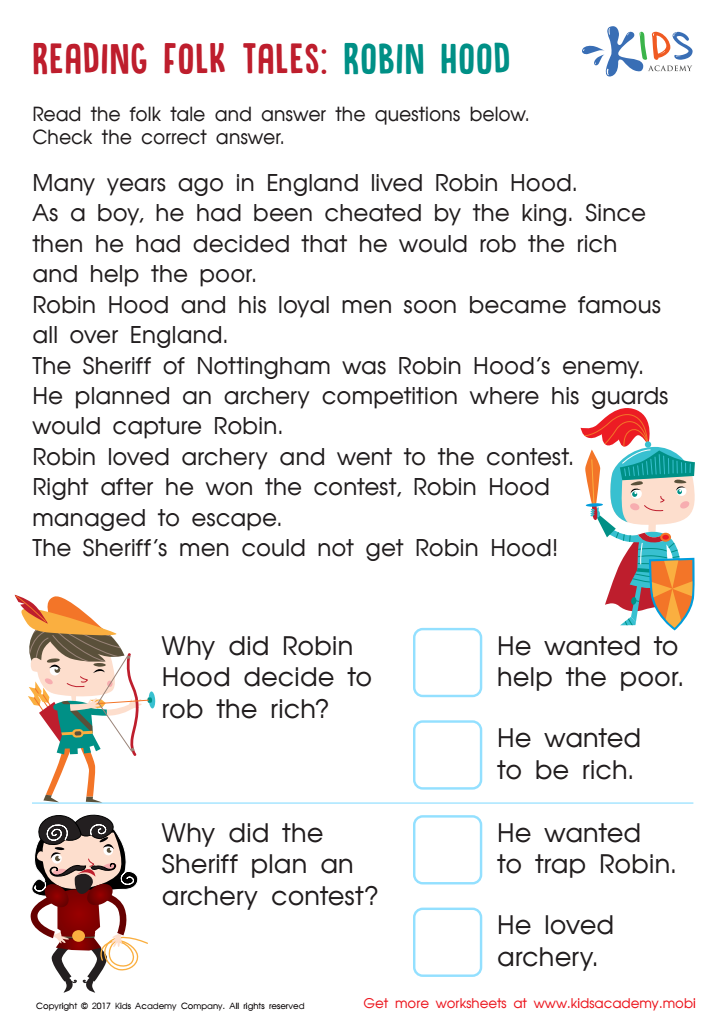
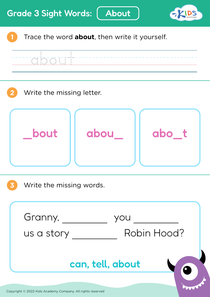
Robin Hood Folktale Worksheet
Have your child practice reading comprehension and inferencing with this Robin Hood folktale worksheet! Get them to read between the lines to find character motivation and answer important questions about the passage. It's a fun way to test their reading skills!
Robin Hood Folktale Worksheet
Worksheet
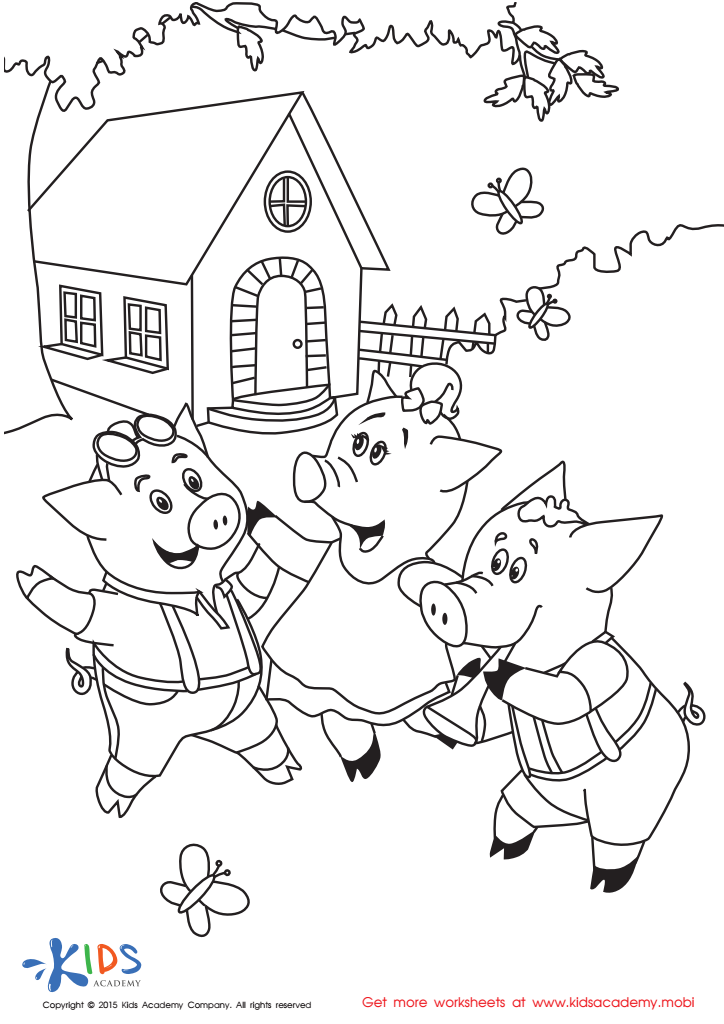
Folktales Printable PDF Worksheet: The 3 Little Pigs
Then, help your child to color the scene with pink piglets, blue sky and green grass. Make the brick house bright and vivid. Enjoy!
Download (PDF)
 Assign to My Students
Assign to My Students
Folktales Printable PDF Worksheet: The 3 Little Pigs
Worksheet
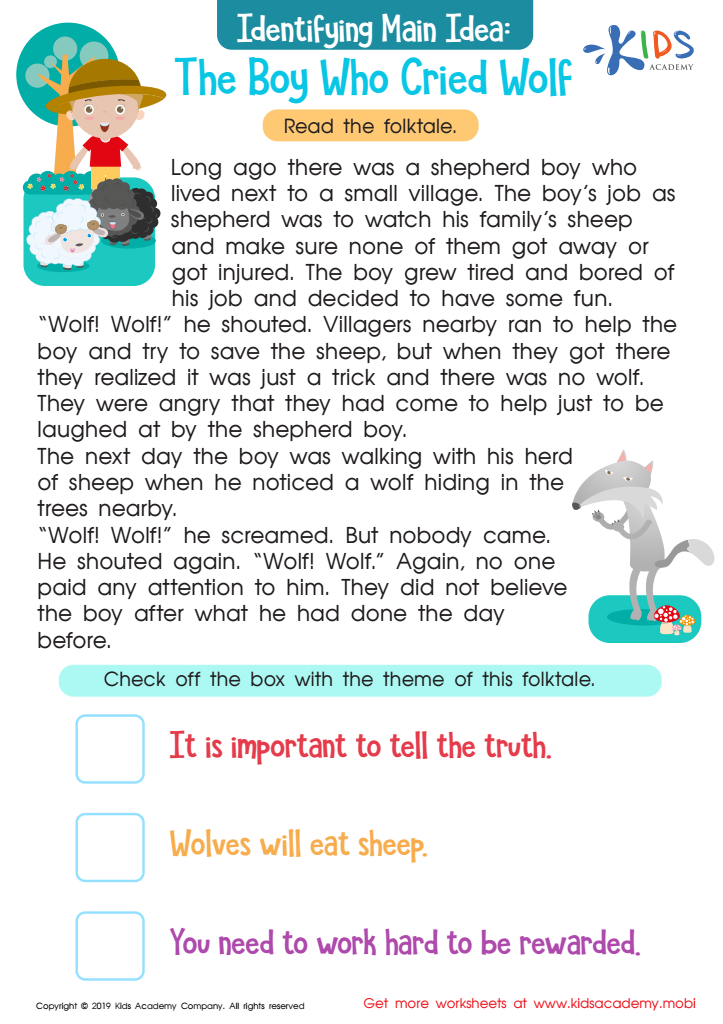
The Boy Who Cried Wolf Part 2 Worksheet
Kids love story time - no doubt they know their favorites! This worksheet tells a story with a theme or main idea. Read it carefully with your kids and ensure they understand every word. Then, help them answer the simple questions at the bottom of the page.
The Boy Who Cried Wolf Part 2 Worksheet
Worksheet
Join Kids Academy for Free
Who is primarily going to use this learning content?






Story sequencing is a crucial skill for Grade 3 students, as it lays the groundwork for their reading comprehension and critical thinking abilities. At this age, children are transitioning from learning to read to reading to learn. Understanding story sequencing helps them identify the structure of narratives, grasp the main ideas, and follow the plot developments, leading to improved comprehension. When students can recognize the beginning, middle, and end of a story, they can better summarize content and make connections to other texts and real-life experiences.
Parents and teachers should care about this skill because it enhances students’ confidence and enjoyment in reading. Engaging with stories improves vocabulary and encourages creativity, enabling children to articulate their thoughts clearly. Additionally, strong sequencing skills promote analytical thinking; students learn to anticipate outcomes and infer meanings, which are essential capabilities in problem-solving.
Furthermore, fostering a love for storytelling can enhance family bonds, encouraging parents to share books and discuss narratives with their children. Ultimately, strong story sequencing skills can translate into academic success across various subjects, highlighting the value of nurturing this competency in young learners. Investing in children's reading skills is an investment in their overall educational journey.