Counting skills Grade 3 Sight Words Worksheets
4 filtered results
Difficulty Level
Grade
Age
-
From - To
Subject
Activity
Standards
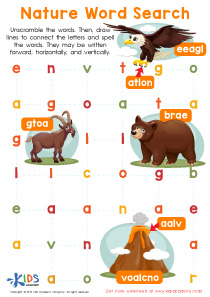
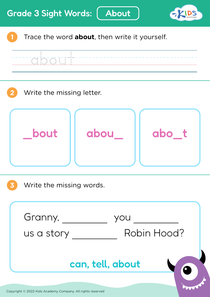
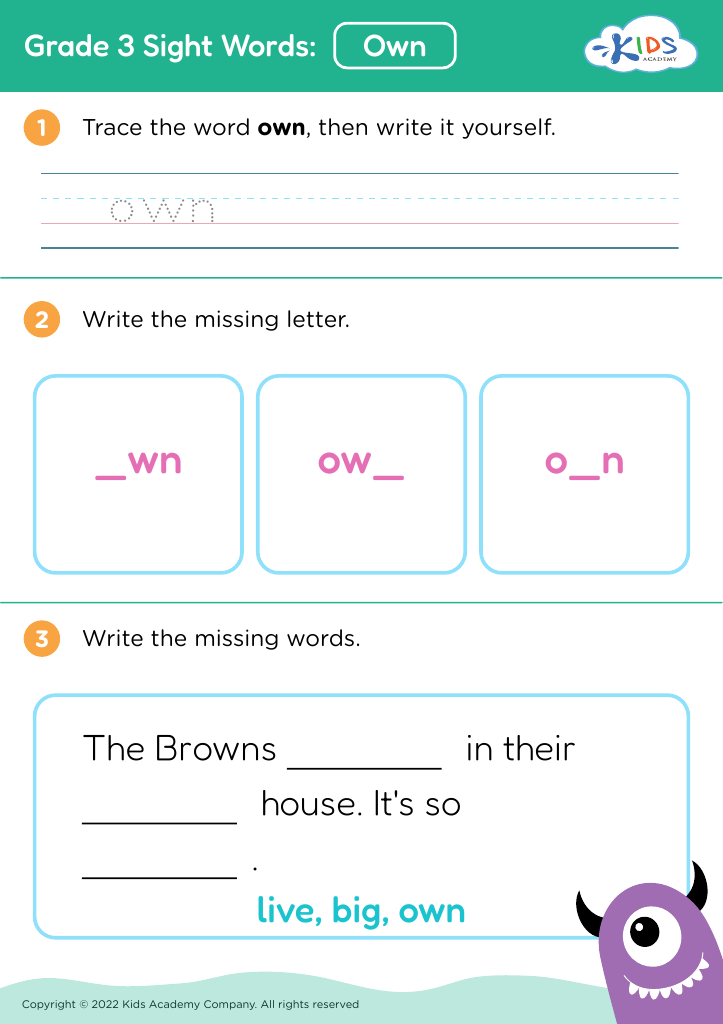
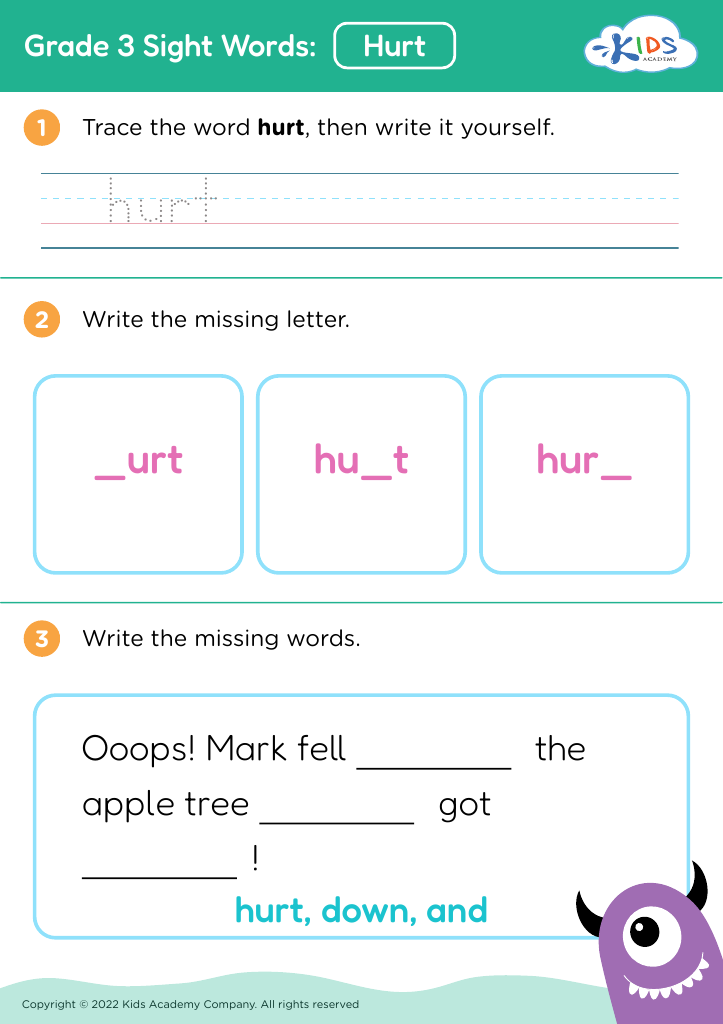
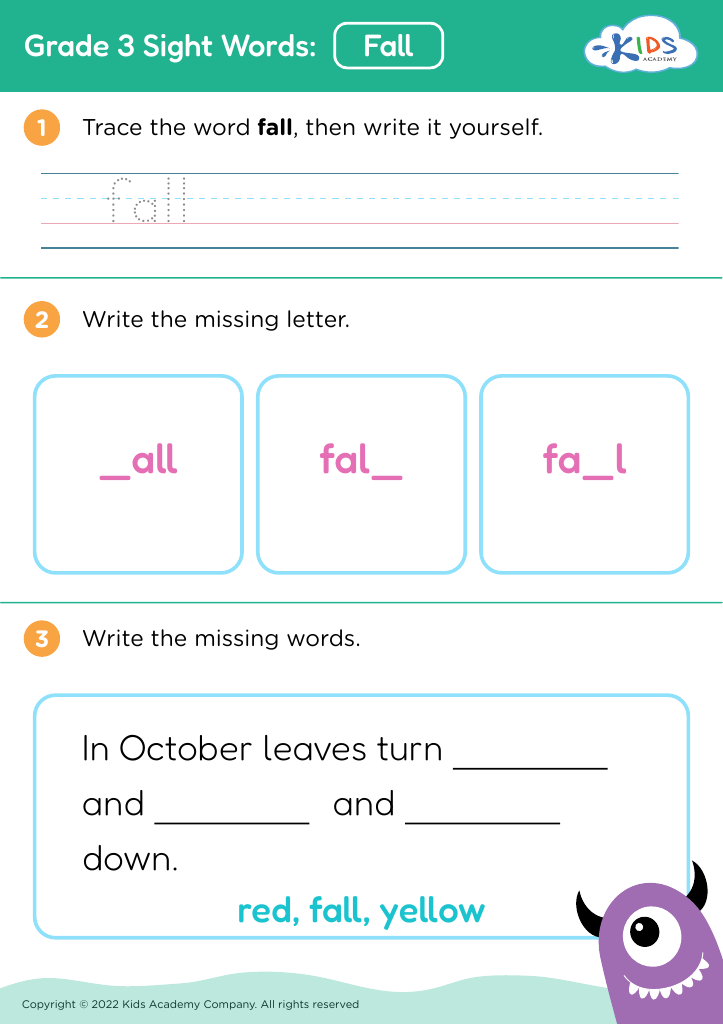
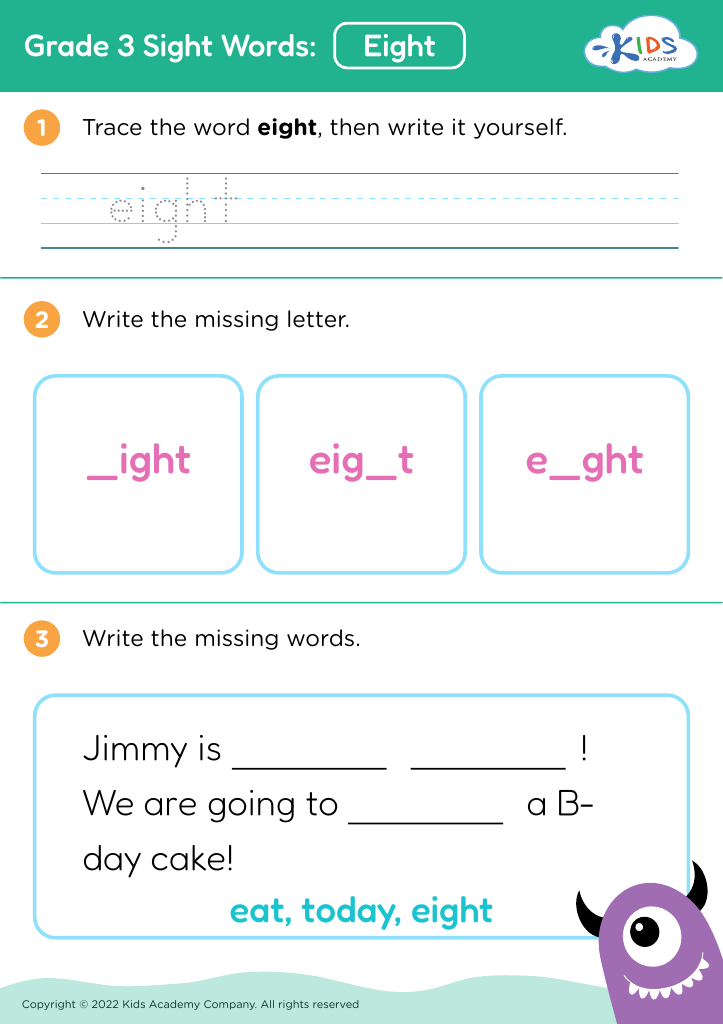
Boost your third grader's reading and numeracy with our engaging Counting Skills and Sight Words worksheets! Designed specifically for Grade 3 students, these worksheets seamlessly combine essential sight word recognition and counting practice. Children will enhance their vocabulary while developing critical math skills through interactive activities that promote both reading fluency and numerical understanding. Perfect for classroom use or at-home learning, our worksheets cater to diverse learning styles and help reinforce confidence. Explore our colorful and concise printables to support your child's educational journey, making learning fun and effective. Empower your child with invaluable skills today!
Favorites
With answer key
Interactive
Join Kids Academy for Free
Who is primarily going to use this learning content?








Counting skills and Grade 3 sight words are essential components of early education, serving as foundational tools for academic success. At this stage, children transition from learning to read to reading to learn, making proficiency in sight words crucial. Sight words—common words that don't necessarily adhere to phonetic rules—enable fluent reading, allowing children to focus on comprehension rather than decoding individual words. When students can recognize these words promptly, it boosts their confidence and encourages a love for reading.
Simultaneously, counting skills play a vital role in children’s mathematical development. Understanding numbers and their relationships enhances critical thinking, problem-solving, and analytical skills. Mastery of counting lays the groundwork for more advanced mathematical concepts such as addition, subtraction, and eventually multiplication and division.
Parents and teachers should care about these skills because they are pivotal indicators of a child's overall academic growth. Mastery in reading and math at this stage correlates with future success in school and beyond. By fostering these skills, adults can ensure children not only gain academic proficiency but also the critical thinking and confidence necessary to navigate diverse learning environments effectively. Addressing these areas helps cultivate lifelong learners who thrive in school and socially.