Understanding food chains Grade 3 Animals Worksheets
3 filtered results
-
From - To
Explore our "Understanding Food Chains: Grade 3 Animals Worksheets" designed to ignite curiosity in young minds about ecosystems. These engaging worksheets offer a comprehensive look at the interconnectedness of different species and their roles within food chains. Through a combination of fun activities, colorful illustrations, and thought-provoking questions, students will learn how energy flows from one organism to another. Perfect for third graders, the worksheets align with educational standards and encourage critical thinking. Foster a deeper understanding of nature and promote environmental stewardship in a manner that's both educational and enjoyable. Dive into the wonders of food chains today!
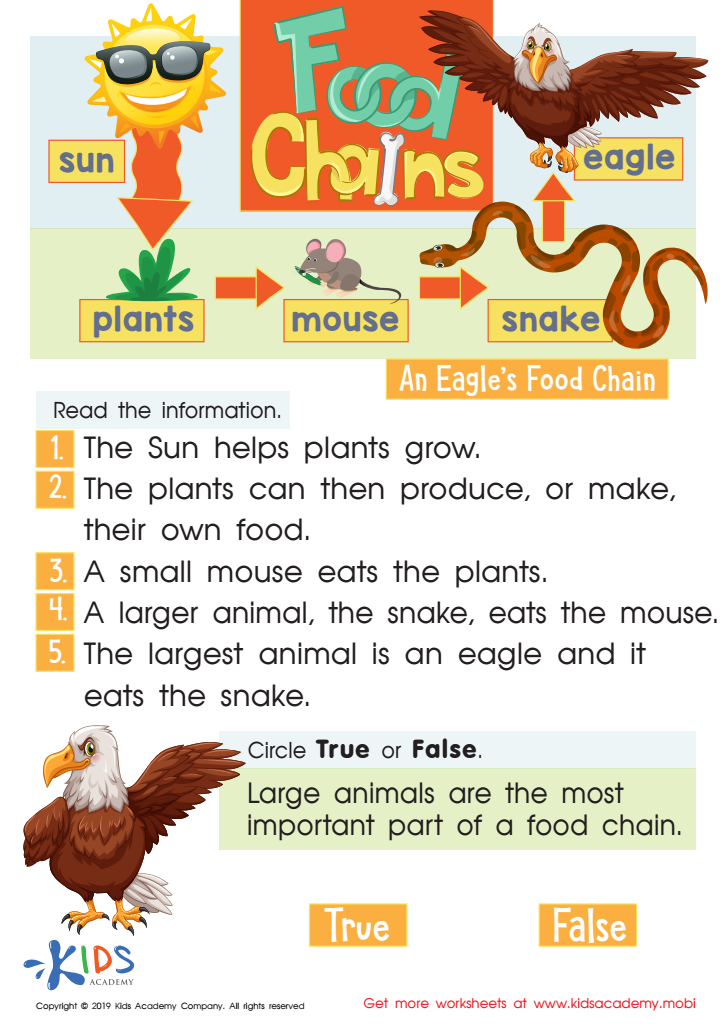
Food Chains Worksheet
 Assign to My Students
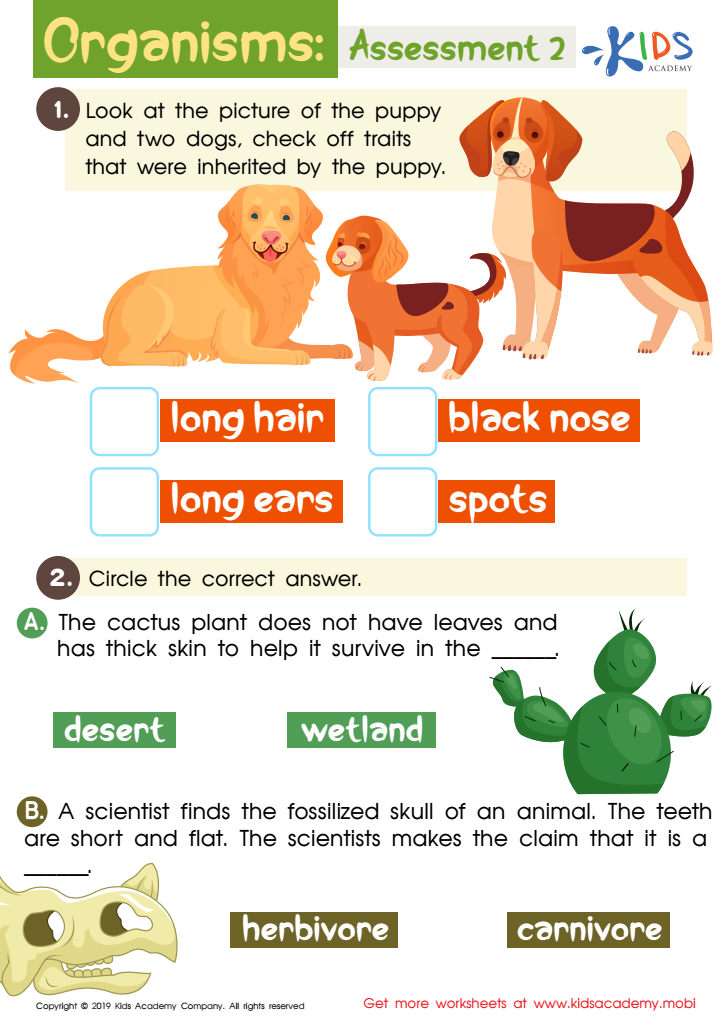
Organisms: Assessment 2 Worksheet
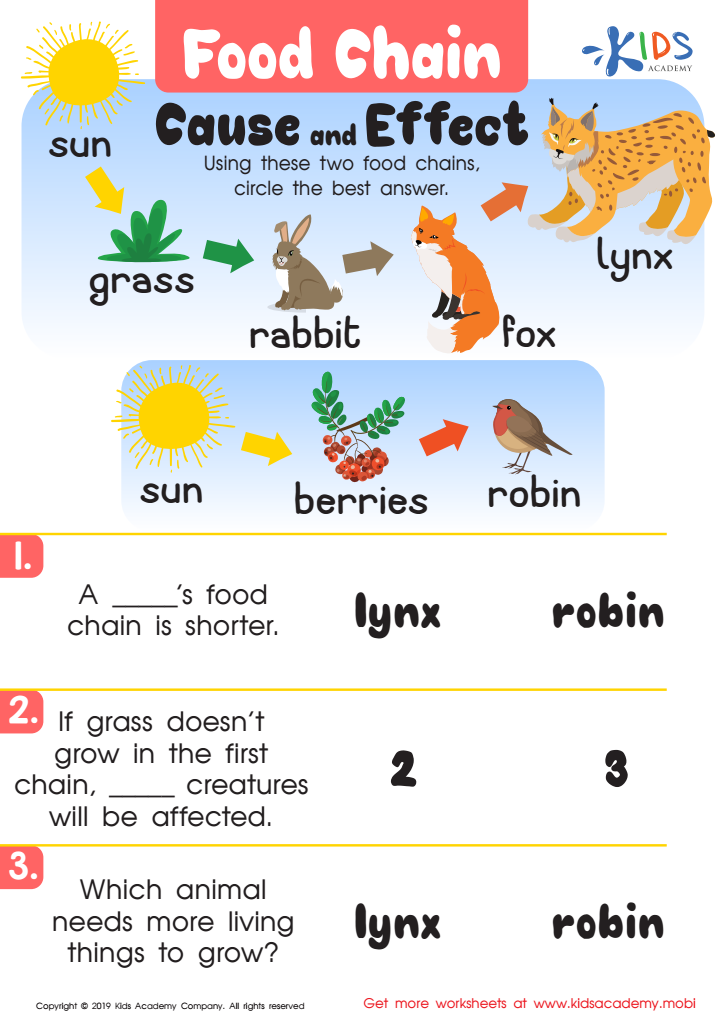
Food Chain Cause Worksheet







Understanding food chains is essential for young students in Grade 3 because it lays the foundation for comprehending ecosystems, the interdependence of living organisms, and basic biological principles. Parents and teachers should care about teaching this concept because it helps children appreciate the world around them and fosters a sense of curiosity and responsibility toward nature.
Firstly, knowledge of food chains introduces children to the concept of producers, consumers, and decomposers, showcasing how plants, animals, and microorganisms contribute to a balanced ecosystem. This understanding builds critical thinking and encourages students to make connections between different ecological components.
Moreover, learning about food chains underscores the importance of conservation. When children see how each animal has a role and understand the consequences of one link disappearing, they are more likely to value and protect nature. Such awareness is crucial in an era where environmental issues like habitat loss and extinction are prominent.
Lastly, incorporating food chains into lessons can make learning more engaging. Interactive activities such as creating food chain diagrams or exploring local ecosystems can spark curiosity and enhance learning retention. This hands-on approach solidifies their grasp of science concepts while simultaneously cultivating a love for biology and the environment.