Animal Classification Grade 3 Science Worksheets
3 filtered results
Difficulty Level
Grade
Age
-
From - To
Subject
Activity
Standards
Enhance your child’s understanding of the animal kingdom with our engaging Grade 3 Animal Classification Science Worksheets. These well-crafted worksheets provide fun and educational activities that help students categorize animals based on their characteristics, such as mammals, reptiles, birds, fish, and amphibians. Through colorful illustrations and interactive exercises, children explore the diversity of animal life and discover significant traits that distinguish each species. Tailored to third-grade learning standards, these materials are perfect for reinforcing classroom lessons or providing extra practice at home. Unlock the wonders of zoology and inspire a lifelong love for science in young learners.
Favorites
With answer key
Interactive
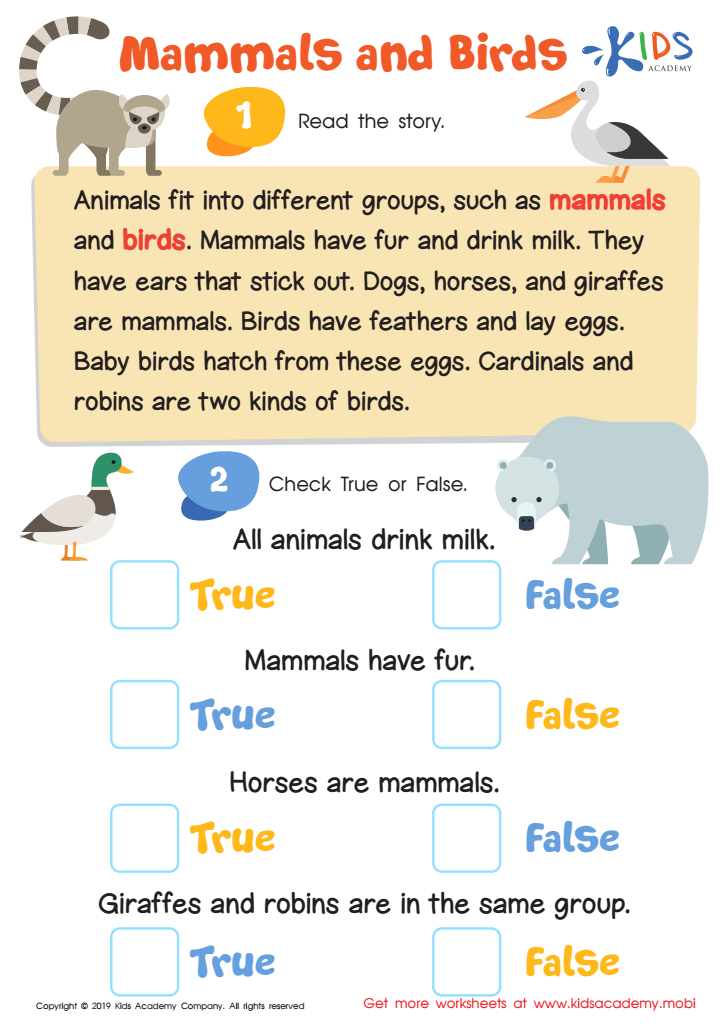
Mammals and Birds Worksheet
This worksheet challenges kids to read an informational text and review science facts about mammals and birds. Have them read the passage then mark statements true or false. Remind them to go back to the text if they get stuck! Get started now and help your child enhance multiple skills in one go!
 Assign to My Students
Mammals and Birds Worksheet
Worksheet
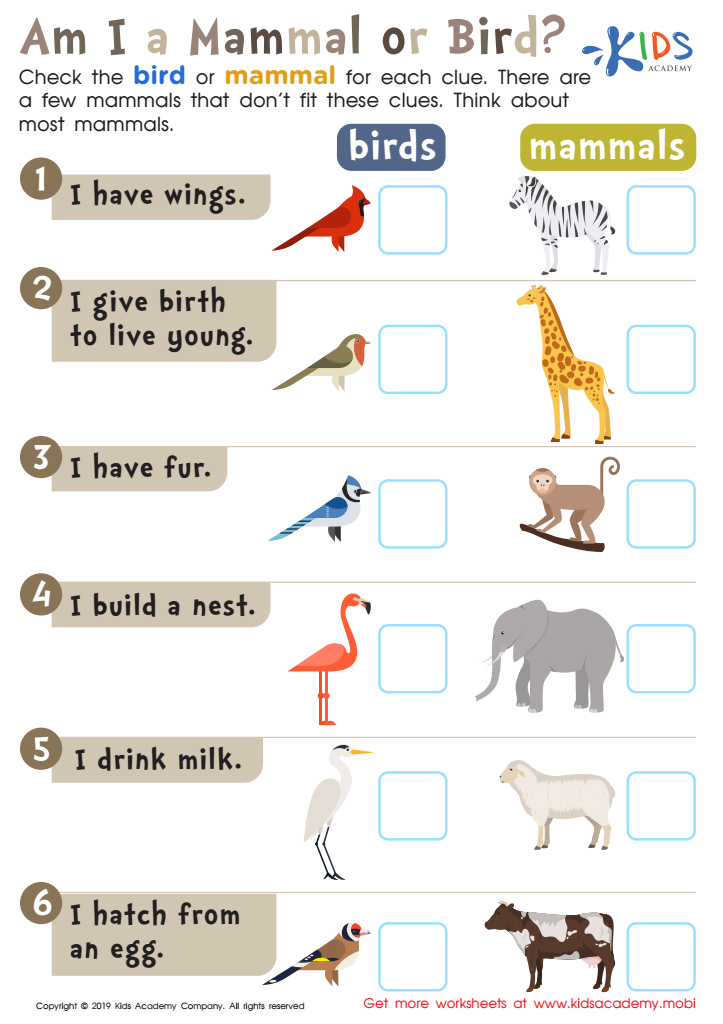
Am I a Mammal or Bird? Worksheet
We categorize animals into groups such as mammals, birds, reptiles, etc. This worksheet helps kids understand the difference between birds and mammals. Read through the clues and think about each one. Then decide if it describes a bird or mammal, check the box and complete!
Am I a Mammal or Bird? Worksheet
Worksheet
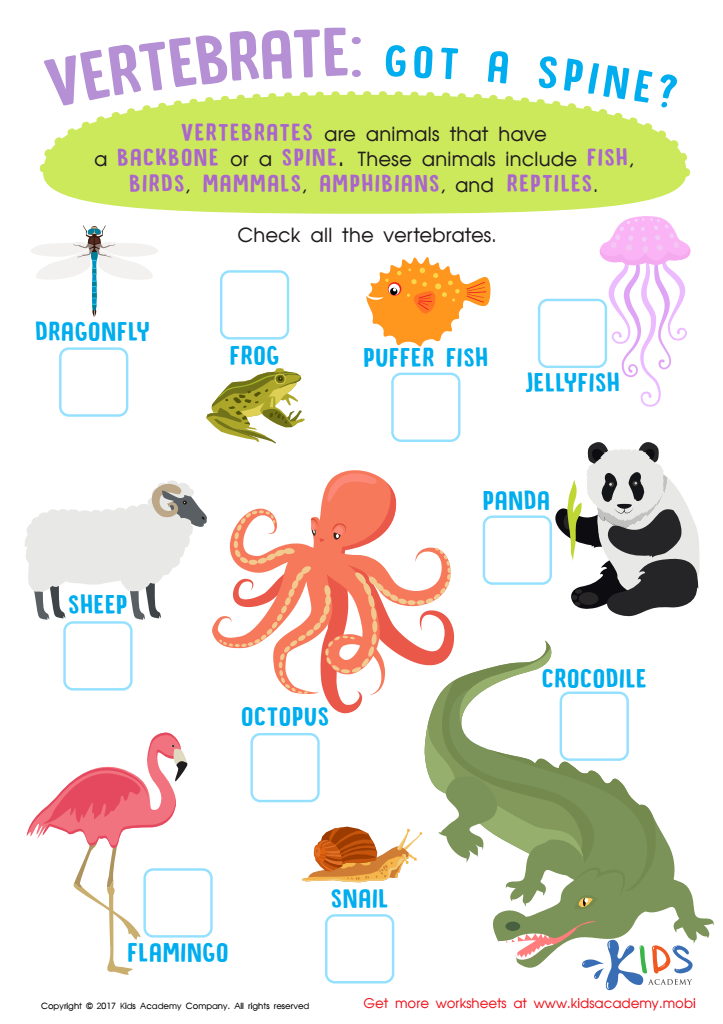
Vertebrates Animals Worksheet for 3rd Grade
This 3rd grade worksheet introduces your child to the wonders of vertebrate animals. They will have fun sorting them from those without a spine, while learning more about the animal kingdom!
Vertebrates Animals Worksheet for 3rd Grade
Worksheet
Join Kids Academy for Free
Who is primarily going to use this learning content?





Understanding Animal Classification in third grade is vital for both parents and teachers because it lays the groundwork for students' scientific literacy and critical thinking skills. Firstly, this topic introduces children to the diversity of life on Earth, fostering an appreciation and respect for living organisms and their habitats. Learning to classify animals helps students develop observation skills, teaching them to notice details and learn the characteristics that define different groups such as mammals, birds, reptiles, amphibians, and fish.
For parents, being engaged with their child’s learning strengthens the parent-child bond and encourages positive attitudes towards education. By discussing animal classification at home, parents can make learning fun and relevant with real-life examples and outings such as zoo trips.
Teachers should care about facilitating a robust understanding of animal classification as it aligns with curriculum goals and educational standards. It serves as a springboard for more complex biological studies in later grades, including ecosystems, evolution, and environmental science. Moreover, mastering classification can enhance students’ organizational skills and their ability to process information systematically, which benefits diverse aspects of learning.
In summary, both parents and teachers should be invested in teaching and reinforcing animal classification to ensure students build a solid scientific foundation, appreciate biodiversity, and enhance cognitive skills.