Vocabulary enhancement Grade 3 History Worksheets
3 filtered results
Difficulty Level
Grade
Age
-
From - To
Subject
Activity
Standards
Enhance your third grader's understanding of history with our engaging Vocabulary Enhancement Grade 3 History Worksheets. Designed to support young learners, these worksheets focus on building essential historical vocabulary, providing a foundation for comprehending significant events and concepts. Each worksheet features fun activities, such as word searches, matching exercises, and context-based fill-in-the-blanks, making the learning process enjoyable and interactive. As students explore important historical terms, they’ll not only boost their vocabulary but also develop a deeper appreciation for our world’s past. Perfect for classroom use or at-home learning, these worksheets are a valuable resource for every young historian!
Favorites
With answer key
Interactive
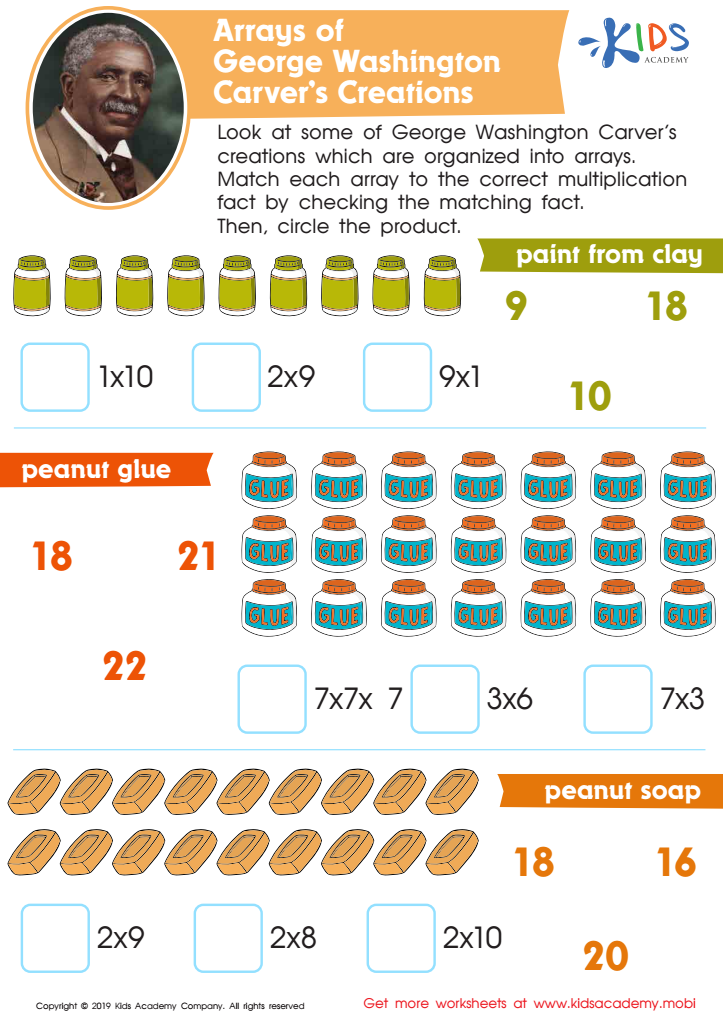
Arrays of George Washington Carver’s Creations Worksheet
Remind your child of what George Washington Carver created. Can they tell you? This worksheet has arrays with his creations. Match the array to the multiplication fact and help your child to circle the product.
 Assign to My Students
Arrays of George Washington Carver’s Creations Worksheet
Worksheet
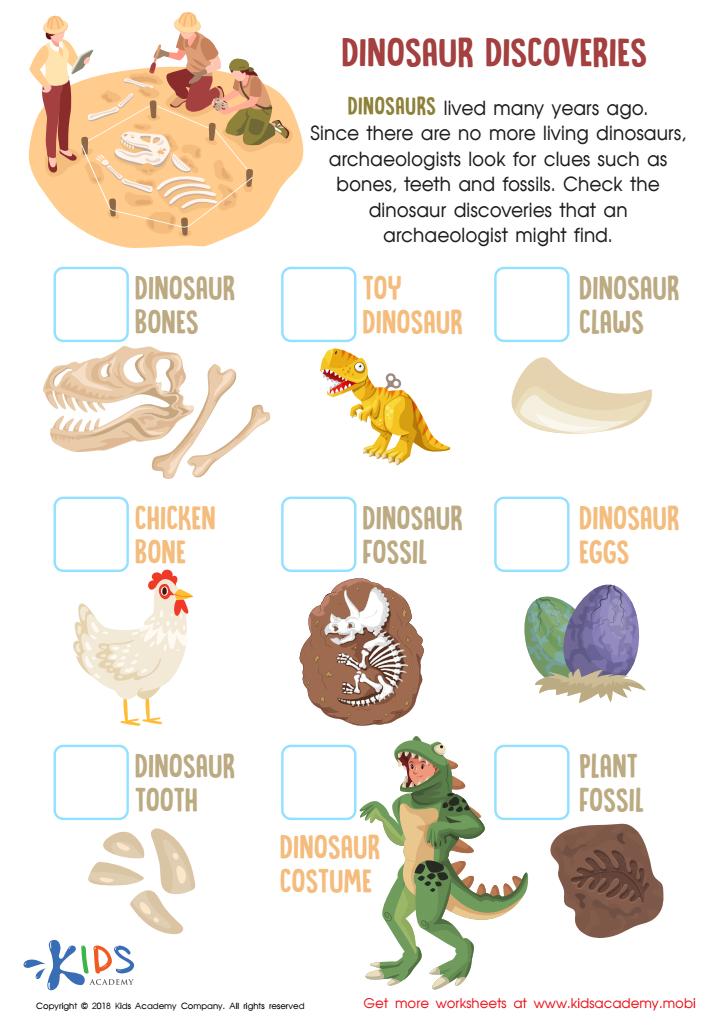
Dinosaur Discoveries Worksheet
Kids love the fascinating world of dinosaurs! This free worksheet educates them on how archeologists discover clues from their fossils, teeth, and bones. They'll identify items that are fossils with the help of pictures and choices provided. Learning has never been this fun!
Dinosaur Discoveries Worksheet
Worksheet
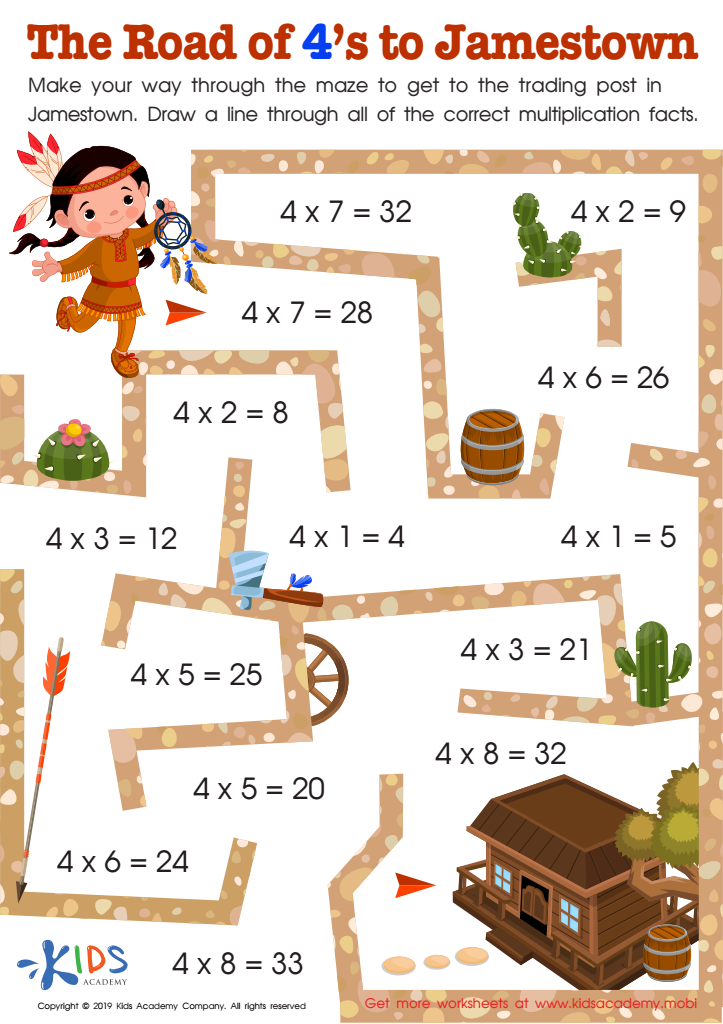
The Road of 4’s to Jamestown Worksheet
Does your child enjoy trips? Help them remember the best ones with this fun worksheet maze! Get your kid to look at the picture and draw a line through all the right multiplication facts to get to Jamestown's trading post. This worksheet is a great way to stimulate their problem-solving skills.
The Road of 4’s to Jamestown Worksheet
Worksheet
Join Kids Academy for Free
Who is primarily going to use this learning content?








Vocabulary enhancement in Grade 3 History is crucial for several reasons. At this developmental stage, children are not only expanding their general vocabulary but are also learning specific terms related to historical events and concepts. Understanding this vocabulary helps students grasp complex ideas, ultimately fostering a deeper comprehension of the subject matter. For instance, terms like "democracy," "civilization," or "exploration" are essential for discussing historical themes and understanding their relevance to today’s society.
Moreover, a strong vocabulary supports reading comprehension. Students encounter texts that may introduce unfamiliar words; a robust vocabulary aids them in deciphering these texts more easily. When children can identify and understand historical terms, they become more engaged readers, which contributes to their overall academic success across subjects.
Additionally, enhancing vocabulary sets the stage for critical thinking and discussions. As students learn new words, they equip themselves with the tools necessary for articulating thoughts, asking questions, and participating in classroom discussions, which fosters a collaborative learning environment.
Ultimately, when parents and teachers prioritize vocabulary enhancement, they empower children to connect with history on a more meaningful level, preparing them not only for academic achievements but also for informed citizenship in the future.