Addition & Subtraction worksheets activities for Ages 5-9 - Page 2
26 filtered results
-
From - To
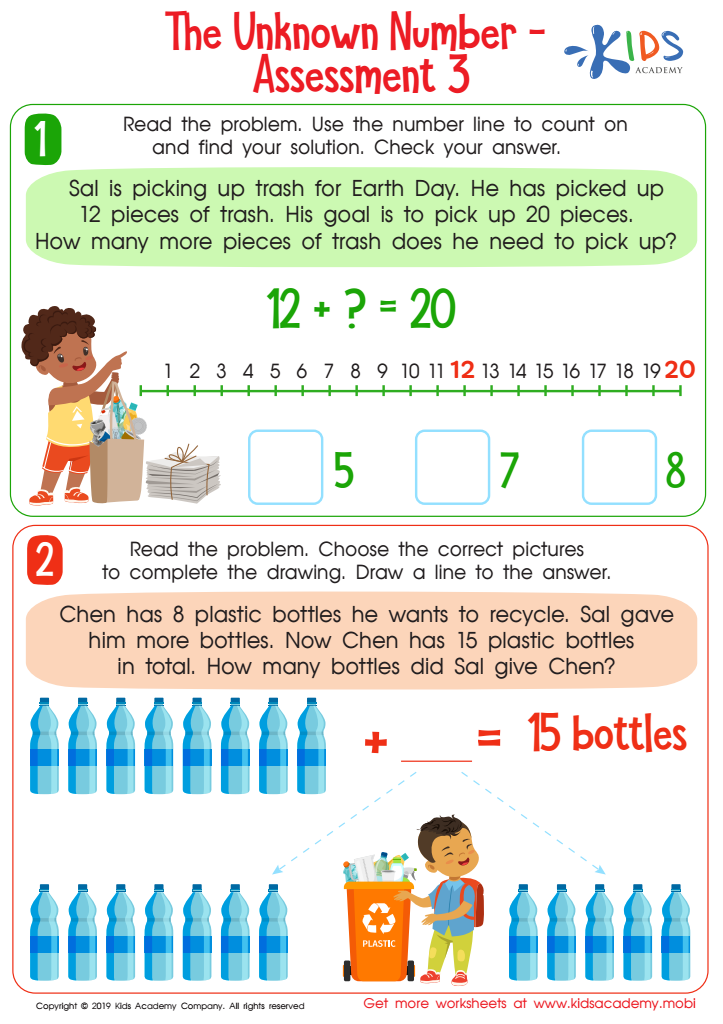
The Unknown Number - Assessment 3 Worksheet
 Assign to My Students
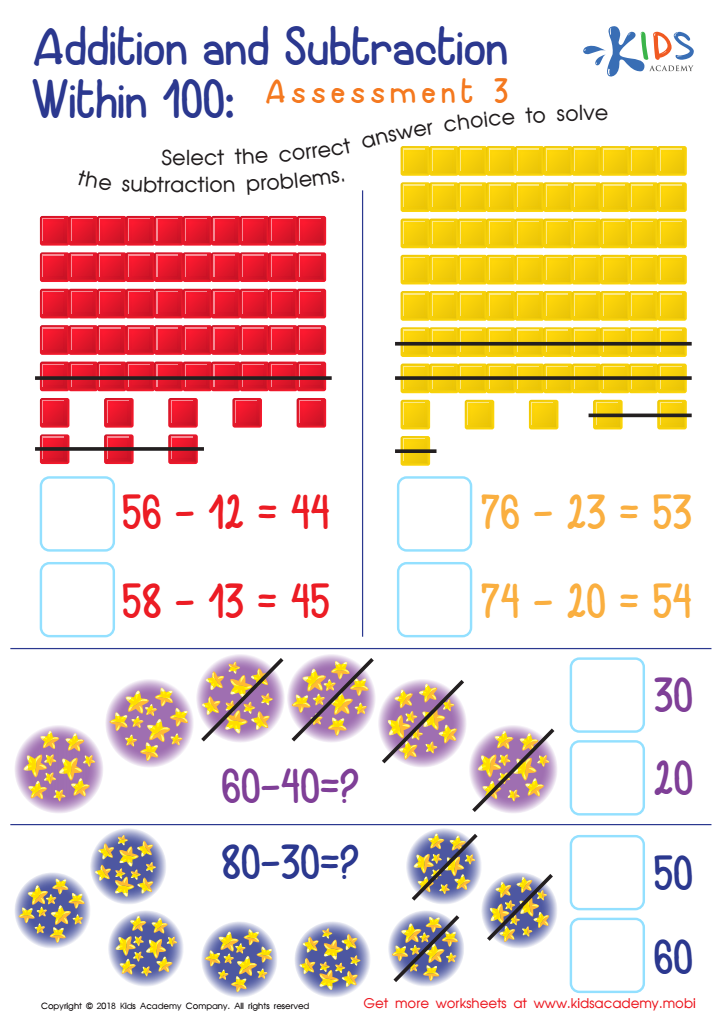
Addition and Subtraction Within 1: Assessment 3 Worksheet








Addition and subtraction activities for children ages 5-9 are crucial for several reasons. First, these foundational math skills are essential for everyday life. Children use addition and subtraction in simple tasks such as counting money, measuring ingredients in cooking, or understanding time. When parents and teachers engage children in these activities, they build confidence and promote a positive attitude toward mathematics.
Furthermore, math activities enhance cognitive development. They improve problem-solving skills, logical reasoning, and critical thinking. Engaging in addition and subtraction helps children recognize patterns, understand relationships between numbers, and manipulate quantities, laying the groundwork for future math concepts like multiplication and division.
Additionally, interactive activities promote social skills. Children often work in pairs or groups, fostering collaboration and communication as they share strategies and solutions. These formative experiences in cooperative learning encourage peer support and a sense of community within the classroom.
Lastly, integrating fun and engaging activities, such as games or hands-on tools, captivates children’s interest and makes learning enjoyable, reducing math anxiety. Overall, meaningful addition and subtraction practice cultivates essential life skills, encouraging academic success and lifelong learning. Parents and teachers play a pivotal role in nurturing these vital math skills through engaging and supportive activities.








