Addition & Subtraction worksheets activities for Ages 6-8 - Page 2
26 filtered results
-
From - To
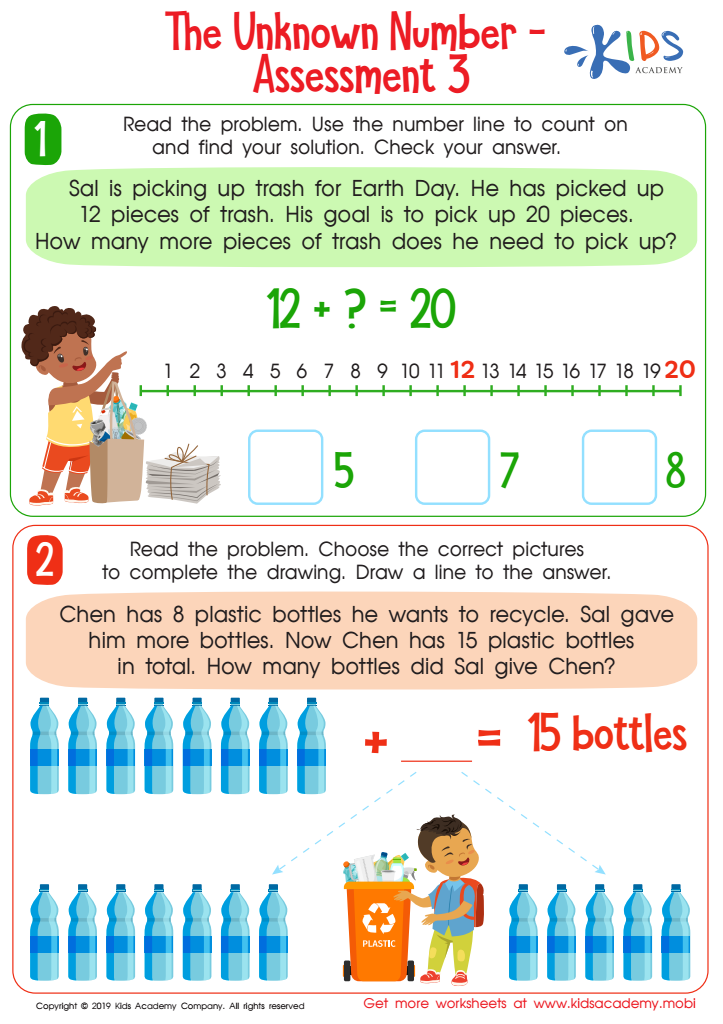
The Unknown Number - Assessment 3 Worksheet
 Assign to My Students
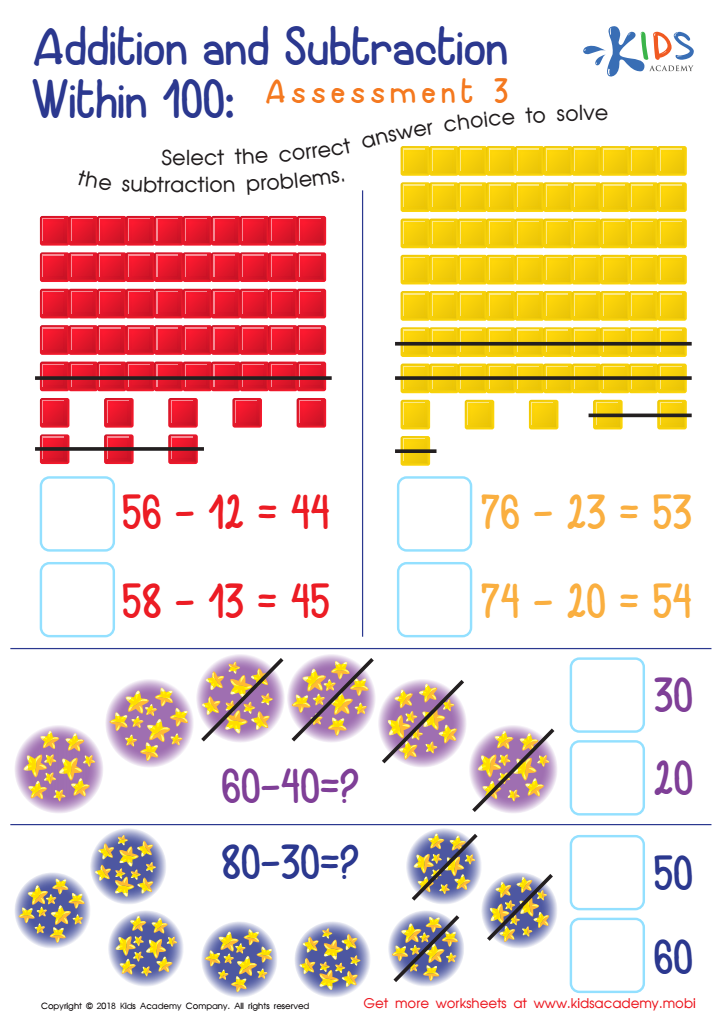
Addition and Subtraction Within 1: Assessment 3 Worksheet





Addition and subtraction are fundamental skills crucial for young learners aged 6-8, laying the groundwork for all future mathematics. Parents and teachers should prioritize these activities as they promote not only basic numeracy but also critical thinking and problem-solving skills. At this stage, children are developing their ability to visualize numbers and understand their relationships, which is essential for more complex mathematical concepts later on.
Engaging in addition and subtraction activities helps reinforce number sense, helping children recognize patterns, understand quantity, and develop confidence in their abilities. Additionally, incorporating these skills into daily routines through games, puzzles, or real-life scenarios, like cooking or shopping, makes learning relevant and enjoyable.
Moreover, mastering addition and subtraction enhances a child's academic performance across disciplines. Many subjects, including science, art, and even literacy, require a strong foundation in math for analysis and comprehension. Different forms of assessment also often include quantitative problems, where strong computation skills are necessary.
Overall, active involvement in addition and subtraction supports cognitive development, instills a love for learning, and prepares children for a successful educational journey. Thus, parents and teachers play a key role in fostering these essential skills in early learners.








