
Easy Reading Fiction worksheets activities for Ages 4-7
3 filtered results
Difficulty Level
Grade
Age
-
From - To
Subject
Activity
Standards
Discover a delightful collection of Easy Reading Fiction worksheets and activities designed for children aged 4-7! These engaging resources aim to foster a love for reading, improve literacy skills, and enhance comprehension. Each worksheet features captivating stories and illustrations that spark imagination while encouraging kids to connect with the material. From multiple-choice questions to character explorations, our activities allow young readers to practice critical thinking and express their creativity. Perfect for classrooms or at-home learning, our easy-to-use worksheets provide a fun and educational way for kids to dive into the world of fiction while building their reading confidence!
Favorites
With answer key
Interactive
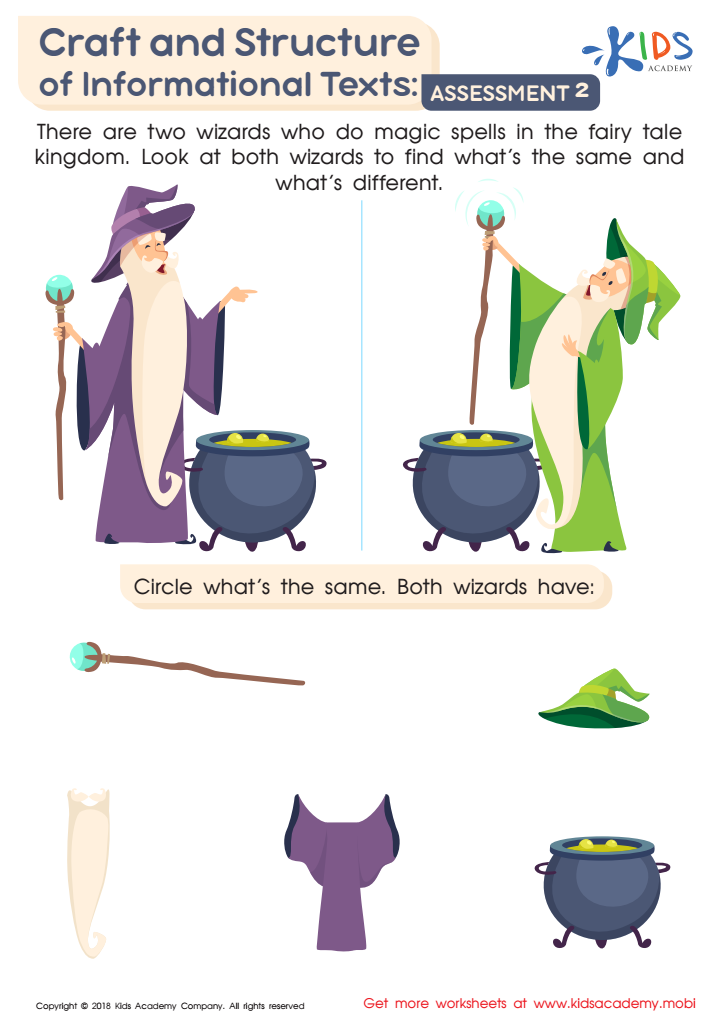
Craft and Structure of Informational Texts: Assessment 2 Worksheet
This assessment has kids looking at two similar fairy tale wizards, focusing on their visuals to find the similarities and differences. Then, they'll circle the things they both have. It's a great way to help children hone their detail-oriented comprehension skills, which is essential when using informational texts.
 Assign to My Students
Craft and Structure of Informational Texts: Assessment 2 Worksheet
Worksheet
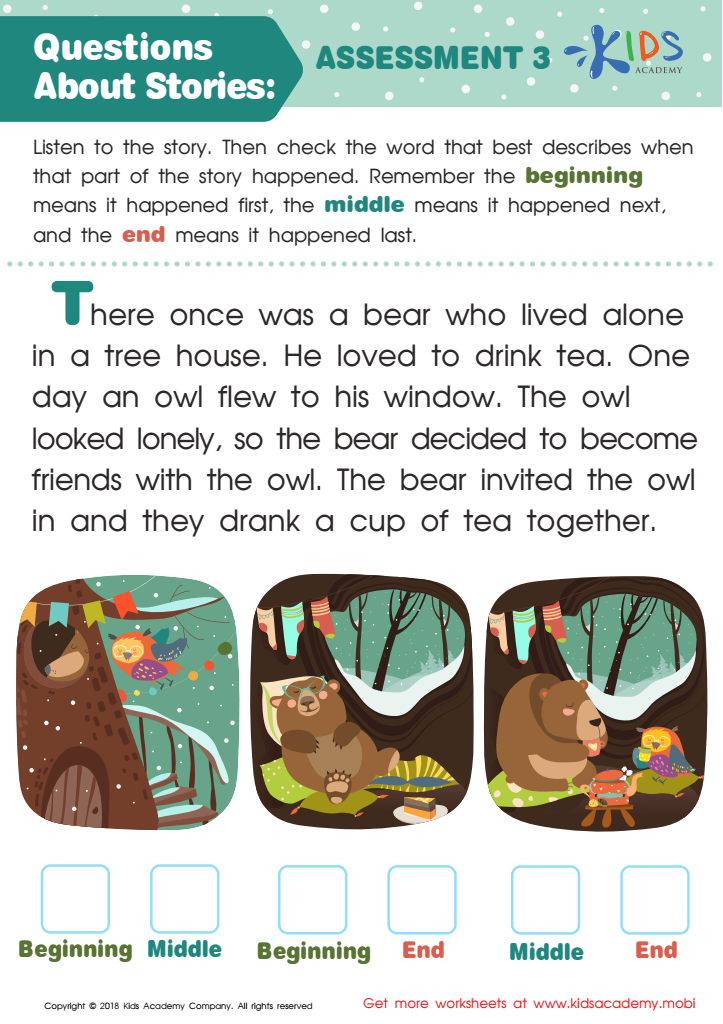
Questions About Stories: Assessment 3 Worksheet
Help kids understand stories by having them listen to a story and check boxes for the beginning, middle, and end. This worksheet makes it fun for even the youngest learners to recall story elements and sequence of events. Let them listen to the story from start to finish, then look at the pictures to check which part of the story they depict.
Questions About Stories: Assessment 3 Worksheet
Worksheet
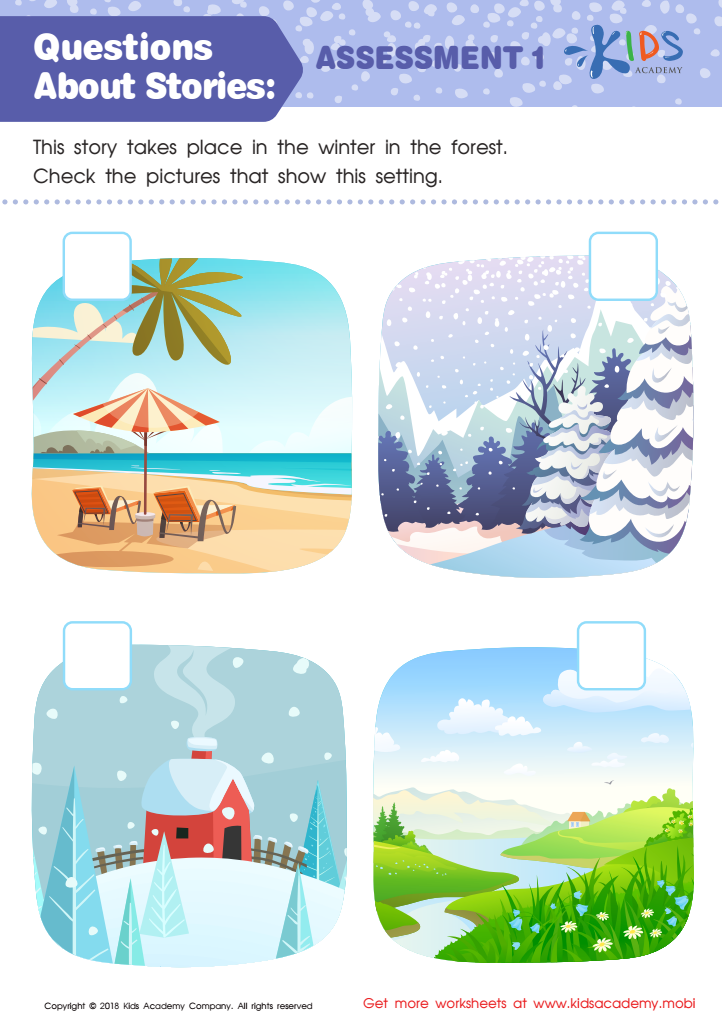
Questions About Stories: Assessment 1 Worksheet
Winter brings snow, cold, short days, and darkness. Schools can even close due to heavy snow. Ask your child what their favourite winter activities are and what color they associate with 'winter'. This worksheet takes place in a winter forest. Look at the 4 pictures with your child, and help them identify which one shows the correct setting.
Questions About Stories: Assessment 1 Worksheet
Worksheet
Join Kids Academy for Free
Who is primarily going to use this learning content?








Parents and teachers should prioritize Easy Reading Fiction activities for ages 4-7 because these early reading experiences significantly shape children's literacy development and lifelong learning habits. At this stage, children are curious and eager to explore language, making it a prime time to introduce them to the joys of storytelling. Easy reading fiction, characterized by simple vocabulary and engaging narratives, captures young children's attention, fostering a love for reading.
Such activities stimulate vocabulary expansion, improve comprehension skills, and cultivate critical thinking. Through character interactions and plot developments, children learn to infer, predict, and connect stories to their own experiences. Additionally, engaging with fiction enhances their imagination and creativity, encouraging them to think outside the box.
Moreover, reading together strengthens the bond between parents and children, while also promoting a cooperative learning environment in classrooms. These interactions can boost children's confidence, making them more willing to engage in reading both at home and school. By prioritizing Easy Reading Fiction, parents and teachers can ensure that children develop foundational literacy skills in a fun, enjoyable manner, setting them up for academic success and a lifelong passion for reading. Ultimately, fostering this early appreciation for literature supports their overall cognitive and emotional development.








