Normal Fairy Tales worksheets activities for Ages 3-8 - Page 3
49 filtered results
-
From - To
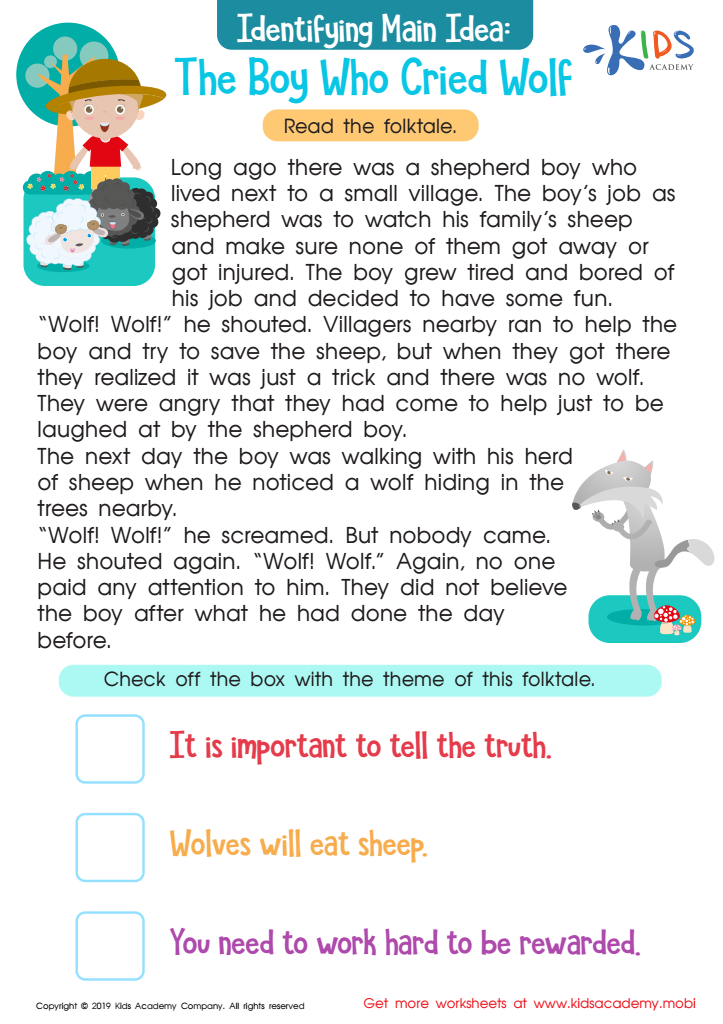
The Boy Who Cried Wolf Part 2 Worksheet
 Assign to My Students







Normal Fairy Tales activities for ages 3-8 are vital for early childhood development, providing numerous educational and social benefits. Firstly, these activities promote cognitive growth by stimulating imagination and encouraging creative thinking. Children engage with diverse characters and scenarios, helping them to explore complex themes such as morality, friendship, and bravery.
Moreover, fairy tales often incorporate rich vocabulary and narrative structures, aiding language development. Through storytelling, children enhance their listening skills and expand their vocabulary repertoire, crucial for effective communication as they grow.
Additionally, participating in fairy tale activities fosters social skills. Storytelling, role-playing, and group discussions enable children to collaborate, share ideas, and better understand different perspectives. These interactions lay the groundwork for developing empathy and emotional intelligence.
Finally, Normal Fairy Tales activities create a structured yet engaging environment where children can learn through play. This form of learning is both enjoyable and impactful, helping to cultivate a lifelong love for literature and learning. Parents and teachers who embrace these activities are not only enhancing children's critical thinking and communication skills but also nurturing their emotional and social development in an imaginative and supportive setting.








