Normal Fairy Tales worksheets activities for Ages 5-9 - Page 3
49 filtered results
-
From - To
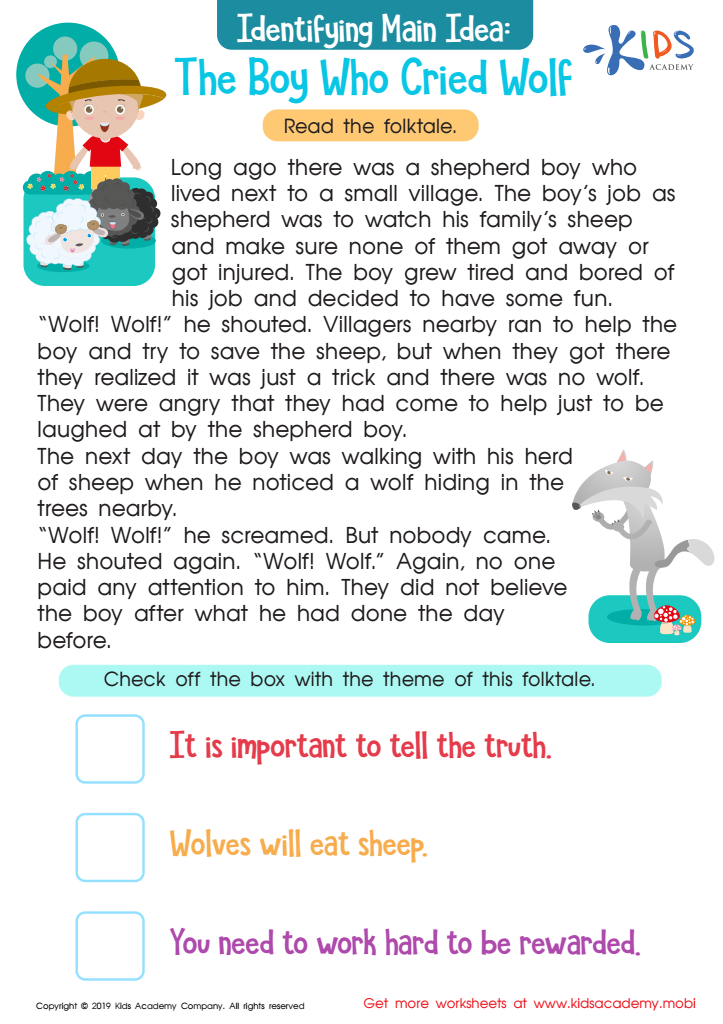
The Boy Who Cried Wolf Part 2 Worksheet
 Assign to My Students







Parents and teachers should care about Normal Fairy Tales activities for ages 5-9 because these activities offer a wealth of developmental benefits that are crucial during early childhood. Fairy tales stimulate imagination and creativity, allowing children to explore different worlds, cultures, and morals in an engaging manner. These stories, combined with interactive activities, encourage children to think critically about narratives and develop their storytelling skills, enhancing both language and literacy.
Moreover, Normal Fairy Tales activities promote social-emotional learning. They introduce themes such as friendship, bravery, and empathy, helping children to understand their feelings and the feelings of others. By discussing characters’ emotions and decisions, children learn valuable lessons about compassion and problem-solving.
Incorporating these activities into learning also supports cognitive development. Children begin to identify patterns, make predictions, and draw conclusions, which fosters their analytical thinking skills. Additionally, hands-on activities associated with fairy tales can enhance motor skills and promote collaboration among peers, reinforcing teamwork and communication.
In summary, Normal Fairy Tales activities are not just entertaining; they are essential tools for nurturing well-rounded, emotionally intelligent, and literate young learners, making them important for both parents and educators.








