
Alphabetical order understanding ABC Letters Worksheets for Ages 3-4
3 filtered results
Difficulty Level
Grade
Age
-
From - To
Subject
Activity
Standards
Our "Alphabetical Order Understanding ABC Letters Worksheets for Ages 3-4" are designed to introduce young learners to the concept of alphabetical order. These engaging, colorful worksheets help children recognize and sequence letters from A to Z through fun activities and exercises. Perfectly tailored for preschoolers, our resources build foundational literacy skills, encourage cognitive development, and make learning the alphabet an exciting adventure. With clear instructions and playful designs, kids gain confidence in letter recognition, enhancing their reading readiness. Ideal for both classroom and home use, our worksheets offer a playful approach to early alphabet education for ages 3-4.
Favorites
With answer key
Interactive
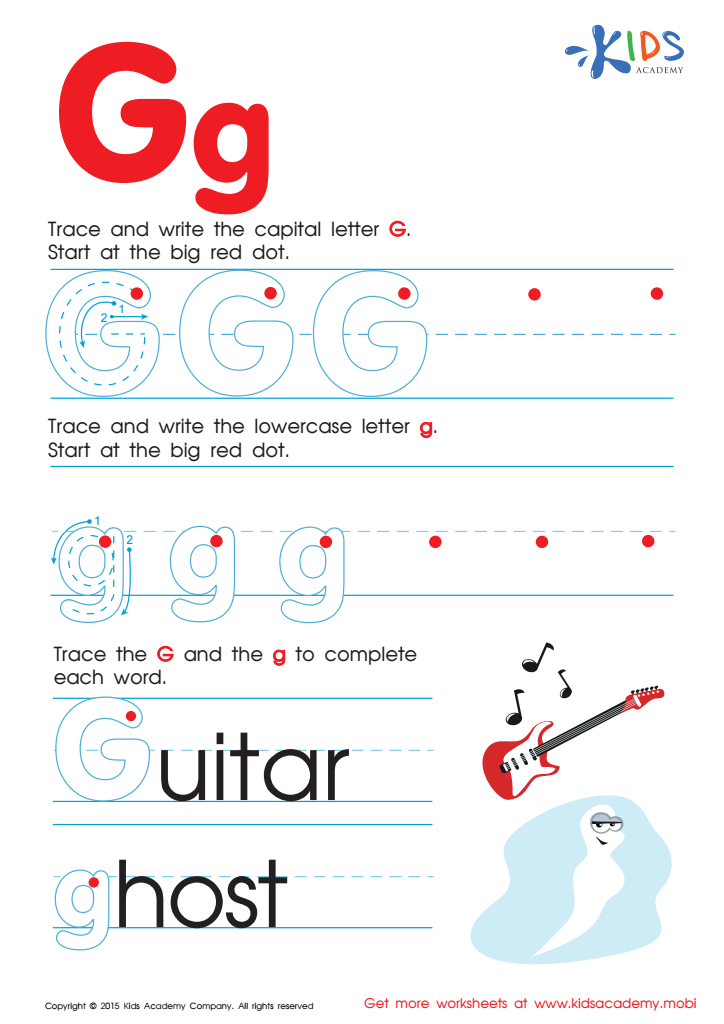
Letter G Tracing Page
Get ready to trace the letter "G" – with a big red spot as the starting point, trace the lines and watch the letter appear. Uppercase and lowercase letters are both easy and fun to write. Give it a go and finish the word "go". Play the guitar and say "hello" to a funny ghost!
Letter G Tracing Page
Worksheet


Letter J Coloring Sheet
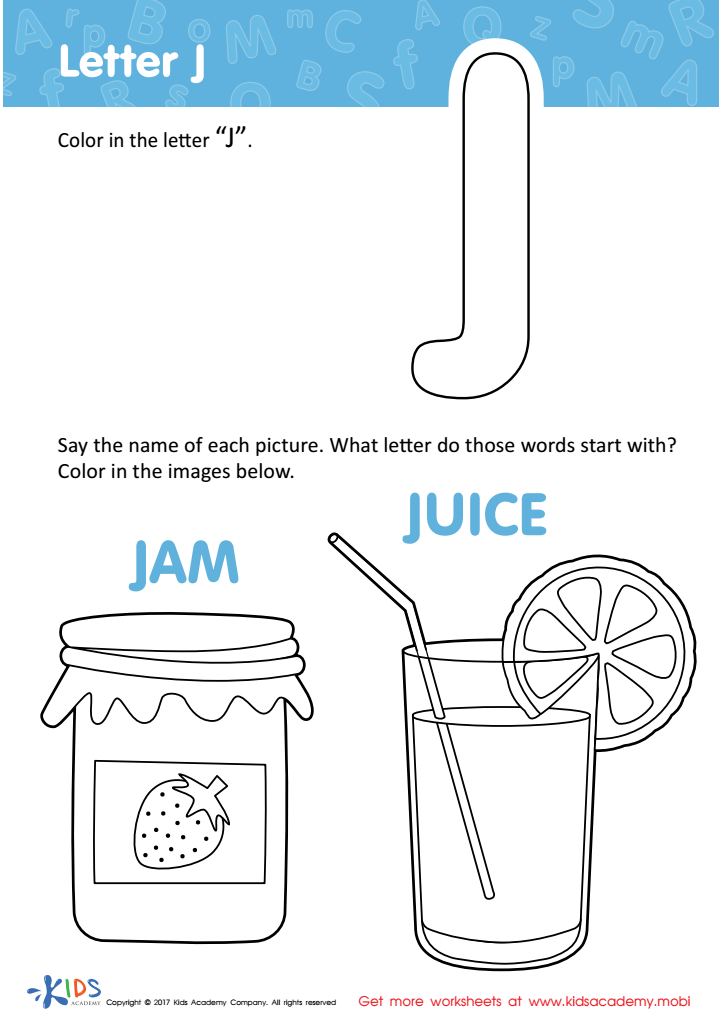
Practice the letter 'J' with your little one with this fun coloring page! Pictures of jar, juice, jam and jelly make it an enjoyable experience for kids. Learning the letter and coloring is fun for even the youngest learners.
Download (PDF)
 Assign to My Students
Assign to My Students
Letter J Coloring Sheet
Worksheet
Letter K Coloring Sheet
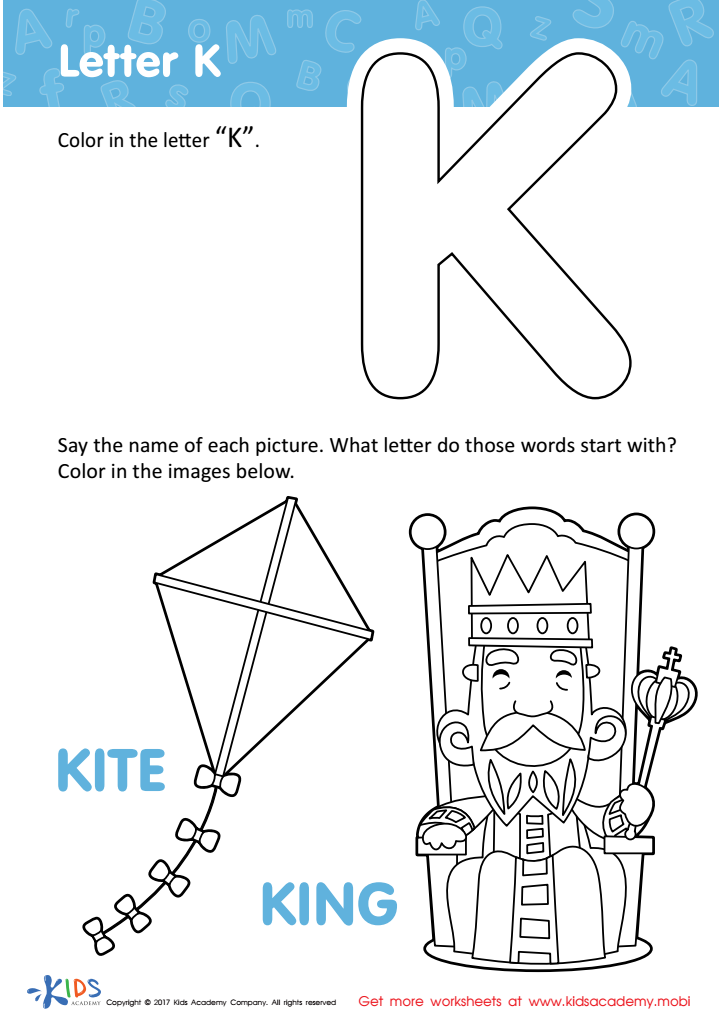
This letter K coloring page captivates your child's creativity while learning the letter! Showcasing a king and kite, common words for their age group, it's sure to spark their imagination.
Download (PDF)
Assign to My Students
Assign to My Students
Letter K Coloring Sheet
Worksheet
Join Kids Academy for Free
Who is primarily going to use this learning content?






Understanding alphabetical order is foundational for children aged 3-4, as it significantly impacts their literacy development and overall cognitive skills. At this young age, children are in a critical period of learning where they begin to recognize and make sense of letters and sounds, which are crucial steps in becoming proficient readers and writers.
One primary reason parents and teachers should emphasize alphabetical order is that it facilitates early phonic awareness. Recognizing the sequence of letters helps children learn how to decode words, enhancing their ability to read. This fundamental skill transition smoothly into recognizing patterns within words and understanding word families.
Additionally, knowledge of alphabetical order aids in cognitive development. It helps children improve their memory, as they need to recall the specific order of letters. Sorting and organizing letters can also enhance logical thinking and introduce them to the concept of systems and sequences, promoting problem-solving skills.
Moreover, familiarity with the alphabet boosts confidence in young learners. It provides a sense of achievement and encourages a positive attitude towards learning. As they make progress, children are more likely to engage in reading activities, ultimately nurturing a lifelong interest in books and knowledge.
Therefore, parents and teachers prioritizing alphabetical order ensures that young children develop the essential skills for educational success in an engaging and structured manner.







