Word identification Alphabet Worksheets for Ages 3-4
3 filtered results
-
From - To
Boost early reading skills with our Word Identification Alphabet Worksheets, specially designed for ages 3-4. These engaging, fun, and educational printables help toddlers recognize, identify, and match letters to their corresponding words. By incorporating colorful illustrations and interactive exercises, our worksheets make learning the alphabet delightful. They’re perfect for building a strong foundation in literacy while developing fine motor skills. Ideal for both classroom and at-home use, these worksheets offer a comprehensive approach to early childhood education, making it easier for little ones to embark on their reading journey. Download now and watch your child’s confidence soar!
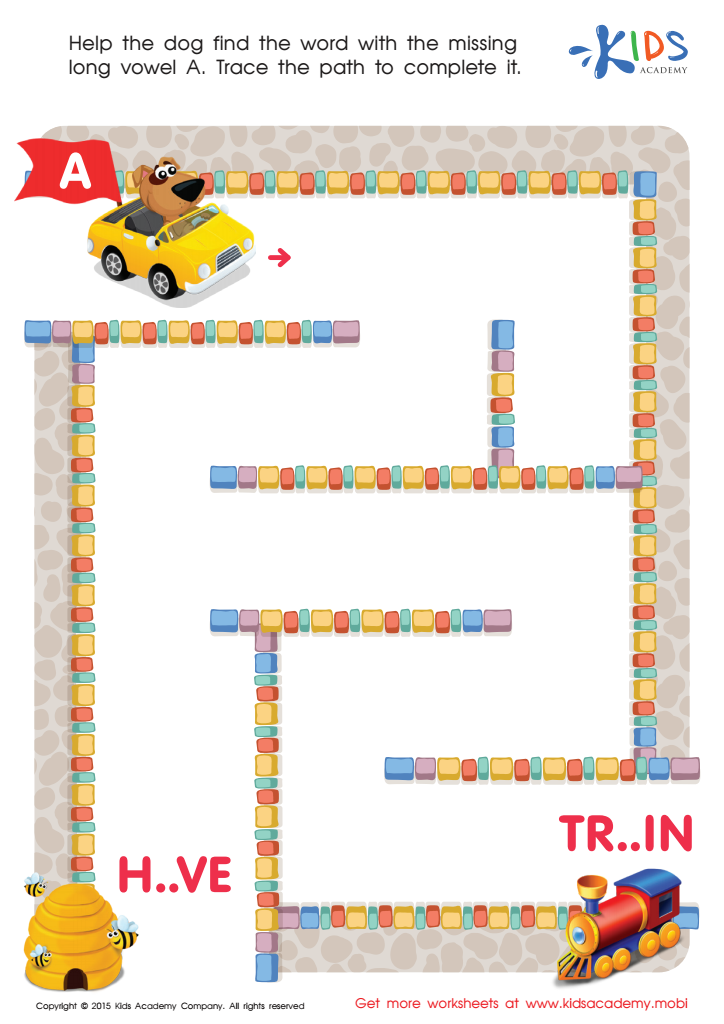
Long Vowel Sound A Worksheet
 Assign to My Students
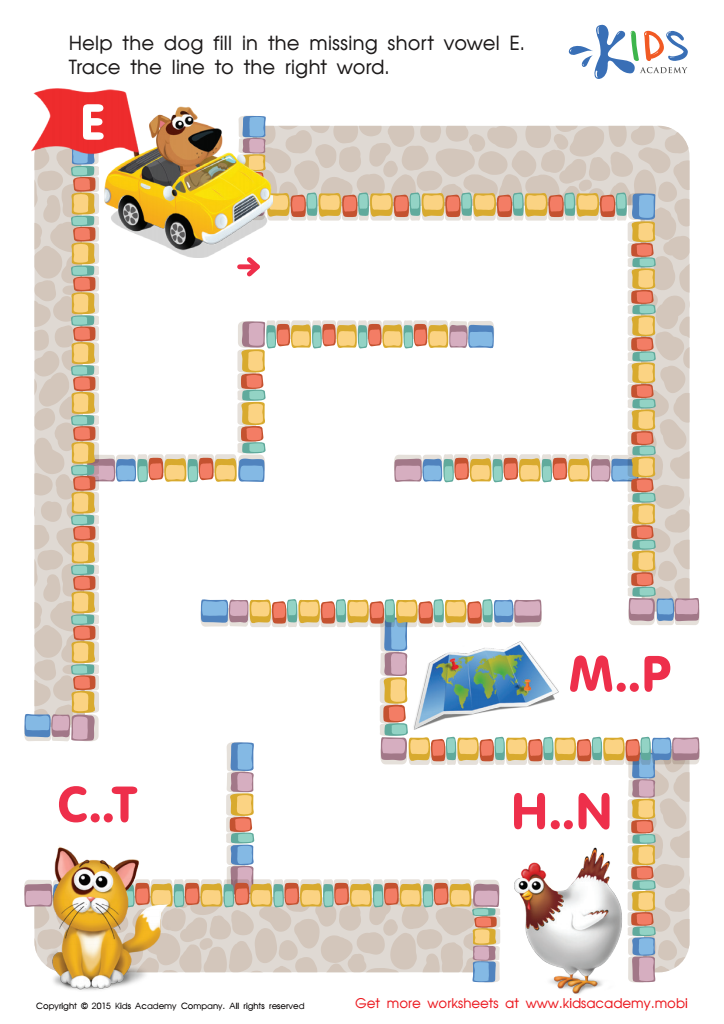
Short Vowel Sound E Worksheet
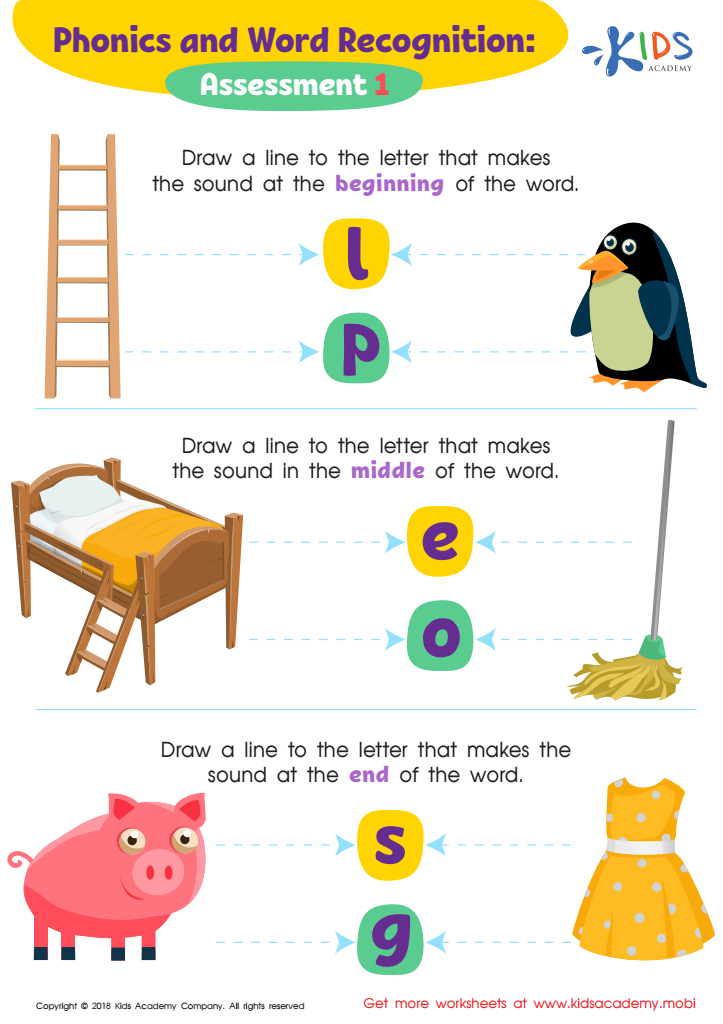
Phonics and Word Recognition: Assessment 1 ELA Worksheet






.jpg)

Parents and teachers should prioritize Word Identification Alphabet for children ages 3-4 because it lays the foundation for essential early literacy skills, crucial for academic success and lifelong learning. At this developmental stage, children are in a prime period for absorbing new information, and engaging them with alphabet activities helps them recognize letters and sounds. Understanding letter forms and phonics aids in word identification, facilitating smoother transitions to reading fluently.
This early familiarity with the alphabet bolsters phonemic awareness—the ability to hear, identify, and manipulate individual sounds in words—which is critical for decoding and spelling. When children become adept at identifying words, they build confidence in their reading abilities, fostering a love for books and a positive attitude towards learning.
Moreover, alphabet learning promotes cognitive skills such as memory, attention, and sequential processing, and supports fine motor skills when children practice writing letters. It also strengthens communication and comprehension by expanding vocabulary and language skills. Parents and teachers can make learning enjoyable through interactive and playful methods like songs, games, and storytelling, thereby instilling a love for reading and learning that will benefit children throughout their educational journey. Engaging young minds at this age sets them on a path to becoming proficient, enthusiastic readers and learners.







