Lowercase identification Letter Recognition Worksheets for Ages 3-4
5 filtered results
-
From - To
Unlock your child's early literacy skills with our engaging Lowercase Letter Recognition Worksheets designed specifically for ages 3-4! These fun and interactive activities help little ones familiarize themselves with lowercase alphabet letters through colorful illustrations and engaging exercises. As they practice identifying and matching letters, children strengthen their cognitive abilities and reinforce their understanding of the alphabet. Our worksheets provide a perfect balance of education and entertainment, fostering a love for learning from a young age. Explore our variety of printable options that encourage hands-on learning and watch your child's confidence soar as they become proficient in lowercase letter recognition!
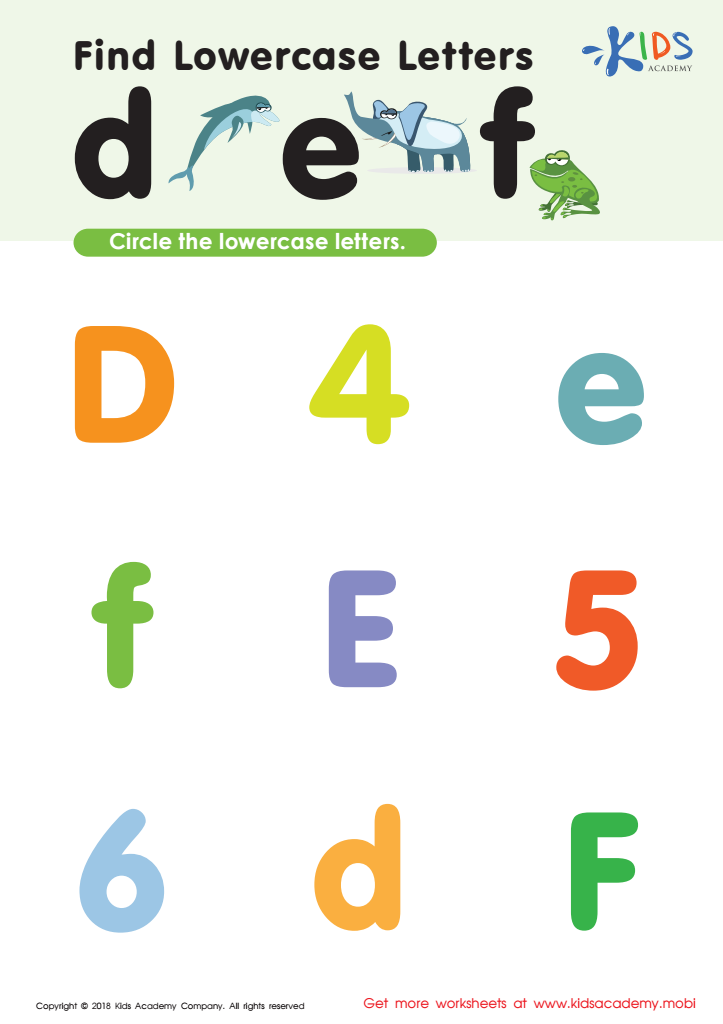
Find Lowercase Letters d e f Worksheet
 Assign to My Students
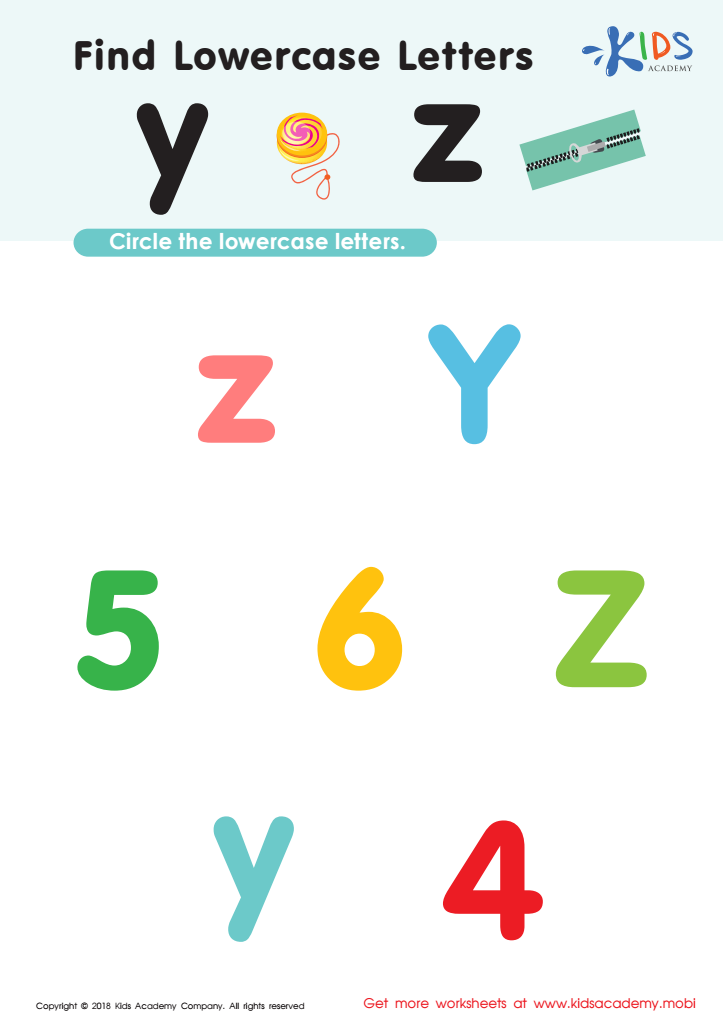
Find Lowercase Letters y z Worksheet
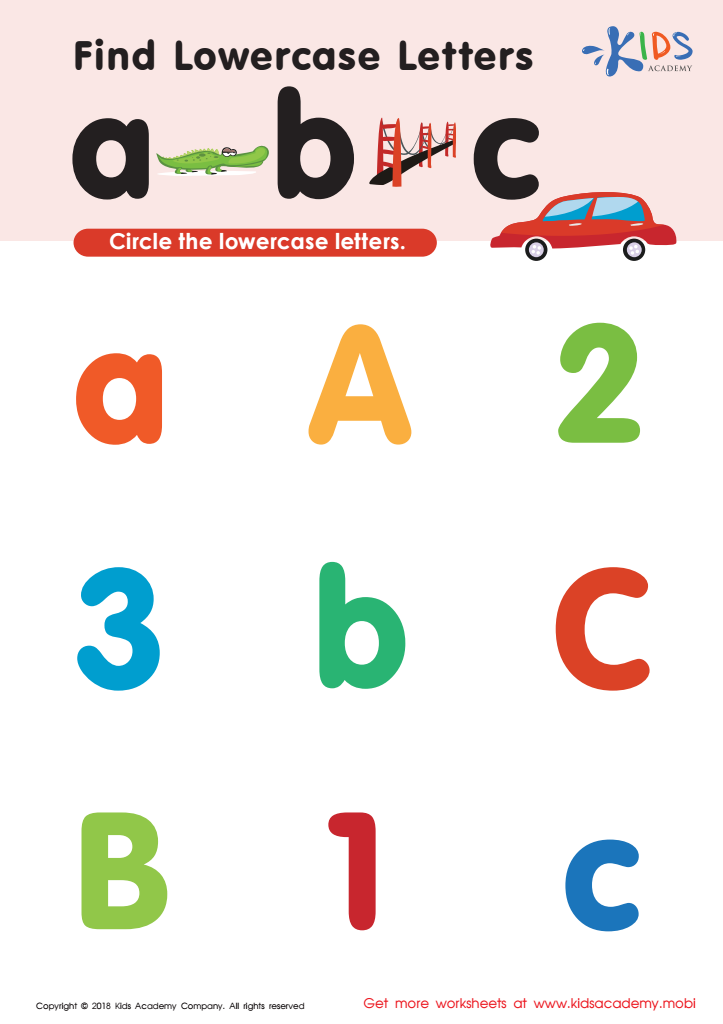
Find lowercase letters a b c Worksheet
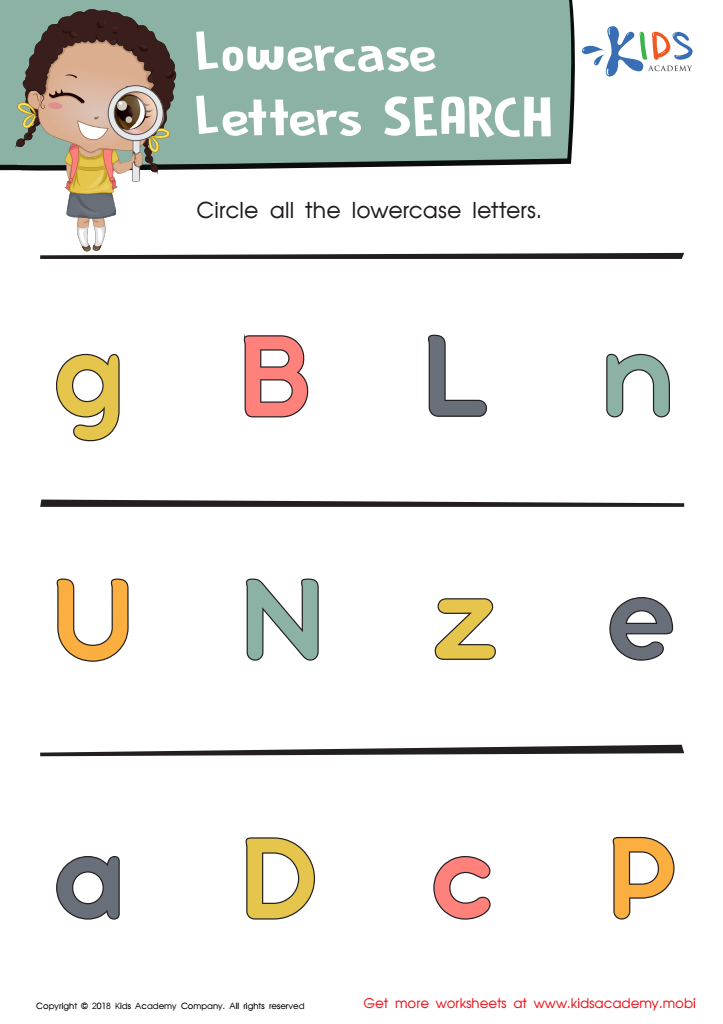
Lowercase Letters Search: Assessment Worksheet
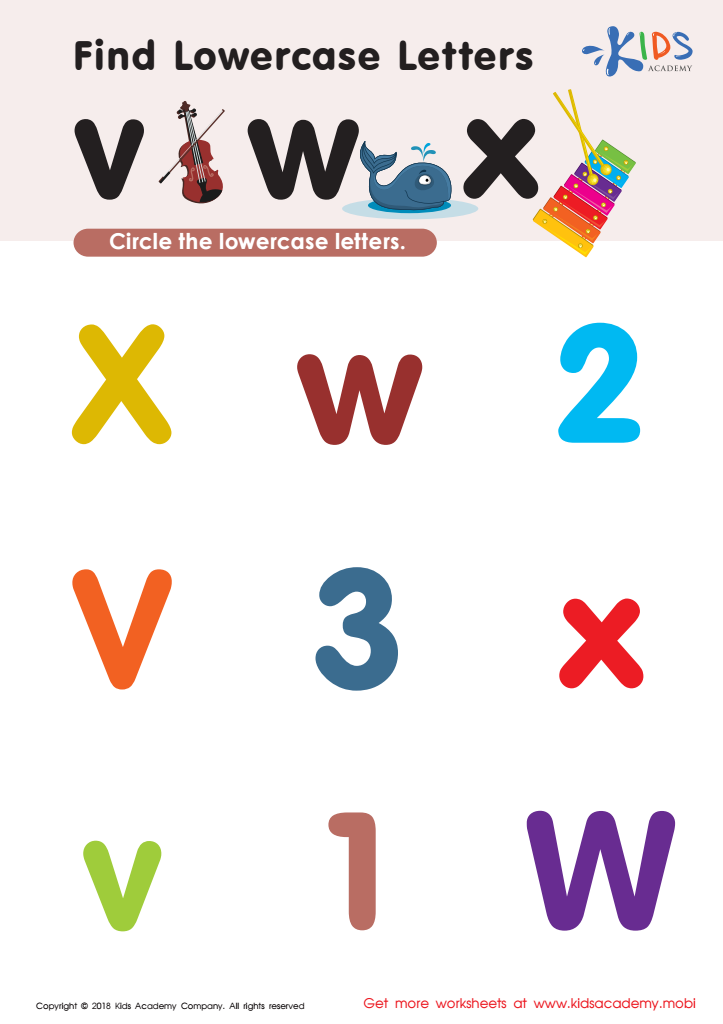
Find Lowercase Letters v w x Worksheet








Lowercase letter recognition is a crucial skill for children aged 3-4, laying the foundation for literacy development. At this early age, fostering a strong awareness of lowercase letters helps children not only to understand that letters represent sounds but also to facilitate the connection between printed language and spoken word. This recognition is essential for reading and writing, as most texts feature lowercase letters predominantly.
By supporting lowercase identification, parents and teachers can enhance children's phonemic awareness, which is vital for successful reading. When children become experts at recognizing lowercase letters, they gain confidence in their ability to decode words, contributing to a positive reading experience. Furthermore, early exposure to letter recognition aids in vocabulary development, as children learn to associate images and meanings with the written word.
Moreover, reinforcing lowercase recognition during this age promotes fine motor skills through activities like writing and drawing. Engaging in playful learning experiences, such as letter matching games or storytelling with illustrated books, can make learning enjoyable and impactful.
Investing time in lowercase letter recognition helps develop a strong literacy foundation, encouraging a lifelong love for reading and learning as children grow. Parents and teachers play a pivotal role in this developmental stage, making early letter recognition a priority.







