Letter recognition Letter V Worksheets for Ages 3-4
4 filtered results
-
From - To
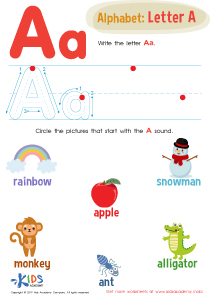
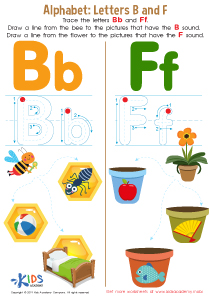
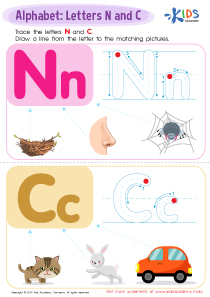
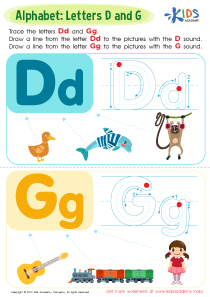
Introduce your little learner to the world of letters with our "Letter V Recognition Worksheets!" Designed specifically for ages 3-4, these engaging worksheets make learning the letter V fun and easy. Featuring vibrant illustrations and interactive activities, children will enhance their letter recognition skills through tracing, coloring, and matching exercises. As they connect with the visual cue of the letter V, they'll also develop fine motor skills, hand-eye coordination, and early phonics understanding. Make learning enjoyable and effective with our expertly crafted resources, setting the foundation for a lifelong love of reading and writing.
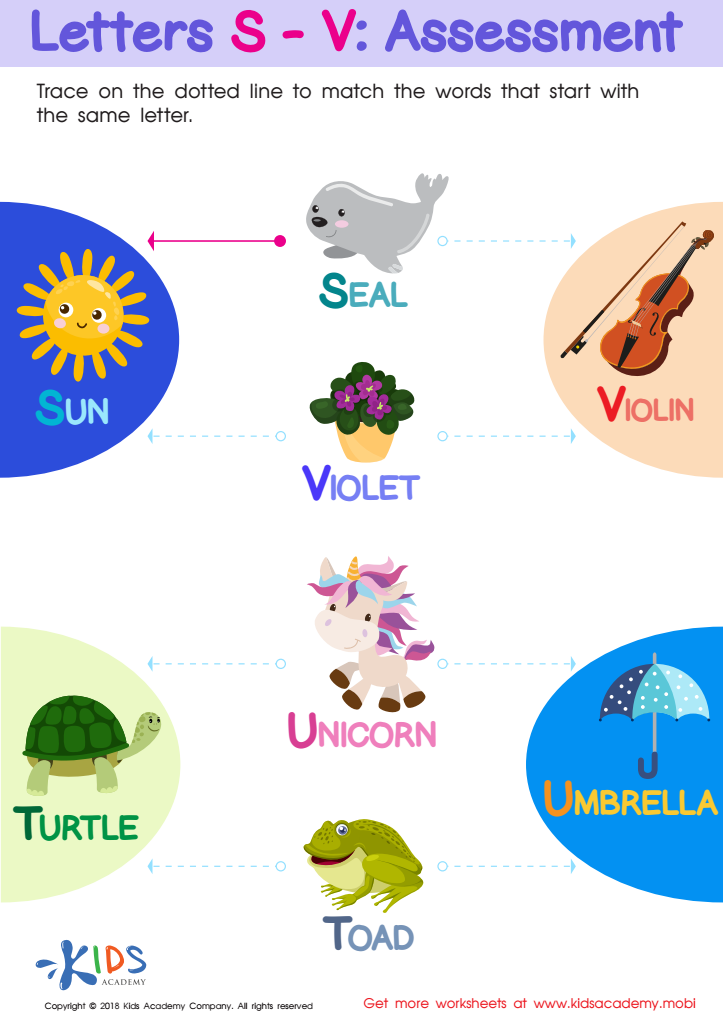
Letters S - V Tracing Worksheet
 Assign to My Students
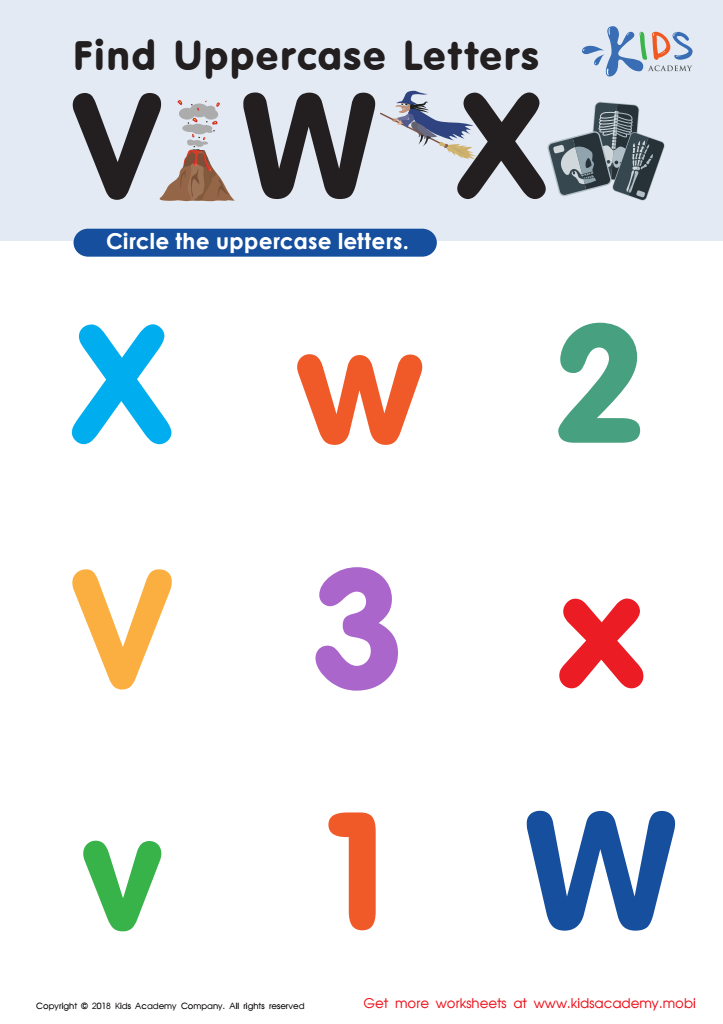
Find Uppercase Letters V, W, X Worksheet
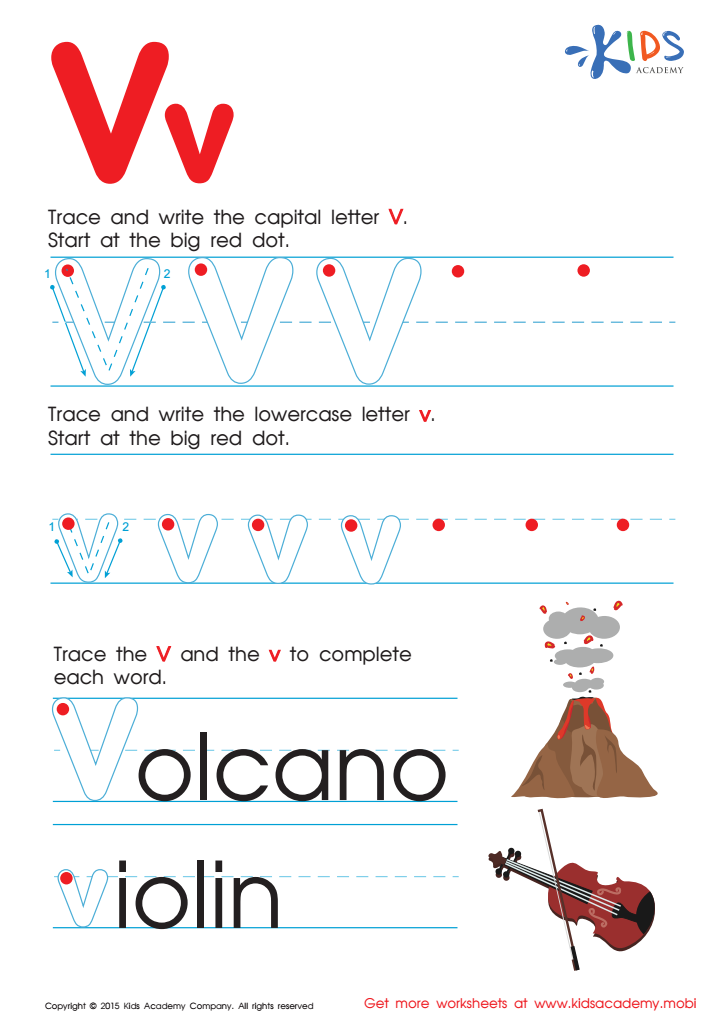
Letter V Tracing Page
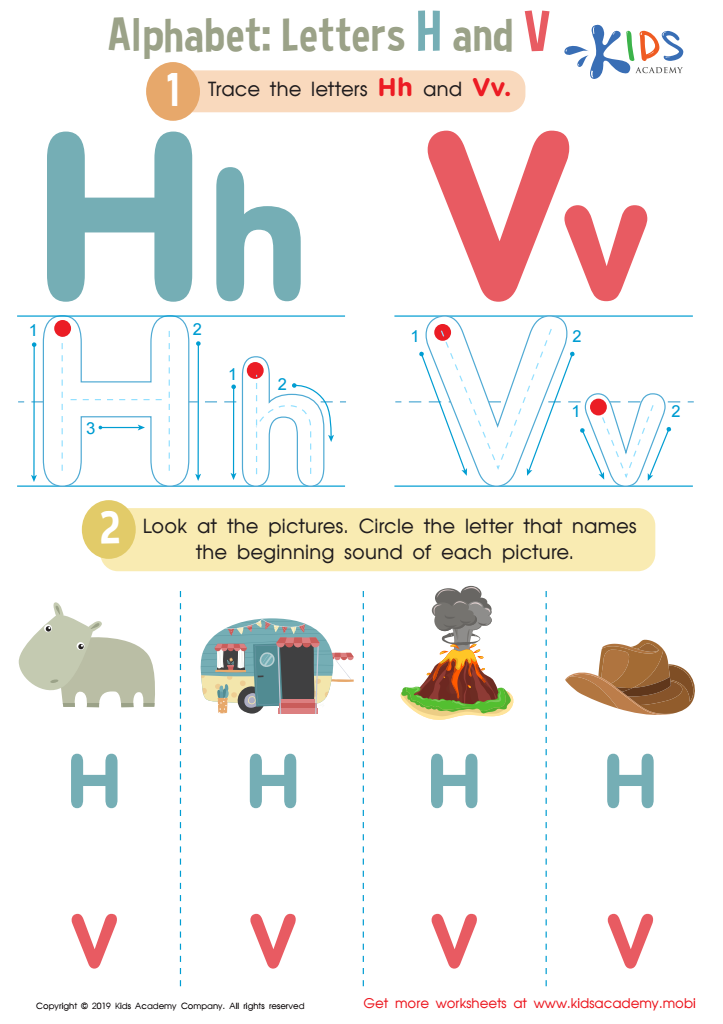
Letters H and V Tracing Worksheet




Letter recognition, including the letter V, is a crucial milestone for children aged 3-4 as it lays the foundation for early literacy skills. For parents and teachers, fostering an understanding of the letter V helps in building a child's alphabet knowledge and enhances their ability to read and write in the future.
Recognizing the letter V is important for several reasons. Firstly, early awareness of letters boosts cognitive development in young children. It encourages skills like attention to detail, memory, and categorization. Secondly, familiarizing children with letters like V aids in phonemic awareness—the ability to hear, identify, and manipulate individual sounds in words. Recognizing that "V" makes the /v/ sound helps children decode words such as "van," "violet," and "vase," strengthening their vocabulary and comprehension.
Moreover, learning the alphabet at a young age can boost a child's confidence. Successfully identifying letters gives children a sense of accomplishment and paves the way for a positive attitude toward learning. Engaging in alphabet-related activities, such as singing alphabet songs or interactive story readings, also allows for quality bonding time between parents, teachers, and children.
In conclusion, caring about letter recognition, such as the letter V, is fundamental for cultivating literacy, cognitive skills, confidence, and meaningful social interactions in children aged 3-4.