Vowel Recognition Long Vowels Worksheets for Ages 3-4
4 filtered results
Difficulty Level
Grade
Age
-
From - To
Subject
Activity
Standards
Unlock essential reading skills with our Vowel Recognition Long Vowels Worksheets designed specifically for ages 3-4. These engaging worksheets help young learners identify long vowel sounds through fun activities and colorful illustrations. By practicing vowel recognition, children will build a strong foundation for early literacy development. Our user-friendly format promotes interactive learning, making it easy for children to explore vowels while enjoying creative exercises. Ideal for homeschool settings or classroom environments, these worksheets enhance phonics skills and foster a love for reading. Start your child's literacy journey today with our captivating long vowels resources! Explore and download now!
Favorites
With answer key
Interactive
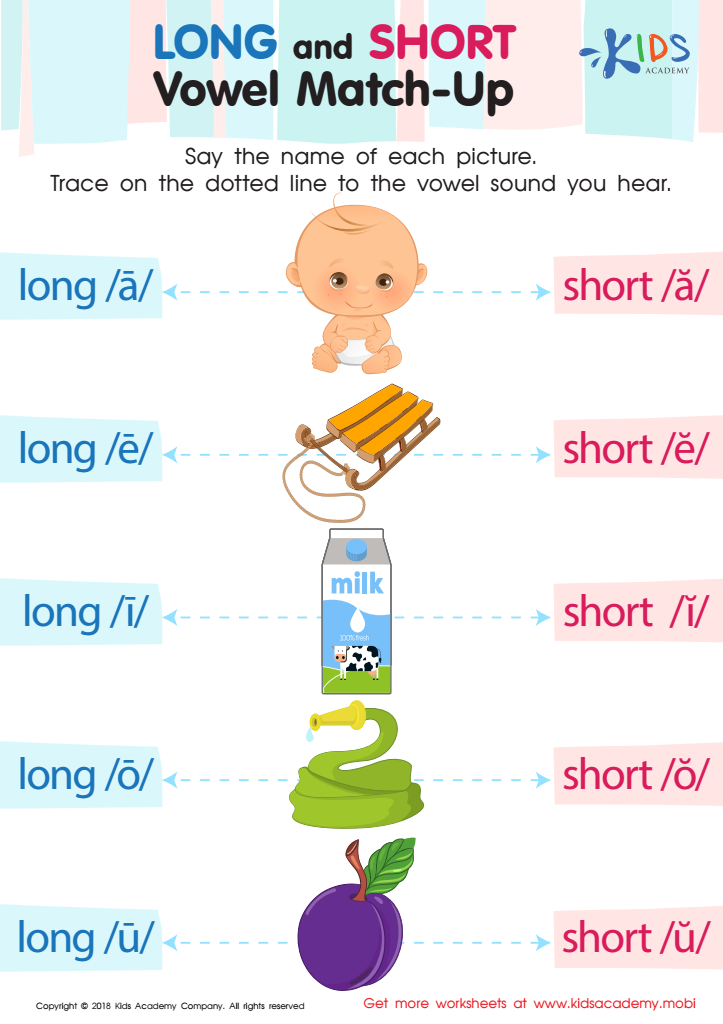
Long and Short Vowel Match up Reading Worksheet
Help your reader build confidence and refine their decoding skills! This worksheet combines long and short vowel recognition with a traceable component to improve fine motor skills. Your learner will name each picture and trace the dotted lines to get to the correct vowel sounds.
 Assign to My Students
Long and Short Vowel Match up Reading Worksheet
Worksheet
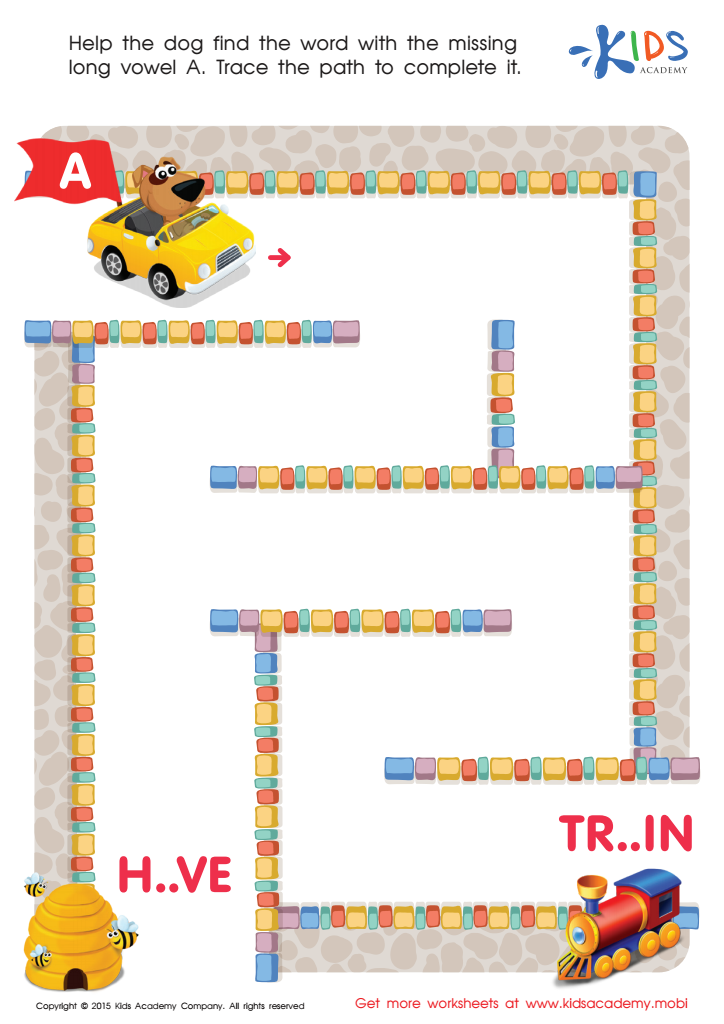
Long Vowel Sound A Worksheet
Teach your young learner about the long vowel A with this colorful free printable phonics worksheet. The long vowel A says its name while the short vowel A does not. Complete the worksheet by tracing the root to the toy train and helping the dog by filling in the missing letter A. Have them practice writing and spelling with phonics while having fun!
Long Vowel Sound A Worksheet
Worksheet
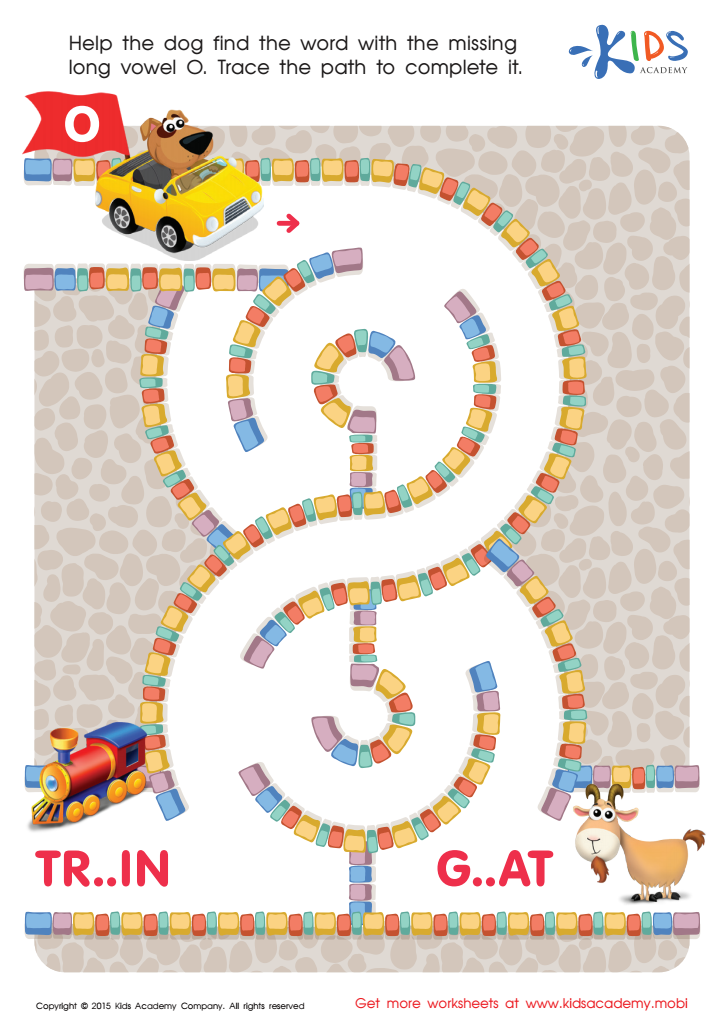
Long Vowel Sound O Worksheet
Help the goat find her missing O! Guide your little learner through this fun maze to help the goat get its vowel sound back. Make phonics learning engaging and enjoyable with this free printable worksheet.
Long Vowel Sound O Worksheet
Worksheet
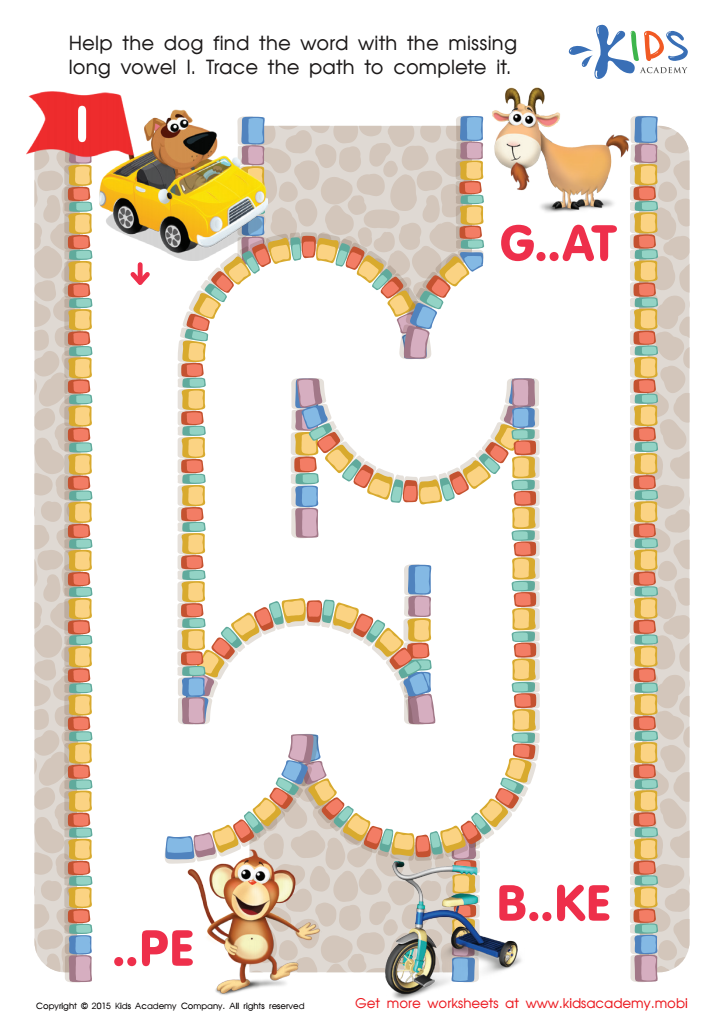
Long Vowel Sound I Worksheet
Learning long vowels is essential to becoming a good reader. Ask your child to distinguish between the long and short I vowel sounds. Remind them that the long I says its name, while the short I doesn't. With this fun printable phonics worksheet, your kid can practice writing and spelling while helping a dog find his way through a maze. Check out our phonics worksheets for more learning activities.
Long Vowel Sound I Worksheet
Worksheet
Join Kids Academy for Free
Who is primarily going to use this learning content?



Vowel recognition, particularly of long vowels, is a crucial foundational skill for young learners ages 3-4. At this age, children begin to develop language skills that underpin their literacy as they progress in their education. Recognizing long vowels helps children distinguish sounds in words, which is essential for early reading and phonics development.
Understanding long vowels can lead to greater phonemic awareness, aiding in their ability to decode words when reading and promote correct pronunciation. This thin distinction lends itself to successful writing and spelling as children learn to connect sounds to letters. Familiarity with long vowel patterns (such as "a_e" as in "cake" or "i_e" as in "bike") also introduces children to basic linguistic structures, preparing them for complex language concepts down the road.
Moreover, focusing on long vowel recognition fosters a love for reading. Engaging children with songs, rhymes, and playful activities that emphasize long vowels make the learning process more enjoyable. This not only builds confidence in their reading skills but also promotes overall language development. Therefore, parents and teachers should prioritize long vowel recognition in early education, setting the stage for ongoing literacy success.