Rhyming skills development Phonics Worksheets for Ages 3-4
4 filtered results
-
From - To
Unlock your child's potential with our Rhyming Skills Development Phonics Worksheets designed for ages 3-4! These engaging, vibrant activities foster early literacy by helping young learners recognize and produce rhyming words. By focusing on essential phonemic awareness, our worksheets encourage critical thinking and language development in a fun and interactive way. Perfect for home or classroom use, these resources are easy to implement and align with early education standards. Give your preschooler the tools they need to succeed and nurture their love for reading while enhancing their rhyming abilities. Explore our collection and watch your child thrive in their phonics journey!
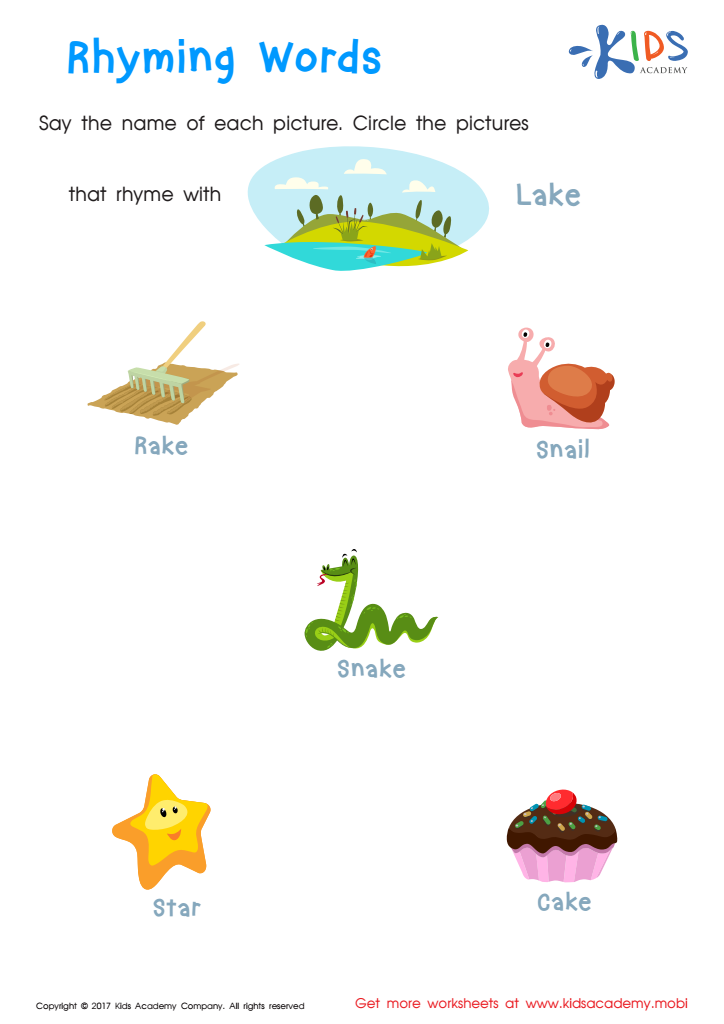
Rhyming Words Rhyming Worksheet
 Assign to My Students
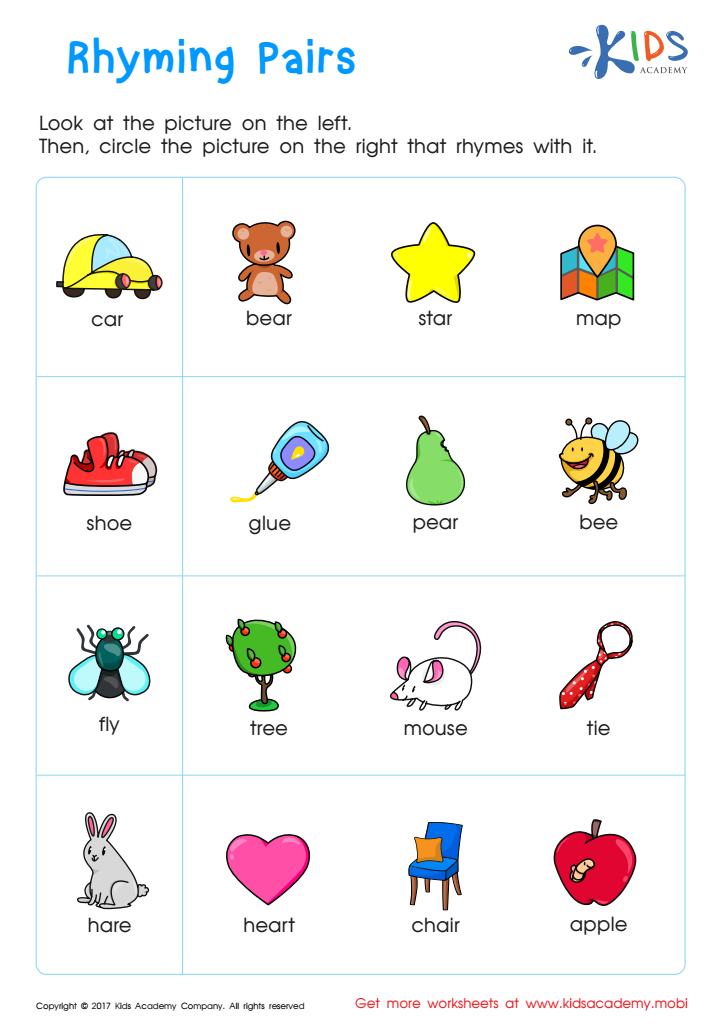
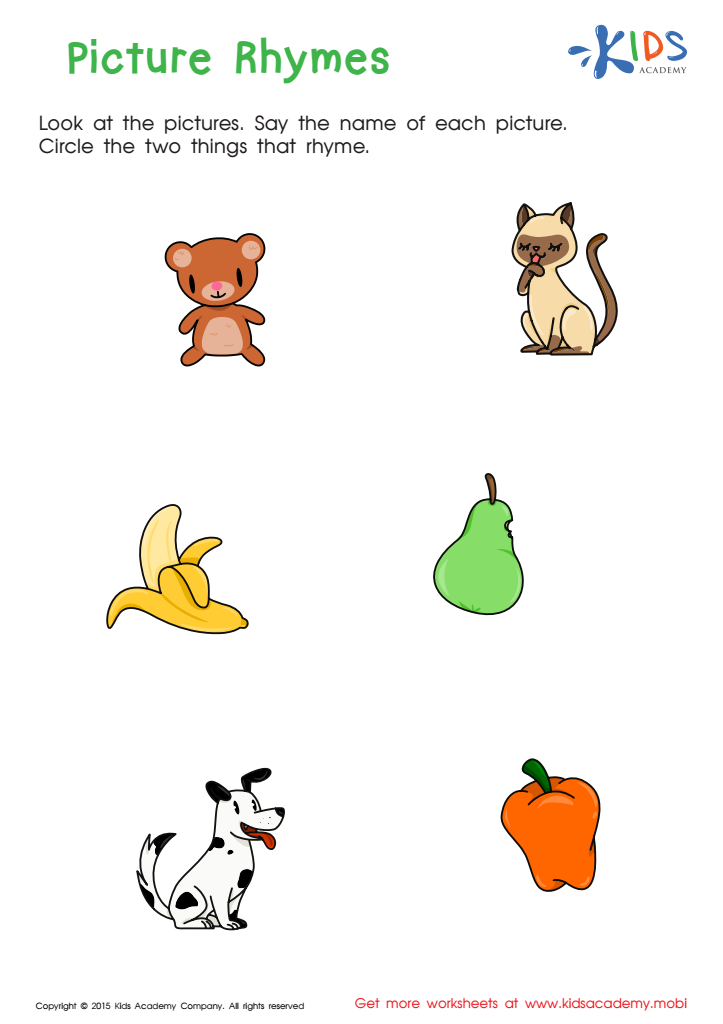
First Words: Picture Rhymes Worksheet
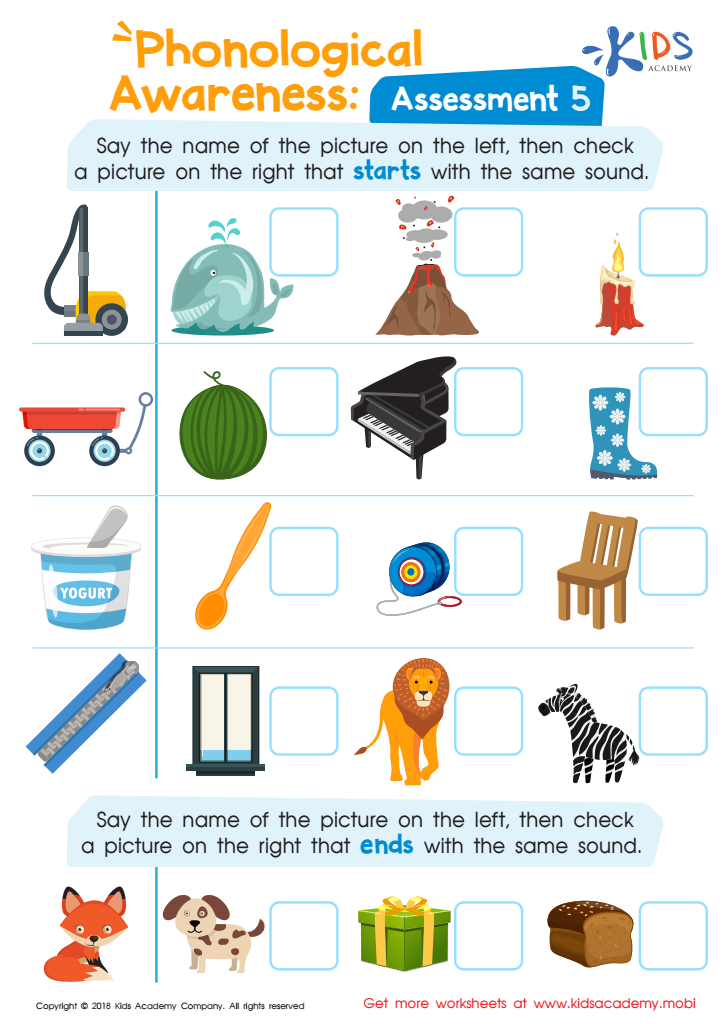
Phonological Awareness: Assessment 5 Worksheet








Rhyming skills and phonics development are foundational components of early literacy for children aged 3-4. At this stage, children are beginning to develop auditory discrimination and phonemic awareness, which are crucial for reading success later on. Rhyming games and activities not only make learning enjoyable but also enhance children’s ability to hear and manipulate sounds in words.
When parents and teachers encourage rhyming, they help children recognize patterns within language. This recognition lays the groundwork for phonics, where children learn the relationship between sounds and letters. As children play with rhymes, they become more familiar with word structures, which builds their vocabulary and enhances their spoken language skills.
Additionally, promoting rhyming helps cultivate qualities like critical thinking and creativity, as children enjoy experimenting with language. Engaging in rhyming activities also strengthens the bond between adults and children, creating positive associations with literacy. In summary, focusing on rhyming and phonics development at this young age empowers children with the essential skills for effective reading and communication, ultimately shaping their educational journey and fostering a lifelong love for learning.







