Sound-letter correlation Phonics Worksheets for Ages 3-4
3 filtered results
-
From - To
Introducing our engaging Sound-Letter Correlation Phonics Worksheets designed specifically for ages 3-4! These interactive resources help young learners develop essential pre-reading skills by connecting sounds to their corresponding letters. Through fun activities and vibrant illustrations, children will enjoy recognizing letters and practicing their phonetic sounds in a playful way. Our worksheets encourage critical thinking and reinforce sound-letter associations, laying a strong foundation for literacy. Perfect for parents and educators, these resources make learning enjoyable and effective. Explore our comprehensive collection and start nurturing your child's reading journey today! Dive into the world of phonics with our delightful worksheets!
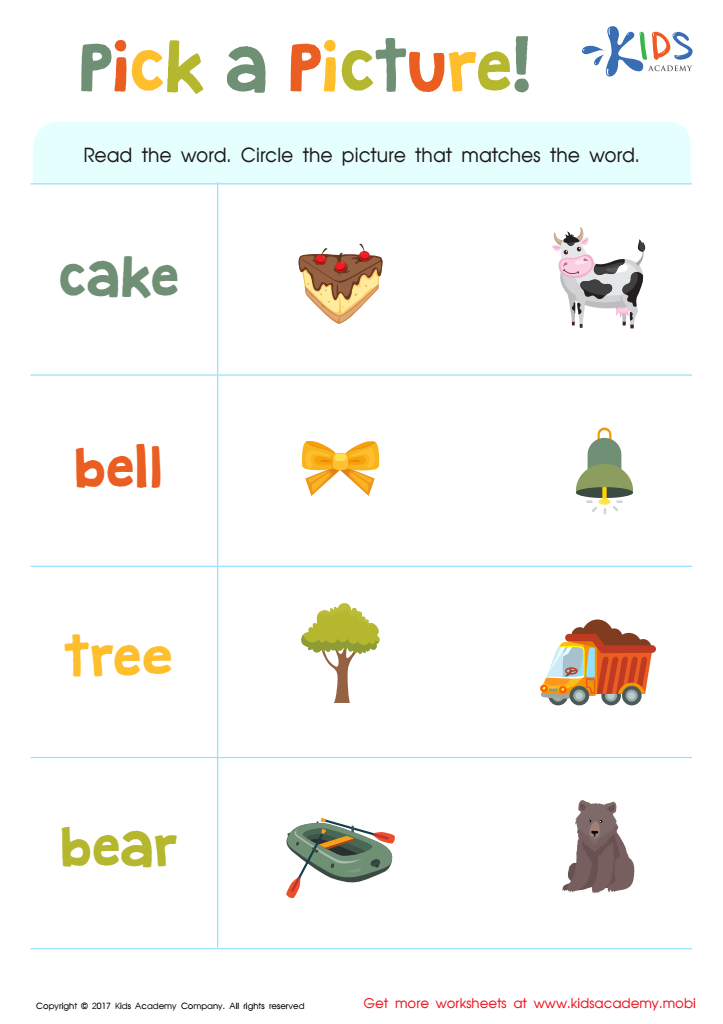
Pick a Picture Word Recognition Worksheet
 Assign to My Students
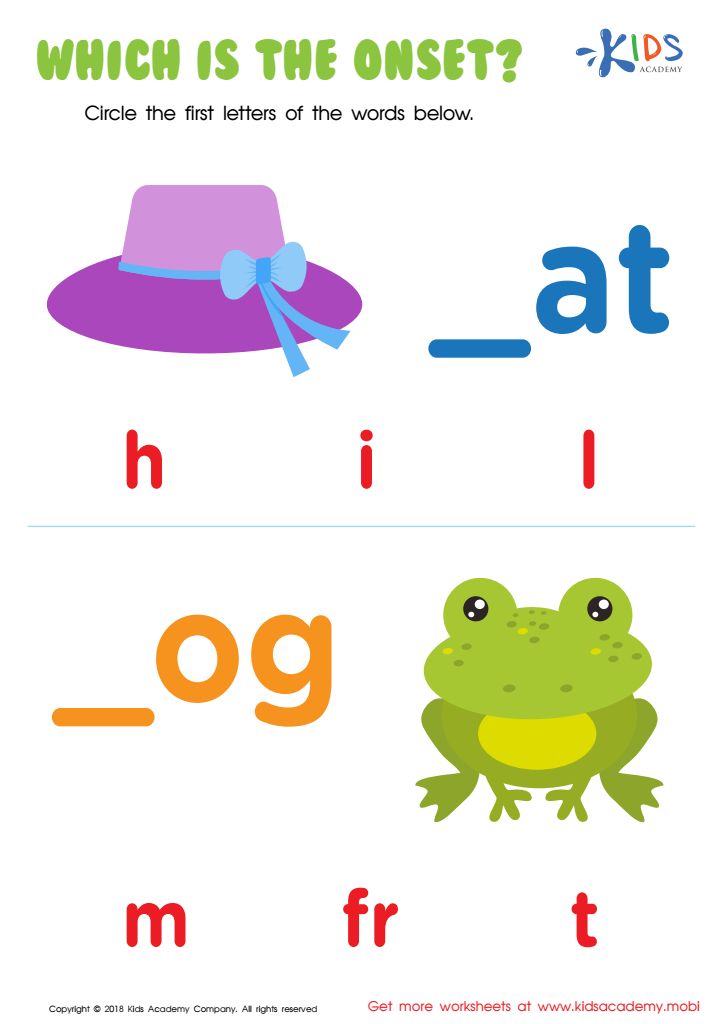
Which Is the Onset? Worksheet
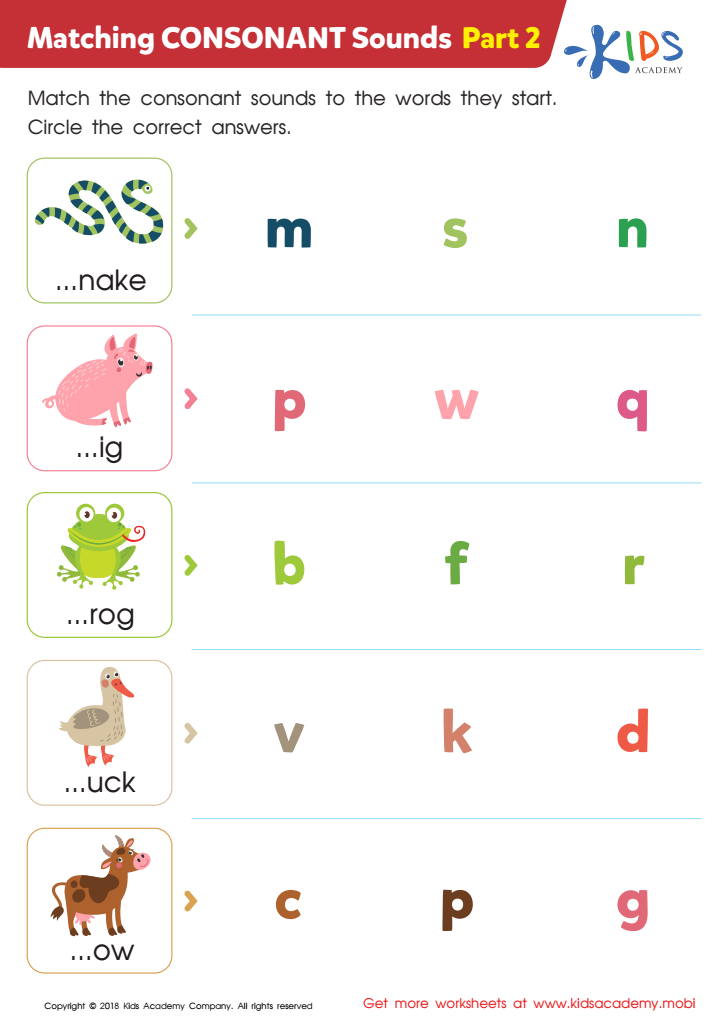
Matching Consonant Sounds: Part 2 Worksheet








Phonics, specifically sound-letter correlation, is vital for young learners aged 3-4 as it lays the foundation for reading and literacy development. At this age, children are exceptionally receptive to language, making it the ideal time to introduce them to the relationship between sounds (phonemes) and letters (graphemes). Understanding this correlation helps children learn to decode words, a crucial skill they will rely on throughout their educational journey.
Parents and teachers should care about phonics because it promotes language acquisition, boosts vocabulary, and enhances comprehension skills. Early phonics instruction supports the development of effective listening skills, auditory discrimination, and verbal communication. When children grasp that letters represent specific sounds, they become more engaged in storytelling and reading activities, fostering a love for literature.
Moreover, strong phonics skills can reduce the risk of future literacy challenges. Children with a solid phonemic awareness are more likely to excel in reading and writing, which are essential for overall academic success. By prioritizing sound-letter correlation through playful and interactive activities, parents and teachers can create a rich, engaging learning environment, ensuring that children are well-prepared for more complex literacy skills as they progress through school.







