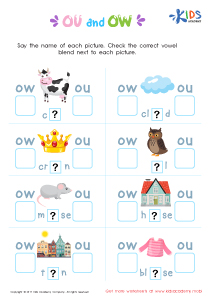
Spelling practice Short Vowels Worksheets for Ages 3-4
4 filtered results
Difficulty Level
Grade
Age
-
From - To
Subject
Activity
Standards
Enhance your child's literacy skills with our Spelling Practice Short Vowels Worksheets designed specifically for ages 3-4. These engaging and interactive worksheets focus on familiarizing young learners with short vowel sounds through fun activities and exercises. Each printable resource is crafted to support early phonics development, helping little ones recognize and spell basic words. Perfect for parents and educators, our worksheets encourage hands-on practice and build confidence in early spelling. Give your child the foundational skills they need for reading success with our vibrant and educational short vowel worksheets! Start the learning adventure today!
Favorites
With answer key
Interactive
Short Vowel Sound U Worksheet Worksheet
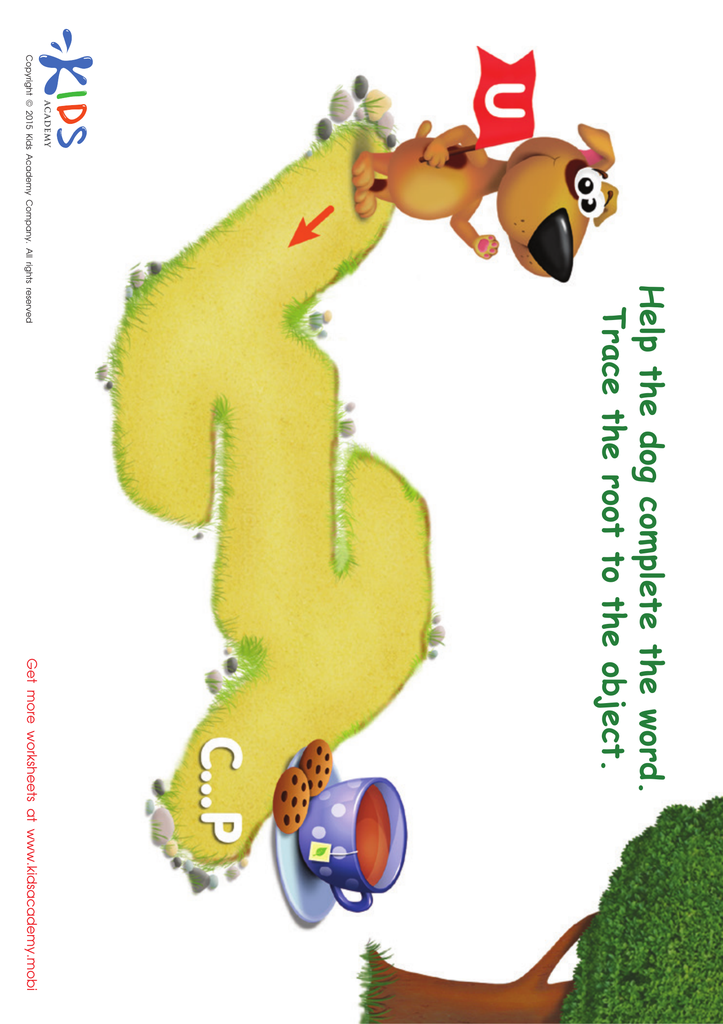
Help your early reader join the adorable dog on his way to the cup of tea with cookies. This traceable worksheet reinforces the short -u sound and strengthens fine motor skills. Kids don't realize they are practicing reading skills while having fun!
Short Vowel Sound U Worksheet Worksheet
Worksheet
Short Vowel Sound I Worksheet
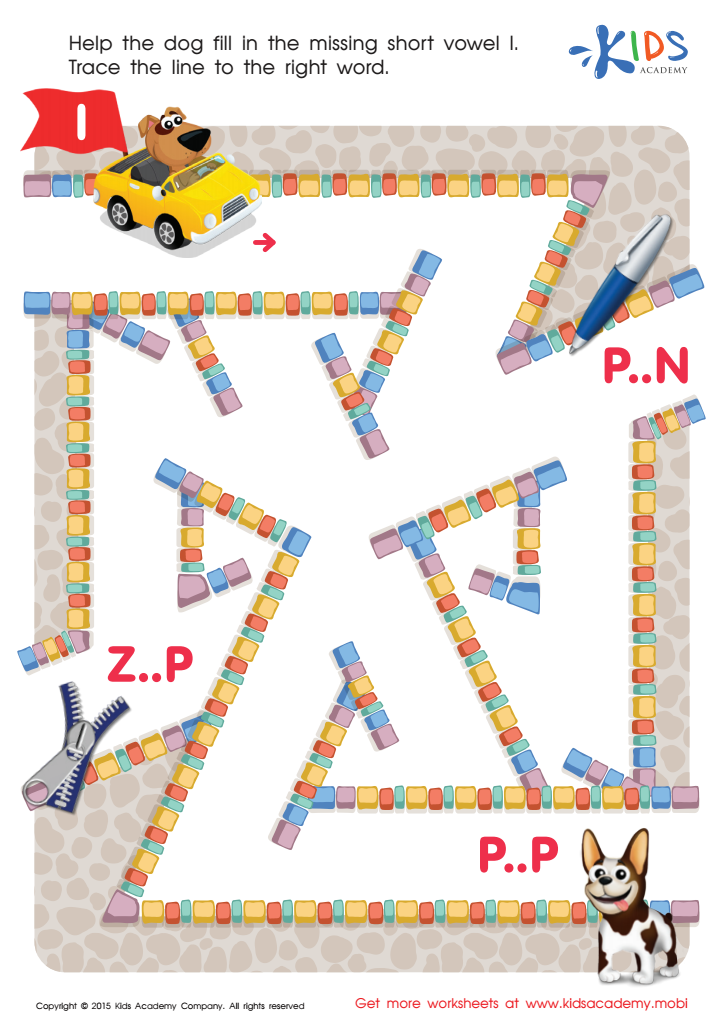
This free printable phonics worksheet will get your kid prepped for reading! It's a maze to help the dog complete the word “zip” with the missing letter I. Have your kid say the word aloud to learn the I sound. It's a great way to practice reading, writing and spelling skills. Check out here for more phonics worksheets!
 Assign to My Students
Short Vowel Sound I Worksheet
Worksheet
Short Vowel Sound E Worksheet
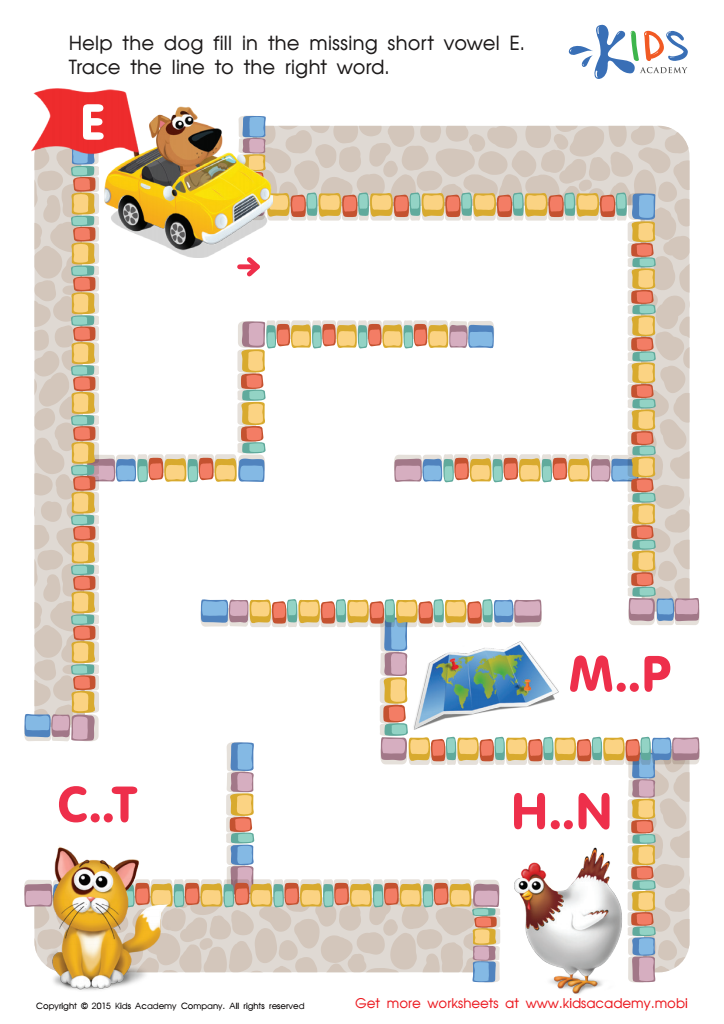
This free printable phonics worksheet helps kids learn the short vowel sound E. Kids need to help the dog complete the word “hen” by finding their way through a maze. It teaches kids to see the connection between letters and sounds and also strengthens their writing and spelling skills. Fun and educational, this phonics worksheet is great for kids. Want more? Check out here.
Short Vowel Sound E Worksheet
Worksheet
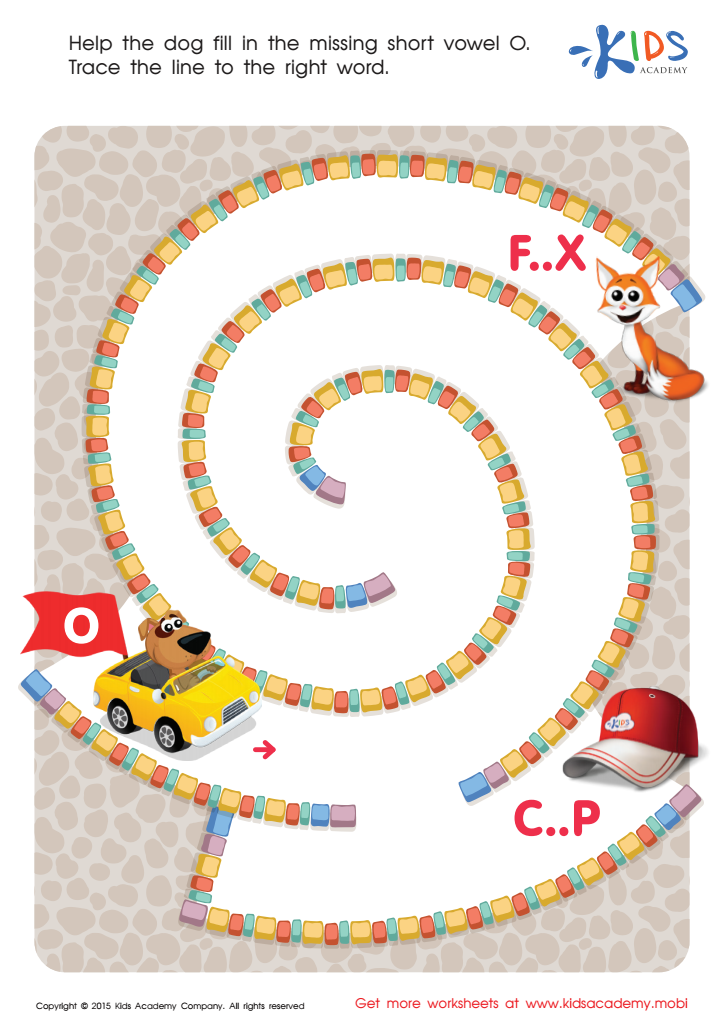
Short Vowel Sound O Worksheet
Help your child learn the short vowel sound O with this fun and free printable phonics worksheet! They'll need to complete the maze to help the dog finish the word "fox" with the missing letter O. Engage their fine motor muscles while they color or trace the maze with crayon or pencil. This educational activity is sure to bring a smile to your little learner's face! For more phonics worksheets, check here.
Short Vowel Sound O Worksheet
Worksheet
Join Kids Academy for Free
Who is primarily going to use this learning content?



Spelling practice, particularly with short vowels, is crucial for children aged 3-4, as it lays the groundwork for their reading and writing skills. At this stage, children are rapidly developing their language abilities, and short vowel sounds form the foundation of most words in early literacy. By focusing on short vowels, parents and teachers can help young learners understand phonemic awareness, which is essential for decoding and spelling various words.
Engaging children in spelling activities encourages them to recognize patterns in words, boosting their confidence as emerging readers. It also develops fine motor skills when they practice writing letters. Simplified, interactive methods—like using colorful flashcards or fun rhymes—can transform these learning experiences into enjoyable activities. Researchers indicate that early exposure to spelling helps reinforce a child's cognitive connections and vocabulary.
Ultimately, prioritizing short vowel spelling practice fosters an early love for reading and lays a solid foundation for more complex language skills in the future. By nurturing this knowledge, parents and teachers actively contribute to building a child’s academic success and overall communication abilities, which are vital for their lifelong learning journey.