Handwriting practice Tracing Letters Worksheets for Ages 3-4 - Page 2
28 filtered results
-
From - To
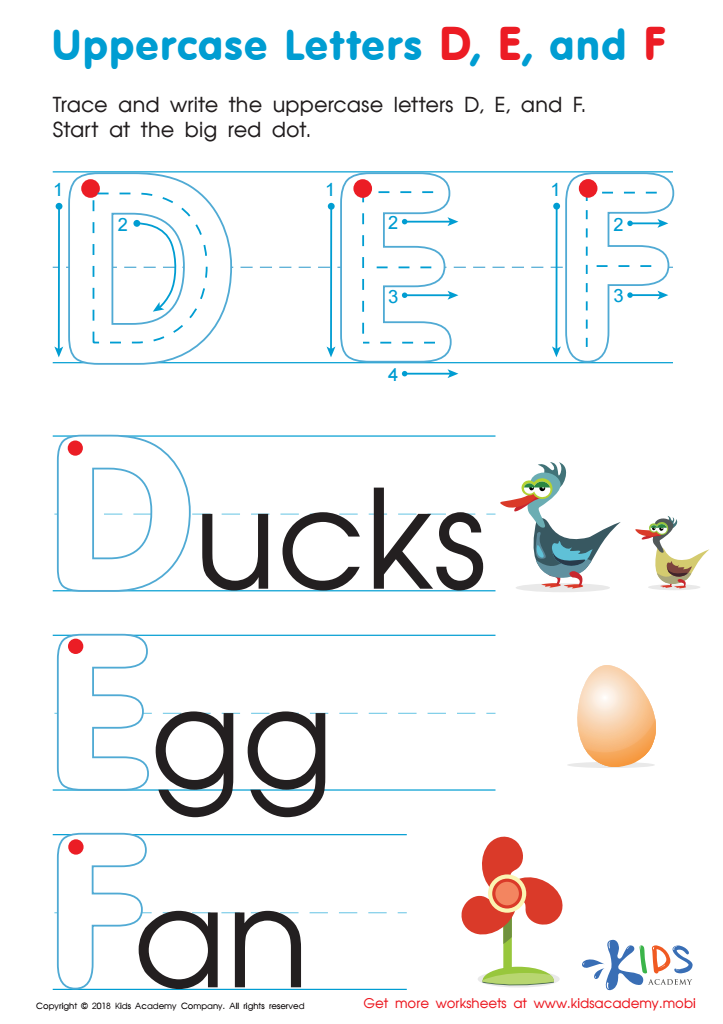
Uppercase Letters D, E, and F Worksheet
 Assign to My Students
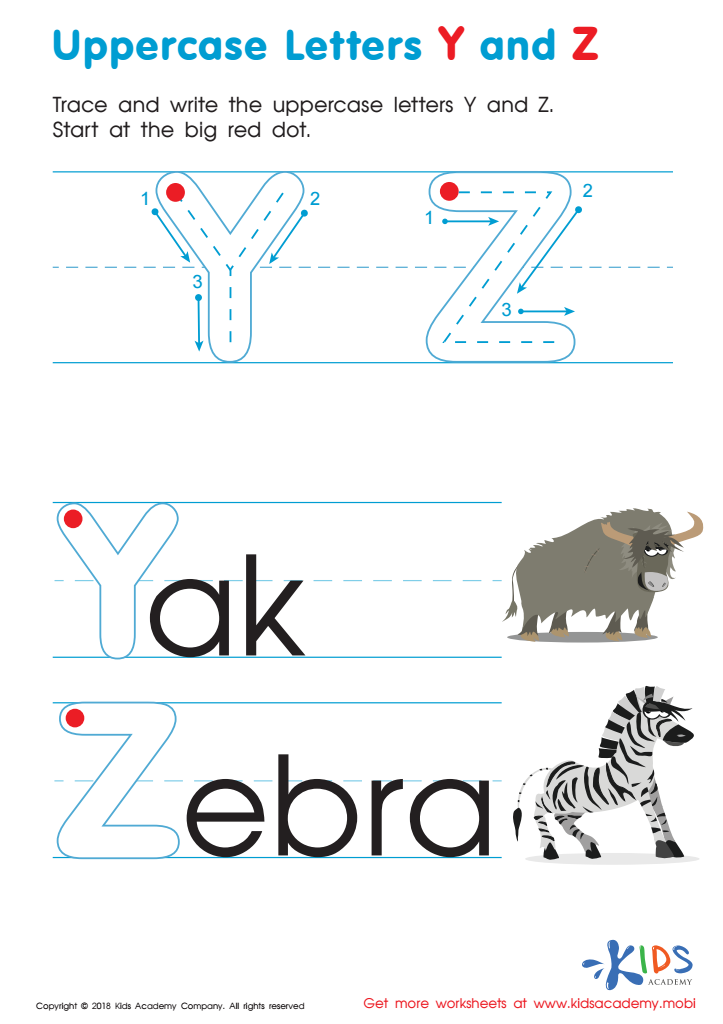
Uppercase Letters Y Z Worksheet
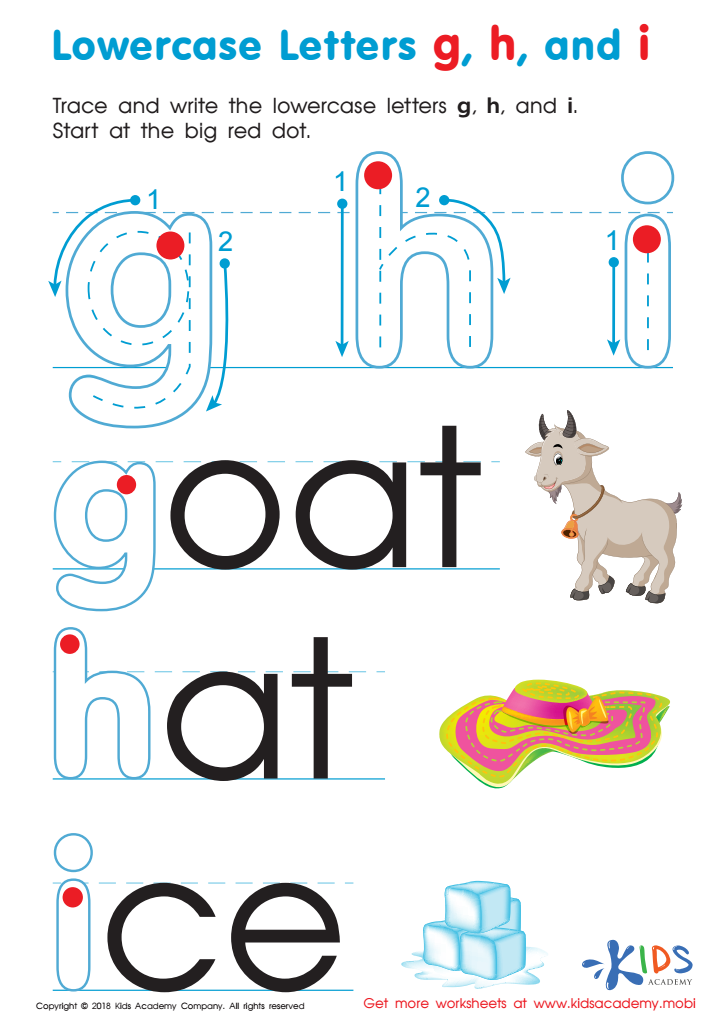
Lowercase Letters g h i Worksheet
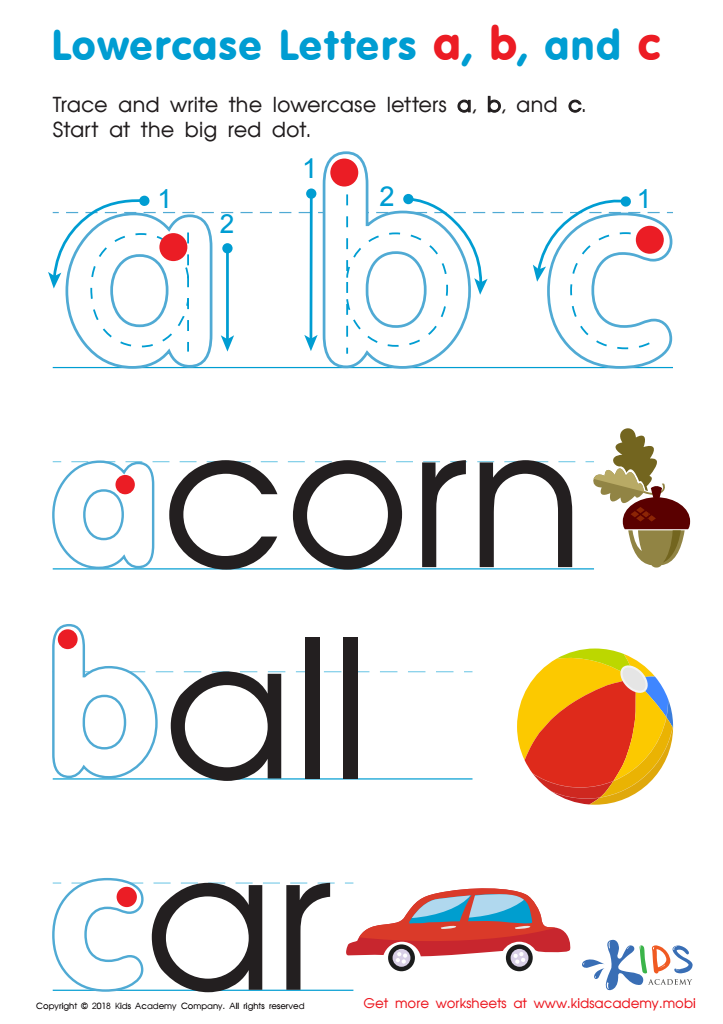
Lowercase Letters a b c Worksheet








Handwriting practice, particularly tracing letters, is crucial for children aged 3-4 as it lays the foundation for essential literacy and motor skills needed for their future academic success. During these formative years, children's brains are highly adaptable, and developing fine motor skills through handwriting helps strengthen these neural pathways. Tracing letters is not just about reproducing shapes on paper; it involves visual recognition, memory recall, and the coordination of hand muscles, eyes, and brain.
For parents and teachers, investing time in handwriting practice reaps significant benefits in children’s cognitive and motor development. Firstly, it supports literacy by familiarizing children with the alphabet, thereby enhancing their ability to recognize letters and sounds, which is crucial for learning to read and write. Secondly, fine motor activities such as tracing letters contribute to improved hand-eye coordination and hand strength, which are necessary for other daily tasks like buttoning clothes and using eating utensils.
Moreover, the discipline and focus required to practice tracing can also bolster a child’s attention span and concentration—a skill that will benefit all areas of learning. Lastly, these activities can boost self-confidence and impart a sense of achievement when children see their progress, fostering a positive attitude towards learning. Hence, handwriting practice is a critical component of early education that paves the way for well-rounded development.








