Lowercase identification Upper & Lowercase Letters Worksheets for Ages 3-4
5 filtered results
-
From - To
Unlock your child's potential with our "Lowercase Identification Upper & Lowercase Letters Worksheets for Ages 3-4." These engaging worksheets are designed to help young learners, aged 3-4, easily distinguish between upper and lowercase letters. Each worksheet is filled with fun activities, including coloring, tracing, and matching, making learning both enjoyable and effective. By focusing on lowercase identification, children develop foundational reading and writing skills crucial for their educational journey. Our worksheets provide a hands-on, interactive experience that supports early literacy in an engaging, stress-free way. Visit Kids Academy to explore the complete collection and start your child on the path to success!
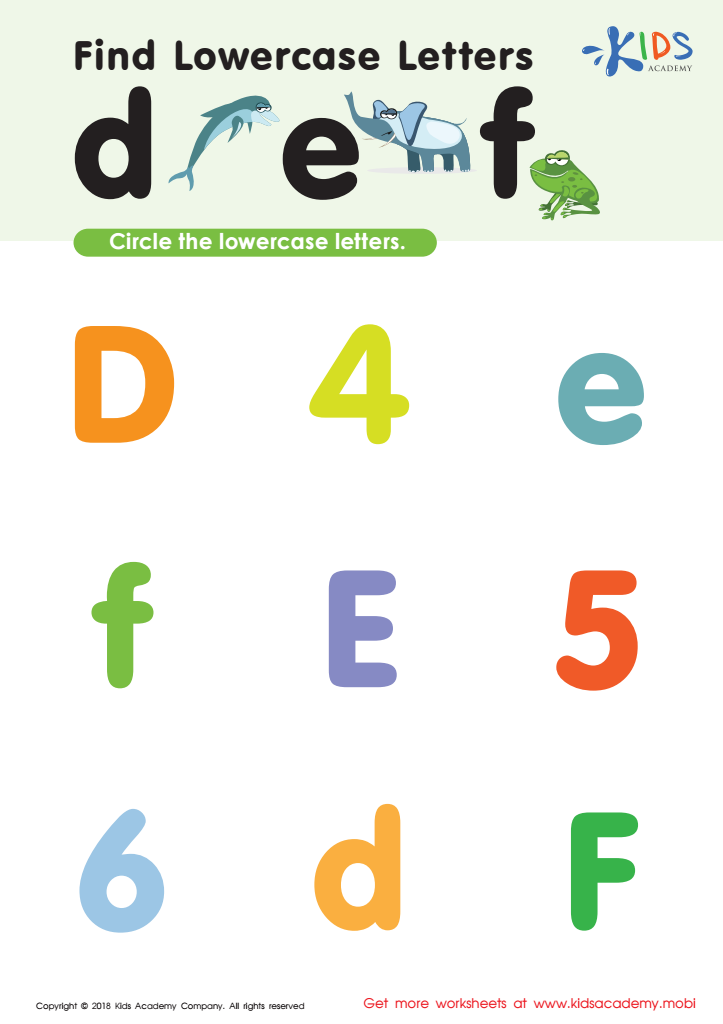
Find Lowercase Letters d e f Worksheet
 Assign to My Students


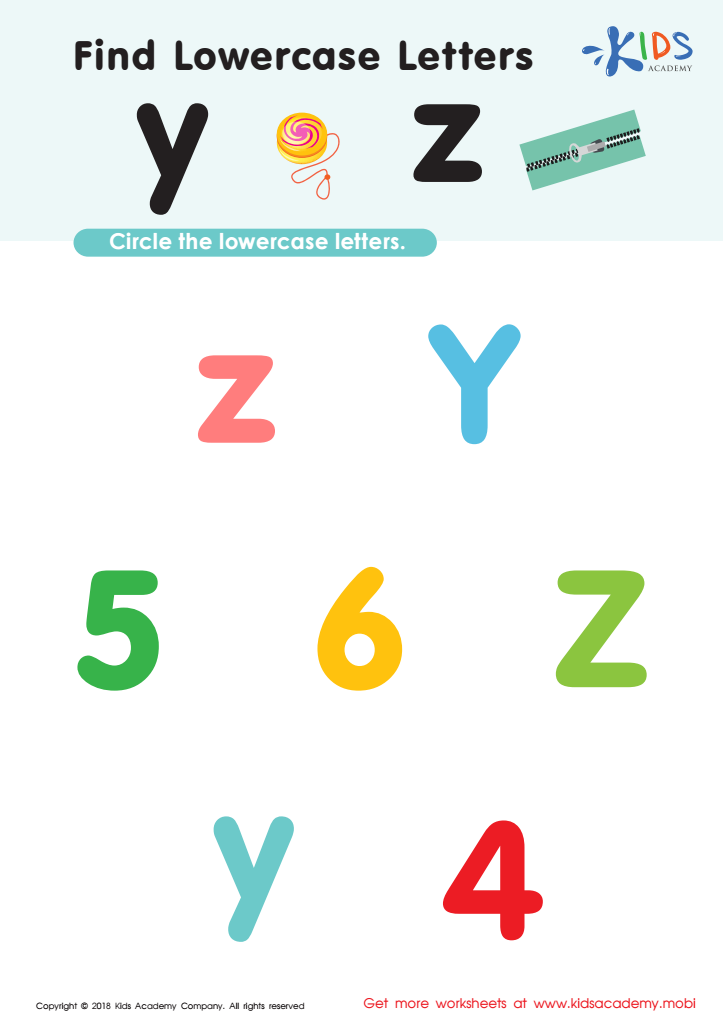
Find Lowercase Letters y z Worksheet
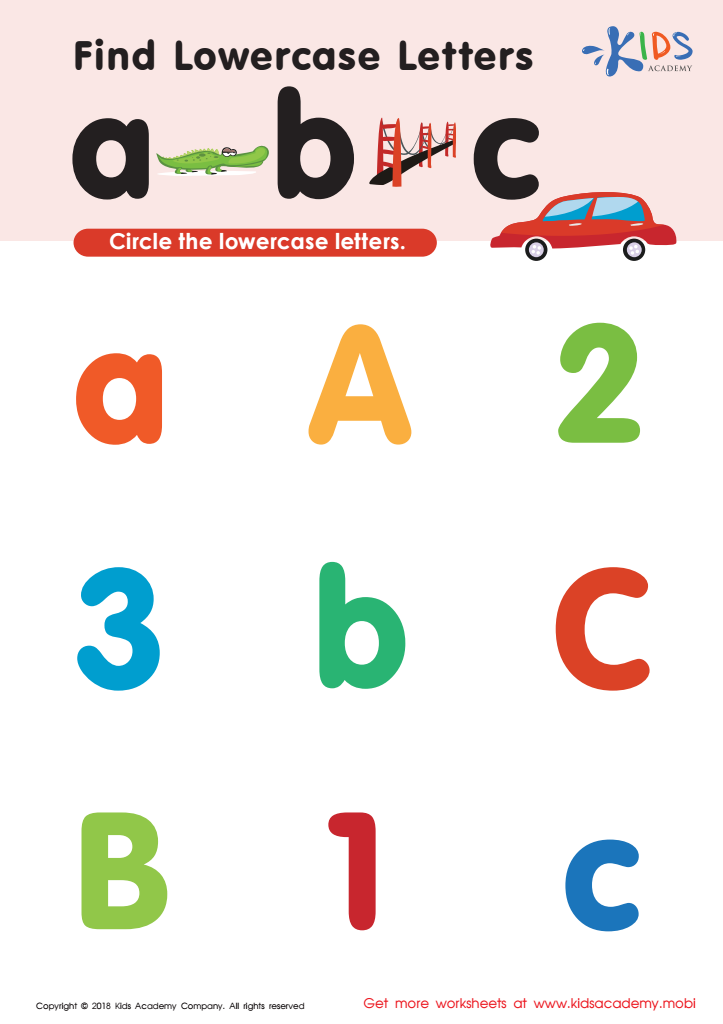
Find lowercase letters a b c Worksheet
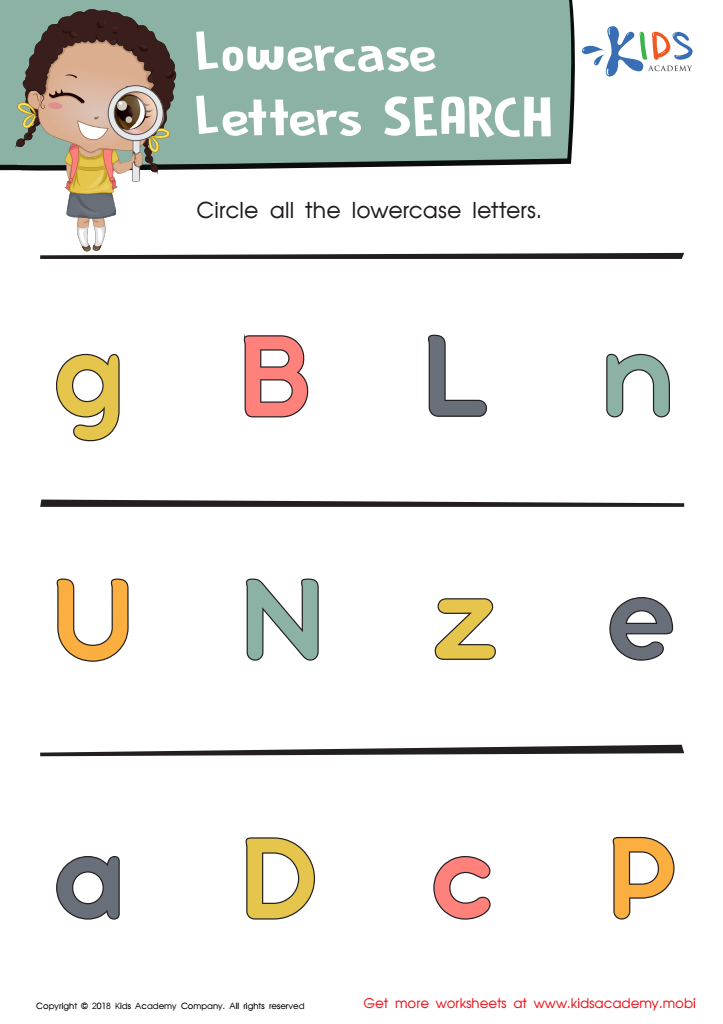
Lowercase Letters Search: Assessment Worksheet
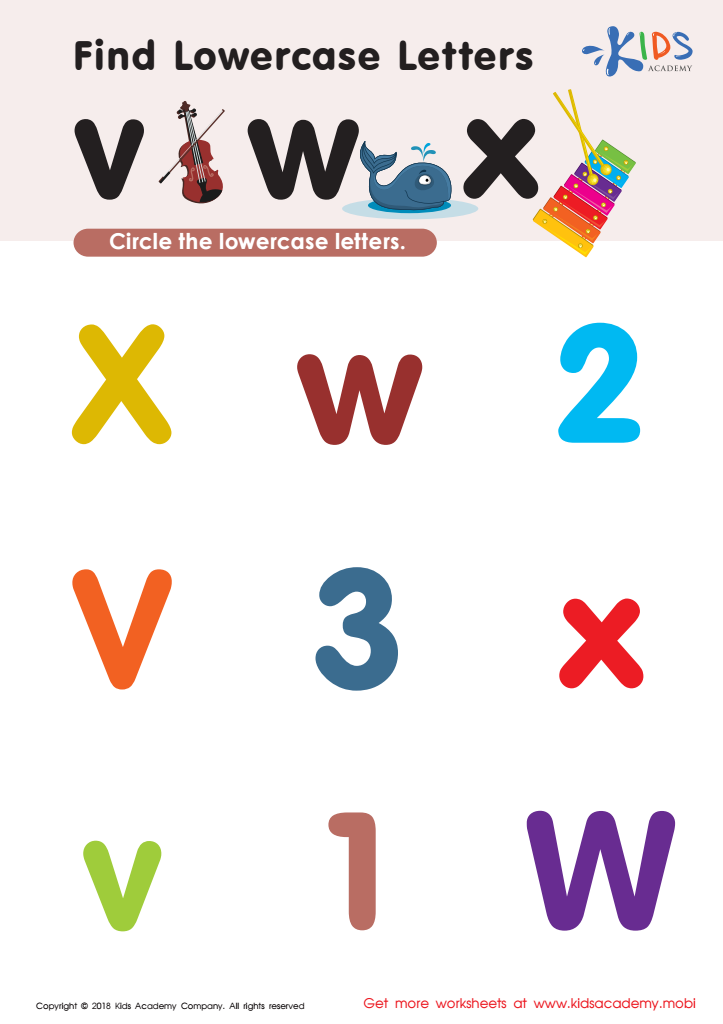
Find Lowercase Letters v w x Worksheet






Ensuring that children ages 3-4 can identify both uppercase and lowercase letters is crucial for their early literacy development. During these formative years, kids are in a prime stage for absorbing new information. Recognizing the difference between uppercase and lowercase letters sets the foundation for reading and writing. Parents and teachers who focus on this skill help children develop strong alphabet knowledge, which is a key predictor of future reading success.
When children can distinguish between uppercase and lowercase letters, they find it easier to understand word structures and sentence formation. This understanding is critical for decoding (reading) and encoding (spelling) words. For instance, knowing that a "T" is the uppercase version of "t" helps kids better understand words like "The" and "cat."
Moreover, this skill boosts children's confidence in classroom activities, where many learning materials include mixed-case texts. Early proficiency can also foster a positive attitude towards learning since mastering these early literacy skills can turn challenging tasks into enjoyable activities, promoting a lifelong love for reading. Overall, helping children aged 3-4 identify uppercase and lowercase letters provides them with a strong start in their educational journey.







