
Alphabetical order understanding Worksheets for Ages 3-4
7 filtered results
Difficulty Level
Grade
Age
-
From - To
Subject
Activity
Standards
Discover the joy of learning with our Alphabetical Order Understanding Worksheets designed specifically for children aged 3-4. These engaging, colorful worksheets help young learners familiarize themselves with the alphabet and improve their sorting skills through fun activities. Our worksheets encourage creativity while reinforcing essential early literacy concepts, making learning enjoyable and interactive. By practicing these alphabetic skills, children will develop critical thinking and organizational abilities. Perfect for classrooms or at-home learning, these resources provide parents and teachers with effective tools to pave the way for future reading success. Start your child’s alphabetical journey today and lay a solid foundation for lifelong learning!
Favorites
With answer key
Interactive
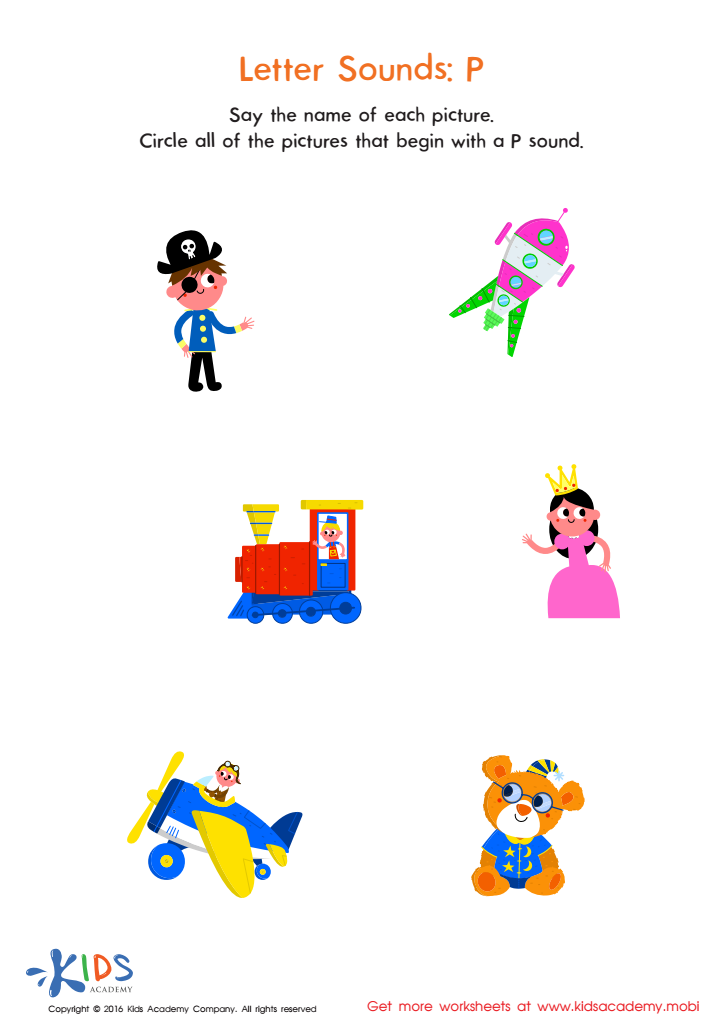
Letter P Sound Worksheet
Think P! Kids practice phonics with this fun letter P worksheet. With delightful illustrations, they'll sound out simple words and get closer to reading.
Letter P Sound Worksheet
Worksheet
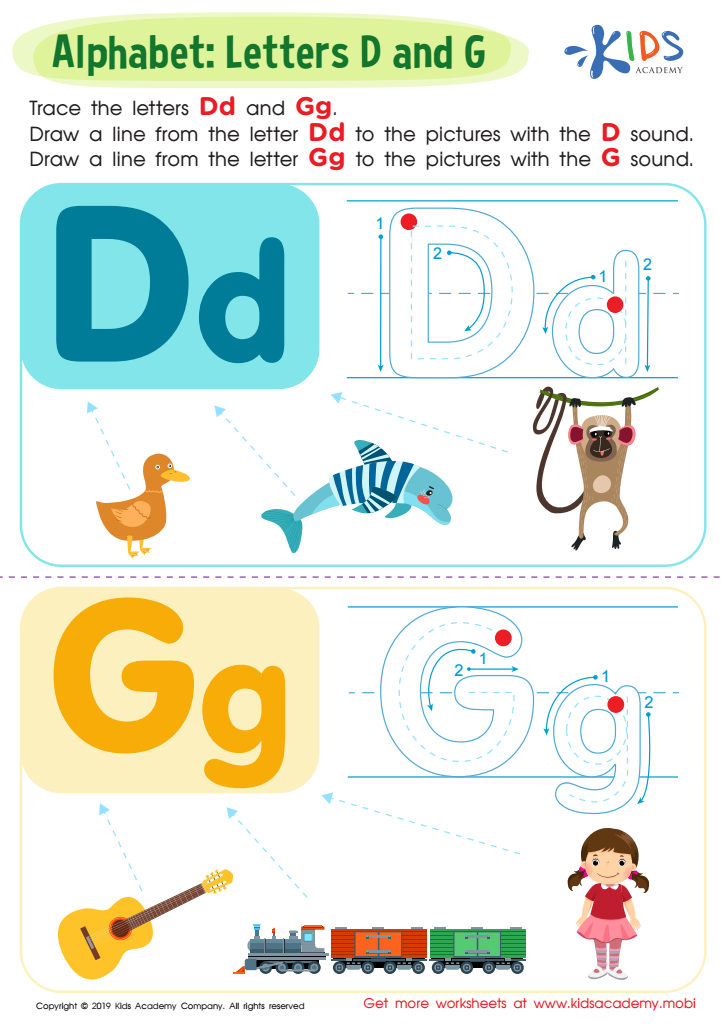
Letter D and G Tracing Worksheet
Kids can explore their imagination with the 'Alphabet: Letters D and G' worksheet! They'll trace capital and lowercase "D" and "G" and trace a line from the words. Colorful animals and objects make the task more fun and entertaining!
Letter D and G Tracing Worksheet
Worksheet

Letter G Tracing Page
Get ready to trace the letter "G" – with a big red spot as the starting point, trace the lines and watch the letter appear. Uppercase and lowercase letters are both easy and fun to write. Give it a go and finish the word "go". Play the guitar and say "hello" to a funny ghost!
Letter G Tracing Page
Worksheet
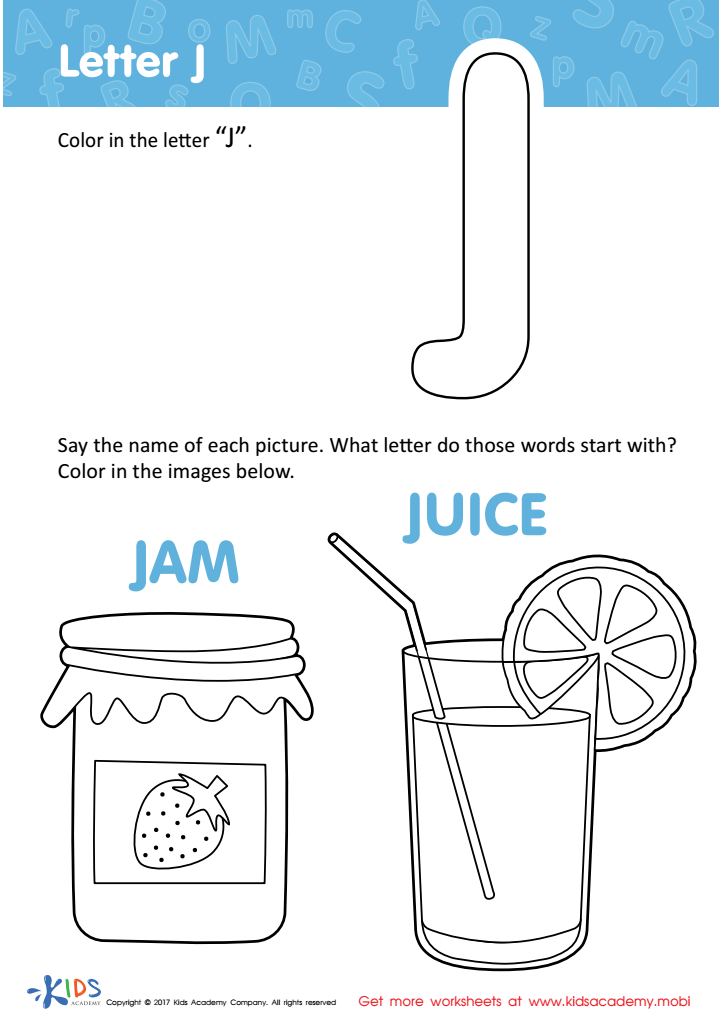
Letter J Coloring Sheet
Practice the letter 'J' with your little one with this fun coloring page! Pictures of jar, juice, jam and jelly make it an enjoyable experience for kids. Learning the letter and coloring is fun for even the youngest learners.
Download (PDF)
 Assign to My Students
Assign to My Students
Letter J Coloring Sheet
Worksheet
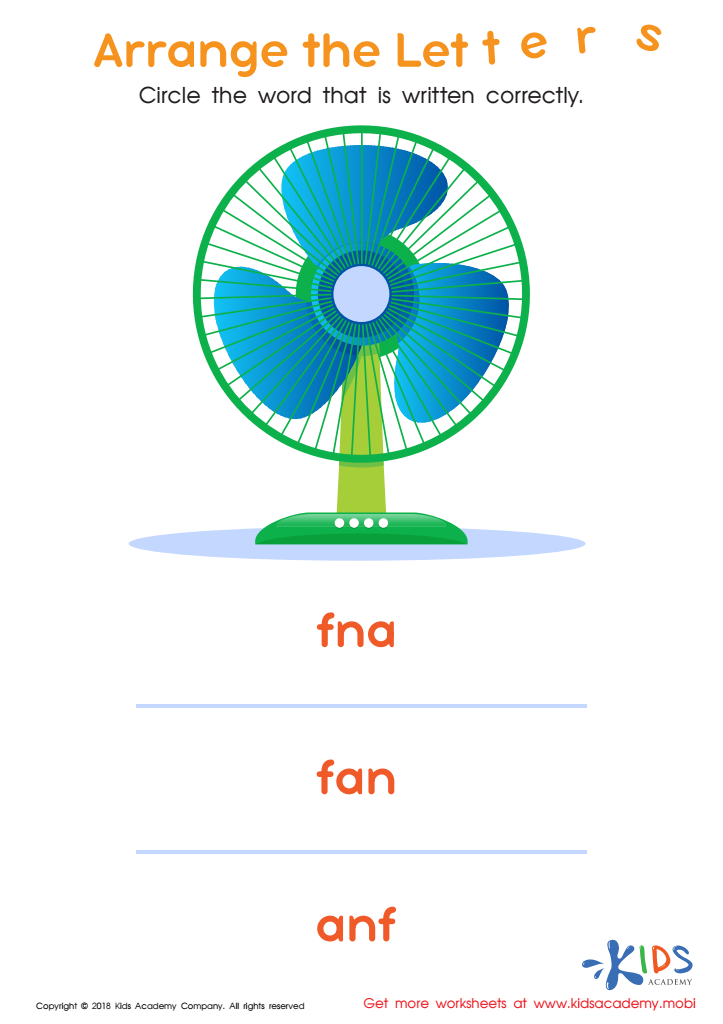
Arrange the Letters Worksheet
Test your kids' spelling skills with this worksheet! Show them the picture and ask what it stands for. Then, have them choose the correct spelling from the options given. Check their answer by circling the right one.
Arrange the Letters Worksheet
Worksheet
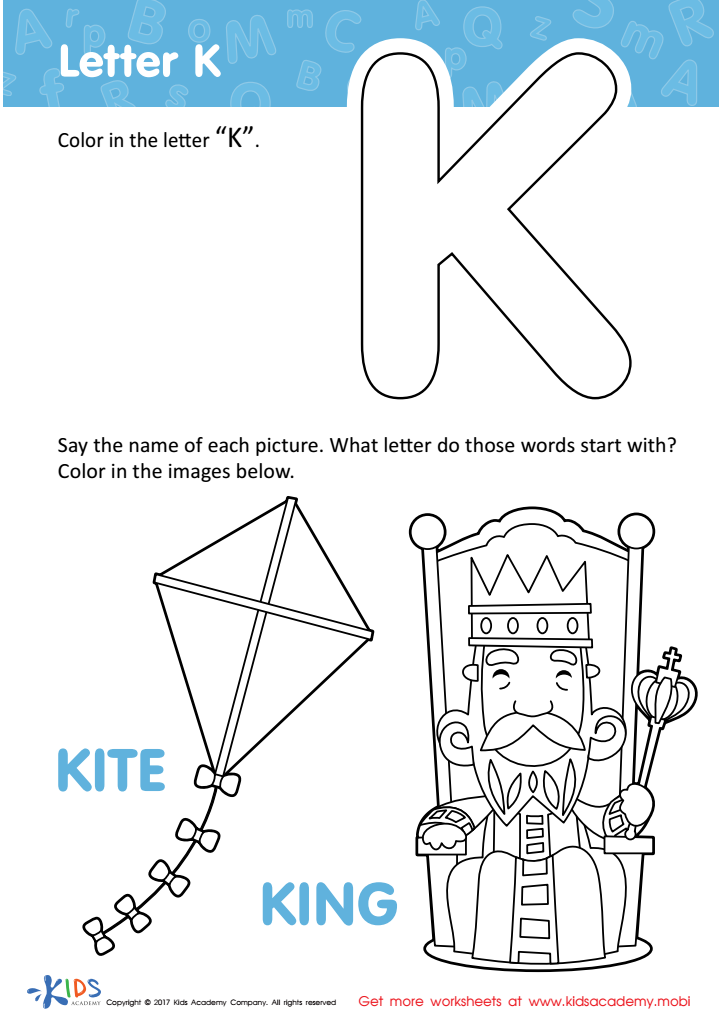
Letter K Coloring Sheet
This letter K coloring page captivates your child's creativity while learning the letter! Showcasing a king and kite, common words for their age group, it's sure to spark their imagination.
Download (PDF)
Assign to My Students
Assign to My Students
Letter K Coloring Sheet
Worksheet
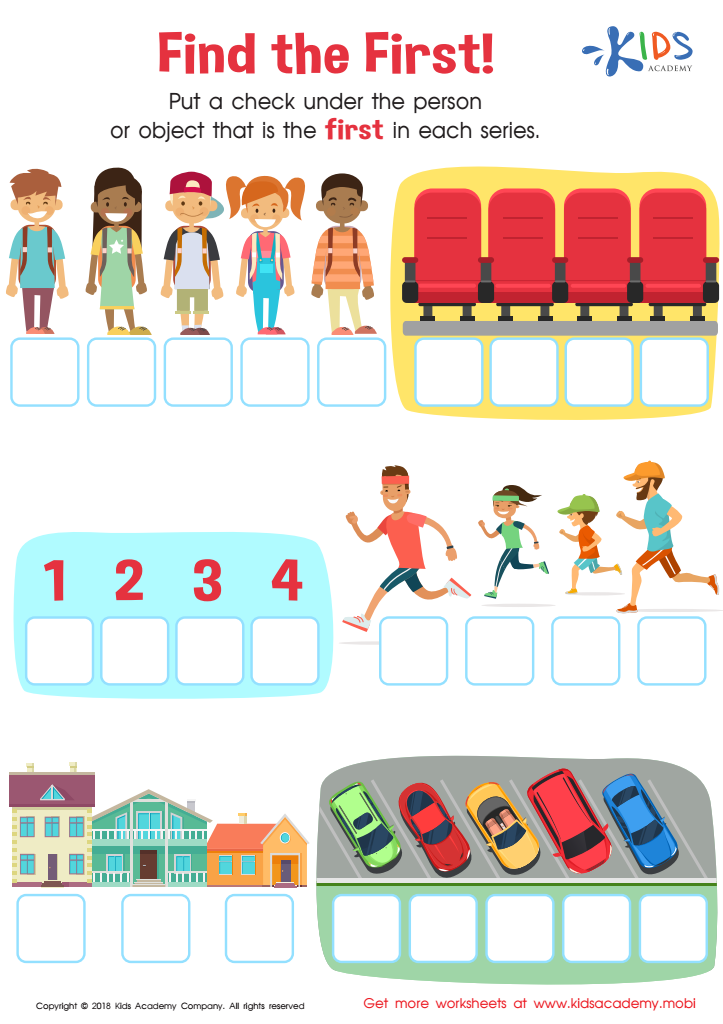
Find the First! Worksheet
Have your young students discuss what it means to be first in line, row, or a race. This free worksheet helps clarify their understanding of "first". View each group of people/objects and choose the first one. Follow up with hands-on activities like lining up students/toys or acting out a sequence of movements. Students can tell what happened first. Enjoy this printout for a fun math lesson!
Find the First! Worksheet
Worksheet
Join Kids Academy for Free
Who is primarily going to use this learning content?






Understanding alphabetical order is an essential foundational skill for young children aged 3-4, and it plays a crucial role in their cognitive and language development. For parents and teachers, fostering this understanding sets the stage for future literacy skills.
Firstly, recognizing the alphabetical order helps children make connections between letters and sounds, which is vital for phonemic awareness. This connection supports their ability to read and write as they progress through early education. By learning that letters have a specific order, children can enhance their sorting and categorization skills, critical for organizing information in their daily lives.
Additionally, engaging with alphabetical order promotes vocabulary growth. Children can learn to identify letters and associate them with corresponding words and objects, making the learning process interactive and fun. Activities such as alphabet games, songs, and visual aids encourage a playful exploration of letters while solidifying their understanding, making learning an enjoyable experience.
Overall, emphasizing alphabetical order at this tender age cultivates a strong literacy foundation, boosts confidence, and fosters a love for reading, ultimately preparing children for academic success and lifelong learning. Hence, parents and teachers should prioritize these skills in their early education efforts.








